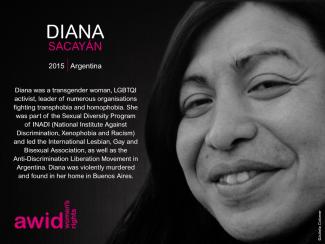
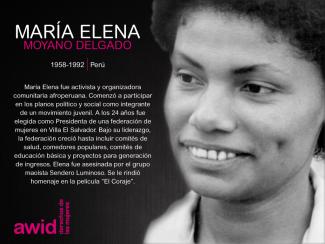
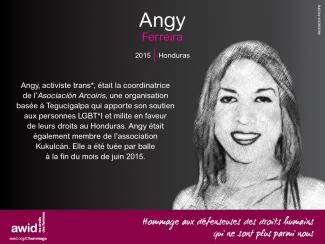
Diana Sacayan
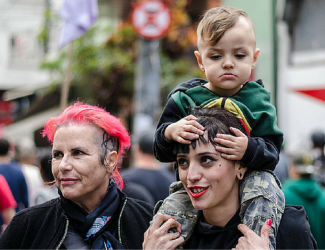
Over the past few years, a troubling new trend at the international human rights level is being observed, where discourses on ‘protecting the family’ are being employed to defend violations committed against family members, to bolster and justify impunity, and to restrict equal rights within and to family life.
The campaign to "Protect the Family" is driven by ultra-conservative efforts to impose "traditional" and patriarchal interpretations of the family, and to move rights out of the hands of family members and into the institution of ‘the family’.
Since 2014, a group of states have been operating as a bloc in human rights spaces under the name “Group of Friends of the Family”, and resolutions on “Protection of the Family” have been successfully passed every year since 2014.
This agenda has spread beyond the Human Rights Council. We have seen regressive language on “the family” being introduced at the Commission on the Status of Women, and attempts made to introduce it in negotiations on the Sustainable Development Goals.
AWID works with partners and allies to jointly resist “Protection of the Family” and other regressive agendas, and to uphold the universality of human rights.
In response to the increased influence of regressive actors in human rights spaces, AWID joined allies to form the Observatory on the Universality of Rights (OURs). OURs is a collaborative project that monitors, analyzes, and shares information on anti-rights initiatives like “Protection of the Family”.
Rights at Risk, the first OURs report, charts a map of the actors making up the global anti-rights lobby, identifies their key discourses and strategies, and the effect they are having on our human rights.
The report outlines “Protection of the Family” as an agenda that has fostered collaboration across a broad range of regressive actors at the UN. It describes it as: “a strategic framework that houses “multiple patriarchal and anti-rights positions, where the framework, in turn, aims to justify and institutionalize these positions.”
Lorsque des milliers de féministes se réunissent, nous créons une grande force de solidarité qui a le pouvoir de changer le monde. Le Forum de l’AWID sera pour nous un moment de repos et de guérison ensemble, de connexion au-delà des frontières et de découverte de nouvelles orientations stratégiques courageuses.
La date et le lieu seront annoncés l'année prochaine, dès que possible. Nous sommes ravi.es et nous savons que vous le serez aussi. Restez à l'écoute!
Assurez-vous de nous suivre sur les médias sociaux et de vous inscrire à notre liste de diffusion pour rester informé!
A complex and evolving network of anti-rights actors is exerting increasing influence in international spaces as well as domestic politics. Often backed by obscure funding, these actors build tactic alliances across issues, regions, and faiths to increase their impact.
¿Cuánto sabes sobre financiamiento feminista? 📊 Pon a prueba tu conocimiento sobre la movilización de recursos para el financiamiento de la organización feminista, respondiendo al cuestionario "¿Dónde está el dinero?":
Completa el quiz en línea Descarga la versión para imprimir
Queremos expresar nuestro más sincero agradecimiento a todos los diversos grupos, colectivos y organizaciones feministas de todo el mundo que respondieron a la encuesta WITM. Su participación y sus puntos de vista han sido inestimables y enriquecerán enormemente nuestra comprensión colectiva de los recursos feministas a nivel mundial.
Notre fonds d'accès offrira un nombre limité de bourses pour financer la participation d'activistes qui ne pourraient autrement pas se rendre sur place, sachant qu’ils·elles ne bénéficient pas du soutien de bailleurs de fonds leur permettant de couvrir leur participation. Si d'autres possibilités s'offrent à vous, n'hésitez pas à les explorer. Nous ferons de notre mieux pour accorder un maximum de bourses, et échangerons plus d'informations concernant cette procédure et les modalités de candidature au début de l’année 2024.
As feminist and labour movements, together in solidarity, we articulate the following points as a collective vision for care economies with domestic workers rights at the centre. We call on feminist and social movements to join the call to rethink the economy with care at its centre recognising the rights, agency and leadership of domestic worker movements.
Domestic and care work is in the limelight after the COVID-19 global pandemic as it provided the means to carry the world through multiple intersecting crises at the global scale. The World Bank, the International Monetary Fund, and other multilateral institutions also acknowledge the importance of care and domestic work in sustaining the world’s economy. However, it is our analysis that this recognition most often takes an instrumentalist approach (i.e. care work sustains the ‘productive’ economy) focused on profiteering from care work without recognizing care as a human right and public good, or providing recognition and rights to the workers undertaking the bulk of this labour.
El informe más reciente del Observatorio sobre la Universalidad de los Derechos desarma discursos como los de la «ideología de género», el «genocidio prenatal» y el «imperialismo cultural». También investiga los flujos de fondos para CitizenGo, la Alliance Defending Freedom/ADF Internacional y otros grupos anti-derechos. En este informe también se puede encontrar un análisis de los sistemas regionales de derechos humanos así como de las estrategias exitosas y los logros feministas.
Notre force collective, notre sagesse et notre engagement sont illimités... mais pas nos comptes en banque.
Cette synthèse s’appuie sur les réponses de 1 174 organisations féministes, de défense des droits des femmes, LBTQI+ et alliées (désignées ci-après comme « organisations féministes et de défense des droits des femmes ») issues de 128 pays, ayant participé à l’enquête Où est l’argent pour l’organisation des mouvements féministes ?. Les données reflètent les expériences vécues entre 2021 et 2023, et sont examinées au regard des tendances de restrictions budgétaires qui se profilent pour 2024–2025.
Découvrez l’état des lieux du financement des organisations féministes aujourd’hui.
We will reconnect with past partners, to ensure past efforts are honored. If your contact information has changed since the last Forum process, please update us so that we may reach you.
La Construcción de Economías Feministas se trata de crear un mundo con aire limpio para respirar y agua limpia para beber, con trabajo significativo y cuidado para nosotrxs y nuestras comunidades, donde todxs podamos disfrutar de nuestra autonomía económica, sexual y política.
En el mundo en que vivimos hoy, la economía sigue dependiendo del trabajo de cuidado no remunerado o subvalorado que realizan las mujeres para ganancia de otrxs. La búsqueda del «crecimiento» solo expande el extractivismo, un modelo de desarrollo basado en la extracción y explotación masiva de los recursos naturales que sigue destruyendo a las personas y al planeta mientras concentra la riqueza en manos de las elites globales. Mientras tanto, el acceso a la salud, a la educación, a un salario digno y a la seguridad social se están convirtiendo en el privilegio de pocxs. Este modelo económico se asienta sobre la supremacía blanca, el colonialismo y el patriarcado.
Adoptar solamente un «enfoque de empoderamiento económico de las mujeres» es solo integrar aún más a las mujeres a este sistema. Ese ‘empoderamiento’ puede ser un medio temporal de supervivencia, pero debemos plantar las semillas que hagan que otro mundo sea posible mientras derribamos los muros del que ya existe.
Creemos en la capacidad de los movimientos feministas de trabajar para el cambio con alianzas amplias que atraviesen distintos movimientos sociales. Al amplificar las propuestas y visiones feministas, nuestro objetivo es construir nuevos paradigmas para economías justas.
Nuestro enfoque debe ser interconectado e interseccional, porque la autonomía sexual y corporal no será posible hasta que todxs y cada unx de nosotrxs disfrute de sus derechos e independencia económicos. Queremos trabajar con quienes resisten y enfrentan el auge mundial de la derecha conservadora y de los fundamentalismos religiosos, porque no es posible ninguna economía justa hasta que no hagamos crujir las bases del actual sistema.
Promovemos agendas feministas: Enfrentamos al poder corporativo y su impunidad por los abusos de derechos humanos trabajando con aliadxs. Así nos asegurarnos de llevar a los espacios de decisión política las perspectivas feministas, de derechos de las mujeres y de justicia de género. Un ejemplo sobre el que puedes leer más es nuestro trabajo sobre el futuro instrumento legalmente vinculante sobre las «corporaciones transnacionales y otras empresas comerciales con respecto a los derechos humanos», en el Consejo de Derechos Humanos de las Naciones Unidas.
Movilizamos acciones solidarias: Trabajamos para fortalecer los vínculos entre los movimientos feministas y por la justicia impositiva, incluyendo el reclamo de que los recursos públicos perdidos a través de los flujos financieros ilícitos (IFFs, por sus siglas en inglés) sean usados para asegurar la justicia social y de género.
Construimos conocimiento: Brindamos a las defensoras de derechos humanos información estratégica que es vital para enfrentar el poder corporativo y el extractivismo. Contribuiremos a construir conocimiento acerca del financiamiento local y global para el extractivismo,y los mecanismos de inversión que lo sostienen.
Creamos y difundimos alternativas: Movilizamos a nuestra membresía y a los movimientos imaginando de manera colectiva economías feministas, y compartiendo conocimientos, prácticas y agendas feministas por la justicia económica.
«La revolución corporativa va a colapsar si nos rehusamos a comprar lo que están vendiendo: sus ideas, su versión de la historia, sus guerras, sus armas, su idea de inevitabilidad. Otro mundo no solo es posible, sino que está en camino. En los días tranquilos, puedo oírlo respirar».
Arundhati Roy, War Talk.
Suivez notre super-héroïne alors qu'elle se lance dans une quête pour récupérer le récit des acteurs anti-droits à travers le monde.
Là où les organisations de terrain pilotent et les multinationales sont tenues responsables.
📅 Mardi 11 novembre 2025
📍 En ligne et à l'Universidade Federal do Pará, Belém
Para preguntas adicionales, por favor utiliza nuestro formulario de contacto. ¡Continuaremos actualizando este documento en base a las consultas que vayamos recibiendo de ustedes!
Avec Lindiwe Rasekoala, Lizzie Kiama, Jovana Drodevic et Malaka Grant.
*Website in French
New
As an online participant, you can facilitate activities, connect and converse with others, and experience first-hand the creativity, art and celebration of the AWID Forum. Participants connecting online will enjoy a rich and diverse program, from workshops and discussions to healing activities and musical performances. Some activities will focus on connection among online participants, and others will be truly hybrid, focusing on connection and interaction among online participants and those in Bangkok.


Feminists have long asserted that the personal is political. Crear, Resister, Transform Festival created spaces for feminists to discuss issues around body, gender and sexualities, and explored the interconnections of how these issues are both deeply embodied experiences, and simultaneously a terrain where rights are constantly disputed and at risk in society.
The power of feminist movements lie in how we organise and take coordinated action, not only amongst our own communities and movements, but with allied social justice causes and groups. This space provided opportunities for movements to share and strengthen organizing and tactical strategies with each other.
The COVID-19 global health pandemic has made the failures of neo-liberal capitalism even more apparent than ever before, exposed the cracks in our systems, and highlighted the need and opportunities to build new realities. A feminist economic and social recovery requires all of us to make it together. This journal edition in partnership with Kohl: a Journal for Body and Gender Research, will explore feminist solutions, proposals and realities for transforming our current world, our bodies and our sexualities.
Explore the articles online or
Download PDF