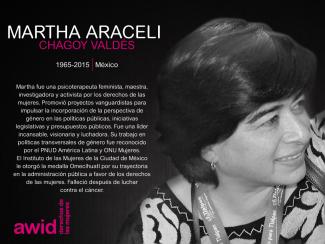
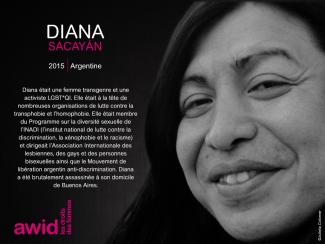
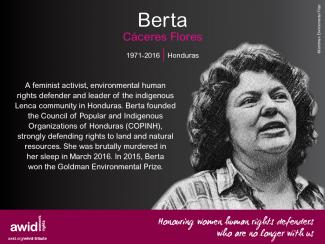
Analyses Spéciales

L´AWID est une organisation féministe mondiale qui consacre ses efforts à la justice de genre, au développement durable et aux droits humains des femmes

S'opposer à l’extractivisme et au pouvoir des entreprises

Dans le monde entier, les femmes défenseuses des droits humains défendent leurs terres, leurs moyens de subsistance et leurs communautés contre le pouvoir des entreprises et des industries extractives. Elles se mobilisent et défient de puissants intérêts économiques et politiques qui motivent la spoliation de terres, le déplacement de communautés, la perte des moyens de subsistance et la dégradation de l'environnement.


Pourquoi résister à des industries extractives?

L’extractivisme est un modèle économique et politique de développement qui œuvre à la marchandisation de la nature et privilégie le profit au détriment des droits humains et de l'environnement. Enraciné dans l'histoire coloniale, il creuse les inégalités sociales et économiques au niveau local et mondial. Le plus souvent, les femmes rurales, noires ou autochtones sont les plus touchées par l’extractivisme et sont largement exclues des espaces de prise de décision en la matière. Les femmes se mobilisent pour défier ces forces patriarcales et néocoloniales et défendre les droits, les terres, les personnes et la nature.

Les principaux risques et les violences basées sur le genre

Les femmes qui s’opposent aux industries extractives vivent une série de risques, de menaces et de violations de leurs droits comme la criminalisation, la stigmatisation, la violence et l'intimidation. Leurs histoires révèlent des aspects évidents de violences sexuelles et basées sur le genre. Parmi les auteurs de ces abus se trouvent les autorités locales et fédérales, les entreprises, la police, les militaires, les forces de sécurité paramilitaires et privées, et parfois mêmes leurs propres communautés.

Agir ensemble

L'AWID et la Coalition internationale des femmes défenseures des droits humains (WHRDIC) ont le plaisir d'annoncer la sortie de leur publication « Les défenseuses des droits humains résistent à l’extractivisme et aux pouvoir des entreprises », un rapport basé sur un projet de recherche transrégional qui relate les expériences vécues par des défenseuses en provenance d'Asie, d'Afrique et d'Amérique latine.

Nous encourageons les activistes, les membres de mouvements sociaux, la société civile, les donateurs et les décideurs à lire et à faire usage des documents suivants pour leur travail de plaidoyer, comme outil pédagogique et comme source d’inspiration :

Partagez votre expérience et vos questions !

Dites-nous comment vous utilisez la boîte à outils sur les défenseur-e-s des droits humains qui résistent à l'extractivisme et aux pouvoir des entreprises.

◾️ Comment ces ressources peuvent-elles soutenir votre activisme et votre plaidoyer ?

◾️ De quelles informations ou connaissances supplémentaires avez-vous besoin pour utiliser au mieux ces ressources ?

Faites-nous part de vos commentaires


Merci !

C’est avec gratitude que l’AWID reconnaît les contributions précieuses de chaque défenseur-e des droits humains qui a participé à ce projet. Cette recherche a été rendue possible grâce à votre volonté à partager vos expériences. Votre courage, créativité et résilience est une source d’inspiration pour nous toutes et tous. Merci !

Contenu lié

Snippet - COP30 - Radical Democracy - ES

Democracia radical y justicia climática: el debate ausente en la COP30

Modelos de gobernanza alternativos como vías para salir de la crisis climática.

📅 Miércoles 12 de noviembre de 2025
📍 Seminario Mar Nossa Sra Da Assunção, Pará, Brasil

Más información aquí

Leah Tumbalang

Leah Tumbalang était une femme lumad de Mindanao, aux Philippines. L’histoire du peuple autochtone Lumad recouvre des générations de résistance à l'exploitation minière à grande échelle par les entreprises, la protection des domaines ancestraux, des ressources et de la culture, et la lutte pour le droit à l'autodétermination. 

Leah était une leader lumad, ainsi qu’une dirigeante du Kaugalingong Sistema Igpasasindog tu Lumadnong Ogpaan (Kasilo), une organisation paysanne lumad plaidant contre l'arrivée des sociétés minières à Bukidnon, dans la province de Mindanao. Elle s’est montrée inébranlable dans son activisme antimines, militant avec ferveur contre les effets dévastateurs de l'extraction minière sur l'environnement et les terres des peuples autochtones. Leah était également une organisatrice de la liste du parti Bayan Muna, membre du parti politique de gauche Makabayan.

Depuis près d’une décennie, Leah (ainsi que d’autres membres de Kasilo) recevait des menaces du fait qu'elle codirigeait l'opposition contre le déploiement de groupes paramilitaires soupçonnés d’être soutenus par des intérêts miniers. 

« En tant que leader des Lumad au sein de leur communauté, elle est au premier plan pour lutter en faveur de leurs droits à la terre ancestrale et à l'autodétermination ». - Organisation régionale lumad de Kalumbay

Être en première ligne de la résistance implique également souvent d’être la cible de violences et victime de l’impunité. Leah a non seulement reçu de nombreuses menaces de mort, mais elle a été assassinée le 23 août 2019 à Valencia, dans la province de Bukidnon.  

Selon un rapport de Global Witness, « les Philippines sont le pays à avoir été le plus touché en chiffre absolu » pour ce qui est des meurtres d’activistes écologistes en 2018. 


Lisez le rapport du Global Witness, publié en juillet 2019

En savoir plus sur les femmes lumad aux Philippines et leur lutte intergénérationnelle pour l'autodétermination
 

A few different people from my organization are planning to attend the Forum. Is there a group discount for the Forum?

AWID does not provide group discounts, but we do provide registration discounts to members. (Click here to learn more about becoming a member)

Privacy and cookies - before 25 Apr 2023

AWID Privacy Policy, Your rights to privacy and cookies

This policy governs all pages hosted at www.awid.org, and any other websites under the control of the AWID (the “Website”) and registrations for these sites. It does not apply to pages hosted by organisations other than AWID, to which we may link and whose privacy policies may differ. Please read the following policy to understand our privacy policy regarding nature, purpose, using and sharing of your personal identifiable information that is collected via this website.

1. Types of information collected on this site

Generally, you can browse this website without submitting your personal information to us. However, in some circumstances, we will ask for your personal information.

1.1 Information you provide to us

When you are on the website and are asked for personal information, you are sharing that information only with AWID.

1.1.1 The information you provide to get updates from AWID:

When you register to use the website – for example, subscribe to receive emails from us or apply to become a member - you provide us with the mandatory information about you like Name, country, language to receive email updates and email address. This information is provided by you through secure forms and is stored on secure servers.

1.1.2 The payment information you provide to become member or registering for a paid event:

Also, while becoming a member or registering for events, you may need to provide payment information. AWID doesn’t store any credit card information on its servers and uses payment gateway to process the payment information.

1.1.3 The optional information you chose to give us as AWID member (with consent)

When you communicate with AWID, provide optional information through forms on the website or use the site to communicate with other members, we collect information about your communication and any information you choose to provide.

1.1.4 Information you provide us through contact forms or when you directly communicate with us

When you communicate with us, we collect your communication and any other information you choose to provide us.

1.2 Information that is automatically collected (third party cookies)

In addition, when you interact with the Website, our servers may keep an activity log that does not identify you individually (“Non-Personal Information”). Generally, we collect the following categories of Non-Personal Information:

  • We may collect certain demographic data such as age and gender as part of collecting personal information;
  • We collect and store certain device information about your computer, mobile device, or other device that you use to access the Website. This information may include IP address, geolocation information, unique device identifiers, browser type, browser language, and other transactional information;
  • We automatically log certain usage information about your use of the Website. This information includes a reading history of the pages you view. We use this information to provide you with a more customized experience on the Website;
  • We collect and store additional “traffic data” such as time of access, date of access, software crash reports, session identification number, access times, and referring website addresses; and
  • We collect and store your search terms and search results.
  • We also collect and store certain other information regarding our users’ use of the Website so that third parties may provide us with reports and analysis regarding usage and browsing patterns of the Website.

For more information about cookies, please see www.allaboutcookies.org.

If you do not wish to receive cookies you can easily modify your web browser to refuse cookies, or to notify you when you receive a new cookie, see how here.

2. Use of information collected on this website

AWID uses the information we collect about you to:

  • Better understand how you are using our website and what we could do to improve your experience.
  • Communicate with you via email to share resources and analysis in the field of women's rights, connect with you and provide opportunities to engage with our work, keep you updated about developments at AWID and with our partners.
  • Comply with our legal obligations to:
    • Detect and prevent fraud, spam, abuse, security incidents, and other harmful activity.
    • Conduct security investigations and risk assessments.
    • Verify or authenticate information provided by you (such as to verify your authorization to act as an agent on behalf of a nonprofit organization).
    • Conduct checks against databases and other information sources, to the extent permitted by applicable laws.
    • Resolve any disputes with any of our users or customers and enforce our agreements with third parties.
    • Enforce our Terms of Use and other policies.

3. Distribution of information

If you have subscribed to AWID´s e-newsletters or email updates or you have become a member, we will send you regular communications as specified in the relevant area of the website. You are able to unsubscribe from any of the e-newsletters or email updates at any time by using the unsubscribe information provided in our emails.

4. Accessing, changing and removing information

The accuracy of your individual identifying information is important to AWID. We are always looking for ways to make it easier for you to review and correct the information that AWID maintains about you through our website. If you change your email address, or if any of the other information we hold is inaccurate or out of date, please write to us here.

  • Where you have provided AWID with consent to use your personal data, you can withdraw it any time by sending us a communication and specifying which consent you are withdrawing. Please note that the withdrawal of your consent does not affect the lawfulness of any processing activities based on such consent before its withdrawal.
  • Where applicable, you may also have a right to receive a machine-readable copy of your personal data. If you would like to have a copy of the personal data we hold on you or if you think that we hold incorrect personal data about you, please write to us.
  • You also have the right to ask us to delete your personal data or restrict how it is used. There may be exceptions to the right to erasure for specific legal reasons which, if applicable, we will set out for you in response to your request.
  • At any time, regardless of applicable law, you may object to us processing your personal information for direct marketing purposes. You may, at any time, ask AWID to cease processing your data for these direct marketing purposes by Contacting Us.


5. Sharing information

Except as explained below, AWID will not disclose any of your personally identifiable information, and will not sell or rent lists containing your information to third parties. AWID may disclose information when it has your permission to do so or under special circumstances, such as when it believes in good faith that the law requires it.

6. Information security

We are continuously implementing and updating administrative, technical, and physical security measures to help protect your information against unauthorized access, loss, destruction, or alteration. Some of the safeguards we use to protect your information are firewalls and data encryption, and information access controls. If you know or have reason to believe that your AWID membership credentials have been lost, stolen, misappropriated, or otherwise compromised or in case of any actual or suspected unauthorized use of your AWID membership account, please contact us through on Contact Us.

7. Changes to this policy & Contacting us

This policy may change from time to time. The changed policy will be posted on this website and Last updated date at the end of the policy will be updated. There will be an email update sent to you for the revised policy and if you do not agree with the revised policy, you will have the option to cancel you registration(s) with us. You can also write to us here. We welcome your feedback!

Last updated: May 2019
ours chapter 5 fr

Chapitre 5

Tactiques, stratégies et impacts des antidroits

Les antidroits ont adopté une double stratégie : outre leurs attaques ouvertes sur le système multilatéral, ils et elles sapent les droits humains depuis l’intérieur. Leur implication vise à prendre le contrôle des processus, instaurer des normes régressives et fragiliser la redevabilité.

En lire plus

Snippet - COP30 - Actions - FR

Événements et actions à la COP30

Du 8 au 16 novembre 2025

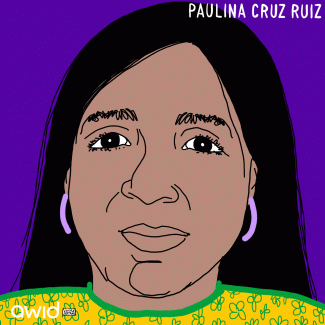
Paulina Cruz Ruiz

Paulina Cruz Ruiz, from the Rabinal, Baja Verapaz region of Guatemala, was an ancestral Maya Achí (Indigenous) authority and a human rights defender.

She was actively involved in community organizing and resistance, including legal measures against mining projects on Indigenous territory, projects that would severely affect and damage the socio-environmental fabric.  

“The extractive industry model promoted by the Guatemalan government and the construction of large-scale development projects on indigenous lands without community consent has been a source of ongoing disputes with resistance movements.” - Minority Rights Group International

Paulina was also part of the March for Dignity, Life and Justice, in which on 1 May 2019 thousands of Guatemalans started a march of eight days against corruption and impunity in the prosecution and assassinations of human rights, peasant and Indigenous leaders and land defenders.

Paulina was murdered on 14 September 2019 near her home in the village of Xococ. 

According to the Minority Rights Group International, “one of the major ongoing issues affecting Mayan communities is the increasing activity of the mining industry.”


Read more about the Mayans of Guatemala

Read more about the March for Dignity, Life and Justice


Nunca he viajado antes. ¿Qué debería saber?

Reconocemos que el viaje involucra muchos desafíos y por eso brindaremos más información y detalles sobre cómo llegar a Bangkok cuando abramos el proceso de inscripción a principios del próximo año.

Sin trabajadorxs domésticxs no hay economía de los cuidados

Un Manifiesto

Como movimientos feministas y sindicales, juntxs en solidaridad, articulamos los siguientes puntos como una visión colectiva de las economías de los cuidados con los derechos de lxs trabajadorxs domésticxs como eje central.

Nuestro manifiesto responde a un contexto complejo:

El trabajo doméstico y de cuidado estuvo en la primera línea de fuego durante y después de la pandemia de COVID-19, al proporcionar los medios para sobrellevar las múltiples crisis globales que se intersectan. El Banco Mundial, el Fondo Monetario Internacional y otras instituciones multilaterales también reconocen la importancia del trabajo doméstico y de cuidados para el sostenimiento de la economía. Sin embargo, vemos que esta atención adopta un enfoque utilitarista (es decir, el trabajo de cuidados contribuye a sostener a la economía "productiva") centrado en el lucro, sin reconocer los cuidados como un derecho humano y un bien público, ni prestar atención a lxs trabajadorxs que realizan la mayor parte de este trabajo.

El manifiesto está disponible en inglés, francés, español, amárico y tailandés.

Descargar el manifiesto completo

Time for Action: Stop the anti-rights infiltration of the UN!

Call to action

Sign the Call to Action!

Want to join the growing numbers of people saying “enough” to the infiltration of the UN by anti-rights actors?

Join the call — sign and share today.

Snippet - COP30 - Our Tools title - EN

Boîte à outils pour les organisations à la COP30

Quelles sont les langues parlées au Forum ?

Les langues de travail de l'AWID sont l'anglais, le français et l'espagnol. Le thaï sera ajouté comme langue locale, ainsi que la langue des signes et d'autres mesures d'accessibilité. D'autres langues étant susceptibles d’être ajoutées si le financement le permet, nous vous invitons à consulter régulièrement les mises à jour. La justice linguistique nous tient à cœur et nous essaierons d'inclure autant de langues que possible en fonction de nos ressources. Nous espérons créer de multiples occasions pour que chacun·e d'entre nous puisse s'exprimer dans sa langue et communiquer avec les autres.

Building Feminist Economies

Building Feminist Economies is about creating a world with clean air to breath and water to drink, with meaningful labour and care for ourselves and our communities, where we can all enjoy our economic, sexual and political autonomy.


In the world we live in today, the economy continues to rely on women’s unpaid and undervalued care work for the profit of others. The pursuit of “growth” only expands extractivism - a model of development based on massive extraction and exploitation of natural resources that keeps destroying people and planet while concentrating wealth in the hands of global elites. Meanwhile, access to healthcare, education, a decent wage and social security is becoming a privilege to few. This economic model sits upon white supremacy, colonialism and patriarchy.

Adopting solely a “women’s economic empowerment approach” is merely to integrate women deeper into this system. It may be a temporary means of survival. We need to plant the seeds to make another world possible while we tear down the walls of the existing one.


We believe in the ability of feminist movements to work for change with broad alliances across social movements. By amplifying feminist proposals and visions, we aim to build new paradigms of just economies.

Our approach must be interconnected and intersectional, because sexual and bodily autonomy will not be possible until each and every one of us enjoys economic rights and independence. We aim to work with those who resist and counter the global rise of the conservative right and religious fundamentalisms as no just economy is possible until we shake the foundations of the current system.


Our Actions

Our work challenges the system from within and exposes its fundamental injustices:

  • Advance feminist agendas: We counter corporate power and impunity for human rights abuses by working with allies to ensure that we put forward feminist, women’s rights and gender justice perspectives in policy spaces. For example, learn more about our work on the future international legally binding instrument on “transnational corporations and other business enterprises with respect to human rights” at the United Nations Human Rights Council.

  • Mobilize solidarity actions: We work to strengthen the links between feminist and tax justice movements, including reclaiming the public resources lost through illicit financial flows (IFFs) to ensure social and gender justice.

  • Build knowledge: We provide women human rights defenders (WHRDs) with strategic information vital to challenge corporate power and extractivism. We will contribute to build the knowledge about local and global financing and investment mechanisms fuelling extractivism.

  • Create and amplify alternatives: We engage and mobilize our members and movements in visioning feminist economies and sharing feminist knowledges, practices and agendas for economic justice.


“The corporate revolution will collapse if we refuse to buy what they are selling – their ideas, their version of history, their wars, their weapons, their notion of inevitability. Another world is not only possible, she is on her way. On a quiet day, I can hear her breathing”.

Arundhati Roy, War Talk

Contenu lié

Ghiwa Sayegh Snippet

Ghiwa-Sayegh-Walkthrough

Ghiwa Sayegh is an anarcha-queer writer, independent publisher, and archivist. She is the founding editor of Kohl: a Journal for Body and Gender Research and the co-founder of Intersectional Knowledge Publishers. She has an MA in gender studies from Université Paris 8 Vincennes – Saint-Denis. She is passionate about queer theory, transnational circulations, and imagined or unknown histories. Her influences are Audre Lorde and Sara Ahmed.

Snippet - COP30 - Resistance Hubs

Resistance Hubs for Climate Justice

ours 2021 - chapter 2 fr

Chapitre 2

Comprendre le contexte des menaces antidroits

La montée en puissance des antidroits a préparé son terrain. Nous devons comprendre la montée de l’ultranationalisme, du pouvoir incontrôlé des entreprises, de la répression croissante et de l’amenuisement de l’espace civique pour contextualiser les menaces actuelles contre nos droits.

En lire plus