Forum de l'AWID : Co-créer nos horizons féministes
En septembre 2016, 1800 féministes et défenseur-e-s des droits des femmes venu-e-s des quatre coins de nos mouvements se réunissaient sur les côtes de Bahia à l’occasion du 13ème Forum international de l’AWID.
Cette section met l’accent sur les victoires, les enseignements et les ressources qui ont couronné nos conversations. Nous vous invitons à l’explorer, la partager et laisser vos impressions.
L’un des principaux éléments à retenir de ce Forum a été la nécessité d’élargir et d’approfondir notre travail de collaboration entre mouvements pour faire face à une montée des fascismes et des fondamentalismes, une exacerbation de la cupidité des entreprises et un changement climatique en progression.
L’AWID a donc travaillé avec plusieurs allié-e-s pour ériger ces semences de résistance :
-
Nos Initiatives Jeunes-pousses ont aidé 20 idées émérgées au Forum à évoluer en actions concrètes
-
La vidéo « Protéger les personnes et la planète » et le guide « Arrimer la résistance à l'action » mettent en lumière le courage des défenseur-e-s des droits humains et présentent des stratégies concrètes pour résister au pouvoir des entreprises
-
Avec nos animations L'état de nos mouvements féministes et La justice climatique et environnementale, les mouvements ont maintenant des outils créatifs pour appuyer leur travail de plaidoyer.
-
La compilation des expressions artistiques des mouvements continue d’inspirer une organisation plus forte et plus créative dans le monde entier.
-
Les mouvements peuvent aussi bénéficier d’une nouvelle méthodologie pour envisager nos horizons féministes. (à venir bientôt !)
A travers son prochain plan stratégique et le processus de son Forum, l’AWID s’engage à poursuivre et approfondir les rapports, les apprentissages et les processus amorcés lors du Forum 2016, tout en s’inspirant de l’actualité.
Et maintenant ?
Le monde est bien différent de celui qu’il était l’an dernier et il continuera à changer dans les années à venir.
Le prochain Forum de l’AWID se tiendra dans la région Asie-Pacifique (les dates et le lieu exacts seront annoncés en 2018). Nous attendons avec impatience de vous y retrouver !
Le prochain Forum de l’AWID se tiendra dans la région Asie-Pacifique (les dates et le lieu exacts seront annoncés en 2018). Nous attendons avec impatience de vous y retrouver !
A propos du Forum de l’AWID
Les Forums de l’AWID ont vu le jour en 1983, à Washington DC. Depuis, ils revêtent de nombreux aspects et incarnent, selon les personnes, tantôt un processus itératif visant à affiner nos analyses, notre vision et nos actions, un évènement clé galvanisant les féminismes des participant-e-s et leurs organisations ou un espace politique offrant refuge et solidarité aux défenseur-se-s des droits humains.
Contenu lié
L’AWID EN 2014 : Renforcer les processus d’organisation en faveur des droits des femmes dans le monde entier

L’AWID a le plaisir de partager son rapport annuel 2014.
Du renforcement des connaissances sur les enjeux liés aux droits des femmes à l’élaboration de réponses plus efficaces aux violences perpétrées contre les défenseuses des droits humains, nos efforts de l’an dernier n’ont cessé de poursuivre la consolidation des mouvements féministes et de droits des femmes du monde entier.
Consultez le rapport pour en apprendre davantage sur la façon dont nous avons renforcé les capacités de nos membres et plus largement de notre public , exercé de fortes pressions pour que les droits des femmes demeurent au premier plan des principaux processus internationaux relatifs au développement et aux droits humains, et contribué à améliorer la couverture médiatique des problématiques des droits des femmes et des processus organisationnels qui y sont liés. Le rapport propose une vue panoramique de nos projets ainsi que certains chiffres qui témoignent concrètement de notre impact.
La collaboration est au cœur de toutes nos actions et nous anticipons avec enthousiasme une autre année de travail ensemble afin de mener nos mouvements vers un niveau supérieur.
Coup d'oeil à l'intérieur du rapport
Dans un contexte de plus en plus exigeant, nous pouvons néanmoins discerner d’importants signes d’espoir de voir les priorités relatives aux droits des femmes progresser. Les activistes des droits des femmes jouent toujours un rôle crucial dans la création d’espaces au sein desquels il est possible d’exiger des changements structurels, de soutenir les communautés, de s’opposer à la violence et de préserver les acquis essentiels/ importants/majeurs. Il y a en effet des occasions à saisir pour influencer les nouveaux acteurs et mobiliser des ressources plus abondantes en faveur des organisations de droits des femmes.
Pour ce faire, il est essentiel de mener de solides actions collectives et de renforcer le processus d’organisation des activistes des droits des femmes.
Notre impact

- Nous avons contribué au renforcement des connaissances sur les problématiques des droits des femmes
- Nous avons renforcé notre communauté en ligne
- Nous avons contribué à l’amélioration des réponses aux violences perpétrées contre les défenseuses des droits humains
- Nous avons renforcé le mouvement grâce à des processus de travail collaboratifs
- Nous avons exercé une pression maximale pour que les droits des femmes demeurent au premier plan des processus internationaux majeurs relatifs au développement
- Nous avons permis aux organisations de droits des femmes d’influencer plus efficacement les donateurs et à la communauté des donateurs de mieux percevoir et comprendre les organisations de droits des femmes
- Nous avons contribué à accroître et à améliorer la qualité de la couverture faite par les médias généralistes des problématiques des droits des femmes et des organisations actives dans ce domaine
Je suis sincèrement enchantée par tout ce qu’a réalisé l’AWID depuis 1982 et j’espère être en mesure d’apporter ma contribution, même modeste, à ce dur labeur en faveur des femmes et de l’égalité de genre. » — Aleksandra Miletic-Santic, Bosnie Herzégovine
Nos membres

Lire le rapport complet
CFA 2023 - Call for Activities is live- EN
The Call for Activities is Live!
The Deadline to submit activities has been extended to February 1st, 2024
In the spirit of the Forum’s theme, we invite a diversity of activity topics and formats that:
- Facilitate genuine connection and interaction among participants
- Foster healing and regeneration in various forms, as individuals, as communities and as movements
- Inspire and challenge us to thrive together as communities and movements
Snippet - COP30 - Ecozine card - FR
📰 La solidarité féministe transnationale : un antidote à l’écocide
Ce fanzine collectif est issu d’une série de cercles de partage organisés en 2022, rassemblant des féministes des quatre coins du monde. Ces rencontres visaient à partager des expériences et à s’enrichir mutuellement pour découvrir comment les communautés réagissent à la crise climatique dans divers contextes locaux.
#1 - Sexting like a feminist Tweets Snippet EN
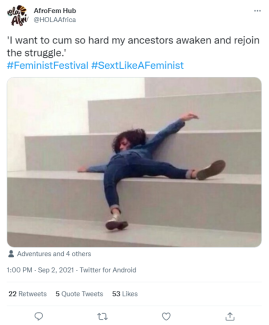
and my number 1... Because you know it’s gotten real when higher powers are invoked.
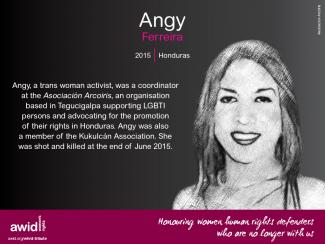
Angy Ferreira
Annual Report 2009
Our 2009 Annual Report includes highlights of another busy year of action and reflection at AWID as we implement our commitment to boldly, creatively and effectively contribute to the advancement of women’s rights and gender equality worldwide.
In the report you can find out about our programmatic achievements, membership, finances, what to watch out for in 2010, as well as information about our Board and Staff.
CFA 2023 - Submit Button - EN
COP30: Homepage Banner - ES
COP30: Recuperar la acción por el clima del control corporativo
Cuando les líderes se reúnen en Brasil, los movimientos feministas hacemos incidencia, nos congregamos y alteramos el statu quo. Nos dirigimos, junto con otres feministas a Belém (Brasil) del 10 al 21 de noviembre de 2025. Allí continuaremos denunciando las soluciones falsas
Intro to tweets snippet ES
Como lo demuestran estos tuits, resulta que sextear como feminista es sexy, divertido – y caliente – todo eso sin perder de vista el compromiso con la equidad y la justicia.
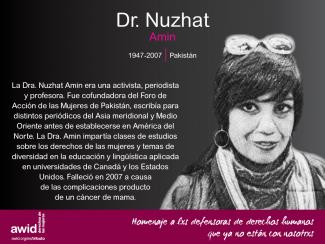
Dr. Nuzhat Amin
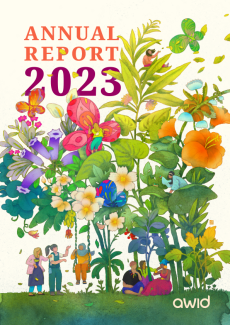
2023: Fierce Feminisms: Together We Rise
For us at AWID, 2023 was the first year of our new Strategic Plan, “Fierce Feminisms: Together We Rise”, which speaks to the unapologetic drive needed to change the world, and the plurality of feminisms and movements in our ecosystem.
In the course of 2023, the volatile situation in Sudan has escalated greatly. The unspeakable genocide in Gaza, in the context of ongoing colonization and occupation of Palestine, continues as we write these lines. Climate crises, militarization, and extractivism all persist as threats to people and the planet. Building stronger movements and people power is a vision to which we contribute daily, through AWID membership, teach-ins, resourcing advocacy and more.
Download the full 2023 Annual Report
From centering climate in feminist economies to advocating for resourcing feminist movements - an urgent task, given the chronic underfunding of feminist, indigenous and Global South movements who are on the frontlines of climate crisis - we are finding solutions.
2023 - Hybrid like never before: in person - ar
هجين (hybrid) كما لم يحدث من قبل
لأول مرة، يعرض منتدى جمعية حقوق المرأة في التنمية ثلاثة طرق للمشاركة
الحضور الشخصي
سيجتمع المشاركون/ات في بانكوك، تايلاند. ننتظر بفارغ الصبر!
Clone of Clone of Publications - Homepage - fr
Publications
Lisez nos recherches sur le financement, sur les défenseuses des droits humains, sur la création de mouvements, sur les fondamentalismes, la justice économique et beaucoup plus
#3 - Sexting like a feminist Tweets Snippet FR
Tout le monde apprécie les intentions clairement exprimées.
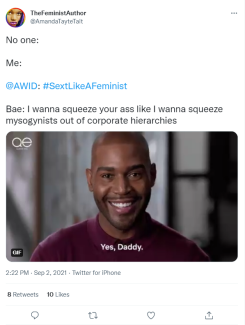
Personne :
Moi :
@AWID : #SextLikeAFeminist
Bae : Je veux te presser le cul aussi fort que je voudrais éjecter les misogynes hors des hiérarchies des entreprises.
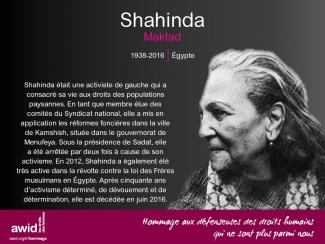
Shahinda Maklad
Isabel Marler
Biography
Isabel est une féministe du Royaume-Uni avec plus d'une décennie d'expérience de réponses féministes aux fascismes, aux fondamentalismes et aux tendances antidroits. À l'AWID, son travail se concentre sur le renforcement des connaissances. Elle a notamment dirigé la production de la série Droits en danger en collaboration avec l'Observatoire sur l'universalité des droits (OUR). Elle est titulaire d’un master en études sur le genre de l’École d’études orientales et africaines (SOAS) et a précédemment travaillé avec Women Living Under Muslim Laws (WLUML). Elle est passionnée par le travail intermouvements, la construction de connaissances centrées sur les mouvements et l’utilisation de l’expression créative pour perturber les systèmes d’oppression. En dehors du travail, Isabel est active dans divers espaces de justice liée au handicap, aux soins collectifs, à l’apprentissage et au plaidoyer.
Position
Responsable de l’initiative de Promotion des Droits Universels et de la Justice
Add to stories
Off
CFA 2023 - what you need to know - ar

ما الذي تحتاج/ين معرفته؟
- سيتم إعطاء الأولوية للأنشطة التي تسهل وتشجع الاتصال والتفاعل بين المشاركين/ات.
- إذا كان من الممكن إجراء نشاطك عبر الإنترنت أو بشكل هجين (ربط المشاركين/ات في الموقع وعبر الإنترنت)، يرجى النظر في كيفية توليد مشاركة حقيقية ومشاركة نشطة من المشاركين/ات عبر الإنترنت.
- نشجع اللقاءات والحوارات والتبادلات بين الحركات والأقاليم وبين الأجيال.
- يرجى تصميم النشاط بطريقة تسمح بالمرونة في عدد المشاركين/ات. في حين أن بعض الأنشطة قد تقتصر على مجموعات أصغر، إلا أن الأغلبية ستحتاج إلى استيعاب أعداد أكبر.
- إذا كان نشاطك يناسب عددًا من أشكال التقديم أو لا يناسبه أي شيء، فستتمكن من الإشارة إلى ذلك في نموذج الطلب.
اللغات التي يمكنك إرسال طلبك بها
- لغات تقديم الطلبات: سيتم قبول الطلبات باللغات الإنجليزية والفرنسية والإسبانية والتايلاندية والعربية.
- لغات المنتدى: سيتم توفير الترجمة الفورية في الجلسات العامة للمنتدى باللغات الإنجليزية، الفرنسية، الإسبانية، التايلاندية والعربية، بالإضافة إلى لغة الإشارة الدولية (ISL)وربما أكثر. بالنسبة لجميع الأنشطة الأخرى، سيتم توفير الترجمة الشفوية في بعض هذه اللغات، ولكن ليس جميعها، وربما بلغات أخرى، مثل اللغة السواحيلية والبرتغالية.
Snippet - WID2026 - Join the Global _EN
Join the Global Feminist Community!
Sign up to be an AWID member to connect with 9,600+ global feminist movements and co-create a range of platforms and spaces designed especially for activists and organizations from teach-ins to solidarity spaces and member mixers.
The AWID Membership community is available as an app. Download the app and start connecting with movements!
 |
 |
Manal Tamimi | Snippet EN
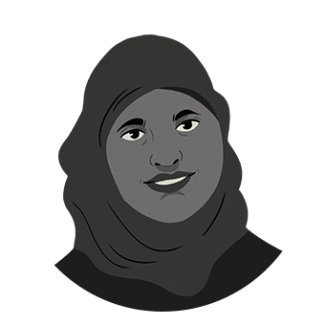
Manal Tamimi is a Palestinian activist and human rights defender. She is a mother of four who holds a master’s degree in international humanitarian law. Due to her activism, she was arrested three times and got wounded more than once, including with live explosive bullets which are banned internationally. Her family is also a target: her children have been arrested and wounded with live ammunition more than once. The last incident was an assassination attempt of her son Muhammad who was shot in the chest, near the heart, a few weeks after his liberation from the occupation prisons where he had spent two years. Her philosophy on life: if I have to pay the price for being a Palestinian and not for a crime I have committed, I refuse to die in silence.
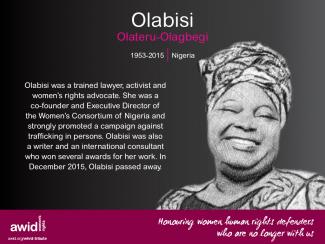
Olabisi Olateru-Olagbebi