
Evelinda Ramirez Reyes

En septembre 2016, 1800 féministes et défenseur-e-s des droits des femmes venu-e-s des quatre coins de nos mouvements se réunissaient sur les côtes de Bahia à l’occasion du 13ème Forum international de l’AWID.
Cette section met l’accent sur les victoires, les enseignements et les ressources qui ont couronné nos conversations. Nous vous invitons à l’explorer, la partager et laisser vos impressions.
L’un des principaux éléments à retenir de ce Forum a été la nécessité d’élargir et d’approfondir notre travail de collaboration entre mouvements pour faire face à une montée des fascismes et des fondamentalismes, une exacerbation de la cupidité des entreprises et un changement climatique en progression.
Nos Initiatives Jeunes-pousses ont aidé 20 idées émérgées au Forum à évoluer en actions concrètes
La vidéo « Protéger les personnes et la planète » et le guide « Arrimer la résistance à l'action » mettent en lumière le courage des défenseur-e-s des droits humains et présentent des stratégies concrètes pour résister au pouvoir des entreprises
Avec nos animations L'état de nos mouvements féministes et La justice climatique et environnementale, les mouvements ont maintenant des outils créatifs pour appuyer leur travail de plaidoyer.
La compilation des expressions artistiques des mouvements continue d’inspirer une organisation plus forte et plus créative dans le monde entier.
Les mouvements peuvent aussi bénéficier d’une nouvelle méthodologie pour envisager nos horizons féministes. (à venir bientôt !)
A travers son prochain plan stratégique et le processus de son Forum, l’AWID s’engage à poursuivre et approfondir les rapports, les apprentissages et les processus amorcés lors du Forum 2016, tout en s’inspirant de l’actualité.
Les Forums de l’AWID ont vu le jour en 1983, à Washington DC. Depuis, ils revêtent de nombreux aspects et incarnent, selon les personnes, tantôt un processus itératif visant à affiner nos analyses, notre vision et nos actions, un évènement clé galvanisant les féminismes des participant-e-s et leurs organisations ou un espace politique offrant refuge et solidarité aux défenseur-se-s des droits humains.
5 de la tarde, hoy.


La escritura a mano de la invitación—
enroscada y brusca—
la he visto cinco veces en cinco años.
Mi cuerpo se activa,
afiebrado.
Necesito cogerme a mí misma antes.
La marea está alta esta noche y
yo
acabo/me corro.
Quiero bajar la velocidad de todo,
saborear el tiempo y el espacio, grabarlos
en la memoria.
*
Nunca he estado antes en esta parte de la ciudad.
Los lugares desconocidos me excitan,
la forma en que las extremidades y las venas
y los huesos
resisten a la descomposición,
su destino incierto.
En la puerta, lo pienso dos veces.
El vestíbulo está oscuro como el carbón
y me hace detenerme.
Del otro lado,
un portal de olor y color
se abre como una maldición
a una tarde soleada.


La brisa
hace bailar mi cabello,
despierta su curiosidad,
lo obliga a moverse.
Oigo chirriar la silla de ruedas,
dando forma a las sombras.
Entonces lx veo:
un rostro de lince
y un cuerpo como el mío
y me encuentro deseando a ambos
de nuevo.
La criatura me hace señas para que me acerque.
Sus gestos escriben una oración;
mientras me muevo hacia ellx
noto sus detalles:
marchitarse, carne, deleite
A su orden, la enredadera que cubre el vestíbulo
abrazando piedras tibias
serpentea hacia arriba por la pared.
Se convierte en un verbo,
«trepar»,
y me reoriento cuando sus garras apuntan
al cantero de la enredadera en el centro.
Oigo las ruedas detrás de mí,
luego ese sonido.
Reverbera
como ningún otro.
Sus largas alas negras
se elevan hacia el cielorraso
y después se lanzan hacia adelante.
La visión felina examina cada detalle,
cada cambio,
cada anhelo.
¿Puede el deseo licuar tus músculos?
¿Puede actuar más dulce que el
tranquilizante más potente?


Un lince cose el mundo
a través de nuestras diferencias
tejiendo encaje alrededor de mis rodillas.
¿Puede el deseo aplastar la distancia del mundo, comprimiendo los segundos?
Se acerca todavía más,
el ojo de lince encontrando el ojo humano,
olfateando el aire,
convirtiendo al cuerpo en
urgencia.
Ellx agita sus alas.
Atizadas,
las lianas se enmarañan alrededor de mi cintura/residuo.
Su lengua adelgaza el tiempo,
moviendo los suelos,
calma, con su magia,
lo que se aviva debajo.
Veo el mundo en ti, y el mundo
está exhausto.
Entonces ellx suplica:
Déjame hacer de tí mi banquete.
A AWID agradece sinceramente às várias pessoas cujas ideias, análises e contribuições moldaram a pesquisa e a defesa do “Onde está o dinheiro” ao longo dos anos.
Em primeiro lugar, os nossos mais sinceros agradecimentos aos membres da AWID e às ativistas que participaram nas colaborações com o WITM e testaram este questionário connosco, ao partilhar tão generosamente o seu tempo, análise e espírito.
Agradecemos aos movimentos feministas, aos aliados e aos fundos feministas, incluindo, mas não se limitando ao Black Feminist Fund, Pacific Feminist Fund, ASTREA, FRIDA Young Feminist Fund, Purposeful, Kosovo Women's Network, Human Rights Funders Network, CEECCNA Feminist Fund e PROSPERA, pelas suas investigações rigorosas sobre o estado de financiamento, pela análise perspicaz e pela defesa contínua de mais recursos de melhor qualidade e poder para a organização feminista e de justiça de género em todos os contextos.
Al momento de su muerte, luego de una corta pero denodada batalla contra el cáncer, Deborah era la Jefa de Comunicaciones y Participación en la Women’s Funding Network (WFN, Red de financiamiento para mujeres).
Deborah también trabajó para el Fondo Global de Mujeres entre 2008 y 2017. Era sumamente querida y respetada por el consejo asesor, el personal y lxs colaboradorxs de la organización.
Kavita Ramdas, anterior directora ejecutiva del Fondo, acertadamente señaló que Deborah era un «pequeño paquete que explotaba de calidez, generosidad, inteligencia, estilo y un apasionado compromiso por unir la belleza con la justicia. Ella entendía el poder de las historias. El poder de la voz de las mujeres. El poder de la experiencia vivida. El poder de levantarse de las cenizas y decirle a otrxs que era posible. Y todavía nos levantamos».
Musimbi Kanyoro, actual directora ejecutiva del Fondo Global de Mujeres, añadió: «Hemos perdido a una hermana y su vida ilumina valores que nos unen y nos inspiran. Al reunirnos para llorar el fallecimiento de Deborah, recordemos y celebremos su notable, audaz y apasionada vida».

Marianne Mesfin Asfaw est une féministe panafricaine qui se consacre à la justice sociale et à la construction communautaire. Elle est titulaire d'une licence en études de genre et en relations internationales de l'Université de la Colombie-Britannique (UBC) et d'un master en études de genre et de droit de l'Université SOAS de Londres. Auparavant, elle travaillait dans l'administration universitaire et le soutien aux étudiant·e·s internationaux·ales, de même qu’à titre de chercheuse et d’animatrice dans des espaces féministes à but non lucratif. Elle a également travaillé et été bénévole auprès d'organisations non gouvernementales, notamment Plan International, dans des rôles administratifs. Avant d'occuper son poste actuel, elle a travaillé dans le soutien logistique et administratif à l'AWID. Elle est originaire d'Éthiopie, a grandi au Rwanda et est actuellement basée à Tkaronto/Toronto, au Canada. Elle aime lire, voyager et passer du temps avec sa famille et ses ami·e·s. Pendant les mois les plus chauds, on peut la trouver en train de se promener dans des quartiers familiers à la recherche de cafés et de librairies obscurs dans lesquels flâner.
Trauma is not the event; it is how our bodies respond to events that feel dangerous to us. It is often left stuck in the body, until we address it. There’s no talking our body out of this response – it just is.

نعم! نريد أن نسمع منكم/ن عن تجربتكم/ن بالتمويل.
Carmen dirigeait le Construction Resource and Development Collective et a joué un rôle de premier plan en faveur de la participation des femmes dans l’industrie de la construction en Jamaïque.
Elle a également œuvré à la préparation aux catastrophes de femmes rurales et urbaines. Elle a travaillé en étroite collaboration avec les femmes (en particulier les mères célibataires) pour leur apprendre à utiliser les sangles anti-ouragan ainsi que d’autres technologies pour sécuriser leur foyer. Elle a travaillé dans le domaine de l’eau et de l’assainissement et a été une ardente défenseure d’une gestion durable de l’environnement et du développement.
Elle faisait partie de la Commission Huairou et plaidait en faveur des femmes de la base sur des questions telles que le logement, l'énergie et les moyens de subsistance durables.

Claudia is a feminist psychologist with a Masters degree in Development Equality and Equity. She has been a human rights activist for 30 years, and a women’s rights activist for the last 24.
Claudia works in El Salvador as the co-founder and Executive Director of Asociación Mujeres Transformando. For the past 16 years she has defended labour rights of women working within the textile and garment maquila sector. This includes collaborations to draft legislative bills, public policy proposals and research that aim to improve labour conditions for women workers in this sector. She has worked tirelessly to support organizational strengthening and empowerment of women workers in the textile maquilas and those doing embroidery piece-work from home.
She is an active participant in advocacy efforts at the national, regional and international levels to defend and claim labour rights for the working class in the global South from a feminist, anti-capitalist and anti-patriarchy perspective and class and gender awareness raising. She is a board member with the Spotlight Initiative and its national reference group. She is also part of UN Women’s Civic Society Advisory Group.
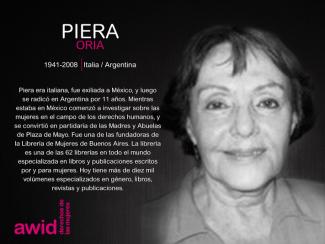
Ottilie was a Namibian feminist activist, educator and politician.
Ottilie was one of the founders of the South West African People's Organisation (SWAPO), the Yu Chi Chan Club (an armed revolutionary group); and the South West African National Liberation Front (SWANLIF). She was also a founder of the Namibian Women’s Association and Girl Child Project.
Throughout her life, Ottilie argued for the right to argue, think, contest, and demand. She mobilized women, organized students and teachers and criticized other comrades for their elitism and their corruption.
Ottilie worked ferociously to dismantle patriarchy, and to create a concrete transformative, liberatory, feminist participatory democracy.
Ottilie often said: “I will rest the day I die.”

Michelle es una feminista de Sudeste Asiático que disfruta de conspirar para congregar a las personas y suscitar conversaciones para el cambio social y el intercambio de conocimientos feministas, a través del arte, la poesía, la música y el juego. Con experiencia en promoción digital y desarrollo de estrategias de comunicación, ha contribuido a iniciativas de derechos digitales, investigaciones en derechos humanos y a la construcción de coaliciones de la sociedad civil a lo largo y ancho del Sudeste Asiático. Posee una licenciatura en Derecho de la Universidad Nacional de Singapur, disfruta de pasear al azar por las calles de la ciudad y le gusta un poquito demasiado el café.
جلسة عامة | إنّها قادمة: بدائل وأشكال متعددة من النسوية وعالم آخر
مع د. فاندانا شيفا ود. ديلار ديريك ونانا أكوسوا هانسو

Sim, é acessível para pessoas com uma variedade diversificada de capacidades auditivas, de movimento, visuais e cognitivas.
Experta en desarrollo social y antropóloga de formación, Mary fue conocida como pionera en la batalla contra la mutilación genital femenina (MGF).
Nacida en 1922 en El Cairo, el trabajo de Mary en el campo del desarrollo comenzó tempranamente, cuando se unió a la Asociación Cristiana de Mujeres Jóvenes (YWCA, por sus siglas en inglés). Fue integrante del Consejo Mundial de Iglesias y se comprometió cada vez más con la cuestión de la salud de las mujeres. Su larga lucha contra la MGF rindió frutos en 2008, cuando Egipto finalmente penalizó este tipo de prácticas.
Se la recuerda como mentora de numerosxs feministas y activistas egipcixs.

Eni Lestari est travailleuse domestique indonésienne à Hong Kong et militante des droits des migrant·e·s. Après avoir échappé à son employeur abusif, elle est passée de victime à mobilisatrice de travailleurs·ses domestiques en particulier, et de travailleurs·ses migrant·e·s plus globalement. En 2000, elle a fondé l'Association of Indonesian Migrant Workers (Association des travailleurs·ses migrant·e·s indonésien·ne·s, ATKI-Hong Kong) qui s'est ensuite étendue à Macao, à Taïwan et en Indonésie. Elle a été coordonnatrice et porte-parole de l'Asia Migrants Coordinating Body (Instance de coordination des migrant·e·s en Asie, AMCB) - une alliance d'organisations de terrain de migrant·e·s à Hong Kong venant d'Indonésie, des Philippines, de Thaïlande, du Népal et du Sri Lanka. Elle est également l'actuelle présidente de l’International Migrants Alliance (Alliance internationale des migrant·e·s), la toute première alliance mondiale de migrant·e·s, d'immigré·e·s, de réfugié·e·s et d'autres personnes déplacées.
Elle a occupé des postes importants dans diverses organisations, en tant que membre actuelle du conseil régional de l’Asia Pacific Forum on Women, Law and Development (Forum Asie-Pacifique sur les femmes, le droit et le développement, APWLD), ancienne membre du conseil d'administration de Global Alliance Against Traffic in Women (Alliance mondiale contre la traite des femmes, GAATW), porte-parole du Network of Indonesian Migrant Workers (Réseau des travailleurs·ses migrant·e·s indonésien·ne·s, JBMI), conseillère d’ATKI-Hong Kong et Macao ainsi que de l’Association of Returned Migrants and Families in Indonesia (Association des migrant·e·s et des familles retourné·e·s en Indonésie, KABAR BUMI). Elle a été une personne-ressource impliquée dans des forums organisés par des universitaires, des groupes interreligieux, des sociétés civiles, des syndicats et bien d'autres, à l’échelle nationale, régionale et internationale.
Elle a aussi participé activement aux assemblées/conférences des Nations Unies sur le développement et les droits des migrant·e·s et été choisie comme intervenante pour l'ouverture de l'Assemblée générale des Nations Unies sur les mouvements massifs de migrant·e·s et de réfugié·e·s en 2016 à New York, aux États-Unis. Des nominations et des prix lui ont par ailleurs été décernés, dont celui d’Inspirational Women de BBC 100 Women, ainsi que le prix Public Hero de RCTI, l’Indonesian Club Award et le Non-Profit Leader of Women of Influence de la Chambre américaine de Hong Kong, et celui de Changemaker de Cathay Pacific.