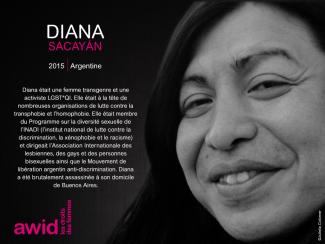
Diana Sacayan
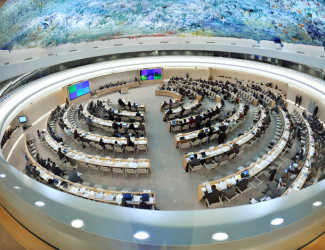
Le Conseil des droits de l'homme (CDH) est un organe intergouvernemental clé du système des Nations Unies, responsable de la promotion et la protection des droits humains autour du globe. Il se réunit trois fois par an en session ordinaire, en Mars, Juin et Septembre. Le Bureau du Haut-Commissariat des Nations Unies aux Droits de l’Homme (HCDH) constitue le secrétariat pour le CDH.
Débat et adopte des résolutions sur les questions globales des droits humains ainsi que sur la situation des droits humains dans des pays particuliers
Examine les plaintes des victimes de violations des droits humains et des organisations activistes, au nom des victimes de violations des droits humains
Nomme des experts indépendants (que l'on connaît sous le nom de « Procédures Spéciales ») pour réviser les cas de violation des droits humains dans des pays spécifiques, ainsi que pour examiner et suivre des questions globales relatives aux droits humains
Prend part à des discussions avec les experts et les gouvernements sur les questions de droits humains
Évalue les bilans des États membres de l'ONU en matière de droits humains tous les quatre ans et demi, dans le cadre de l'examen périodique universel.
La prochaine session du CDH a lieu à Genève, en Suisse, du 30 juin au 17 juillet 2020.
AWID travaille avec des partenaires féministes, progressistes et du domaine des droits humains pour partager nos connaissances clé, convoquer dialogues et évènements avec la société civile, et influencer les négociations et les résultats de la session.

Desde siempre el feminismo sostiene que lo personal es político. El Festival Crear, Resister, Transform generó espacios en los que el feminismo pudo discutir las cuestiones relativas al cuerpo, el género y las sexualidades, y analizar las interconexiones de estos asuntos entendidos como experiencias profundas del cuerpo y, a la vez, un terreno en los que los derechos están en constante disputa y riesgo en la sociedad.
El poder de los movimientos feministas radica en el modo de organizarnos y emprender acciones coordinadas, no solo en nuestras propias comunidades y movimientos, sino también con otras causas y grupos aliados por la justicia social. El espacio brindó la oportunidad de que los movimientos compartieran y reforzaran los procesos de organización y las estrategias tácticas de forma mutua.
La pandemia mundial sanitaria del COVID-19 ha puesto de manifiesto como nunca antes el fracaso del capitalismo neoliberal, expuesto las fallas de nuestros sistemas y acentuado la necesidad de construir nuevas realidades y las oportunidades para ello. Una recuperación económica y social feminista exige el trabajo conjunto. Esta edición, en alianza con Kohl: una publicación para la investigación sobre cuerpo y género, analizará soluciones, propuestas y realidades feministas para transformar nuestro mundo actual, nuestros cuerpos y nuestras sexualidades.
Puedes explorar los artículos en línea o
Descargar en PDF
Thank you for your interest, but the page you're looking for no longer exists.
You can explore more content and updates at https://www.awid.org.

Apreciaremos propuestas de actividades referidas a todo el rango de áreas temáticas e intersecciones que son importantes para los movimientos feministas y por la justicia de género. En el formulario de propuesta podrás marcar más de un tema que se adecúe a tu actividad.
por Chinelo Onwualu
El 2 de septiembre de 2021 lxs increíbles activistas feministas y por la justicia social del festival Crear | Résister | Transform de AWID nos juntamos no solo para compartir estrategias, crear juntxs y transformar al mundo sino también para decir cosas sucias en Twitter.
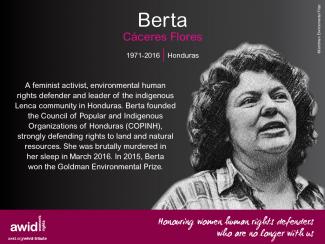
Le Forum international de l'AWID est un événement mondial qui offre aux participant·e·s une occasion unique de se rencontrer, tisser des alliances, de faire la fête et d’apprendre des autres dans une ambiance stimulante, riche en émotions et en toute sécurité.
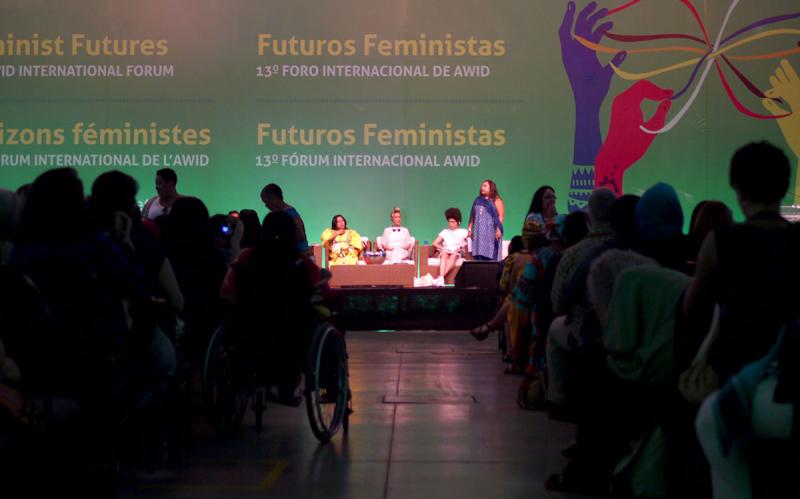
De plus en plus, nous nous efforçons de penser le processus du Forum au-delà des limites de l’événement lui-même. Nous ouvrons des discussions avec des partenaires et renforçons des alliances tout au long de l’année. Nous essayons d’être au plus proches des mouvements locaux pour comprendre leurs difficultés et co-créer des solutions.
Le Forum de l’AWID un espace propice aux discussions en profondeur, qui repousse nos limites internes et externes et favorise le développement personnel et professionnel, en plus de renforcer nos mouvements pour la justice sociale, de genre et les droits des femmes.
Nous envisageons ce moment de rencontre comme une réponse à l’urgence de favoriser un engagement plus marqué et une action mieux concertée entre les organisations féministes, les défenseur·e·s des droits des femmes et les autres activistes de justice sociale. Pour nous, le Forum est plus qu’un événement. Il nourrit nos réflexions respectives et nous aide à cerner des initiatives concrètes dans lesquelles les mouvements féministes et peuvent s’engager avec d’autres acteurs·trices.
Au départ un événement national d’environ 800 personnes, le Forum rassemble aujourd'hui plus de 2 000 féministes, des dirigeant·e·s communautaires, des activistes de justice sociale et des bailleurs de fonds du monde entier.
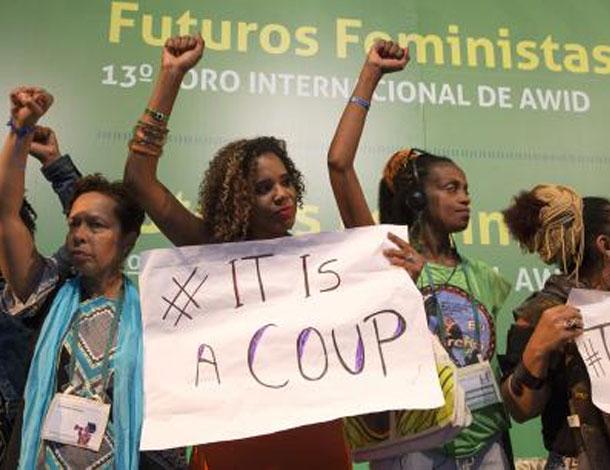
Compte tenu de la complexité du monde d'aujourd'hui, le Forum de l'AWID 2016 ne s'est pas concentré sur un « problème » particulier mais a plutôt exploré comment créer des moyens efficaces de travailler ensemble !
Malgré le contexte difficile dans lequel s’est déroulé le Forum de 2016 (l’épidémie de Zika, la grève au ministère des Affaires étrangères brésilien, la destitution de la présidente Dilma Rousseff et l’instabilité qui a suivi), il a rassemblé plus de 1800 participant-e-s issu-e-s de 120 pays et territoires de toutes les régions du monde.
Téléchargez le rapport d’évaluation
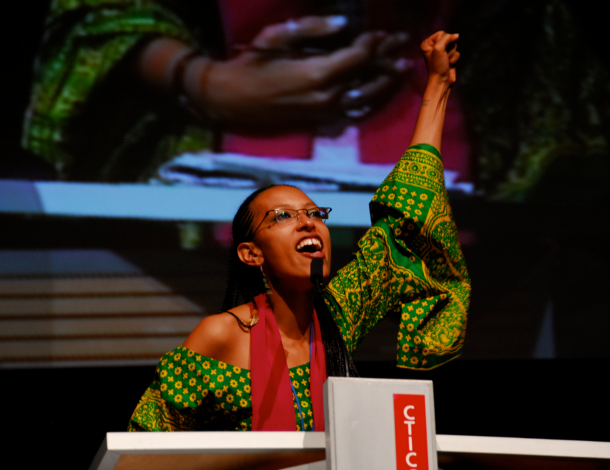
Le 12e Forum de l’AWID s’est tenu à Istanbul en Turquie en 2012, avec pour thème central Transformer le pouvoir économique pour avancer les droits des femmes et la justice. Ce Forum fut le plus important et le plus diversifié de l’histoire, rassemblant quelque 2 239 activistes pour les droits des femmes en provenance de 141 pays différents. Parmi elles-eux, environs 65 % venaient de pays du Sud, près de 15 % étaient des jeunes femmes de 30 ans et moins, alors que 75 % participaient au Forum pour la première fois.
Le Forum s’est focalisé sur la transformation du pouvoir économique pour faire progresser les droits des femmes et la justice en proposant plus de 170 activités incluant des ateliers de formation en économie féministe, en passant par toute une séries d’ateliers de discussion et autres tables rondes solidaires autour de 10 grandes questions cruciales.
Dans l’élan du Forum, nous avons transformé la page qui lui était dédiée en un outil multimédia en ligne qui intègre également les contenus générés par les participant-e-s sur toutes les composantes du Forum.
Visitez l'archive web du Forum 2012
Por primera vez, el Foro de AWID ofrece tres modos de participación:
Lxs participantes se reunirán en Bangkok, Tailandia. ¡No podemos esperar!

Tu veux cette ch*tte? Montre-moi ton doc. (Mais vraiment, où sont tes résultats de tests? En numérique ça ira.)

Nous vous encourageons à utiliser ce matériel pour soutenir votre plaidoyer.
جديد
سيجتمع المشاركات/ون فعليًا في عدد من المواقع خارج مكان انعقاد المنتدى في بانكوك، في أجزاء مختلفة من العالم، في كل يوم من أيام المنتدى. وستكون جميع هذه المواقع ذاتية التنظيم مرتبطة افتراضيًا لموقع انعقاد المنتدى في بانكوك. كما هو الحال مع الأفراد المتواصلون عبر الإنترنت، سيتمكن المشاركون/ات من تسيير النشاطات والمشاركة في المحادثات والاستمتاع ببرنامج غني ومتنوع.
سيتم الإعلان عن مواقع التجمعات في عام 2024.
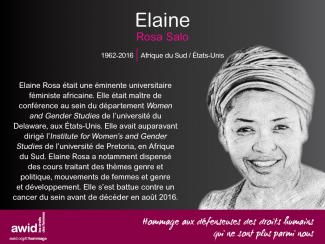
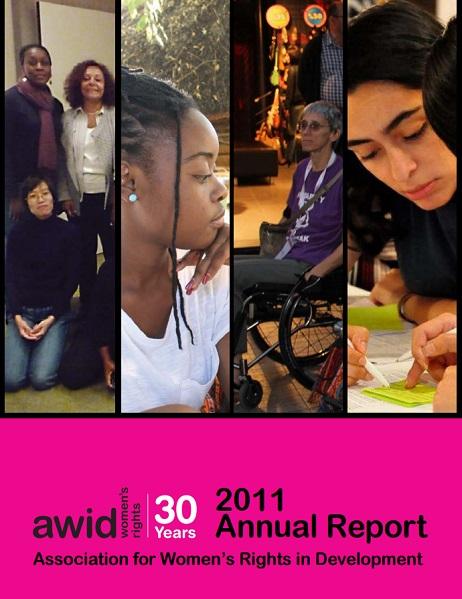
In order to achieve our mission, AWID works through multi-year interconnected programs which encompass a variety of strategies including knowledge production and dissemination, action-research, advocacy, alliance building, and convening strategic dialogues.
Our 2011 Annual Report provides key highlights of our work during the year to contribute to the advancement of women’s rights and gender equality worldwide.
La comunicación del deseo
Anfitrionx: Tendemos a pensar en la comunicación del deseo como algo circunscrito a la intimidad de la alcoba y nuestras relaciones personales. Sin embargo, ¿podemos también pensar este tipo de comunicación como una estructura, una práctica que nutre nuestro trabajo, y cómo somos, y cómo actuamos en el mundo?
LindiweCreo que, desafortunadamente, en el pasado expresar tu sexualidad tenía sus limitaciones. Se te permitía expresarla dentro de los confines del matrimonio, lo cual estaba permitido; siempre el tabú y el estigma estuvieron asociados a todo intento de expresarla de una forma distinta. Cuando se trata de comunicar, obviamente, el hecho de que ciertos estigmas se asocien a la expresión de tu sexualidad o la expresión de tu deseo hace mucho más difícil comunicar eso en la alcoba o en la intimidad con tu pareja. Desde mi experiencia personal creo que, obviamente, si me siento más cómoda expresándome fuera de la alcoba acerca de otros asuntos u otros temas, para mí es más fácil construir esa confianza, porque comprendes la resolución de conflictos con esa persona en particular, comprendes exactamente qué hacer para que esa comunicación sea especial para esa persona en particular. No es fácil. Se hace constantemente en todo tipo de relación, ya sea la pareja, algo casual o solo un momento. Pero creo que la confianza en el afuera puede traducirse definitivamente en cómo comunicas tu deseo.
Manal
Desde la infancia, a una mujer se la cría con eso de: «no tienes permiso para hablar de tu cuerpo, no tienes permiso para hablar de tu deseo», lo que hace recaer una enorme responsabilidad en las mujeres, sobre todo en las niñas en su adolescencia, cuando necesitan expresarse y hablar de estos temas. Por lo tanto, en mi opinión, este es un gran problema. ¿Sabes? Llevo casada más de 25 años, pero todavía, hasta el día de hoy, no puedo hablar de mis deseos. No puedo decir lo que quiero o prefiero, porque es como si no tuviera permitido cruzar esa línea. Es como un pecado, a pesar de ser mi derecho. Lo mismo sucede con todas mis amigas, no pueden expresarse de forma correcta.
Louise
Personalmente creo que expresar nuestros deseos, mis deseos, sea como sea que se expresen, tiene que ver con la otra persona y la mirada que esa otra persona tenga sobre mí. Así que esto también es algo que podemos vincularlo con el cine. Y la mirada que tenga sobre mí misma también: lo que creo que soy como persona, pero también lo que la sociedad espera de mí y mi sexualidad. En el pasado, de algún modo, solía establecer una analogía entre lo que sucede en la alcoba y lo que sucede en el lugar de trabajo, porque a veces se da esta dinámica de poder, lo quiera o no. Y a menudo, la comunicación verbal es más difícil de lo que pensamos. Pero cuando se trata de representarlo en el cine, es un juego absolutamente distinto. Estamos muy lejos de lo que supongo que a todxs lxs presentes nos gustaría ver en la pantalla cuando se trata de comunicar deseos sexuales dentro y fuera de la alcoba.
Anfitrionx: Podemos pensar en el mundo digital como hecho cuerpo: aunque sea virtual, no es menos real. Y eso quedó claro en el contexto del festival de las Realidades Feministas de AWID, el cual se celebró íntegramente en línea. Entonces, ¿qué implica hablar de sexualidad de forma colectiva, política, en los espacios en línea? ¿Navegamos por los espacios virtuales con nuestros cuerpos y afectos y, en dicho caso, cuáles son las distintas consideraciones en juego? ¿Qué implica para la comunicación y la representación?

LindiweLas redes sociales te hacen sentir en comunidad. Cuando expresas lo que quieres o lo que te agrada, habrá alguien que va a estar de acuerdo o en desacuerdo, pero quienes concuerdan contigo te hacen sentir que perteneces a una comunidad. Así que es más fácil lanzarlo al universo, o que otras personas lo vean, y potencialmente que no se te juzguen tanto. Y digo esto muy libremente porque a veces, según lo que expreses, serás humilladx o aprobadx. Pero cuando se trata de la alcoba, hay una intimidad y casi una vulnerabilidad que te expone a ti y a diferentes partes tuyas sobre las cuales no es fácil opinar. Cuando se trata de expresar tu deseo, hablarlo y manifestarlo y, quizás crear un tuit o un posteo en una red social, o incluso darle un «me gusta» y leer a otras comunidades con ideas afines, eso es más fácil que decirle a tu pareja, «así es como quiero recibir placer» o «así quiero que hagas ahora», debido al temor al rechazo. Pero no es eso únicamente. Sólo el aspecto de la vulnerabilidad – permitirte desnudarte a tal punto que la otra persona vea lo que estás pensando, sintiendo, deseando –, creo que es ahí donde radica la diferencia. Siento que en las redes sociales hay más comunidad y es más fácil involucrarse en conversaciones. Mientras que en la habitación, no quieres arruinar el momento necesariamente. Pero creo que eso, en cierta forma, te ayuda a comprender, según la relación con la persona, cómo te relacionarías de allí en más. Así que siempre sé que si intento comunicar algo y no lo logro en el momento, siempre puedo mencionarlo fuera de ese momento y ver cuál sería la reacción para saber cómo abordarlo en el futuro.
Louise¿Sabes? La cuestión con las películas es que no sé si la mirada masculina es intencionada o no. En verdad no lo sabemos. Lo que sí sabemos es la razón por la que la sexualidad en general ha sido tan heteronormativa y se ha centrado en la penetración, y por qué a las mujeres no se les da ningún espacio para realmente pedir algo en el cine: es porque la mayoría de la gente que ha trabajado en esta industria y tomado decisiones en cuanto a, ya sabes, la narración y la edición, han sido varones blancos. La venganza por violación es este género cinematográfico tan extraño que nació en la década de 1970, en donde la mitad de la historia sería sobre una mujer que fue violada por una o varias personas y, en la otra mitad, ella busca vengarse. Generalmente la mujer asesinará y matará a la persona que la violó y, en algunos casos, a otras personas cercanas al violador. Cuando este género comenzaba a surgir y, durante 30 años como mínimo, los varones eran quienes escribían, producían y dirigían esas películas. Por eso también buscamos tanto la representación. Muchxs feministas y pionerxs en la cinematografía queer también usaron el acto de filmar para hacerlo y reivindicar su propia sexualidad. Se me viene a la mente Barbara Hammer, una pionera queer y feminista del cine experimental de los Estados Unidos, que decidió filmar a mujeres teniendo sexo en 16mm., y, al hacerlo, reclamó un espacio dentro de la narrativa que se exhibía en el cine en aquel momento. Y también está el tema de la invisibilización: ahora sabemos, por Internet y el intercambio de conocimientos, que cineastas mujeres y queer vienen intentando y filmando desde los inicios del cine. Recién ahora nos damos cuenta porque tenemos acceso a bases de datos y al trabajo de activistas y curadorxs y cineastas.
Anfitrionx: Y esto abre la conversación sobre la importancia de mantener vivas las historias feministas. Los mundos en línea también han desempeñado un rol crucial en la documentación de las protestas y las resistencias. Desde Sudán hasta Palestina, pasando por Colombia, los feminismos han tomado nuestras pantallas por asalto y desafiado las realidades de la ocupación, el capitalismo y la opresión. Entonces, ¿podemos hablar de la comunicación del deseo, del deseo de algo más, como la descolonización?
ManalQuizás porque en mi pueblo hay apenas 600 habitantes y es una única familia – la Tamimi – no hay barreras entre varones y mujeres. Hacemos todo de manera conjunta. Entonces, cuando comenzamos nuestra resistencia no violenta o cuando nos unimos a la resistencia no violenta en Palestina, nadie discutió si las mujeres debían participar o no. Asumimos un papel muy importante en el movimiento aquí en el pueblo. Pero cuando otros pueblos u otros lugares comenzaron a sumarse a nuestras protestas semanales, algunos hombres pensaban que, si estas mujeres participaban o se unían a las manifestaciones, ellas lucharían con los soldados y entonces serían mujeres fáciles. Algunos hombres que no eran del pueblo intentaron acosar sexualmente a las mujeres. Pero una mujer fuerte que es capaz de enfrentar a un soldado puede también confrontar el acoso sexual. En ocasiones, cuando otras mujeres de otros lugares se suman a nuestra protesta, en un principio son tímidas; no se quieren acercar porque hay muchos hombres. Si quieres participar en la protesta, si quieres ser parte del movimiento no violento, tienes que quitarte todas esas restricciones y todas esas ideas de la cabeza. Tienes que enfocarte simplemente en luchar por tus derechos. Desafortunadamente, la ocupación israelí conoce todo esto. Por ejemplo, la primera vez que me arrestaron, tenía puesta la hijab, entonces intentaron quitármela, intentaron sacarme la ropa, frente a todo el mundo. Había entre 300 y 400 personas y lo intentaron. Cuando me llevaron para interrogarme, el interrogador dijo: «lo hicimos para castigar a otras mujeres a través suyo. Conocemos su cultura». Yo le respondí: «No me importa, creo en lo que hice. Aun si me quitaran toda la ropa, todo el mundo sabe que Manal está resistiendo».
LindiwePienso que incluso desde una perspectiva cultural, lo cual es muy irónico, si observas la cultura en África, antes de ser colonizada, se ve que mostrar la piel no era un problema. Usar piel animal o cuero para protegerte, no era ningún problema y la gente no estaba sexualizada salvo que se diera en un contexto determinado. Pero nos hemos condicionado a decir «deberías cubrirte» y cuando no te cubres, quedas expuesta y, por lo tanto, estarás sexualizada. La desnudez se sexualiza en lugar de estar simplemente desnuda; no quieres que a una niña pequeña la vean desnuda. ¿Qué tipo de sociedad nos hemos condicionado a ser si vamos a sexualizar a alguien que está desnudx fuera del contexto del vínculo sexual? Pero el entorno definitivamente juega un papel importante, porque tu madre y tu padre y tus abuelas y abuelos y tías y tíos dicen «no, no te vistas de manera inapropiada», o «no, eso es muy corto». Entonces, primero escuchas todo eso en el hogar, y luego, en el momento en que te expones al exterior, según el entorno, ya sea eurocéntrico o más occidentalizado que el que estás acostumbrada, entonces eres un poco libre de hacerlo. E incluso entonces, por más libre que seas, eso trae consigo muchas otras cuestiones en términos de abucheos y la gente que todavía sexualiza tu cuerpo. Puedes vestir una falda corta, y alguien se siente con derecho de tocarte sin tu permiso. Hay tanto asociado a la regulación y el control sobre el cuerpo de las mujeres, y la narrativa comienza en casa. Y luego sales a la comunidad, a la sociedad, y la narrativa se perpetúa, y te das cuenta de que la sociedad te sexualiza en general, sobre todo si eres una persona de color.

Anfitrionx: Por último, ¿cómo puede nuestra resistencia traspasar lo que está permitido? ¿Hay un lugar para el placer y el gozo para nosotrxs y nuestras comunidades?
LouiseEncontrar placer en la resistencia y resistencia en el placer; en primer lugar, para mí está la idea del cine de guerrilla o el acto de filmar cuando se supone que no deberías o cuando alguien te dijo que no lo hagas, lo cual es el caso de muchas realizadoras, incluidas lxs realizadorxs queer, en el mundo de hoy. Por ejemplo, en el Líbano, que es un terreno cinematográfico que conozco muy bien, la mayoría de las historias de lesbianas que he visto las han rodado estudiantes en formatos muy cortos «sin valor de producción», como se diría en Occidente: sin dinero, debido a la censura en el ámbito institucional, pero también en la esfera familiar y privada. Creo que filmar lo que sea, pero también filmar el placer y el placer en la narrativa lesbiana, es un acto de resistencia en sí mismo. Muchas veces, tan solo tomar una cámara y conseguir que alguien edite y que alguien interprete es sumamente difícil y requiere de mucha convicción política.
LindiweTengo un grupo de apoyo para casos de violación. Intento asistir a las mujeres para que se restablezcan desde una perspectiva sexual: si quieren volver a tener intimidad, que los traumas del pasado no influyan a la hora de seguir adelante. No es fácil, pero es individual. Por eso siempre comienzo por comprender el cuerpo. Creo que cuanto más lo comprendes y lo amas y más orgullo sientes por él, serás mucho más capaz de recibir a alguien en ese espacio. Lo denomino entrenamiento en la sensualidad, donde hago que comiencen a verse a sí mismas no como objetos sexuales, sino como objetos de placer y deseo que pueden ser intercambiables. De ese modo eres tan digna de recibir como de dar. Pero no solo desde un punto de vista psicológico, también es físico. Cuando sales de la ducha, sales de la tina, y te pasas loción por el cuerpo, miras cada parte de tu cuerpo, sientes cada parte de tu cuerpo, sabes cuando hay cambios, conoces tu cuerpo tan bien que si te sale un grano nuevo en la rodilla, eres tan consciente de ello porque hasta hace unas horas no lo tenías. Con este tipo de cosas intento hacer que las personas se amen a sí mismas desde su interior, se sientan que son dignas de recibir amor en un espacio seguro, así las guío hacia la reivindicación de su sexualidad y su deseo.
Manal
¿Sabes? Comenzamos a ver mujeres de Nablus, de Jerusalén, de Ramallah, incluso de las 48 zonas ocupadas, que tienen que conducir entre tres y cuatro horas solo para sumarse a las protestas. Luego intentamos ir a otros lugares, hablar con las mujeres, decirles que no sean tímidas, que simplemente tienen que creer en sí mismas y que no hay nada de malo en lo que estamos haciendo. Puedes protegerte, entonces, ¿qué tiene de malo participar o sumarte? Cuando les pregunté a algunas de ellas por qué se habían sumado, respondieron, «si las mujeres Tamimi pueden, nosotras también». Con toda honestidad, escuchar esa respuesta me hizo muy feliz porque éramos una especie de modelo para otras mujeres. Si tengo que defender mis derechos, deberían ser todos mis derechos, no apenas uno o dos. Los derechos no se dividen.
