
Yelena Bonner

Les jeunes activistes féministes jouent un rôle crucial au sein des organisations et des mouvements pour les droits des femmes à travers le monde. Ce sont elles qui soulèvent les nouveaux problèmes auxquels les féministes sont confrontées aujourd'hui. Leur force, leur créativité et leur adaptabilité sont vitales pour assurer la viabilité des organisations féministes.
Pourtant, elles sont confrontées à toute une série d’obstacles particuliers, notamment l'accès limité au financement et au soutien, le manque de possibilités de renforcement des capacités et une augmentation considérable des agressions sur les jeunes défenseuses des droits humains. Ces obstacles entraînent un manque de visibilité qui rend leur intégration et leur participation effective au sein des mouvements pour les droits des femmes encore plus difficiles.
Le Programme d’activisme des jeunes féministes de l'AWID a été mis en place pour veiller à ce que les voix des jeunes femmes soient entendues et représentées dans le discours féministe. Nous voulons faire en sorte que les jeunes féministes aient un meilleur accès à du financement, à des opportunités de renforcer leurs capacités et aux processus internationaux.
En plus de soutenir directement les jeunes féministes, nous travaillons également avec des activistes des droits des femmes de tout âge pour élaborer des modèles et des stratégies d’organisation multigénérationnelles plus efficaces.
Nous souhaitons que les jeunes féministes puissent jouer un rôle actif dans les prises de décisions qui concernent leurs droits. Nos actions incluent :
Favoriser la mise en commun et le partage d'informations par la Plateforme de jeunes féministes. Étant donné l'importance des médias en ligne pour le travail des jeunes féministes, notre équipe a lancé la Plateforme de jeunes féministes en mai 2010. Elle a pour objectifs d’échanger des renseignements, de renforcer les capacités des membres par le truchement de webinaires et de discussions en ligne, et d'encourager la consolidation d’une communauté de jeunes féministes.
Soutenir la recherche et le renforcement des connaissances sur l'activisme des jeunes féministes, pour accroître la visibilité et l'influence de leur activisme au sein et entre les mouvements pour les droits des femmes et auprès d'autres acteurs-trices clés, tels les donateurs.
Faire la promotion de la collaboration multigénérationnelle, en explorant de meilleures façons de travailler ensemble.
Inciter les jeunes féministes à s’engager dans les processus internationaux relatifs au programme de développement, notamment ceux des Nations Unies.
S’assurer leur collaboration dans tous les domaines prioritaires de l'AWID, y compris le Forum, pour faire en sorte que leurs contributions, leurs perspectives, leurs besoins et leur activisme se traduisent dans les débats, les politiques et les programmes qui les concernent.
If you wish to save your responses and come back to the survey later, you are able to do this whenever needed. KOBO will save your draft responses on the top left corner of the survey page and reload your record when you return to the survey. Just make sure to continue from the same computer and browser.
Ces femmes transgenres ont été assassinées en raison de leur activisme et de leur identité de genre. Les lois reconnaissant les droits des personnes trans* sont insuffisantes et, lorsqu’elles existent, les mesures prises pour protéger les droits de ces personnes sont quasi inexistantes. Nous vous invitons à vous joindre à nous pour honorer la mémoire de ces défenseuses, leur activisme et l’héritage qu’elles nous ont laissé. Faites circuler ces mèmes auprès de vos collègues et amis ainsi que dans vos réseaux et twittez en utilisant les hashtags #WHRDTribute et #16Jours.
S'il vous plaît cliquez sur chaque image ci-dessous pour voir une version plus grande et pour télécharger comme un fichier


Pronto brindaremos esta información. ¡Mantente sintonizadx!
Cooperativa Textil Nadia Echazú

Si por algún motivo deseas que retiremos y borremos tus respuestas, tienes todo el derecho a hacerlo. Puedes contactarnos a través del formulario disponible aquí indicando «Encuesta WITM (¿Dónde está el dinero?) » en el título del mensaje, y procederemos a retirar y borrar tu respuesta.
Cette section présente les principales ressources que l’AWID recommande afin que vous puissiez mener votre propre recherche WITM.
Dans cette section
Outils en ligne
Quand vous aurez rassemblé ces ressources, vous pourrez estimer les coûts de votre recherche à l’aide de notre Fiche de travail « Êtes-vous prêts-es ? »
No, no es necesario que seas afiliadx de AWID para participar en el Foro, pero lxs afiliadxs de AWID tienen un descuento en el costo de inscripción, y varios otros beneficios.
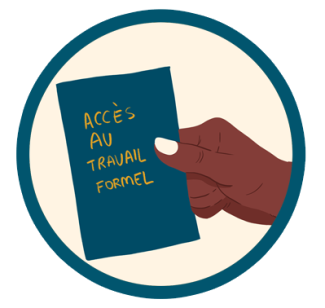
Seul·es 18 % des trans et travestis en Argentine ont accès à un emploi formel.

Oui, n’hésitez pas à le faire! Nous vous encourageons à communiquer le lien vers l’enquête à vos réseaux. Plus les points de vue exprimés et collectés seront divers, plus notre compréhension du paysage du financement de l’organisation des mouvements féministes sera exhaustive.
Les interviews génèrent des renseignements détaillés que vous aurez du mal à obtenir à travers un sondage. Le sondage est surtout axé sur les données quantifiables et les questions fermées,par contre les interviews permettent d’obtenir les opinions d’expert-e-s comme des activistes et des donateurs, tout en utilisant des questions ouvertes qui précisent le contexte entourant les données résultant du sondage.
Dans cette section
- Conseils d’ordre général
1. Avant de mener vos interviews
2. Pendant les interviews- Interviews spécialisées
1. Interviews auprès des donateurs
2. Interviews auprès des activistes et des organisations de droits des femmes- Résultats préliminaires
Envoyez aux personnes que vous allez interviewer une note de synthèse qui décrit les objectifs des interviews et de l’ensemble de votre recherche, en plus d’une liste de questions.
Ces personnes pourront ainsi préparer leurs réponses aux questions plus complexes et obtenir les renseignements qu’elles n’ont peut-être pas sous la main.
Ne fondez pas vos questions sur des hypothèses au sujet des connaissances de la personne interviewée.
Tentez plutôt de préciser ce qu’elle sait, ce qui produit également des informations
- NE DEMANDEZ PAS : « Compte tenu des tendances actuelles de financement en Suisse, est-ce que vous êtes au courant de certaines occasions de collaboration ? » Cette question présume que la personne interviewée connaît les tendances de financement et que sa compréhension de ces tendances est identique à la vôtre.
- DEMANDEZ : En premier lieu, « Quelle est votre compréhension des tendances de financement actuelles en Suisse ? », suivie de « Est-ce que vous êtes au courant de certaines occasions de collaboration ? » Ceci révèlera ce que la personne comprend, vous donnant encore plus d’informations que la première question.
Les interviews auprès des donateurs vous permettront d’approfondir vos relations avec eux, ce qui sera utile lorsque vous entreprendrez les activités de plaidoyer qui succèderont à votre recherche. Vous en tirerez également une connaissance plus poussée des processus de prises de décisions adoptés par les bailleurs de fonds.
Suggestions de thèmes à aborder lors des interviews avec les donateurs :
Les interviews auprès d’activistes et d’organisations de droits des femmes vous renseigneront sur leurs réalités sur le terrain. Ici encore, ces interviews vous permettront d’approfondir vos relations qui peuvent être intégrées aux plaidoyers, particulièrement en vue de favoriser la collaboration entre donateurs et activistes.
Suggestions de thèmes à aborder lors des interviews avec les activistes et les organisations de droits des femmes :
Pendant votre recherche WITM, nous vous recommandons de procéder à l’analyse des résultats préliminaires. La présentation de vos résultats préliminaires offre l’occasion de mener d’autres interviews et de recueillir des réactions sur votre processus de recherche et sur les résultats initiaux. Ces réactions peuvent être intégrées à votre recherche finale.
L’AWID organise des « rencontres WITM » pour partager les résultats préliminaires issus des données de sondage et des interviews. Ces rencontres permettent aux personnes qui y prennent part (activistes, organisations de droits des femmes et donateurs) de débattre et de discuter des résultats, de préciser le contexte, de rehausser le sentiment d’appropriation parmi les membres du mouvement et de fournir plus de commentaires en vue de la recherche finale.
Par exemple, l’AWID a profité du Pôle de mobilisation des ressources (RMH) pour les droits des femmes autochtones, dans le cadre du World Summit on Indigenous Philanthropy (Sommet mondial sur la philanthropie autochtone) pour lancer une présentation de ses résultats préliminaires.
Voir la présentation donnée lors du RMH (en anglais)
4. Recueillez et analysez vos données

• 1,5 - 3 mois
• 1 personne (ou plus) chargée de la recherche
• Liste d’organisations, de donateurs et d’activistes agissant à titre consultatif
• Questions d'interview que vous aurez préparées
• Note conceptuelle (Vous pouvez utiliser de cadre de référence que vous avez déjà préparé)
• Exemples d’interviews auprès des donateurs
• Exemples d’interviews auprès d’activistes et d’organisations de droits des femmes
4. Recueillez et analysez vos données
6. Menez une recherche documentaire
Para preguntas adicionales, por favor escríbenos utilizando nuestro formulario de contacto. Selecciona «14o Foro de AWID» como asunto de mensaje.
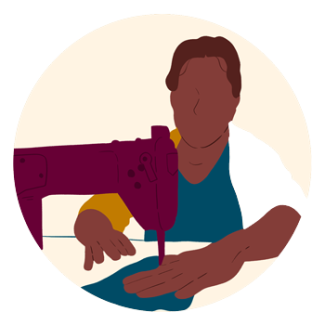
THE TRANS EMPLOYMENT QUOTA
sanctioned by law is not being respected by companies and employers


لمشاركة تجاربكم/ن المعاشة بما يتعلق بتمويل منظمتكم/ن
We believe that the economy, the market, the financial system and the premises upon which they are built are critical areas of feminist struggle. Thus, our vision for a just economy goes beyond promoting women’s rights and empowerment in the market, to evaluating the role of gendered oppressions in shaping economic arrangements and transforming these to ensure gender and economic justice.
We are neither starting from zero, nor alone in this attempt to put forward feminist propositions for a just economy. Many of the propositions herein have been advanced or exist in practice within diverse communities challenging and resisting the mainstream market and growth-based economic systems.
It is also very important to note that there is growing awareness of the fact that micro solutions are not always the answer to macro problems, even if they represent important spaces for resistance and movement building and that there may be limitations to particular alternatives to address the injustices of the current capitalist system at a global scale.
However, feminist alternatives for a just economy are critical to create dents in the system and draw lessons for transformative systemic change. Here we cannot presume to offer a comprehensive nor a complete account on how to create a just feminist economic model, or even models. But we can, but rather draw from cross-movement dialogue with trade unions, environmental, rural and peasants movements, to articulate the propositions for the journey towards this vision.
The neoliberal model driving the global economy has repeatedly demonstrated its inability to address the root causes of poverty, inequalities, and exclusion. Neoliberalism, and has in fact contributed to the very creation and exacerbation of these injustices.
Characterized by globalisation, liberalization, privatisation, financialisation and conditional aid, mainstream development policies over the past 3 decades have wreaked havoc on livelihoods over the past 3 decades. These policies have also sustained a trajectory of deepening inequalities, gendered injustices, and environmental destruction that the world can no longer afford to endure.
While there are people those who assert that economic growth, facilitated by giving free reign to corporations and businesses, can sustain a tide that will (eventually) raise all boats.
However, the notion of development that has prevailed for the past decades, built for the most part upon the premise of limitless economic growth, is going through an ideological crisis.
The myth of economic growth as a panacea for our problems is being debunked.
