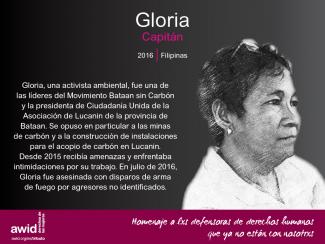
Gloria Capitán
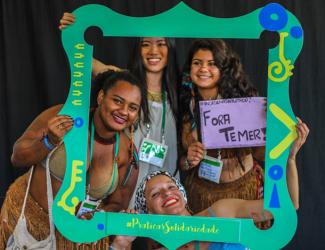
Les jeunes activistes féministes jouent un rôle crucial au sein des organisations et des mouvements pour les droits des femmes à travers le monde. Ce sont elles qui soulèvent les nouveaux problèmes auxquels les féministes sont confrontées aujourd'hui. Leur force, leur créativité et leur adaptabilité sont vitales pour assurer la viabilité des organisations féministes.
Pourtant, elles sont confrontées à toute une série d’obstacles particuliers, notamment l'accès limité au financement et au soutien, le manque de possibilités de renforcement des capacités et une augmentation considérable des agressions sur les jeunes défenseuses des droits humains. Ces obstacles entraînent un manque de visibilité qui rend leur intégration et leur participation effective au sein des mouvements pour les droits des femmes encore plus difficiles.
Le Programme d’activisme des jeunes féministes de l'AWID a été mis en place pour veiller à ce que les voix des jeunes femmes soient entendues et représentées dans le discours féministe. Nous voulons faire en sorte que les jeunes féministes aient un meilleur accès à du financement, à des opportunités de renforcer leurs capacités et aux processus internationaux.
En plus de soutenir directement les jeunes féministes, nous travaillons également avec des activistes des droits des femmes de tout âge pour élaborer des modèles et des stratégies d’organisation multigénérationnelles plus efficaces.
Nous souhaitons que les jeunes féministes puissent jouer un rôle actif dans les prises de décisions qui concernent leurs droits. Nos actions incluent :
Favoriser la mise en commun et le partage d'informations par la Plateforme de jeunes féministes. Étant donné l'importance des médias en ligne pour le travail des jeunes féministes, notre équipe a lancé la Plateforme de jeunes féministes en mai 2010. Elle a pour objectifs d’échanger des renseignements, de renforcer les capacités des membres par le truchement de webinaires et de discussions en ligne, et d'encourager la consolidation d’une communauté de jeunes féministes.
Soutenir la recherche et le renforcement des connaissances sur l'activisme des jeunes féministes, pour accroître la visibilité et l'influence de leur activisme au sein et entre les mouvements pour les droits des femmes et auprès d'autres acteurs-trices clés, tels les donateurs.
Faire la promotion de la collaboration multigénérationnelle, en explorant de meilleures façons de travailler ensemble.
Inciter les jeunes féministes à s’engager dans les processus internationaux relatifs au programme de développement, notamment ceux des Nations Unies.
S’assurer leur collaboration dans tous les domaines prioritaires de l'AWID, y compris le Forum, pour faire en sorte que leurs contributions, leurs perspectives, leurs besoins et leur activisme se traduisent dans les débats, les politiques et les programmes qui les concernent.
Nouveaux
Les participant.e.s se rassembleront physiquement sur un certain nombre de sites en dehors du site de Bangkok, dans différentes parties du monde, chaque jour du Forum. Tous ces sites auto-organisés seront virtuellement connectés au site du Forum à Bangkok pour des sessions conjointes et hybrides. Tout comme pour les personnes se connectant en ligne, les participant.e.s au Hub pourront animer des sessions, participer à des conversations et profiter d'un programme riche et diversifié.
Les lieux de rencontre seront annoncés en 2024.
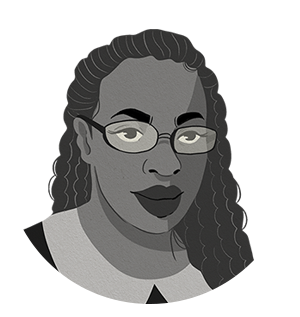
Chinelo Onwualu es una consultora editorial que posee casi 10 años de experiencia en la elaboración de comunicaciones estratégicas para entidades sin fines de lucro de todo el mundo. Algunos de sus clientes han sido ActionAid Nigeria, The BBC World Trust, Open Society Initiative for West Africa (OSIWA) y AWID. Posee una maestría en Periodismo de la Universidad de Siracusa, y ha trabajado como escritora, editora e investigadora en Nigeria, Canadá y Estados Unidos. Es además la editora de no ficción de la revista Anathema y cofundadora de Omenana, una revista de ficción especulativa africana. Sus cuentos se han publicado en diversas antologías galardonadas y ha sido nominada para los Premios Británicos de Ciencia Ficción, el Premio Nommo a la Ficción Africana Especulativa y el Premio Africano del Día de la Narrativa Breve. Es de Nigeria y reside en Toronto con su pareja e hijx.

Intensificamos los preparativos para el 13º Foro Internacional de AWID, pusimos mucha energía en los procesos de la Agenda 2030 y del financiamiento para el desarrollo, y hemos continuado nuestro trabajo diario y central en nuestras áreas prioritarias
En respuesta a esto, estamos saliendo de nuestros compartimentos estancos.
En todo el mundo, los movimientos por los derechos de las mujeres y otros movimientos están logrando articular cada vez más la naturaleza sistémica e interseccional de estos problemas y de muchos otros.


Panel : Dans le cadre d'une table ronde, explorez une question ou un défi sous différents angles, ou partagez un apprentissage ou une expérience, puis posez des questions à l'auditoire, si le temps le permet.
Talk-show : Organisez une conversation plus spontanée dans le cadre d'un talk-show. Les talk-shows peuvent être une conversation entre plusieurs personnes, animée par un.e présentatrice.eur de talk-show. Les questions du public peuvent déterminer l'orientation de la conversation.
Discussion : Elles peuvent prendre la forme de cafés du monde, de cercles restreints ou fishbowl et d'autres méthodologies qui facilitent l'implication active des participant.e.s dans les conversations. Il s’agit d’un format très participatif.
Atelier : Sessions interactives qui invitent les participant.e.s à acquérir de nouvelles compétences dans tous les domaines de la vie et de l'activisme.
Session stratégique : Il s'agit d'une invitation à réfléchir à une question ou à une stratégie, en profondeur, avec d'autres personnes. Un espace pour apprendre les un.e.s des autres : ce qui fonctionne, ce qui ne fonctionne pas, et comment développer de nouvelles stratégies collectives pour créer les mondes dont nous rêvons.
Cercle de partages (également connu sous le nom de Birds of a Feather) : Idéal pour les petits groupes, dans un cadre plus intime, afin d'écouter les un.e.s et les autres, de susciter la discussion et d'aborder avec soin des sujets qui peuvent être spécifiques, sensibles et complexes.
Arts - Atelier participatif : Activités participatives impliquant les arts et l'expression créative. Qu'il s'agisse d'art visuel, de théâtre, de film, de peinture murale, de danse, de musique, d'artisanat collectif ou de création artistique, etc., nous accueillons toutes les idées célébrant l'art et la créativité féministes en tant que formes de changement social, de guérison, d'expression et de transformation.
Arts - Performances, installations et expositions : Nous accueillons les propositions qui offrent aux participant.e.s du Forum de nouvelles expériences et perspectives, qui élargissent nos horizons et qui nous incitent à penser, ressentir et organiser d'une nouvelle manière.
Guérison : Diverses activités adaptées à la fois aux groupes et aux individus, allant de l'apprentissage de techniques de relaxation à la discussion sur la prévention de l'épuisement professionnel, des pratiques de soins du corps, de l'esprit et de l'âme tenant compte des traumatismes à la guérison et des failles au sein de nos mouvements.
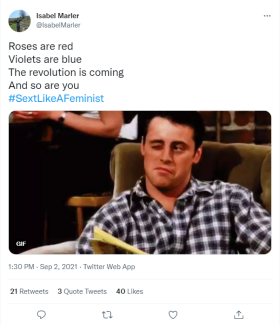
Les fleurs sont en bouton
Le printemps est ici
La révolution gronde
Et toi tu gémis
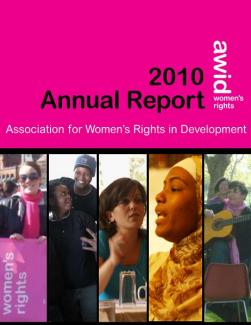
Nuestro Informe Anual 2010 pone en relieve nuestros acontecimientos y el impacto de nuestro trabajo durante el año.
Pueden leer como estamos traduciendo nuestra visión y misión en estrategias y actividades que hemos logrado en colaboración con miembros, socias y aliadas de AWID para avanzar los derechos de las mujeres y la igualdad de género a través del mundo.
Este informe también incluye vínculos a las últimas publicaciones de AWID.
Obtén más información sobre los próximos eventos de la CSW69 que AWID está coorganizando
Pour la première fois, le Forum de l'AWID propose trois modes de participation :
Les participant.e.s se réuniront à Bangkok, en Thaïlande. Nous sommes impatient.e.s de vous y retrouver!
Stephanie Bracken is a feminist who is dedicated to building and supporting strong systems that meet the needs of the moment and the people who interact with them, and serve principles of justice. She holds a Master of Human Rights from the University of Sydney and a BA in Gender Studies, History, and Philosophy from McGill University, and has experience working with feminist and social justice organizations on monitoring, evaluation & learning, strategic work planning, governance, project management, and building operational systems and processes. Stephanie is based in Tiohtià:ke/Montreal, where she enjoys singing with others, camping, fiber arts, and spending time with her kids and community.
Organizada por MADRE, Fondo Semillas y Iglesia Feminista
📅 Miércoles, 29 de abril
🕒 4:00 a 5:30 pm
🏢 Melbourne Convention and Exhibition Centre, Sala #204
نرحب بالطلبات عبر مجموعة كاملة من المواضيع والتقاطعات المهمة للحركات النسوية وحركات العدالة الجندرية.
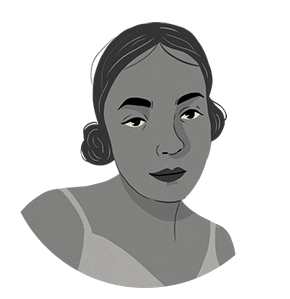
Zuhour Mahmoud es la estratega de comunicación de Kohl. Es una escritora y editora y una DJ ocasional radicada en Berlín. Su trabajo se centra en los enfoques críticos a la música, la tecnología y la política y sus ciclos de vida en la esfera digital.
Margarita es una feminista y activista por los derechos de las personas LGBTIQA de América Latina. Sus pasiones son la transformación social y el bienestar colectivo. Posee títulos en Psicología, Comunicaciones y Administración Pública, y varias certificaciones en Política Pública, Liderazgo, Gestión y Toma de Decisiones. Como profesional, ha tenido una dilatada experiencia con organizaciones de base, ONG nacionales y regionales, universidades y el sector público, en los que se ha abocado a la facilitación, la capacitación, la incidencia política, las comunicaciones y la evaluación de políticas.
A feminist analysis of authoritarianism in the SWANA region: how states sell an image of progress abroad while repressing citizens at home – and the global systems that fuel it.
Why this report matters nowDownload the report (EN)
A research project by AWID and RESURJ
Available in English now. Arabic and French coming soon!