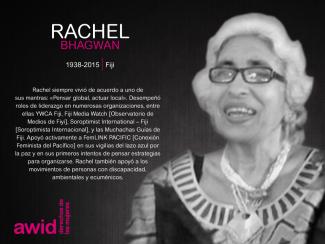
Rachel Bhagwan
Esta sección de análisis especial ofrece un análisis feminista crítico y acceso a los recursos clave relacionados con la «protección de la familia» en los espacios internacionales de derechos humanos.
Durante los últimos años, venimos observando una nueva y preocupante tendencia en el ámbito internacional de derechos humanos, donde se están empleando discursos sobre la «protección de la familia» para defender violaciones cometidas contra miembros de la familia, de modo de reforzar y justificar la impunidad y para coartar la igualdad de derechos en el seno de la familia y la vida familiar.
La campaña para «proteger a la familia» es impulsada por proyectos conservadores que tienen como fin imponer interpretaciones «tradicionales» y patriarcales de familia; quitando los derechos de las manos de sus miembros para ponerlos en las de la institución «familia».
Desde 2014 un grupo de estados opera como bloque en espacios de derechos humanos, bajo el nombre «Group of Friends of the Family» [Grupo de amigos de la familia], y a partir de entonces se han aprobado resoluciones sobre la «Protección de la familia» todos los años.
Esta agenda se ha extendido más allá del Consejo de Derechos Humanos (HRC, por sus siglas en inglés). Hemos visto cómo el lenguaje regresivo sobre «la familia» se ha introducido en la Comisión de la Condición Jurídica y Social de las Mujeres (CSW, por sus siglas en inglés), y hemos asistido a intentos por incluir este lenguaje en las negociaciones sobre los Objetivos de Desarrollo Sostenible.
AWID trabaja con asociadxs y aliadxs para resistir conjuntamente las agendas regresivas de «Protección de la familia» y otras, y para defender la universalidad de los derechos humanos.
En respuesta a la creciente influencia de actores regresivos en los espacios de derechos humanos, AWID se ha unido con aliadxs para formar el Observatorio de la Universalidad de los Derechos (OURs, por sus siglas en inglés). OURs es un proyecto colaborativo que monitorea, analiza y comparte información sobre iniciativas anti-derechos tales como la «Protección de la familia».
Derechos en Riesgo, el primer informe de OURs, traza un mapa de los actores que conforman el cabildeo global anti-derechos e identifica sus discursos y estrategias principales, señalando los efectos que estos discursos y estrategias están teniendo sobre nuestros derechos humanos.
El informe expone a la «Protección de la familia» como una agenda que ha promovido la colaboración entre una amplia gama de actores regresivos en las Naciones Unidas. La describe como un marco estratégico que aloja «múltiples posiciones patriarcales y anti-derechos, cuyo marco, a su vez, apunta a justificar e institucionalizar estas posiciones».
Los actores anti-derechos adoptan una estrategia doble. Además de atacar abiertamente al sistema multilateral, los actores anti-derechos también socavan los derechos humanos desde adentro. Se involucran con el fin de cooptar procesos, consolidar normativas regresivas, y erosionar responsabilidades.
Get started with these resources.
COP30 Political Education Toolbox Play the Climate Justice Organizing Deckgame
Read the Feminist Economic Alternatives Brief Download the Climate Justice Zine
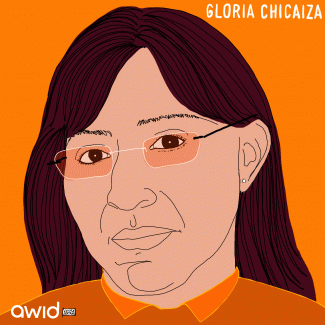
Gloria Chicaiza, an Ecuadorian social and environmental activist, was a fervent defender of land and water. She defied the status quo, fighting against a model of development based on extraction and worked tirelessly for ecological justice and the rights of communities affected by mining.
In diverse areas of Ecuador, Gloria was part of resistance actions in favour of protecting the ecosystem. With passion and dedication, Gloria supported the indigenous and environmental movement, its communities and organizations who oppose mining projects and protect their territories and collective life projects. She spoke out, in local and international foras, against the criminalization of dissent and resistance, the pressure and violence being enacted against community activists, in particular, women human rights defenders and in support of community led efforts for food sovereignty and sustainability.
She was the Mining Justice Coordinator at Acción Ecológica, member of the Latin American Network of Women Defenders of the Social and Environmental Rights and a Board member at the Observatory of Mining Conflicts of Latin America.
In October 2010, Gloria was accused by the mining company Curimining / Salazar Resources S.A. (with Headquarters in Vancouver, Canada) of sponsoring an act of terrorism, sabotage and illegal association to commit a crime. Acción Ecológica believed this to be “in retaliation for her work of denouncing the impacts of mining activities in the country.”
In 2014, Gloria supported the coordination of a delegation to the UN COP 20 Dialogue on Climate Change. The group consisted of 25 Indigenous women from Latin America.
Gloria passed away due to complications from a lung transplant on December 28, 2019. She is remembered for her resistance and tireless work.
"The fastest way to achieve sustainability is still resistance." - Gloria Chicaiza (2010 interview)
“Para GLORIA. GLORIA Agua. GLORIA Tierra. GLORIA Madre. GLORIA Revolución. GLORIA Hermana. GLORIA Cielo. GLORIAmiga. GLORIAstral. Thank you for weaving us together.” -Liliana Gutierrez
“Thank you Glorita, for sustaining hope, for keeping the fabric strong, for connecting the community, for the united hands, for solidarity, thank you Glorita for standing with us in the most difficult moments. Thank you for teaching us that throughout life, nobody gets tired.” (Chakana News)
“Gloria Chicaiza cherished and flourished in being one of many. And as humble as she was, she had an uncanny ability to lead and maintain a steady and thunderous beat, a life-affirming pulse that guided, mobilized, and inspired communities and networks in the protection of Mother Earth. She denounced all forms of violence against cuerpos-territorios. She endorsed el buen vivir.” - Gabriela Jiménez, Latin America Partnerships Coordinator, KAIROS
“Thank you Gloria Chicaiza from infinity we are sure that you will continue to support our struggle. You who continued to struggle with us despite your failing health. You will live on in the forests and the water that you defended with such courage. You will live on in our hearts.”- The community of Intag in Ecuador
Cuando miles de feministas se unen, creamos una fuerza arrolladora de solidaridad que tiene el poder de cambiar el mundo. El Foro de AWID será un momento para que descansemos y nos recuperemos juntas, nos conectemos más allá de las fronteras y descubramos nuevas y osadas direcciones estratégicas.
La fecha y el lugar se anunciarán el próximo año, tan pronto como podamos. Estamos emocionades y sabemos que ustedes también lo están. ¡Manténganse al tanto!
¡Asegúrate de seguirnos en las redes sociales y suscríbete a nuestra lista de correo para mantenerte al día!
Resources to support feminist movements, policy-makers, and allies!
We know that first time travel can be exciting but also stressful. In recognition of the many challenges involved, we will be providing more information and details about how to get to Bangkok when Registration opens early next year.
Dans cette BD illustrée par Sophia, suivez les aventures de notre super-héroïne féministe qui dément les récits des antidroits dans le monde entier et sauve la mise aux mouvements féministes.
Movements marching globally for climate justice.
📅 Saturday, November 15, 2025
📍 Multiple Locations
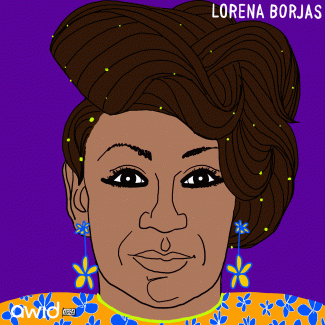
Lorena Borjas, una mujer trans latina y activista, vivía y trabajaba en el barrio de Jackson Heights de Queens, en la ciudad de Nueva York. En esas calles, cuidó de su comunidad durante años, defendiendo los derechos de las personas trans e inmigrantes, apoyando a lxs sobrevivientes del tráfico humano y del abuso, y haciendo campaña por los derechos de lxs trabajadorxs sexuales y de las personas que viven con VIH y SIDA.
Lorena era fuerte e incansable en su lucha por apoyar, defender y proteger a quienes son más marginalizadxs y discriminadxs por la transfobia, la misoginia y el racismo.
«Ella nos empujaba a brillar auténticamente, a convertirnos en un grito de subversión que dice “Aquí estoy, y merezco felicidad también”.» - Cecilia Gentili, activista trans amiga de Lorena
Luego de haber enfrentado ella misma numerosos traumas y dificultades como mujer trans inmigrante y víctima de tráfico humano, recabó conocimientos y memoria emocional de la fuente de sus propias experiencias para ayudar a construir y fortalecer la comunidad de la cual era parte, y que era parte de ella. Algunas de las formas en que llevó esto a cabo fue organizando y movilizando apoyo, que abarcaba desde proveer preservativos y conectar a las mujeres trans con distintos servicios sociales, hasta armar una clínica para el testeo de VIH en su propia casa.
«Era un alma tan bella que ayudaba a otrxs, aun cuando su propio camino era difícil y doloroso como inmigrante, como inmigrante trans. Creía que la comunidad trans necesitaba amor, aceptación, y compasión, y lo daba todo.» - Luchia Dragosh, supervisora de producción de QPTV de un documental sobre Lorena
En sus más de 25 años de activismo, también fundó con Chase Strangio (abogadx y activista por los derechos trans) el Lorena Borjas Community Fund. Este fondo ayuda a lxs diferentes integrantes de su comunidad (y en especial a las personas trans) que lidian con problemas de inmigración, para evitar el ciclo de arresto-cárcel-deportación.
Lorena falleció en marzo de 2020 por complicaciones derivadas del COVID-19.
Su enorme y hermoso legado será llevado adelante a través de las calles de Queens por la red y la comunidad que ella ayudó a crear.
« Continuaremos su trabajo desde donde ella lo dejó, un trabajo que es esencial para el bienestar de “mis pájaras”, como llamaba Lorena a las chicas trans de Queens que protegía bajo su ala.» - Cecilia Gentili
«Lorena nos trajo luz, cuando atravesábamos tiempos muy oscuros aquí en Nueva York. Nos trajo luz cuando tuvimos que enfrentar la epidemia del crack, cuando tuvimos que enfrentar la crisis del SIDA, cuando tuvimos que enfrentar los cambios en las políticas de inmigración.» - Cristina Herrera, fundadora y CEO de Translatina Network y amiga de Lorena
«Lorena ha hecho más que nadie que yo conozca para arrojar luz sobre la epidemia del tráfico en las comunidades transgénero y para ayudar a otras mujeres trans a escapar de la explotación.» - Lynly Egyes, representante de Borjas en nombre del Transgender Law Center
Mira un documental sobre Lorena Borjas (solo en inglés)
Lee un artículo publicado en The New Yorker sobre Lorena Borjas (solo en inglés)
Lee una nota de opinión de Cecilia Gentili publicada en The New York Times (solo en inglés)

Cette histoire raconte comment un groupe toujours plus diversifié de féministes du Pacifique s’est organisé au fil des ans pour participer aux Forums de l’AWID et comment ce qu’elles ont découvert, appris et vécu au cours de ce processus les a transformées à la fois personnellement, en tant qu’organisations et en tant que mouvement. Elle illustre à quel point les Forums sont des espaces offrant aux régions qui ont tendance à être mondialement marginalisées ou ignorées la possibilité d’établir une forte présence au sein du mouvement féministe, laquelle peut ensuite être reproduite dans d’autres espaces internationaux de défense des droits des femmes.
Los idiomas de trabajo de AWID son inglés, francés y español. El tailandés se agregará como idioma local, al igual que el lenguaje de señas y otras medidas de accesibilidad. Es posible que se añadan otras lenguas si la financiación lo permite, así que mantente atentx a las actualizaciones. Nos importa la justicia lingüística y trataremos de incluir tantos idiomas como sea posible y según nuestros recursos lo permitan. Esperamos crear múltiples oportunidades para que muchxs de nosotrxs podamos participar en nuestras lenguas y comunicarnos entre nosotrxs.
بدأنا التخطيط لعدد المجلّة هذا مع نانا داركوا قُبيل مهرجان «ابدعي، قاومي، غيٍّري: مهرجان للحراكات النسوية» لجمعية «حقوق المرأة في التنمية» AWID، وانطلقنا وقتها من سؤالٍ هو بالأحرى ملاحظة حول حالة العالم، ورغبة في تغيير الاعتقادات السائدة: لماذا لا تزال جنسانيّاتنا وملذّاتنا تخضع للترويض والتجريم مع أنّه يتمّ تذكيرنا مراراً وتكراراً بأنّها لا تأتي بأيّ قيمة أو تطوّر؟ واستنتجنا أنّ جنسانيّاتنا، لمّا تتجسّد، فيها ما يتعارض مع النظام العالمي الذي ما زال يتجلّى من خلال ضوابط الحدود، والتمييز العنصري في توزيع اللقاح، والاستعمار الاستيطاني، والتطهير العرقي، والرأسمالية المُستشرية. هل يمكننا إذاً القول إنّ لجنسانيّاتنا قدرةٌ تعطيليّة؟ وهل يصحّ هذا القول عندما ننظر إلى واقع حركاتنا التي يتمّ الاستيلاء عليها ومأسستها في سعيها للتزوّد بالموارد؟
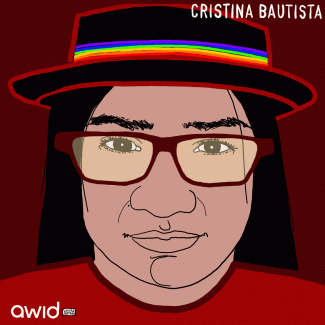
« Si nous nous taisons, ils nous tuent, et si nous parlons [ils nous tuent] aussi. Alors parlons. » - Cristina Bautista, 2019
Défenseuse infatigable des droits du peuple Nasa, Cristina s’est exprimée haut et fort contre la violence à l’égard de sa communauté. Dans un discours devant les Nations Unies, elle appelait à protéger les vies des femmes autochtones et à les impliquer dans différents domaines de la vie. En 2017, Cristina était membre du Bureau des Nations Unies pour les droits humains des personnes autochtones. Le Fonds de contributions volontaires des Nations Unies pour les populations autochtones lui a octroyé une subvention en 2019.
« J’aimerais mettre en lumière la situation actuelle du peuple autochtone en Colombie, le meurtre de leaders autochtones, la répression de la contestation sociale. Au lieu d’aider, l’accord de paix a renforcé la guerre et l’exploitation de territoires sacrés en Colombie… Actuellement, nous travaillons en tant que femmes, dans presque toutes les nations autochtones, à un avenir meilleur pour nos familles. Je ne veux pas voir plus de femmes vivre dans ces conditions en milieu rural. Il nous faut des opportunités qui permettent aux femmes autochtones de participer à la vie politique, à l’économie, à la société et à la culture. J’acquiers une réelle force aujourd’hui, en voyant toutes ces femmes ici, et en voyant que je ne suis pas seule. » - Cristina Bautista, 2019
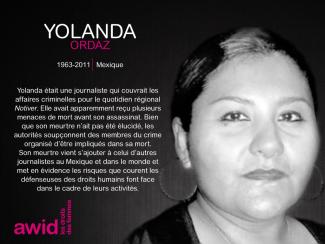
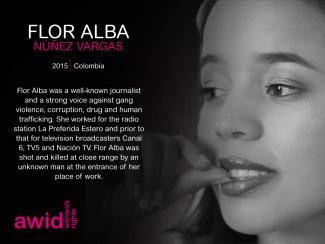
Cristina a été assassinée le 29 octobre 2019, ainsi que quatre autres membres de la garde autochtone désarmée, dans une attaque potentiellement menée par des membres de « Dagoberto Ramos », un groupe dissident FARC.
D’après Global Witness, « le nombre d’assassinats de leaders communautaires et sociaux·les a terriblement augmenté en Colombie au cours de ces dernières années ».
« La communauté nasa a prévenu à maintes reprises les autorités au sujet des menaces qui pèsent sur leur sécurité. Malgré les efforts déployés par les gouvernements colombiens successifs, les peuples autochtones continuent de faire face à d'importants risques, surtout les dirigeants communautaires ou religieux comme Cristina Bautista.» - Point presse des Nations Unies, 1er novembre 2019
The Forum was a key space for the Indigenous Women’s Movement (IWM) in its relationship to feminism. At AWID Forums, they developed engagement strategies that would then apply at other spaces like the United Nations. In that process, both indigenous women and feminists movements were transformed: new voices and issues emerged and feminists started to change their discourses and practices around land rights and spirituality, they understood collective rights better, and included the IWM in their events and agendas. Mónica Alemán and María Manuela Sequeira, from the IWM, shared this story of change.