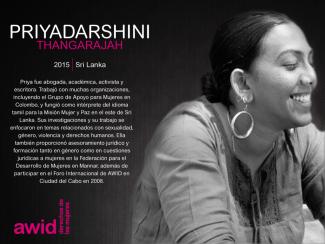
Priyadarshini Thangarajah
Esta sección de análisis especial ofrece un análisis feminista crítico y acceso a los recursos clave relacionados con la «protección de la familia» en los espacios internacionales de derechos humanos.
Durante los últimos años, venimos observando una nueva y preocupante tendencia en el ámbito internacional de derechos humanos, donde se están empleando discursos sobre la «protección de la familia» para defender violaciones cometidas contra miembros de la familia, de modo de reforzar y justificar la impunidad y para coartar la igualdad de derechos en el seno de la familia y la vida familiar.
La campaña para «proteger a la familia» es impulsada por proyectos conservadores que tienen como fin imponer interpretaciones «tradicionales» y patriarcales de familia; quitando los derechos de las manos de sus miembros para ponerlos en las de la institución «familia».
Desde 2014 un grupo de estados opera como bloque en espacios de derechos humanos, bajo el nombre «Group of Friends of the Family» [Grupo de amigos de la familia], y a partir de entonces se han aprobado resoluciones sobre la «Protección de la familia» todos los años.
Esta agenda se ha extendido más allá del Consejo de Derechos Humanos (HRC, por sus siglas en inglés). Hemos visto cómo el lenguaje regresivo sobre «la familia» se ha introducido en la Comisión de la Condición Jurídica y Social de las Mujeres (CSW, por sus siglas en inglés), y hemos asistido a intentos por incluir este lenguaje en las negociaciones sobre los Objetivos de Desarrollo Sostenible.
AWID trabaja con asociadxs y aliadxs para resistir conjuntamente las agendas regresivas de «Protección de la familia» y otras, y para defender la universalidad de los derechos humanos.
En respuesta a la creciente influencia de actores regresivos en los espacios de derechos humanos, AWID se ha unido con aliadxs para formar el Observatorio de la Universalidad de los Derechos (OURs, por sus siglas en inglés). OURs es un proyecto colaborativo que monitorea, analiza y comparte información sobre iniciativas anti-derechos tales como la «Protección de la familia».
Derechos en Riesgo, el primer informe de OURs, traza un mapa de los actores que conforman el cabildeo global anti-derechos e identifica sus discursos y estrategias principales, señalando los efectos que estos discursos y estrategias están teniendo sobre nuestros derechos humanos.
El informe expone a la «Protección de la familia» como una agenda que ha promovido la colaboración entre una amplia gama de actores regresivos en las Naciones Unidas. La describe como un marco estratégico que aloja «múltiples posiciones patriarcales y anti-derechos, cuyo marco, a su vez, apunta a justificar e institucionalizar estas posiciones».
Ahora que has analizado toda la información que recogiste — de la encuesta, las entrevistas, la investigación secundaria y otras fuentes que hayas utilizado — ya puedes generar el producto final.
En esta sección:
- El producto final
1. Escribe con claridad
2. Consigue que tenga un aspecto atractivo- Revisión y comentarios
1. Pule los resultados
2. Facilita los comentarios
El producto final será un documento que resume, analiza y critica la información que obtuviste. Será lo que compartas con la audiencia cuando les presentes tu investigación y se la expliques.
En AWID por lo general elaboramos un informe escrito exhaustivo en el que analizamos cada conjunto de información y sintetizamos todos los resultados que encontramos, para luego generar productos más breves como infografías o resúmenes (que explicaremos en la sección siguiente, «Finalización y formato»).
La importancia de la edición
El trabajo de edición implica corregir el texto, garantizar que la redacción sea concisa, revisar que los datos proporcionados sean exactos, señalar las inconsistencias que se deben resolver, acomodar el texto para que fluya y posiblemente también sugerir títulos.
Lo ideal es que la persona que haga este trabajo entienda y conozca tu labor en cuanto a WITM pero que no haya participado directamente de la investigación, así puede aportar una perspectiva nueva.
Recuerda: Cuanto más accesible sea el producto, más personas querrán leerlo (y compartirlo).
Cuando llegues a este momento, ya habrás compilado toda la información, la habrás analizado y convertido en un producto final, que probablemente sea un informe extenso.
Antes de encarar los pasos siguientes deberías compartir el producto final con organizaciones, activistas y donantes que puedan comentarlo (lxs «consultorxs»).
Este es un momento excelente para pedirles que revisen lo siguiente:
Una vez que hayas incorporado todos los comentarios de las personas a las que consultaste, asegúrate de que la persona a cargo de la edición vuelva a revisar el informe.
Con esto ya tendrás la versión final y completa del informe. Si quieres publicarlo en otros idiomas, ahora es el momento de enviarlo a traducir.
Las personas que revisen el informe (lxs «consultorxs») te estarán haciendo un aporte significativo. Considera la posibilidad de otorgarles alguna forma de reconocimiento.
6. Realiza una investigación secundaria

• 2 - 5 meses
• 1 persona (o más) de investigación
• 1 Editor (editor web o si crea un producto en línea)
• Traductores (si ofrece encuesta en varios idiomas)
• Lista de organizaciones de asesores, activistas y financiadores.
• Documento de Síntesis (sección de "marco de su investigación")
• Los resultados de su(s) encuesta(s)
• Preguntas de la entrevista
• Resultados de las entrevistas
• Los datos de la investigación secundaria
• Todos otros datos utilizados en el informe
6. Realiza una investigación secundaria
Esta publicación (zine) colaborativa surgió de una serie de círculos de intercambio que reunieron a feministas de todo el mundo durante 2022. El propósito fue intercambiar ideas y aprender mutuamente de qué manera las comunidades responden a la crisis climática en diversos contextos locales.
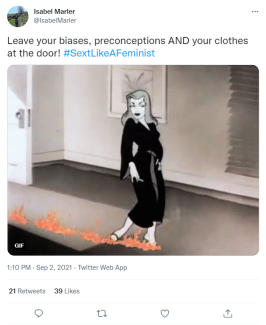
Laisse tes préjugés, tes suppositions ET tes fringues à l’entrée!
Dans le contexte actuel, nous avons cerné cinq grandes menaces à la lutte pour des économies justes d’un point de vue féministe :
« La financiarisation fait référence à l'importance croissante des marchés financiers, des intérêts financiers, des institutions financières et des élites de la finance dans le fonctionnement de l'économie et de ses institutions de gouvernance, sur la scène nationale et internationale. » Gerald Epstein
Epstein Gerald A. 2006 ; Financialization and the World Economy, Editions Edward Elgar, en anglais seulement.
Les institutions financières exercent une forte influence sur la gouvernance économique et l’orientation des politiques de développement. La domination croissante du secteur des entreprises et des institutions financières internationales, dans le cadre de la définition des politiques publiques locales et mondiales, a abouti à la prise en otage de l'État dans l'intérêt du capital. Le système financier actuel, en ce compris les politiques controversées de crédit et d’endettement, font partie intégrante de l'expansion et de la reproduction des processus d'accumulation du capital.
Cela soulève des questions importantes sur la façon de réglementer et de repenser le système financier mondial, non seulement pour éviter les conséquences désastreuses des crises de la dette, mais également pour permettre des moyens de subsistance durables et la réalisation des droits économiques et sociaux sans périodes de recul.
Pour plus de détails, voir l'article de Balakrishnan et Heintz Debt, Power, and Crisis: Social Stratification and the Inequitable Governance of Financial Markets (Dette, pouvoir et crise : la stratification sociale et la gouvernance inéquitable des marchés financiers), disponible en anglais uniquement.
Au cours des 20 dernières années, les cadres des accords commerciaux (bilatéraux ou multilatéraux) ont été élargis, démontrant un intérêt accru pour les droits de propriété intellectuelle (DPI) à octroyer aux sociétés.
Les droits de propriété intellectuelle ont clairement bénéficié aux sociétés multinationales, causant d'énormes répercussions sur la capacité des nations et des peuples les plus pauvres à réaliser les droits humains, notamment :
En outre, la libéralisation de l'importation des produits agricoles a entraîné un afflux de produits bon marché et compromis l’emploi des agriculteur-trice-s indépendants dans les pays pauvres, ainsi que la sécurité alimentaire. Les dispositions de protection de l'investissement inscrites aux accords commerciaux limitent la marge de manœuvre des gouvernements nationaux leur permettant de créer et de faire respecter des règlements sur des questions aussi cruciales que la protection de l'environnement, le droit du travail et la durée des droits d'auteur.
En exposant les pièges de ces accords, les mouvements féministes ont été et sont toujours à la fine pointe de la résistance.
(Voir par exemple, les réactions de réseaux féministes du monde entier contre les négociations relatives au Partenariat transatlantique de commerce et d’investissement (PTCI) et au Partenariat transpacifique (PTP) (en anglais).
La marchandisation des ressources de la Terre, la dégradation environnementale et le changement climatique qui résultent de décennies d'industrialisation agressive, du pillage et de l'extraction liée aux ressources de la planète, ont endommagé la biodiversité et la résilience écologique. Ces dommages menacent maintenant l'existence de la société humaine elle-même.
La communauté internationale n'a pas réussi à modifier les modes de production et de consommation qui sont à la racine du problème. Au lieu de cela, les gouvernements, avec le soutien de grandes entreprises intéressées au profit, penchent en faveur d’une «économie verte». Cette approche favorise les « technologies économes en énergie » (y compris l'énergie nucléaire, les biocarburants, les organismes génétiquement modifiés et la géo-ingénierie) et les systèmes d’échanges de droits d’émission de carbone comme solutions miracles.
Les phénomènes d’accaparement des terres et de l'appropriation des ressources ne sont pas nouveaux et les résistances étaient déjà au cœur de l’histoire coloniale. Ce qui est nouveau, c’est la rapidité et la manière dont les terres et les ressources naturelles sont devenues des marchandises pour de nouveaux marchés.
Les institutions financières internationales jouent un rôle central dans la promotion des marchés fonciers dans les pays en développement. Ces institutions financent des réformes agraires qui permettent à de puissants acteurs financiers de faire main-basse sur des terres à des fins spéculatives en échange de maigres promesses d'emplois et de croissance. L'accaparement des terres a de profondes répercussions négatives sur l'accès des populations locales aux biens et services essentiels, sans compter les déplacements forcés et la dégradation de l'environnement qui y sont associés.
Les personnes qui résistent à l'accaparement des terres, parmi lesquelles des femmes défenseuses des droits humains, sont confrontées quotidiennement à diverses formes de violence, y compris les agressions physiques et les abus sexuels.
Ces fondements patriarcaux sont particulièrement hégémoniques dans les modèles néolibéraux actuels.
Les nombreuses manières dont l'économie politique et le développement sont liés à la sexualité ou au genre sont évidentes : pensez à la manière dont le capitalisme détermine ce qui est qualifié de travail et comment la ‘valeur humaine’ est fondée sur la productivité du travail salarié.
En règle générale, la position des femmes dans l'économie mondiale continue de reposer sur l’exploitation de leur travail fondée sur le genre : ce travail est sous-évalué et on retrouve essentiellement les femmes dans les emplois précaires, la sphère de la subsistance domestique et de la production non rémunérée et dans la sphère ‘reproductive’. Puisque le travail de reproduction est systématiquement associé au travail non rémunéré des femmes, il a fourni un immense soutien au capitalisme, en même temps qu’il est la source d'oppressions fondées sur le genre et l'assujettissement.
Cette situation est aggravée par le fait que dès lors où les mécanismes de protection sociale commencent à diminuer, le fardeau du travail des femmes augmente proportionnellement.
En outre, le phénomène de la migration mondiale, stimulé par des milliers de réfugiés économiques qui fuient la pauvreté endémique à travers le monde, n’est pas étranger au type de relations de pouvoir entre hommes et femmes du système capitaliste. Les fonds envoyés dans le pays d’origine deviennent une source importante de financement et de développement pour les familles et les communautés restées au pays. Ce phénomène a un coût important pour les femmes migrantes qui luttent pour gagner un salaire décent dans leur pays d’accueil.
Dans la même veine, nous avons vu comment les systèmes capitalistes patriarcaux font usage de la violence et de l'oppression pour maintenir le statu quo. La hausse des dépenses militaires mondiales et l’escalade de la violence perpétrée à la fois par des acteurs étatiques et non étatiques, sont des stratégies adoptées pour contrôler la dissidence, le corps et la voix des femmes et régler les différends économiques, politiques et sociaux.
Partout dans le monde, la violence, l'incarcération et la discrimination ciblent de manière disproportionnée :
Pour contester la violence structurelle et ses liens avec un système mondial capitaliste, nous devons procéder à une analyse intersectionnelle qui tienne compte du genre, de la race/de l'origine ethnique, de l'âge, des compétences, de la nationalité, de l'orientation sexuelle et de l'identité de genre des personnes, entre autres statuts.
La crise profonde du système actuel de gouvernance mondiale est également évidente lorsqu’on examine les maigres accords intergouvernementaux conclus et la façon dont ils manquent souvent de mécanismes de responsabilisation les plus fondamentaux. Le système multilatéral qui a servi la gouvernance mondiale par le passé ne parvient plus à répondre aux multiples crises actuelles. Ce même système continue d'être profondément antidémocratique, marqués par l’augmentation de la présence et de la puissance des sociétés qui occupent désormais les espaces précédemment réservés aux États.
Ces menaces nous forcent, nous les féministes, à repenser nos perspectives et nos stratégies, à renouveler et à réactiver notre engagement pour la construction d’un mouvement en faveur d’une économie juste, en partenariat avec d'autres mouvements.
Ces menaces nous incitent à envisager, d’une perspective féministe, de vastes programmes de transformation socioéconomique qui tiennent compte des réalités de la majorité des personnes démunies. Le temps est venu d’opérer les changements nécessaires pour mettre en place une économie juste et pour relever les défis systémiques persistants.
Nous acceptons les candidatures dans toute la gamme des domaines thématiques et des intersections importantes pour les mouvements féministes et de justice de genre.
As world leaders gather in Brazil, feminist movements are advocating, gathering and disrupting the status quo- at COP30 and beyond! We're heading alongside other feminists to Belém, Brazil for COP30, from 10 November – 21 November 2025, where we will continue to denounce false solutions.
Contesting the premise that a country’s economy must always ‘grow or die’, de-growth propositions come to debunk the centrality of growth measured by increase in Gross domestic product (GDP).
A de-growth model proposes a shift towards a lower and sustainable level of production and consumption. In essence, shrinking the economic system to leave more space for human cooperation and ecosystems.
The proposal includes
Feminist perspectives within de-growth theory and practice argue that it also needs to redefine and revalidate unpaid and paid, care and market labour to overcome traditional gender stereotypes as well as the prevailing wage gaps and income inequalities that devalue care work.


เรายินดีรับข้อเสนอกิจกรรมจากหลากหลายสาขาที่เชื่อมโยงกับแนวคิดสตรีนิยมและความยุติธรรมทางเพศ ในแบบฟอร์มใบสมัครนั้น ท่านจะสามารถทำเครื่องหมายเลือกประเด็นหลักที่เหมาะกับกิจกรรมของท่านได้ มากกว่าหนึ่งหัวข้อ
Enciende tu fuego feminista leyendo nuestras investigaciones y publicaciones varias sobre financiamiento, defensoras de derechos humanos, construcción de movimientos, fundamentalismos, justicia económica, seguimiento y evaluación feminista y más