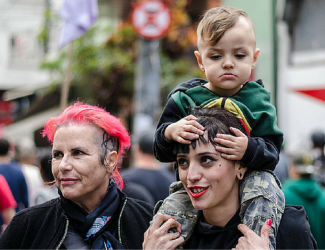
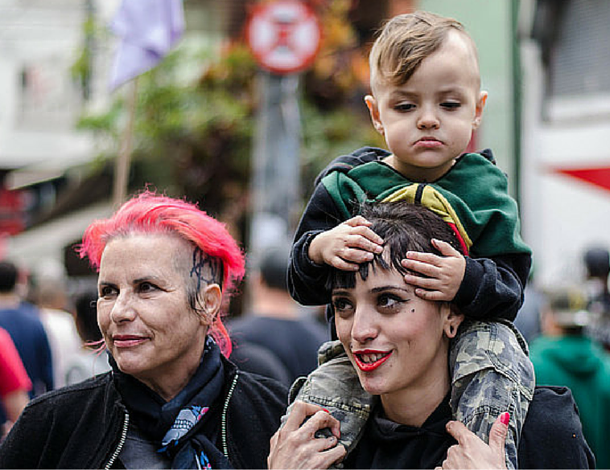
Flickr/Leonardo Veras (CC BY 2.0)

Análisis Especiales

AWID es un organización feminista internacional de membresía, que brinda apoyo a los movimientos que trabajan para lograr la justicia de género y los derechos de las mujeres en todo el mundo.

Protección de la familia

El contexto

Esta sección de análisis especial ofrece un análisis feminista crítico y acceso a los recursos clave relacionados con la «protección de la familia» en los espacios internacionales de derechos humanos.

Durante los últimos años, venimos observando una nueva y preocupante tendencia en el ámbito internacional de derechos humanos, donde se están empleando discursos sobre la «protección de la familia» para defender violaciones cometidas contra miembros de la familia, de modo de reforzar y justificar la impunidad y para coartar la igualdad de derechos en el seno de la familia y la vida familiar. 

La campaña para «proteger a la familia» es impulsada por proyectos conservadores que tienen como fin imponer interpretaciones «tradicionales» y patriarcales de familia; quitando los derechos de las manos de sus miembros para ponerlos en las de la institución «familia».

Los proyectos de «protección de la familia» tienen su origen en los siguientes fenómenos:

  • el auge del tradicionalismo,
  • el auge del conservadurismo cultural, social y religioso, y
  • posturas hostiles a los derechos humanos de las mujeres, los derechos sexuales, los derechos de las niñas y los niños y los derechos de las personas con identidades de género y orientaciones sexuales no normativas.  

Desde 2014 un grupo de estados opera como bloque en espacios de derechos humanos, bajo el nombre «Group of Friends of the Family» [Grupo de amigos de la familia], y a partir de entonces se han aprobado resoluciones sobre la «Protección de la familia» todos los años.

Esta agenda se ha extendido más allá del Consejo de Derechos Humanos (HRC, por sus siglas en inglés).  Hemos visto cómo el lenguaje regresivo sobre «la familia» se ha introducido en la Comisión de la Condición Jurídica y Social de las Mujeres (CSW, por sus siglas en inglés), y hemos asistido a intentos por incluir este lenguaje en las negociaciones sobre los Objetivos de Desarrollo Sostenible.


Nuestro enfoque

AWID trabaja con asociadxs y aliadxs para resistir conjuntamente las agendas regresivas de «Protección de la familia» y otras, y para defender la universalidad de los derechos humanos.

En respuesta a la creciente influencia de actores regresivos en los espacios de derechos humanos, AWID se ha unido con aliadxs para formar el Observatorio de la Universalidad de los Derechos (OURs, por sus siglas en inglés).  OURs es un proyecto colaborativo que monitorea, analiza y comparte información sobre iniciativas anti-derechos tales como la «Protección de la familia».

Derechos en Riesgo, el primer informe de OURs, traza un mapa de los actores que conforman el cabildeo global anti-derechos e identifica sus discursos y estrategias principales, señalando los efectos que estos discursos y estrategias están teniendo sobre nuestros derechos humanos.

El informe expone a la «Protección de la familia» como una agenda que ha promovido la colaboración entre una amplia gama de actores regresivos en las Naciones Unidas. La describe como un marco estratégico que aloja «múltiples posiciones patriarcales y anti-derechos, cuyo marco, a su vez, apunta a justificar e institucionalizar estas posiciones».
Contenido relacionado

Here is your Feminist Realities Toolkit

Thank you for taking the first steps to Co-create Feminist Realities!

Download your toolkit


Learn more about Feminist Realities

Any questions? Please do not hesitate to contact us


Snippet FEA Otras Union meetings and demonstrations (FR)

Réunions et manifestations du Syndicat OTRAS

Fahmida Riaz

« Après
Après l’amour la première fois,
Nos corps et nos esprits nus
Une galerie des glaces,
Complètement désarmés, absolument fragiles,
Nous nous couchons dans les bras de l’autre
Respirant attentivement,
Avec la crainte de briser
Ces figurines en cristal. » - Fahmida Riaz

Fahmida Riaz a brisé les tabous sociaux en écrivant sur le désir des femmes dans ses poèmes, créant des récits alternatifs à propos du corps des femmes et de leur sexualité, et établissant de nouveaux standards dans la littérature urdu.

Son travail s’est confronté à de sévères critiques de la part des conservateurs, qui l’ont accusée d’utiliser des expressions érotiques et « pornographiques » dans son langage poétique.  

Fahmida a finalement été mise sur liste noire et accusée de sédition en vertu de l’article 124A du Code pénal pakistanais sous la dictature de Zia-ul-Haq. Forcée à l’exil en 1981, elle a passé presque sept ans en Inde avant de retourner au Pakistan. 

Dans la préface de « Badan Dareeda » (Un corps ravagé), un recueil de poèmes publié en 1974, elle écrit :

Si, en effet, je suis forcée à me tenir aujourd’hui devant ce maqtal et me confronte à la potence, je dois y faire face, la tête haute. Mes poèmes sont la trace d’une tête mutilée : des sons émanant même lorsque suspendue par des cordes… Un corps ravagé a pris la forme de razmia, ou  d’un son de rupture. Et si cette rupture est effectivement choquante pour les gens, c’est que la poète a atteint son intention : elle a réussi à la perturber. (traduction de l’urdu vers l’anglais par Asad Alvi) 

La splendeur de Fahmida résidait dans sa défiance de toute logique ou toute catégorie particulière de genre, nation, religion ou culture. Elle refusait d’être mise dans le rôle d’une « femme poète », brisant les définitions traditionnelles de la poésie féminine, des concepts et des thématiques (variant entre conscience politique, corps, culture, désir, religion, foyer), et renversant les inhibitions assignées à son genre.   

« Il faut que vous compreniez que la culture ne peut avoir d’essence. Les cultures changent, circulent entre elles, formant de nouvelles cultures. La culture est née de cette façon. Il n’y a pas de conflits de cultures. »

Fahmida a écrit plus de 15 livres de poésie et de fiction, dont son poème ‘Taaziyati Qaraardaaden’ («Résolutions de condoléances» en anglais) qui pourrait servir d'hommage approprié à sa vie et à son héritage et de collection de poèmes (Apna Jurm To Saabit He «Mon crime est prouvé») publié en 1988 durant son exil.

Fahmida Riaz est née à Meerut, en Inde, le 28 juillet 1946 et est décédée le 21 novembre 2018 à Lahore, au Pakistan. 

Body

Our values - esponsibility, Accountability, and Integrity

Responsabilité, responsabilisation et intégrité

Nous nous attachons à faire preuve de transparence, à utiliser nos ressources de manière responsable, à être équitables dans nos collaborations et à faire preuve de responsabilité et d'intégrité envers nos membres, nos partenaires, nos bailleurs de fonds et les mouvements avec lesquels nous travaillons. Nous nous engageons à réfléchir sur nos expériences, à partager ouvertement nos connaissances et à nous efforcer de modifier nos pratiques en conséquence.

قمت بتعبئة الاستطلاع لكنني غيرت رأيي وأريد سحب اجاباتي. ماذا أفعل؟

إن رغبتم/ن في سحب استطلاعكم/ن ومحيه لأي سبب كان، لديكم/ن الحق الكامل بالقيام بذلك. الرجاء التواصل معنا عن طريق هذا النموذج وكتابة "استطلاع المال" في عنوان رسالتكم/ن وسنقوم بسحب ومحي أجوبتكم/ن.

Points d’ancrages thématiques

La cadre des Réalités Féministes du Forum repose sur six points d’ancrages thématiques. Chaque point d’ancrage met les réalités, les expériences et les visions féministes au coeur du continuum entre résistance et proposition, lutte et alternative. Nous cherchons à explorer ensemble ce qui constitue nos réalités féministes et ce qui leur permet de se répandre dans les différentes sphères de nos vies.

Ces réalités se manifestent sous forme de modes de vie pleinement articulés, de rêves et d'idées en devenir, ou encore d'expériences et de moments précieux. 


Plus que des thèmes isolés, les points d’ancrage sont des conteneurs interconnectés à l’effet des activités du Forum. Nous prévoyons de nombreuses activités à l’intersection de ces thèmes, des différentes luttes, communautés et mouvements. Encore provisoires, les descriptions continuent d’évoluer au fur et à mesure que le parcours des Réalités Féministes se poursuit.

Ressources pour les communautés et les mouvements  et justice économique 

Ce point d’ancrage met l’accent sur la façon dont nous répondons à nos besoins fondamentaux et assurons les ressources qui nous sont nécessaires pour prospérer, en tant qu’individus,  communautés et mouvements, d’une manière qui prenne soin des personnes et de la nature en priorité. Nous entendons par “ ressources ” l’alimentation, l’eau et l’air pur, ainsi que l’argent, le travail, l’information, la connaissance, le temps et autres. 

S’appuyant sur la résistance féministe face au système économique d’exploitation et d’extractivisme, ce point d’ancrage met en lumière les propositions, expériences et pratiques féministes puissantes et inspirantes concernant l’organisation de notre vie économique et sociale. L’alimentation et la souveraineté alimentaire ainsi que les visions féministes du travail et des systèmes commerciaux justes et durables ne constituent que quelques-unes des questions qui feront l’objet de notre exploration. Nous ferons courageusement  face aux contradictions qui émergent de la nécessité de survivre dans des systèmes économiques répressifs.  

Ce point d’ancrage intègre le financement et le ressourcement pour les organisations et les mouvements dans une vaste analyse féministe de la justice économique et de la création de richesses. Il examine comment déplacer les ressources là où elles sont nécessaires, de la justice fiscale et du revenu de base à différents modèles de philanthropie et au ressourcement créatif  et autonome des mouvements.

Gouvernance, responsabilisation et justice 

Nous cherchons à créer de nouvelles visions et à amplifier les réalités et les expériences existantes en termes de gouvernance féministe, de justice et de responsabilisation. Face à la crise mondiale et à la montée du fascisme et du fondamentalisme, ce point d’ancrage se concentre sur les modèles, les pratiques et les idées féministes, radicales et émancipatrices d’organisation de la société et de la vie politique, à l’échelle locale et mondiale. 

Ce point d’ancrage explorera les aspects de la gouvernance, depuis les expériences féministes du municipalisme jusqu'à nos visions du multilatéralisme, en passant par la construction d'institutions situées à l’extérieur des États-nations. Nous échangerons nos expériences concernant les processus judiciaires et de responsabilisation au sein de nos communautés, nos organisations et nos mouvements, notamment les modèles de justice réparatrice, communautaire et transformatrice qui rejettent la violence étatique et le complexe carcéro-industriel. 
En nous concentrant sur les expériences de voyages, de migrations et de refuges ainsi que sur l’organisation féministe, nous voulons un monde sans régimes frontaliers mortels; un monde où la circulation y est libre et les voyages passionnants.  

Réalités digitales 

Le rôle de la technologie dans nos vies ne cesse de croître et la frontière entre les réalités en ligne et hors ligne continue de s’estomper. Les féministes se servent largement des technologies et des espaces en ligne pour construire la communauté, apprendre les un-e-s des autres et mobiliser l’action.  Grâce aux espaces en ligne, nous pouvons repousser les limites de notre monde physique. En revanche,, les communications digitales appartiennent majoritairement à des sociétés n’assumant qu’une part de responsabilité mineure vis-à-vis des utilisateurs-trices : l’exploration de données, la surveillance et les atteintes à la sécurité sont devenues la norme, de même que la violence et le harcèlement en ligne. 

Ce point d’ancrage explore les opportunités et les enjeux féministes qui existent au sein des réalités digitales. Nous nous pencherons sur les alternatives qui se présentent face aux plateformes privées qui dominent l’horizon digital, ainsi que sur les stratégies de bien-être pour la navigation d’espaces en ligne et les utilisations de la technologie comme moyen de surmonter les problèmes d’accessibilité. Nous examinerons ce que la technologie peut apporter en termes de plaisir, de confiance et de relations.

Corps, plaisir et bien-être 

Les réalités féministes règnent également en nous-mêmes: il s’agit de l’expérience incarnée. Le contrôle dont font l’objet notre travail, notre reproduction et notre sexualité est toujours au coeur des structures patriarcales, cis-hétéro-normatives et capitalistes. Face à cette répression, des personnes de genre, de sexualité et d’habiletés différentes  organisent des rencontres, créent des espaces et conçoivent des sous-cultures destinées à la joie, à la sollicitude, au plaisir et à une profonde appréciation mutuelle et de soi-même.  

Ce point d’ancrage explorera les idées, les récits, les inventions et les expressions culturelles du consentement, du pouvoir et du désir des femmes, des personnes transgenres, non-binaires, transexuelles et intersexuées dans différentes sociétés et cultures. 

Nous échangerons des stratégies visant à obtenir les droits en termes de santé reproductive et la justice, et exposerons des pratiques sociales facilitatrices et respectueuses de l’autonomie, l’intégrité et la liberté corporelles. Ce point d’ancrage relie différentes luttes et différents mouvements afin de partager nos perceptions et nos expériences de ce que sont le bien-être et le plaisir.

Planète et êtres vivants 

Imaginez une planète féministe. Quel est le son de l’eau, l’odeur de l’air, le contact de la terre?  Quelles sont les relations entre la planète et les êtres vivants, y compris les êtres humains? Les réalités féministes sont celles d’une justice environnementale et climatique.  Les luttes féministes, autochtones, décoloniales et écologiques puisent souvent leurs racines dans des visions transformatives ainsi que dans la relation entre la nature et les êtres. 

Ce point d’ancrage se concentre sur le bien-être de notre planète et s’interroge sur les façons dont les êtres humains ont interagi avec elle et l’ont transformée. Nous voulons explorer les aspects des savoirs traditionnels et de la biodiversité dans le cadre de la préservation d’une planète féministe, et acquérir des connaissances sur les pratiques féministes dans le domaine de la décroissance, la pratique des communs, les modèles d’économies parallèles, l’agro-écologie et les initiatives en termes de souveraineté alimentaire et énergétique.  

Organisation féministe 

Bien que nous considérions tous ces points d’ancrage comme étant reliés, celui-ci est véritablement transversal; nous vous invitons donc à ajouter une dimension organisationnelle à tous les points d’ancrage auxquels les activités que vous proposez sont liées. 

Comment se déroule l’organisation féministe dans le monde aujourd’hui? Cette question porte notre attention sur les acteurs, la dynamique du pouvoir, les ressources, le leadership, les économies dans lesquelles nous sommes intégré-e-s, notre compréhension de la justice et de la responsabilisation, l'ère numérique et les expériences que nous faisons de l'autonomie, du bien-être et des soins collectifs. Nous espérons, à travers tous ces points d’ancrage, créer un espace de réflexion sincère autour de la répartition du pouvoir et des ressources et de la négociation au sein de nos propres mouvements.


Le Forum est un processus collaboratif

Le Forum se veut bien plus qu’un événement de quatre jours. C’est un arrêt de plus dans un parcours de renforcement de mouvement autour des réalités féministes, lequel a déjà commencé et continuera bien au-delà des dates du Forum.

Rejoignez l'aventure

Snippet FEA Union Otras Photo 5 (EN)

Photo of people sitting on red chairs in a hall

Navleen Kumar

"She was not a person. She was a power."
- a fellow activist remembering Navleen Kumar

Navleen Kumar was a fervent land rights and social justice activist in India.

With commitment and integrity, she worked for more than a decade to protect and restore the lands of Indigenous people (adivasi) in Thane district, an area taken away by property and land developers using such means as coercion and intimidation. She fought this injustice and crime through legal interventions at different courts, realizing that manipulation of land records was a recurrent feature in most cases of land acquisition. In one of the cases, that of the Wartha (a tribal family), Navleen found out that the family had been cheated with the complicity of government officials.

Through her work, she helped restore the land back to the Wartha family and continued to pursue other cases of adivasi land transfers.

“Her paper on the impact of land alienation on adivasi women and children traces the history and complexities of tribal alienation from the 1970s, when middle class families began to move to the extended suburbs of Mumbai as the real estate value in the city spiralled.

Housing complexes mushroomed in these suburbs, and the illiterate tribals paid the price for this. Prime land near the railway lines fetched a high price and builders swooped down on this belt like vultures, to grab land from tribals and other local residents by illegal means.”
-Jaya Menon, Justice and Peace Commission 

During the course of her activism, Navleen received numerous threats and survived several attempts on her life. Despite these, she continued working on what was not only important to her but contributed to changing the lives and realities of many she supported in the struggle for social justice. 

Navleen was stabbed to death on 19 June 2002 in her apartment building. Two local gangsters were arrested for her murder. 

14th AWID international Forum is cancelled (forum page)

The 14th AWID International Forum is cancelled

Given the current world situation, our Board of Directors has taken the difficult decision to cancel Forum scheduled in 2021 in Taipei. 

Read the full announcement

Body

Могу ли я поделиться информацией об опросе с другими?

Да, пожалуйста! Мы просим распространить ссылку на опрос среди своих коллег по сети. Чем больше различных точек зрения мы соберем, тем более полным будет наше понимание финансового положения феминистских организаций.

Selection of Forum activities

For each AWID Forum we call for contributions from a wide range of feminist and social justice movements to propose activities and create the Forum program.

For the 14th AWID international Forum, we want to make the program truly representative of the diversity of the movements.

That is why we put in place a new and engaging way to choose the proposals that will generate the final Forum program: the Participatory Selection Process (PSP).

What is the Participatory Selection Process (PSP)?

The Participatory Selection Process is the final step in reviewing the activity proposals and selecting those that will be part of the official Forum program. 

This is how it works: 

  1. Activity proposals have originally been submitted via our Call for Forum Activities, open to everyone - groups and individuals - interested in presenting their feminist reality at the Forum.
  2. Out of all the activities submitted, AWID staff pre-selects the ones best reflecting the Forum theme and presenting a creative approach for audience engagement.
  3. Activities are then reviewed and short-listed by different Forum Committees to ensure a good diversity of regions, movements and ideas.
  4. The selected proposals are then reviewed and rated by individuals and groups whose proposals have also been short-listed. The proposals which receive the most votes from fellow candidates will become part of the final Forum program.

The whole activity selection process at a glance:

Step


Step 1: 
Call for Forum Activities: Application submissions

Step 2:
First screening


Step 3:
Shortlisting 


Step 4:
Participatory Selection Process 


Timeline

December 2019 - mid.February 2020


January-February 2020


Summer 2020


timeline to be adjusted


People involved Everyone interested in co-creating the Forum program

AWID staff


AWID staff; Content and Methodology Committee; Access Committee

Shortlisted applicants


Number of activities involved

838 activities submitted


306 applications selected


126 activities selected


50-60 most voted activities selected for the final Forum program


Why did AWID decide to organize a PSP for the 14th AWID Forum activities?

We think a PSP is relevant for the AWID Forum because:

  • It places at the centre of the decision making process the communities who live the feminist realities that will be showcased and discussed at the Forum 

  • It is consistent with our identity and our role as a movement support/ accompaniment organization

  • It is in line with our vision of the Forum as co-created with different feminist and social justice movements, who shape the Forum through their participation in committees (content and methodology, access, artivist and host country), creating and facilitating activities as partners with AWID and also making decisions about the Program through the PSP.

  • It allows for greater diversity in the textures that will make up the Forum fabric (or in the voices that will compose the Forum song). It ensures we go beyond AWID itself and the movement partners that we already know and work with. It opens the door to the unexpected.

How did AWID come up with this PSP idea?

This is the first time AWID is considering such a process.

The initial idea came from AWID’s Co-EDs and staff. Before committing to a decision, we consulted some of the community funds that have been implementing participatory selection processes for years. These included FRIDA: The Young Feminists Fund, the International Trans Fund, UHAI - East Africa’s fund for sexual minorities and sex workers - and the Central American Women’s Fund. We consulted them to learn from their extensive experiences and get their feedback.


Pre-selected activities

  • Financial autonomy, breaker of silence
    ORGANISATION DES FEMMES AFRICAINES DE LA DIASPORA (OFAD) ASSOCIATION LES PETITES MERES PRODADPHE ASSOCIATION AMBE KUNKO (AAK)

  • Contribution of feminist organisations to the fight against violent extremism in Niger
    Femmes Actions et Développement (FAD)

  • Self-financing: home banking for women 
    Rassemblement des Femmes pour le développement endogène et solidaire RAFDES

  • Food and food sovereignty for rural women
    Association Song-taaba des Femmes Unies pour le Développement (ASFUD)

  • Feminist leaders, investing in positive masculinity, creating a new balanced social order: how to change mentalities? 
    Une societe cooperative, la chefferie traditionnelle des localites, les autorites administratives et les autres associations feminines ONG Centre Solidarite "Investir dans les Filles et les Femmes

  • Co-creating the sponsorship methodology.
    NEGES MAWON

  • Millennium of opportunities to save the earth (MOST) by supporting climate justice for local and Indigenous communities in Congo Basin. 
    Jeunesse Congolaise pour les Nations Unies (JCNU), Association Genre et Environnement pour le Développement (AGED)

  • Envisioning an Asian Queer Feminist Politics
    ASEAN Feminist LBQ Womxn Network Sayoni

  • Supporting the Self-Managed: Abortion Doulas, Acompanantes, and Radical Networks of support
    inroads

  • Online Feminisms: How Women Are Taking Back The Tech
    Feminism In India

  • Committee on the Elimination of Discrimination Against Sex Workers
    Asia Pacific Network of Sex Workers (APNSW), The International Women's Rights Action Watch Asia Pacific (IWRAW AP)

  • Sustainable Feminist Leadership and Organizing - Personal and Collective Experiences
    HER Fund, Institute for Women's Empowerment (IWE) ,Kalyanamita, AAF

  • Caribbean Realities: Black Sauna Radio
    WE-Change Jamaica

  • Telephone Helplines Care and Women Experience
    Generation Initiative for Women and Youth Network (GIWYN),Youth Network for Community and Sustainable Development (YNCSD), Community Health Rights Network (CORENET)

  • Sensuality as resistance; body movement workshop
    UHAI EASHRI

  • Lesbian Disco Eastern European Style
    Sapfo Collective

  • FitcliqueAfrica Feminist Utopia Installation, Trauma Healing and Self Defense Camp
    FitcliqueAfrica (Fitclique256 Uganda Limited)

  • Queering Communications for an Open Internet
    Astraea Lesbian Foundation for Justice

  • Is the Way you Think about Sexual and Reproductive Health (SRHR) Ableist? Good Practices for Disability Inclusive SRHR Programmes and Advocacy.
    Asia Pacific Network of Women with Disabilities and Allies

  • Decolonizing Non-Violent Communication
    API Equality-LA, Sayoni, ASEAN Feminist LBQ Womxn Network

  • Feminist centred approaches to prosecuting sexual harassment in the world of work
    Women's Legal Centre

  • Women in Conflict in Myanmar
    Women's League of Burma, Rainfall

  • Caribbean Feminist Spaces, Creative Expressions & Spiritual Practices for Community Transformation
    CAISO: Sex and Gender Justice

  • POP-UPS: Just Power: Popular Education Tools for a Feminist Future
    JASS/Just Associates

  • UnAnonYmous: Queering Black African Diaspora Feminist Practices Sobriety

  • Digital Witchcraft: Magical Thinking for Cyberfeminist Futures
    The Digital Witchcraft Institute

  • Building Womanifestos: Grassroot Women's Agenda for Change in Asia Pacific
    Asia Pacific Forum on Women Law and Development

  • Designing your astral travels
    EuroNPUD, narcofeminists as a loose group

  • Collective Care
    RENFA Rede Nacional de Feministas Antiproibicionistas

  • Music of our movements
    Radical imagination

  • From waste to Ecofriendly coal
    KEMIT ECOLOGY SARL

  • Collective care and insurgency of feminist antiracist movements under authoritarian and violent contexts
    CFEMEA - Feminist Center of Studies and Advisory Services, CRIOLA - black women`s organization, Iniciativa Mesoamericana de Mujeres Defensoras

  • Breaking Patriarchal Religion's Stranglehold on Family Laws that Affect Our Lives #FreeOurFamilyLaws
    Musawah

  • Feminist approach to claim and control over lands within investment
    Badabon Sangho, APWLD

  • Women's Global Strike: Our resistance, our future
    Asia Pacific Forum on Women, Law & Development, ESCR-Net, Women's March Global

  • Towards an Inclusive ‘Mother Earth’
    Disability Rights Fund, Open Society Foundation

  • From Inclusion to Infiltration: Strategies for Building Intersectional Feminist Movements
    Mobility International USA (MIUSA)

  • The hidden stories of women with invisible disabilities: Art in action
    The Red Door, Merchants of Madness, Improving Mental Wellbeing through Art

  • Public-Private Partnership and Women´s Human Rights: learnings from case studies in the Global South
    Development Alternatives with Women for a New Era (DAWN)

  • The Interconnected Journey: Our Bodies, Our Sci-Fi! <3
    The Interconnected Journey Project, Laboratorio de Interconectividades

  • Compiling and Building: Alternative feminist vision to challenge the dominant world economic order
    IWRAW Asia Pacific

  • Self-publication as a feminist act
    International Women* Space

  • Good Practices of legal protection for gender & sexual minorities in Pakistan and their Intersectionality
    Activists Alliance Foundation, Khawja Sirah Society, Wajood Society, Wasaib Sanwaro

  • Feminist Approaches to Counter Trafficking
    IWRAW Asia Pacific, Business & Human Rights Resource Center

  • Critiquing individualism and state policies: transnational organizing against targeted violence
    Masaha: Accessible Feminist Knowledge

  • Decolonizing Intimacy: How Queer Identities Challenge Heteronormative Family Structures
    WOMANTRA

  • Yeki Hambe - Sex worker theatre
    Sex Worker Education and Advocacy Task Force

  • Creating the Indigenous feminist reality: honoring the sacred feminine and building new paths for Indigenous women
    Cultural Survival, International Funders in Indigenous Peoples

  • Eyes on Anti-prohibitionism by Brazillian Women
    Mulheres Cannabicas, Tulipas do Cerrado

  • Black Feminist Truth Commission: Addressing Injustices to Revolutionize Intersectional Feminism as the New Reality
    Black Women in Development

  • Community care is self care: true stories are told in safer spaces
    Eurasian Harm Reduction Association, Metzineres, Urban Survivor’s Union, Salvage women and children from drug abuse

  • NO MOVES BARRED:Dancing connections between Disability,trans & sexual rights against violence
    National Forum of Women with Disabilities, Autonomy foundation, Nazyk kyz

  • The Impact of Corporate Capture on Feminist Realities: Developing Tools for Action
    ESCR-Net | Economic, Social, Cultural Rights Network

  • Reimagining AIDS: building a feminist HIV response
    Frontline AIDS, Aidsfonds, IPPI (Indonesian Network of Women Living with HIV), UHAI-EASHRI (East African Sexual Health and Rights Initiative)

  • Advancing Economic Justice towards Realizing Our Vision of a Feminist Planet
    International Network for Economic, Social and Cultural Rights, ESCR-Net

  • Sex Workers Cafe
    Hydra e.V.

  • Adopting an ecofeminist approach in dealing with climate change and food security
    Umphakatsi Peace Ecovillage, Human Rights Educational Centre

  • Connecting the grassroots with the international: experience from creative sex worker mobilisation in Europe
    International Committee on the Rights of Sex Workers in Europe, STRASS - French Sex Worker Union, APROSEX, Red Edition

  • Experiment with how innovative tech can help us feel safer when navigating our cities
    Soul City Institute for Social Justice, Safetipin, Womanity Foundation

  • question “Are hierarchies within organisations UNfeminist?”
    Gay and Lesbian Coalition of Kenya National, Gay and Lesbian Human Rights Commission

  • We all are different, but we do have joint shared values
    UNWUD (Ukrainian network of women who use drugs), JurFem Association, Women's Prospects

  • A World Without Class
    Bunge La Wamama Mashinani (Grassroots Women's Parliament)

  • Women Empower the Community
    Institute for Women's Empowerment (IWE), Solidaritas Perempuan, ASEC Indonesia, Komunitas Swabina Pedesaan Salassae (KSPS)

  • Feminist Organizing: Transformational Leadership - Women Workers in Latin America Creating a Feminist Labor Movement and a Feminist World of Work
    Solidarity Center

  • Acting Out, Acting Up : Disability-Feminism decolonising narratives of Stigma thro' Participatory theatre
    Rising Flame, National Indigenous Disabled Women Association, Nepal, The Spectrum & Union of Abilities, The Red Door

  • Valuing and centering rest, pleasure and play
    ATHENA Network

  • The African feminist judgment project
    The Initiative for strategic Ligation in Africa (ISLA)

  • Voices from the frontlines: Bolstering collective power to end the incarceration of women worldwide
    International Drug Policy Consortium, Equis Justicia para las Mujeres, National Council for Incarcerated and Formerly Incarcerated Women and Girls, Women and Harm Reduction International Network

  • Queer Youth Organising: imagining in an era of human rights and sustainable development
    African Queer Youth Initiative, Success Capital Organisation

  • Our Struggles Our Stories Our Strengths
    Oriang Lumalaban, Pambansang Koalisyon ng Kababaihan sa Kanayunan

  • Breaking barriers for collective Indigenous climate action in Southeast Asia
    Cuso International, Asia Indigenous Peoples' Pact

  • Love Positive Women: Going beyond romantic love to deep community love and social justice
    Eurasian Women's Network on AIDS

  • Intersex and Feminism
    Intersex Russia

  • Understanding the reproductive health experiences and needs of transgender and gender diverse people
    Asia Pacific Transgender Network (APTN)

  • Because She Cares: Critical conversations on HIV activism as (un)caring work
    Because We Care Collaborative

  • The Mississippi Food Systems Manifesto
    Center for Ideas, Equity & Transformative Change, National Council of Appropriate Technology - Gulf South, MS Food Justice Collaborative, Malcolm X Grassroots Movement

  • Kurdish Women's Movement co-presidency experience as an example of a radical feminist realization: Co-presidency is our PURPLE line!
    The Free Women’s Movement (TJA)

  • WOES -"Walking on Egg Shells"
    Eldoret Women For Development (ELWOFOD), Mama Cash, Young women against Women Custodial Injustices Network

  • FREEDOM

  • Prison Isn’t Feminist: Exploring the impact and alternatives to reliance on police and incarceration
    Migrant Sex Workers Project, Showing Up For Racial Justice

  • Bondo without Blood: A Feminist Reimagining of Sierra Leonean Rites of Passage
    Purposeful

  • Liberated Land & Territories: A Pan-African Conversation
    Thousand Currents (USA), Abahlali baseMjondolo (South Africa), Nous Sommes la Solution (west Africa/regional), Movilización de Mujeres Negras por el Cuidado de la Vida y los Territorios Ancestrales (Colombia), and Articulation of Black Rural Quilombola Communities (Brazil)

  • Popular Education and Organizing for a Feminist Economy
    Jamaica Household Workers Union (JHWU), United for a Fair Economy, Centro de Trabajadores Unidos en la Lucha (CTUL)

  • So You Wish To Mobilise With An Empty Wallet? Let’s Make It Happen!
    Breakthrough India

  • Experience sharing establishing a network for women human rights defenders in East Africa: Ugandan perspective
    Women Human Rights Defenders Network Uganda

  • Tech clinic
    Stichting Syrian Female Journalists Netowrk

  • Building Inclusive Movements: Going Beyond Tokenism
    Rising Flame

  • Justice & Healing for Survivors of GBV: an interactive debate on restorative justice and the anatomy of an apology
    One Future Collective

  • Collective actions to ending transphobia through a feminist lens
    Asia Pacific Transgender Network, Iranti, Transgender Europe

  • LBQ women & Asylum
    Sehaq

  • Abortion and Disability: Towards an Intersectional Human Rights-Based Approach
    Women Enabled International

  • Learn how to support the self-organizing of undocumented, migrant, and criminalized and sex workers communities
    Buttrerfly (Asian and Migrant Sex Workers Support Network)

  • Self Care: A Fundamental Tool for Sustaining LGBTQI & Feminist Organizing
    United and Strong Inc., S.H.E Barbados, Lez Connect

  • Reclaiming Young African Feminist VOICES-REALITIES-POWER for climate justice
    Young Feminist organization Gasy Youth Up, Young African Feminist Dialogues

  • Women in action & solidarity: performing our realities (Asia & Africa)
    Young Feminist organization Gasy Youth Up ( co-founder) , Young African Feminist Dialogues ( member)

  • Women in action & solidarity: performing our realities (Asia & Africa)
    Women Performing the World (Asia/Africa)

  • Challenging patriarchy: Workers in entertainment sector
    Women Forum for Women in Nepal (WOFOWON)

  • The non-citizens: issues of women's citizenship in the context of migrant, vulnerable communities in South Asia
    NEthing

  • Visioning for voice in migration and climate crises
    Women's Refugee Commission, The Feminist Humanitarian Network, ActionAid

  • In It Together: Women's Funds and Feminist Movements Co-Creating Feminist Realities
    Mama Cash, Global Fund for Women, Urgent Action Fund - Africa

  • Co-creating magic with young feminist movements - participatory practices that spark joy
    Feminist organizing, FRIDA The Young Feminist Fund (Community), Teia

  • Protection right of woman’s in difficult realities 3 organizations of women from marginally communities
    NGO Asteria, Ermolaeva Irena and Bayazitova Renata. NGO Ganesha Musagalieva Tatiana. NGO Ravniy Ravnomu Kucheryavyh Tanya

  • Feminnale - traditions against art and expression
    Bishkek Feminist Initiatives

  • Resistance through knowledge, arts and activism: creation of a feminist library in Armenia
    FemHouse, Armenia

  • Conquering the UN System with Feminist Strategies (You Don’t Need to be a Lawyer to Have Fun)
    Kazakhstan Feminist Initiative "Feminita", IWRAW Asia Pacific, ILGA World

  • Data. Huh. What is it good for? Feminist data and organizing for feminist outcomes
    International Women's Development Agency, Women's Rights Action Movement, Fiji Women's Rights Movement

  • Criminalized Women’s voice, leadership and influence on laws, policies and practices in Kenya
    Keeping Alive Societies Hope-KASH, Katindi Lawyers and Advocates, Vocal Kenya

  • From Colombia to the world, African women's changing force
    Proceso de Comunidades Negras en Colombia -PCN, Solidarité Féminine por la Paix el le Develppment Integral -SOFEPADI,

  • Afro Queer Listening Lounge and Story-Telling Booth
    AQ Studios, None on Record, AfroQueer Podcast

  • Reclaiming Bodily Integrity
    GBV Prevention Network : Coordinated by Raising Voices

  • Learning from diversity
    Circulo de Mujeres con Discapacidad -CIMUDIS, Alianza Discapacidad por nuestros Derechos -ADIDE, Fundación Dominicana de Ciegos -FUDCI, Filial Puerto Rico de Mujeres con Discapacidad

  • Football as a feminist tool
    Fundación GOLEES (Género, Orgullo, Libertad y Empoderamiento de Ellas en la Sociedad)

  • Migratory constellations
    LasVanders

  • Ecofeminist dialogues to defend territories
    CIEDUR (Centro Interdisciplinario de Estudios sobre el Desarrollo), Equit, Foro permanente de Manaos y Amazonia

  • La Frida BikesMoviment
    La Frida Bike

  • Witchcraft, shamanism and other insurgent knowledge against patriarchy.
    Colectiva Feminista MAPAS-Mujeres Andando Proceso por Autonomías Sororales

  • Experiences, learnings and challenges in managing holistic security of horizontal feminist organisations and of gender-dissidence in times of social and political crisis. The experience of the popular uprising in Chile of 18 October.
    Fudación Comunidades en Interfaz

  • Food that we all know about
    Las Nietas de Nonó, Parceleras Afrocaribeñas por la Transformación barrial (PATBA)

  • Practices of resistance against climate change of Indigenous women in Peru and Guatemala
    Thousand Currents, Red de Mujeres Productoras de la Agricultura Familiar, Asociación de Mujeres Ixpiyakok (ADEMI, Ixpiyakok Women's Association)

  • Building Feminist Cities
    CISCSA, Articulacion Feminista Marcosur

  • Stand in my place
    Alianza Discapacidad por nuestros Derechos - ADIDE, Circulo de Mujeres con Discapacidad -CIMUDIS

  • Clearing the way for women's fullness of life, healing collective and historical traumas
    Grupo de Mujeres Mayas Kaqla

  • Zapoteca Indigenous women challenged by nature

  • Houses of Care and Healing for Women Human Rights Defenders as part of Integral Feminist Protection: A Feminist Reality
    Iniciativa Mesoamericana De Defensoras de Derechos Humanos, Consorcio Oaxaca para el Diálogo Parlamentario y la Equidad A.C, Red Nacional De Defensoras De Derechos Humanos en Honduras, Coletivo Feminista de Autocuidado

  • Healing your unicornix voice: Weaving ancient and digital technologies to sharpen the tongue

  • Feminist trajectories for an assisted motherhood protocol for women with disabilities
    Circulo emancipador de mujeres y niñas con discapacidad de Chile, CIMUNIDIS, WEI

  • School for trans feminist children
    Fundación Selena

  • REDTRASEX: Experience of Organization and Struggle for the Rights of Women Sex Workers in Latin America and the Caribbean
    RedTraSex Red de mujeres trabajadoras sexuales LAC

  • Gender based violence and the world of sex work in Mexico
    Brigada Callejera de Apoyo a la Mujer, "Elisa Martínez", A.C., Red Mexicana de Organizaciones Contra la Criminalización del VIH. Red Mexicana de Trabajo Sexual

  • Migration forces us to draw the path as we walk
    Asociación de Trabajadoras del Hogar a Domicilio y de Maquila. ATRAHDOM

  • New narratives for Black women: body, healing and pleasure

  • Weaving memories and networks - Black Feminists strengthening Black feminisms in LAC
    Red de Mujeres Afrolatinoamericanas, Afrocaribeñas y de la Diáspora, Articulação de Organizações de Mulheres Negras Brasileiras (AMNB), Voces Caribeñas

Snippet FEA Principles of Work S4 (ES)

Cuatro manos sosteniéndose por las muñecas, formando un cuadrado.

HORIZONTALIDAD

Nadyn Jouny

Lo personal es político, y la apasionada y valiente Nadyn Jouny personificó este mantra feminista. Nadyn experimentó de primera mano el dolor de la violencia estructural de los sistemas legales que despojan a las mujeres de sus derechos.

Cuando Nadyn decidió solicitar el divorcio, los tribunales religiosos chiítas, bajo las Leyes de Estatuto Personal Libanesas, le negaron la custodia de su joven hijo Karam. Nadyn, como tantas otras mujeres del Líbano y de otros países, se vio atrapada entre el dolor imposible de dejar una relación no deseada y abusiva y de perder a la vez los derechos sobre su hijo.  Sin embargo, Nadyn se defendió, y lo habría de hacerlo hasta el último día.

Nadyn utilizó su  habilidad con los medios de comunicación para convertirse en una voz  franca a favor de las mujeres que luchan contra la discriminación en la legislación familiar, en el Líbano y a nivel internacional. Nadyn cofundó el grupo autofinanciado "Protecting Lebanese Women" [Protegiendo a las Mujeres Libanesas] (PLW, por sus siglas en inglés) y se unió a muchas otras madres libanesas que se enfrentaban a problemas similares de custodia. Juntas, trabajaron para crear conciencia sobre las injusticias extremas a las que se enfrentaban, a nivel nacional, protestaron ante los tribunales religiosos por sus derechos y, a nivel internacional, llamaron la atención de los medios de comunicación.

Nadyn también trabajó con ABAAD - Resource Center for Gender Equality [Centro de Recursos para la Igualdad de Género], otra organización por los derechos de las mujeres en el Líbano, para realizar campañas en favor de los derechos de las mujeres, la igualdad en la legislación familiar y relativa a las custodias y contra los matrimonios forzados y precoces.

Para muchxs de sus colegas, Nadyn llegó a "simbolizar la lucha de una madre libanesa contra la supresión y la misoginia de todo tipo" (en inglés), al utilizar "su experiencia personal y trayectoria individual de empoderamiento, dio a otras mujeres esperanza para que ellas también pudieran ser un catalizador para el cambio positivo" - ABAAD - Centro de Recursos para la Igualdad entre los Géneros, Líbano.

El 6 de octubre de 2019, Nadyn murió trágicamente en un accidente de automóvil cuando se dirigía a protestar por los injustos aumentos de impuestos en un país que ya se enfrentaba a una espiral de crisis financiera. Nadyn Jouny tenía solo 29 años en el momento de su muerte.

“Where is the Money for Women’s Rights?" AWID’s WITM Toolkit (landing page intro) ES

Una nueva edición de la investigación "¿Dónde está el dinero?" está actualmente en marcha.

Obtén más información

Manual «¿Dónde está el dinero?» (WITM)

Una metodología de investigación que puedes aplicar tú mismx

Women leaders
© UN Women/Ashutosh Negi (CC BY-NC-ND 2.0) [https://creativecommons.org/licenses/by-nc-nd/2.0/]

AWID presenta este Manual WITM para apoyar a personas y organizaciones que quieran investigar por su cuenta las tendencias en el financiamiento para una región, temática o población en particular, adaptando las metodologías de investigación de AWID.


El Manual WITM de AWID es producto de diez años de experiencia. Las investigaciones de WITM y este Manual son una demostración política y práctica de los recursos y pasos necesarios para realizar investigaciones en acción de buena calidad.

Más información sobre el contexto de la metodología de la investigación WITM

El equipo WITM también ofrece apoyo técnico y político antes y durante el proceso de investigación. Te invitamos a leer el Manual y a ponerte en contacto con nosotras en fundher@awid.org si necesitas más información.