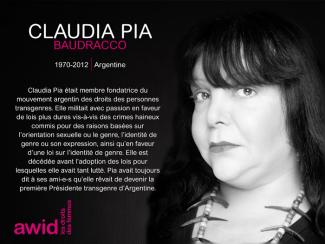
Claudia Pia Baudracco
Esta sección de análisis especial ofrece un análisis feminista crítico y acceso a los recursos clave relacionados con la «protección de la familia» en los espacios internacionales de derechos humanos.
Durante los últimos años, venimos observando una nueva y preocupante tendencia en el ámbito internacional de derechos humanos, donde se están empleando discursos sobre la «protección de la familia» para defender violaciones cometidas contra miembros de la familia, de modo de reforzar y justificar la impunidad y para coartar la igualdad de derechos en el seno de la familia y la vida familiar.
La campaña para «proteger a la familia» es impulsada por proyectos conservadores que tienen como fin imponer interpretaciones «tradicionales» y patriarcales de familia; quitando los derechos de las manos de sus miembros para ponerlos en las de la institución «familia».
Desde 2014 un grupo de estados opera como bloque en espacios de derechos humanos, bajo el nombre «Group of Friends of the Family» [Grupo de amigos de la familia], y a partir de entonces se han aprobado resoluciones sobre la «Protección de la familia» todos los años.
Esta agenda se ha extendido más allá del Consejo de Derechos Humanos (HRC, por sus siglas en inglés). Hemos visto cómo el lenguaje regresivo sobre «la familia» se ha introducido en la Comisión de la Condición Jurídica y Social de las Mujeres (CSW, por sus siglas en inglés), y hemos asistido a intentos por incluir este lenguaje en las negociaciones sobre los Objetivos de Desarrollo Sostenible.
AWID trabaja con asociadxs y aliadxs para resistir conjuntamente las agendas regresivas de «Protección de la familia» y otras, y para defender la universalidad de los derechos humanos.
En respuesta a la creciente influencia de actores regresivos en los espacios de derechos humanos, AWID se ha unido con aliadxs para formar el Observatorio de la Universalidad de los Derechos (OURs, por sus siglas en inglés). OURs es un proyecto colaborativo que monitorea, analiza y comparte información sobre iniciativas anti-derechos tales como la «Protección de la familia».
Derechos en Riesgo, el primer informe de OURs, traza un mapa de los actores que conforman el cabildeo global anti-derechos e identifica sus discursos y estrategias principales, señalando los efectos que estos discursos y estrategias están teniendo sobre nuestros derechos humanos.
El informe expone a la «Protección de la familia» como una agenda que ha promovido la colaboración entre una amplia gama de actores regresivos en las Naciones Unidas. La describe como un marco estratégico que aloja «múltiples posiciones patriarcales y anti-derechos, cuyo marco, a su vez, apunta a justificar e institucionalizar estas posiciones».
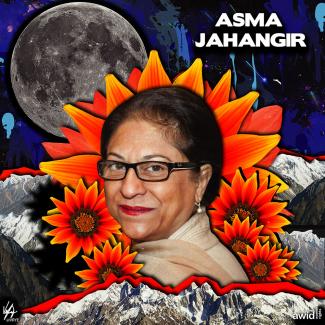
Asma était une militante pakistanaise des droits humains, une critique courageuse de l'ingérence de l'armée dans la politique et une défenseure acharnée de la primauté du droit.
Elle a été la présidente fondatrice de la Commission des droits de l'homme du Pakistan, un groupe indépendant ainsi qu’administratrice de l'International Crisis Group. Elle a remporté des prix internationaux et a été rapporteuse des Nations Unies sur les droits de l'homme et les exécutions extrajudiciaires.
Ses collègues et ami-e-s de l’AWID se souviennent d'elle avec affection
« Grâce à sa vie, Asma a réécrit l'histoire que beaucoup d'entre nous ont racontée en tant que femmes. Asma a changé le monde. Elle l'a changé au Pakistan et elle l'a changé dans notre imaginaire. »
The growing dominance of international financial markets and institutions in defining global economic policies has resulted in the capture of people’s power in the interest of global elites and big corporations.
Our policy brief on Illicit Financial Flows explores their disproportional gender impact and unveils the current legal and political frameworks that allow multinational corporations to benefit from tax abuse to the detriment of people and planet.
The brief concludes with these seven feminist policy recommendations to demand transparency and corporate accountability in order to curb illicit financial flows.
Illicit financial flows are gaining unprecedented attention: whether in development negotiations, like those leading to Agenda 2030 and the Addis Ababa Financing for Development Conference in 2015; or making headlines in mainstream media with the release of leaked documents on offshore finance known as the ‘Panama Papers’. In another example, the Ecuadorean people voted to bar politicians and civil servants from having assets, companies or capital in tax havens, in a referendum in February 2017. The Ecuadorian government is now a leading voice within the group of G77, in the United Nations, to create a UN global tax body to end tax havens.
This public attention potentially builds momentum for feminists, social movements and tax justice advocates to pressure for the transformation of the global financial system, which entrenches global inequalities, including gendered inequalities.
We offer below a set of seven policy asks as a contribution to growing advocacy efforts from social justice, feminist, women’s rights and gender equality actors:
Чтобы заявить о себе как об эксперте по вопросам ресурсного обеспечения феминистских движений

At the time of her death, following a short but aggressive battle with cancer, Deborah was the Chief Communication and Engagement Officer at the Women’s Funding Network (WFN).
Deborah also worked for the Global Fund for Women from 2008 to 2017. Deborah was extremely loved and respected by board, staff, and partners of Global Fund for Women.
Kavita Ramdas, former CEO of the Global Fund for Women aptly noted that Deborah was “a small package exploding with warmth, generosity, intelligence, style, and a passionate commitment to fusing beauty with justice. She understood the power of story. The power of women’s voice. The power of lived experience. The power of rising from the ashes and telling others it was possible. And, still we rise.”
Musimbi Kanyoro, the present CEO of the Global Fund for Women, added, “We have lost a sister and her life illuminates values that unite and inspire us all. As we all come together to mourn Deborah’s passing, let us remember and celebrate her remarkable, bold, and passionate life.”

 За последнее десятилетие спонсоры выделили значительно больше средств на обеспечение гендерного равенства, однако лишь 1% средств, выделенных на благотворительность и развитие был направлен непосредственно на поддержку социальных изменений, проводимых под руководством феминисток.
В солидарности с движениями, которые по-прежнему остаются невидимыми, маргинализированными и не имеют доступа к основному, долгосрочному, гибкому и основанному на доверии финансированию, данный опрос освещает фактическое состояние ресурсного обеспечения, выявляет ошибочные решения и указывает на то, как необходимо изменить модели финансирования, чтобы движения процветали и решали сложные задачи современного мира.
Carmen encabezaba el Construction Resource and Development Collective (CRDC, Colectivo de recursos para la construcción y el desarrollo) y fue fundamental para apoyar la participación de las mujeres en la industria de la construcción en Jamaica.
También trabajó con mujeres rurales y urbanas en temas relacionados a la preparación para afrontar desastres naturales. Trabajó de manera cercana con mujeres (especialmente madres solteras) enseñándoles cómo usar los cinturones para huracanes y otras tecnologías para poner sus hogares a resguardo. Trabajó en el área de agua y obras sanitarias y fue una fuerte defensora del manejo y desarrollo ambientalmente sustentable.
Fue parte de la Comisión Huairou y realizó incidencia en favor de las mujeres de base en temas vinculados a refugio, energía y medios de vida sustentables.

En planifiant l’activité que vous voulez présenter au Forum, pensez aussi à la façon dont vous financerez votre participation. Prenez en compte : l’hébergement, le voyage, le visa, les frais d’inscription au forum, etc.
Veuillez noter que ce Forum offrira de nombreux « espaces ouverts » et moments d’apprentissage et d’échange entre mouvements, mais aussi moins de sessions formelles. (Consultez la section « Comment décrire le Forum pour votre levée de fonds » ci-dessous concernant le langage à adopter dans votre demande).
Votre meilleure option sera toujours de faire appel à vos bailleurs de fonds actuels : Si votre groupe bénéficie de l'appui d'organismes donateurs, dites-leur que vous souhaitez participer au Forum de l’AWID pour apprendre, expérimenter, échanger et travailler en réseau, et ce même si votre activité n'est pas sélectionnée dans le programme final.
Pour soutenir votre participation, vos bailleurs de fonds devront en être informés longtemps à l'avance, alors n’attendez pas pour leur en parler déjà tout de suite ! (Ils sont déjà en train de décider des fonds qu’ils vont distribuer en 2020. Nous vous recommandons de les contacter au plus tard début 2020.) Bon nombre de donateurs qui soutiennent les organisations féministes disposent de budgets alloués au déplacement pour le Forum.
D’autres pourraient les inclure dans des renouvellements de subventions ou dans d’autres financements permettant de couvrir les frais de déplacements.
Si vous ne disposez pas actuellement d’un soutien financier, ou que vous ne pouvez garantir de subventions dédiées au déplacement pour le Forum, vous pouvez envisager de contacter de nouveaux donateurs.
Les délais et exigences varient d’un donateur à l’autre, et la procédure d’octroi de financement peut prendre plusieurs mois. Si vous envisagez d’effectuer de nouvelles demandes de financement, nous vous encourageons à le faire au plus tôt.
Les mouvements féministes ont depuis longtemps fait preuve de créativité lorsque s’agissait de financer leur propre militantisme. Voici quelques idées que nous avons été en mesure de rassembler afin d’inspirer des modes alternatifs de financement.
Pour plus d’inspiration, vous pouvez consulter les informations continues de l’AWID sur le financement autonome, comprenant des idées spécifiques sur le financement de la participation aux conférences.
Le Fonds d’accès de l’AWID : l’AWID s'efforce de faire du Forum un véritable rassemblement mondial avec la participation de divers mouvements, régions et générations. A cette fin, l'AWID mobilise des ressources pour constituer un Fonds d'accès limité (AF, selon son sigle anglais) afin d'aider les participant-e-s à couvrir leurs frais de participation.
Vous pouvez indiquer dans votre candidature si vous souhaitez soumettre une demande de financement au Fonds d'accès de l’AWID.
N'oubliez pas que ces ressources sont très limitées et que nous ne serons pas en mesure de soutenir tou.te.s les candidat.e.s. Même si vous faites une demande pour le Fonds d'accès de l’AWID, nous vous encourageons à continuer à explorer d'autres options pour financer votre participation au Forum. Les décisions relatives au Fonds d'accès seront confirmées d'ici la fin du mois de juin 2020.
Voici quelques extraits de messages qui peuvent vous aider à prendre contact avec vos donateurs ou votre réseau. N’hésitez pas à les adapter de la façon que vous jugerez la plus utile à vos yeux !
Le Forum de l’AWID est un espace cocréé par des mouvements féministes qui stimule les participant·e·s dans leur propre activisme, et renforce les connexions entre divers mouvements de droits et de justice. Les participant·e·s en tirent des sources d’espoir, d’énergie et d’imagination débridée, tout en approfondissant leurs analyses partagées et leurs apprentissages. C’est aussi un lieu de renforcement de la solidarité entre mouvements qui permet de développer des programmes d’action intégrés et de faire avancer des stratégies communes.
Notre organisation est à la recherche de fonds pour participer à ce Forum afin de se connecter à d’autres activistes et mouvements du monde entier, de consolider nos stratégies et de partager notre travail. Les participant·e·s des années précédentes nous inspirent, notamment lorsque ces personnes décrivent le pouvoir de ce rassemblement mondial féministe :
« Pendant quelques jours… les voix se sont tissées en une perspective mondiale sur l’état de l’égalité de genre. Et lorsque je dis mondiale, je fais référence à des traductions simultanées en sept langues… »
« Nous nous sommes rappelé·e·s que nous n’étions pas seul·e·s. Le Forum est un moyen pour traduire le collectif dans nos mouvements. En dépit des idéologies, des identités ou des frontières, notre force réside dans notre vision et notre soutien les un·e·s pour les autres. »
Veuillez noter que ce Forum offrira de nombreux « espaces ouverts » et moments d’apprentissage et d’échange entre mouvements, mais aussi moins de sessions formelles.
Même si beaucoup de participant·e·s ne feront pas de présentation aux sessions formelles, le Forum offrira cependant un espace précieux d’apprentissage, de réflexion stratégique et d’expérimentation du pouvoir collectif en action des mouvements féministes.
Lors du calcul de vos coûts et du montant nécessaire à financer, il est important de prendre en compte certaines dépenses qui peuvent survenir. Voici des exemples d’éléments clés à considérer :
Le 14ème Forum de l'AWID aura lieu du 11 au 14 janvier 2021 à Taipei, Taiwan.
C'est bien plus qu’un événement de quatre jours. C’est un arrêt de plus dans un parcours de renforcement de mouvement autour des réalités féministes, lequel a déjà commencé et continuera bien au-delà des dates du Forum.
AWID выражает признательность всем тем, чьи идеи, аналитические работы и вклад в развитие легли в основу исследования «Где деньги?» и его дальнейшей адвокации.
Прежде всего, мы выражаем глубочайшую благодарность членам AWID и активисткам(-там), которые участвовали в консультациях, и провели этот опрос вместе с нами, щедро поделившись своим временем, аналитикой и теплом.
Мы выражаем признательность феминистским движениям, союзницам(-кам) и феминистским фондам, включая (но не ограничиваясь ими) Black Feminist Fund, Pacific Feminist Fund, ASTRAEA Lesbian Foundation for Justice, FRIDA Young Feminist Fund, Purposeful, Kosovo Women’s Network, Human Rights Funders Network, Dalan Fund and PROSPERA International Network of Women's Funds , за ваше тщательное исследование состояния ресурсного обеспечения, вдумчивый анализ и постоянную адвокацию для достижения более объемного и эффективного финансирования для феминистских организаций и движений за гендерную справедливость во всех контекстах.