Análisis Especiales

AWID es un organización feminista internacional de membresía, que brinda apoyo a los movimientos que trabajan para lograr la justicia de género y los derechos de las mujeres en todo el mundo.

Foro de AWID: Co-creando futuros feministas

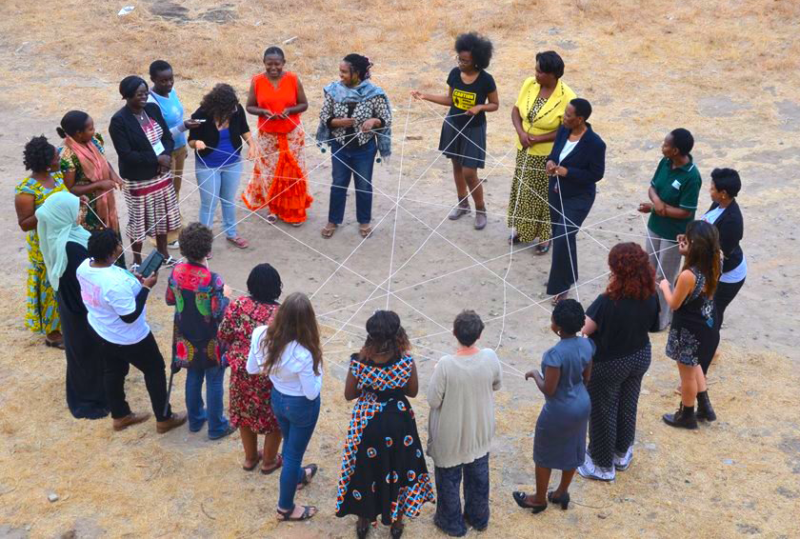
En septiembre de 2016, 1800 feministas y activistas por los derechos de las mujeres de todos los rincones de nuestros movimientos se congregaron en las costas de Bahia, en el 13º Foro Internacional de AWID.

En esta sección se destacan los logros, los aprendizajes y los recursos que surgieron de las ricas conversaciones mantenidas. Te invitamos a analizar, compartir y comentar.


¿Qué ha pasado desde 2016?

Uno de los aportes más importantes del Foro fue la necesidad de ampliar y profundizar nuestro trabajo entre movimientos, frente a la confluencia de los fascismos en auge, fundamentalismos, codicia corporativa y cambio climático.

Con esto en mente, AWID, en asociación con múltiples aliadxs, ha estado trabajando para que estas semillas de resistencia:

AWID se ha comprometido, mediante su próximo plan estratégico y su proceso del Foro, a continuar y profundizar las relaciones, las lecciones y los procesos iniciados en el Foro 2016 y basándonos en el momento actual.

¿Que pasa ahora?

El mundo es un lugar muy diferente de lo que era un año atrás, y seguirá cambiando en los próximos años.

El próximo Foro de AWID se realizará en la región del Pacífico Asiático (el lugar y la fecha exactos serán anunciados en 2018). Esperamos que te unas a nosotrxs.

Sobre el Foro de AWID

Los Foros de AWID comenzaron en 1983 en Washington DC. Desde entonces, el evento ha crecido hasta convertirse en muchas cosas para muchas personas: un proceso iterativo para darle forma a nuestros análisis, objetivos y acciones; un hito crucial que fortalece los feminismos de lxs participantes e infunde energías a sus procesos de organización; un hogar político donde lxs defensoras de derechos humanos encuentran un santuario y solidaridad.

Más información sobre los Foros anteriores

Contenido relacionado

Snippet FEA different lines of work S4 (ES)

Líneas de trabajo:

EN CONTRA DE

Body

Download your faciliation guide:

"A Feminist Approach to Understanding Illicit Financial Flows and Redirecting Global Wealth"

IFF Toolkit

Download your facilitation guide in English

This Guide is also available in Spanish and Russian


Thanks to the co-creators of this facilitation guide:

  • Daniela Fonkatz and Ana Ines Abelenda (AWID)
  • Zenaida Joachim (Mesoamericanas en Resistencia - El Salvador)
  • Olga Shnyrova (Ivanovo Center for Gender Studies - Russia)
  • Leah Eryenyu (Akina Mama Wa Afrika - Uganda)
  • Daryl Leyesa (Oriang and PKKK/National Rural Women Congress - the Philippines)

Stella Mukasa

Stella comenzó su carrera en el Ministerio de Género y Desarrollo Comunitario en Uganda colaborando con lxs legisladores en reformas legales, incluida la Constitución de Uganda de 1995, que estableció algunas de las reformas más progresistas para las mujeres en la región.

Stella es respetada y admirada en toda la región por sus incansables esfuerzos para crear y hacer cumplir leyes y políticas que tomen en cuenta cuestiones de género. También desempeñó un papel clave en la redacción de la Ley de Violencia Doméstica de Uganda y en la movilización de apoyo para las constituciones sensibles al género tanto en Uganda como en Ruanda.

A través de su trabajo con el Centro Internacional para la Investigación sobre la Mujer (ICRW, por sus siglas en inglés), abordó la violencia contra lxs niñxs y trabajó para fortalecer las capacidades de las organizaciones de base que abordan la violencia de género. Stella fue profesora en cursos sobre derechos de género y la ley, en la Universidad Makerere, y formó parte de las juntas directivas de Akina Mama wa Afrika, ActionAid International Uganda y Open Society Initiative para África Oriental.


Stella Mukasa, Uganda

Моего языка нет в списке и мне сложно заполнить опрос – что мне делать?

AWID стремится к языковой справедливости, и мы сожалеем, что на данный момент проведение опроса на большем количестве языков не представляется возможным. Если вам нужна помощь в переводе или вы хотите заполнить анкету на любом другом языке, пожалуйста, свяжитесь с нами по адресу witm@awid.org

Snippet FEA Decent Pay (FR)

Illustration d'une main à la peau blanche tenant de l'argent rose sur un fond turquoise.

DES SALAIRES DÉCENTS

Reason to join 1

Faites partie d’une organisation et d’une communauté internationales, associatives et féministes. Nos membres sont établi·e·s dans toutes les régions du monde; iels apprennent les un·e·s des autres et se soutiennent mutuellement dans un réseau mondial fondé sur la solidarité.

Body

Holding up the Skies

A Film Series on Feminist Realities from Africa and the African Diaspora

by Gabrielle Tesfaye

When I created my short animation film, The Water Will Carry Us Home, my mind was plugged into a magical world of fearless resilience and ancestral mermaids who transformed their deepest scars into a new generation of life. Set during the time of the transatlantic slave trade, I was pulled to show this history of African enslavement in a different way than it has ever been told on screen. I wanted to give my ancestors the commemoration they never received. I was motivated to reclaim the history that continues to paint us as helpless victims. Essentially, I wanted to tell the truth. To reclaim and reimagine our history and perspective, means to simultaneously heal our generational traumas that exist today. It is this important work that so many women through the African continent and the African diaspora are doing today, igniting our collective Feminist Realities. 

In the making of the film I researched religiously, and in what was written, I saw what was not. There were many times I felt I was hitting a wall trying to find something that was not there, and it was in those voided places that I realized the storytellers of today are filling the voids. I found the most useful stories in contemporary art, film, and African diaspora folklore. 

“... a truly unique, raw and representation of feminist power in action.”
 
    - Hers is Ours Collective, organizers of the Outsider Moving Art & Film Festival

The Water Will Carry Us Home carried itself around the world into the hearts of the Diaspora. It also led me here, as the curator of the African and Diaspora film screenings of AWID’s Co-Creating Feminist Realities initiative. Whilst curating this collection of films, I looked for stories that were completely unique, raw and representational of feminist power in action. Consisting of three shorts and one feature, they reveal stories through many communities in Africa and the diaspora, including Ethiopia, Uganda, The Democratic Republic of Congo, South Africa and Kenya. These films reposition African women as what they truly are- self governing and empowered through the unfiltered lens of their work. 

“An incredibly beautiful, attentive, finely observed telling of the connection between Africa and its Diaspora formed form the trans Altantic slave trade. The visual universe it creates is just gorgeous… an echo of the fusion of spiritual traditions and non-linear time that speak to how we are still experiencing the moments of the past that formed 'new' worlds of diaspora blackness.”
 
    - Jessica Horn, PanAfrican feminst strategist, writer and co-creator of the temple of her skin


Our short documentary film, Women Hold Up the Sky, created by the WoMin African Alliance, tells the story of women activists in Uganda and the Democractic Republic of Congo who are actively reclaiming their land rights, threatened by mining and other extractives in their homes. The film not only exposes the corruption of extractivism, but finally shares what we have been missing on screen - how grassroots African women are actively organizing, strategizing, and analyzing within their communities to create women-centred and community-driven alternatives. Margaret Mapondera of WoMin explains it beautifully, that they are the “custodians of lands, forests, waters, rivers and territories; the ways in which women hold and transmit the stories / herstories of our past and our futures; the powerful and transformative ways of being that women embody in their relationships to each other, to the environment and in themselves.” 

“A refreshing and much-needed piece of cinema highlighting the many ways African women are coming together to create women-led and community-driven alternatives… The fight is on and
women hold the key.”
 
    - Hers is Ours Collective, organizers of the Outsider Moving Art & Film Festival


Pumzi, created by critically acclaimed director Wanuri Kahiu, bridges Africa and science fiction around climate and environmentalism. Pumzi imagines a futuristic world where humankind has been forced to settle on another planet. While Pumzi seems afro-futuristic and new for Africa on the surface, Kahiu reveals the truth that science fiction and fantasy is something that has always existed in African storytelling, but never recognized. Kahiu creates a world where women are truth seekers and heroes who pioneer us into a new world, the opposite of images that position Africans as victims of war and destruction. Instead, Pumzi writes the narrative of African women being their own saviors and problem solvers, who stop at no cost to follow the cryptic visions they channel in their dreams. 

“A pioneering African sci-fi film, situating women as scribes of the future and opening up our visions about other worlds, other universes we might occupy as Africans - always an important exercise as we imagine our way out of present crises.”
 
       - Jessica Horn, PanAfrican feminst strategist, writer and co-creator of the temple of her skin


Our feature film of the program, Finding Sally is set in 1970’s Ethiopia during the time of The Red Terror war, documenting the striking history of director Tamara Mariam Dawit’s activist aunt, Sally Dawit. Throughout the film we learn of Sally’s incredible journey as a young and courageous woman activist navigating one of the most violent times of Ethiopian history. Sally’s story not only reveals the gravity of this time, but the reflection of her own personal evolution as a young woman. Dawit was intentional to tell the film through the lens of women, untouched by male voices. Due to so much Ethiopian history being told by men, the making of this powerful story preserved its reality of honoring the feminist perspective. Dawit explains, “Women in revolution and war are often only included as someone's spouse or someone who did cooking or typing work. I wanted to look at the activism around the revolution only through the memories and voices of women.” Finding Sally demonstrates the reclamation of history sought by current filmmakers today. It is an igniting of feminist power and our connected realities throughout time.   

“The responsibility falls on us, to remember these women that came before us and their brilliant work so they are not forgotten like the thousands of women already forgotten while fighting the good fight. Sally is such a woman and may she never be forgotten.”

     - Hers is Ours Collective, organizers of the Outsider Moving Art & Film Festival

Register here to watch this film from June 18-22


These films have became a part of my own psyche, empowering me to continue building powerful alternatives towards justice from within. They affirm that I am a woman among a world of women, holding up the skies and actively building indestructible Feminist Realities. These films are more than stories of African women - they are globally relatable, inspiring and set the example of Feminist Realities for all of us around the world. 


Gabrielle Tesfaye:

Gabrielle Tesfaye is an interdisciplinary artist versed in painting, animation, film, puppetry and interactive installation. Her work is rooted in the African diaspora, Afro-futurism, ancient art practices and cultural storytelling.

Follow us on Social Media to receive news about upcoming events and screenings:

Facebook: @AWIDWomensRights
Instagram: @awidwomensrights
Twitter ENG: @awid
Twitter ES: @awid_es
Twitter FR: @awid_fr
LinkedIn: Association for Women's Rights in Development (AWID)

Juana Ramírez Santiago

Ayant co-fondé le réseau Red de Mujeres Ixiles de Nebaj, une organisation de défense des droits des femmes autochtones, membre de l’Initiative mésoaméricaine des femmes défenseur-e-s des droits humains (IM-Defensoras en espagnol), Juana était actuellement membre de son conseil d’administration.

Elle était également sage-femme et mère de 7 enfants. Juana avait reçu des menaces de mort qui avaient été signalées au bureau du procureur. Juana est la troisième défenseure autochtone assassinée dans la région en 2018. L'Ombudsman pour le Guatemala a signalé qu'au total 20 défenseur-e-s ont été tué-e-s dans le pays cette année.

Juana Ramírez Santiago a été abattue par des assaillants non identifiés alors qu'elle traversait un pont à Nebak, Quiché, au Guatemala. Les enquêtes visant à identifier les auteurs sont en cours. 


Juana Ramírez Santiago, Guatemala

O nosso grupo não recebeu qualquer financiamento nos três anos entre 2021 e 2023. Devemos preencher o questionário mesmo assim?

Sim, ainda queremos a sua resposta, independentemente de terem recebido financiamento em três, dois, um, ou qualquer um dos anos entre 2021 e 2023.

Snippet FEA Map of Spain Union Otras (EN)

Mustard background with a pink map of Spain and a yellow pin of the location of Sindicato Otras;

Solidarity: membership why page

Solidarity 

We take a position in solidarity with each other and diverse struggles for justice and freedoms. We strive to mobilize and strengthen collective action and practice meaningful ways of working with each other.

Main image
cfa_header_v8.2.png
Body

#MeToo in China

En China, el movimiento #MeToo [«Yo También»] se encendió en enero de 2018, empujado por el ímpetu del movimiento #MeToo de todo el planeta. Fue una respuesta a los problemas culturales y sistémicos relacionados con el género y el poder dentro de China. Las bases del movimiento habían sido establecidas durante décadas, y los muchos años de debate y promoción de la igualdad de género, finalmente, hicieron erupción con tremenda fuerza en toda la sociedad. El movimiento #MeToo fue impulsado fundamentalmente por jóvenes, que incluyen a innumerables mujeres anónimas y sus aliadxs, en busca de oportunidades para hacer realidad el principal «sueño chino»: transformar a China en un país con igualdad de género.
 
En China, el contexto para el movimiento #MeToo es extremadamente adverso: el Estado de derecho, la justicia y la transparencia de las acciones gubernamentales y la libertad de expresión no pueden darse por descontados, pero estos son precisamente los objetivos por los cuales lucha el movimiento. Ha sido, desde el principio, una lucha intensa, y cada víctima o activista que se visibiliza corre enormes riesgos: desde ser silenciadx o humilladx o de sufrir represalias hasta poner en peligro su seguridad. Todos los éxitos del movimiento #MeToo han sido logrados por quienes son lo suficientemente valientes como para asumir los costos de manifestarse y desafiar la censura.
 
La exhibición «#MeToo in China» fue inaugurada en 2019 y recorrió cinco ciudades. Su objetivo es dar mayor prominencia  a las experiencias personales de lxs víctimas y lxs activistas, para inspirar al público a unirse a la lucha a través del contacto con estas historias. La exposición misma se ha convertido en parte de la lucha #MeToo: ha debido enfrentar desafíos en su itinerario por toda China y, en más de una ocasión, fue amenazada con la clausura.

#MeToo China Image
#MeToo China Image
#MeToo China Image

Diakite Fatoumata Sire

Diakite was actively involved in advocating for women in political and public life in Mali.

She worked to support training of women candidates in elections, and spoke out against the practice of Female Genital Mutilation (FGM). She was a strong proponent of reproductive health and rights. 


Diakite Fatoumata Sire, Mali

لماذا تسألون عن اسم المجموعة، المنظمة و\ أو الحركة التي تعبئ الاستطلاع؟

نسأل عن هذه المعلومات كي نسهّل عملية المعالجة وكي نستطيع أن نتواصل مع مجموعتكم/ن في حالة لم تستطيعون تكملة الاستطلاع و\ أو في حالة كانت لديكم/ن شكوك أو أسئلة إضافية. يمكنكم/ن قراءة المزيد عن كيف نستعمل المعلومات التي نجمعها خلال عملنا هنا.