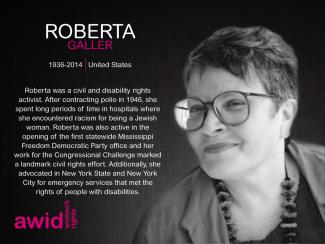
Roberta Galler

En septiembre de 2016, 1800 feministas y activistas por los derechos de las mujeres de todos los rincones de nuestros movimientos se congregaron en las costas de Bahia, en el 13º Foro Internacional de AWID.
En esta sección se destacan los logros, los aprendizajes y los recursos que surgieron de las ricas conversaciones mantenidas. Te invitamos a analizar, compartir y comentar.
Uno de los aportes más importantes del Foro fue la necesidad de ampliar y profundizar nuestro trabajo entre movimientos, frente a la confluencia de los fascismos en auge, fundamentalismos, codicia corporativa y cambio climático.
Nuestras Iniciativas Semilla han ayudado a 20 ideas que surgieron en el Foro para crecer en forma de acciones concretas
El vídeo «Defendiendo a las Personas y al Planeta» y la guía «Tejiendo la resistencia a través de la acción» estan protagonizados por defensoras de derechos humanos y presentan estrategias concretas para confrontar al poder corporativo
Con nuestras animaciones El estado de nuestros movimientos feministas y Justicia climática y ambiental, los movimientos ahora tienen herramientas creativas para apoyar su trabajo.
La compilación de las expresiones artísticas «Los Movimientos Importan», sigue inspirando una organización más fuerte y creativa en todo el mundo.
Los movimientos también pueden beneficiarse de nuevas metodologías para imaginar nuestros futuros feministas (¡pronto!)
AWID se ha comprometido, mediante su próximo plan estratégico y su proceso del Foro, a continuar y profundizar las relaciones, las lecciones y los procesos iniciados en el Foro 2016 y basándonos en el momento actual.
Los Foros de AWID comenzaron en 1983 en Washington DC. Desde entonces, el evento ha crecido hasta convertirse en muchas cosas para muchas personas: un proceso iterativo para darle forma a nuestros análisis, objetivos y acciones; un hito crucial que fortalece los feminismos de lxs participantes e infunde energías a sus procesos de organización; un hogar político donde lxs defensoras de derechos humanos encuentran un santuario y solidaridad.
(« main échangée »)
Terme des communautés noires du Cauca du Nord pour la minga, le travail collaboratif dans les fermes, basé sur l'entraide et la solidarité.

Feminist, women’s rights, gender justice, LBTQI+ and allied movements around the world are at a critical juncture, facing a powerful backlash on previously-won rights and freedoms. Recent years have brought the rapid rise of authoritarianism, violent repression of civil society, criminalization of women and gender-diverse human rights defenders, escalating war and conflict in many parts of our world, continued perpetuation of economic injustices, and the intersecting health, ecology and climate crises.

AWID正密切關注全球新冠肺炎疫情,目前會按原訂計畫推動論壇事宜。
若屆時情況有變,我們會立即通知您。
第十四屆AWID國際論壇將於西元2021年9月20日至23日在台北举行。
更多資訊 (in English)
|
383 people |

1 |
Provide AWID members, movement partners and funders with an updated, powerful, evidence-based, and action-oriented analysis of the resourcing realities of feminist movements and current state of the feminist funding ecosystem. |
2 |
Identify and demonstrate opportunities to shift more and better funding for feminist organizing, expose false solutions and disrupt trends that make funding miss and/or move against gender justice and intersectional feminist agendas. |
3 |
Articulate feminist visions, proposals and agendas for resourcing justice. |
自2019年年末在印尼發生的一連串事件中,我們觀察到了當地軍事緊張與對同志權益的反彈跡象,AWID希望多元的與會者能在論壇齊聚一堂,但這讓我們自問是否能為與會者維持合理安全和讓人感到被歡迎的環境。
經過仔細商討後,AWID董事會在2019年11月決定將第十四屆AWID國際論壇的舉辦地點由峇里島改至台北。
台北擁有穩健的勤務服務能力,對旅客友善(針對國際論壇參與者提供便利的電子簽證流程)。
更多資訊請見以下 :
 The Cover
|
 The Powerful
|
 The Ivy
|
 The Howl
|
Production and entrepreneurship |
 Artisana
|

There are many reasons why your response to the WITM survey matters. The survey offers the opportunity to share your lived experience of mobilizing funding to support your organizing; claim your power as an expert on how money moves and who it reaches; and contribute to collective and consistent advocacy to funders moving more and better funding. Over the last two decades, AWID’s WITM research has proven to be a key resource for activists and funders. We wholeheartedly invite you to join us in its third iteration to highlight the actual state of resourcing, challenge false solutions, and point out how funding must change for movements to thrive and meet the complex challenges of our times.

No. Valoramos muchísimo su trabajo, pero no estamos buscando respuestas de fondos de mujeres/feministas por el momento. Alentamos a compartir la encuesta con sus socios beneficiarios y con sus redes feministas.
Nos entusiasma compartir nuestro nuevo Plan Estratégico (2023-2027) con el mundo. Próximamente, AWID anunciará a nuestra comunidad y membresía al respecto.
La Asociación para los Derechos de las Mujeres y el Desarrollo es una organización feminista mundial, de membresía, que se dedica a brindar apoyo a los movimientos.
Por más de 35 años hemos formado parte de un increíble ecosistema de movimientos feministas que trabajan para alcanzar la justicia de género y los derechos humanos de las mujeres de todo el mundo.
AWID imagina un mundo donde las realidades feministas florezcan, donde los recursos y el poder sean compartidos de maneras que permitan a todxs, y a las generaciones futuras, prosperar y concretar plenamente su potencial con dignidad, amor y respeto, y donde la Tierra nutra la vida en toda su diversidad.
Nuestra misión es apoyar a los movimientos feministas, de derechos de las mujeres y por la justicia de género para que progresen y para que sean una fuerza impulsora de retos a los sistemas de opresión y para la creación conjunta de realidades feministas.
Desarrollamos nuestro trabajo a través de estas tácticas:
Hacemos uso colaborativo de nuestro acceso, poder, recursos y relaciones para influir estratégicamente sobre las políticas y las prácticas. Nos proponemos impulsar agendas feministas a través de nuestro trabajo con quienes tienen poder de decisión política, con financiadoras y con activistas en los espacios regionales y mundiales. Para reforzar nuestro poder e influencia colectivos, también procuramos influir sobre los movimientos feministas y de derechos de las mujeres para que pongan en lugar central a los movimientos históricamente oprimidos.
Utilizamos nuestro poder de convocatoria para facilitar el diálogo y pensar estrategias sobre temas clave. Conectamos a nuestra membresía y aliadxs entre sí, para que compartan e intercambien recursos, ideas y acciones sobre temas relevantes. Organizamos y facilitamos espacios en los que participan y se fortalecen diversos movimientos, espacios para imaginar y concebir nuevos futuros, para desarrollar tácticas de influencia efectivas y para crear juntxs agendas y procesos transformadores.
Trabajamos para movilizar a nuestra membresía y a los movimientos que apoyamos para fortalecer la acción colectiva en solidaridad con causas feministas y con lxs defensorxs que están en peligro. Construimos colaboraciones de largo plazo, nos comprometemos en la escucha activa y la solidaridad continua. Trabajamos con defensorxs para construir conocimiento, redes de apoyo y solidaridad para la protección y el bienestar.
Reconocemos el valor único y estratégico de las iniciativas culturales y creativas en la lucha contra la opresión y la injusticia. Trabajamos con artistas que le dan un lugar central a las voces feministas y a las narrativas de la comunidades históricamente oprimidas. En esta táctica emergente, vemos al arte y la expresión creativa como algo que nos ayuda a concebir un mundo donde las realidades feministas siguen floreciendo y sigan siendo celebradas.
Nuestras iniciativas trabajan en las intersecciones de escenarios de cambio que buscamos abordar, de los movimientos que priorizamos y de las tácticas que usamos:
Monitoreamos, documentamos y hacemos visible cómo están operando y aglutinándose lxs actorxs anti-derechos en los espacios multilaterales y apoyamos a los movimientos feministas, de derechos de las mujeres y por la justicia de género y sus aliadxs para contrarrestar esa influencia e impacto.
Desde perspectivas como el extractivismo, la justicia impositiva y la rendición de cuentas corporativa, construimos conocimiento sobre el poder corporativo y su influencia; abogamos por que las empresas asuman sus responsabilidad así como por la distribución equitativa de la riqueza, y amplificamos las propuestas feministas para lograr economías justas.
Desarrollamos análisis accesibles y orientados a la acción acerca del estado del financiamiento para los movimientos feministas. Nos proponemos influir sobre las políticas y prácticas de las financiadoras, incrementar y sostener el financiamiento para el cambio social feminista, y apoyar las necesidades y estrategias de los movimientos.
Además del impacto que pretendemos tener en el mundo, AWID está expresamente comprometida con el fortalecimiento de nuestro propio aprendizaje y resiliencia organizacionales, para poder fortalecer mejor a los movimientos feministas del mundo.
¡Muchas Gracias!
Sin el generoso aporte y apoyo de nuestros donantes, nuestro trabajo no sería posible.