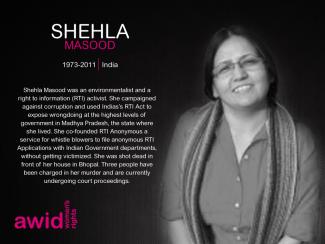
Shehla Masood
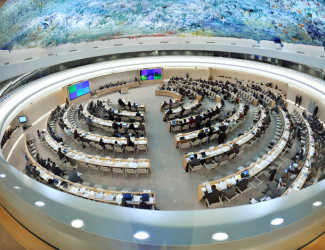
El Consejo de Derechos Humanos (CDH) es el cuerpo intergubernamental del sistema de las Naciones Unidas responsable de la promoción y protección de todos los derechos humanos en todo el mundo. El HRC se reúne en sesión ordinaria tres veces al año, en marzo, junio y septiembre. La La Oficina del Alto Comisionado para los Derechos Humanos (ACNUDH) es la secretaría del Consejo de Derechos Humanos.
Debate y aprueba resoluciones sobre cuestiones mundiales de derechos humanos y el estado de los derechos humanos en determinados países
Examina las denuncias de víctimas de violaciones a los derechos humanos o las de organizaciones activistas, quienes interponen estas denuncias representando a lxs víctimas.
Nombra a expertos independientes que ejecutarán los «Procedimientos Especiales» revisando y presentado informes sobre las violaciones a los derechos humanos desde una perspectiva temática o en relación a un país específico
Participa en discusiones con expertos y gobiernos respecto a cuestiones de derechos humanos.
A través del Examen Periódico Universal, cada cuatro años y medio, se evalúan los expedientes de derechos humanos de todos los Estados Miembro de las Naciones Unidas
Se está llevarando a cabo en Ginebra, Suiza del 30 de junio al 17 de julio de 2020.
AWID trabaja con socios feministas, progresistas y de derechos humanos para compartir conocimientos clave, convocar diálogos y eventos de la sociedad civil, e influir en las negociaciones y los resultados de la sesión.

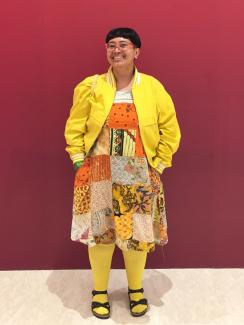
En Indonesia, la bunga [flor] está a menudo asociada a las mujeres. Esto significa que una flor también puede ser asociada a las mujeres transgénero, porque las mujeres transgénero son mujeres. Son igual de bellas, igual de fuertes, y tanto las flores como las mujeres trans no viven solo esperando ser «recogidas», sino que crecen y florecen y mueren como quieren. Esta obra es un tributo a mis amigas mujeres transgénero, en el Día Internacional de la Visibilidad Transgénero.

The AWID Forum is just one stop in the Feminist Realities journey. Let’s travel this path together and explore our power in action!
Contenu lié
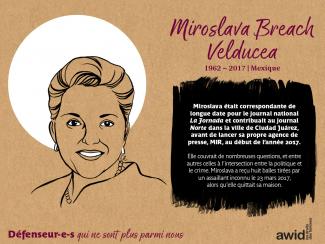
RFI: Une journaliste tuée au Mexique, la troisième en moins d’un mois
par Esra Özban
Dans un monde obsédé par le produit final, donner la priorité au processus est une méthode fondamentalement féministe. Les processus sont importants, et la sélection d’œuvres artistiques n’y fait pas exception. Alors que nous décidions quels films de la région d’Asie du Sud-Ouest et Afrique du Nord (SWANA) représenteraient et s’inscriraient le mieux dans le thème des Réalités féministes, la pandémie à laquelle nous sommes toujours confronté·e·s continue à transformer radicalement nos vies. Le simple fait de penser, d’écrire ou de m’exprimer est devenu un combat de tous les jours. Je n’arrivais à respecter aucune de mes échéances, j’envoyais les uns après les autres des courriels d’excuses à Kamee Abrahamian avec qui je travaillais en tant que commissaire indépendante pour le projet de Ciné-Club Féministe de l’AWID. Le soutien indéfectible de Kamee, sa compréhension et ses précieuses suggestions me rappelaient que, même dans deux parties différentes du monde, en tant que collègues qui ne se côtoient jamais en chair et en os, nous pouvons cocréer des microversions des Réalités féministes pour lesquelles nous vivons et auxquelles nous aspirons.
Pour moi, les Réalités féministes ont beaucoup à voir avec les sororités. Des sororités qui aident les femmes à déminer la région d’Artsakh/Haut-Karabakh. Des sororités nourries dans le Vegan Inclusive Trans Cake préparé par de jeunes féministes trans à Ankara, qui rappellent aux cis-ta qu’elles ne sont pas les bienvenues pour la génération Z. Des sororités qui poussent parmi les brins de menthe sur le toit de Dragica Alafandi dans le camp de réfugié·e·s de Dheisheh en Palestine occupée, dans Sowing Seeds of Resistance. Des sororités qui englobent et accueillent des proximités intimes, sexuelles et révolutionnaires dans le parc Gezi avec #resistayol. Des sororités qui mettent à jour une rencontre imaginée entre deux générations de femmes en exil, dans les rues de Haïfa, avec Your father was born 100 years old and so was the Nakba. Des sororités entre espèces qui construisent un (courageux) espace fictif, créé par Mounia Akl dans son Submarine, où la rebelle Hala, qui refuse de quitter une ville qui croule sous les déchets, est abandonnée à son sort avec un chien pour seul ami.
Cette sélection regroupe des petits morceaux de nombreuses Réalités féministes réalisées dans la région de SWANA ces dernières années. Nous continuerons à imaginer, apprendre et partager des incarnations féministes d’espoir et de pouvoir. En attendant, continuons à nous plonger dans les puissantes alternatives auxquelles ces cinéastes et personnages donnent vie dans ces films. Nous pouvons cocréer chacune des étapes, chacun des gestes et chacune des tentatives, en continuant de cohabiter dans ce monde avec d’autres qui vivent des Réalités féministes et continuent à donner vie à leurs rêves.
De Emily Mkrtichian et Jesse Soursourian
« Avec de beaux visuels associés à des scènes de vérité convaincantes, Motherland est une démonstration de camaraderie et de force entre femmes… Ce film est un témoignage de femmes du monde entier qui sont prêtes à travailler plus dur pour surmonter les obstacles qu'elles rencontrent. »
- Nosarieme Garrick, réalisatrice primée
« Motherland est une visualisation inspirante de solidarité, de courage et de cran… »
- Collectif Hers is Ours (La sienne est nôtre), organisateur du Festival Outsider Moving Art & Film
Motherland from jesse soursourian on Vimeo.
Emily Mkrtichian, à propos des Réalités féministes et d’Artsakh/HK
Nous avons filmé le court-métrage Motherland en République d’Artsakh, en 2018. Chacune de ces femmes me fascinait, par sa force, sa résilience et son humour – malgré le contexte dans lequel elles vivent. Ce contexte, en 2018, était celui du lendemain de la guerre brutale des années 1990, suite à laquelle leur pays est demeuré un territoire non reconnu (ou contesté, aux yeux de la communauté internationale), qui n’a pas reçu l’autonomie et l’indépendance dont bénéficient de très nombreux autres pays. L’Artsakh a également fortement souffert des conséquences visibles dans tous les lieux ayant subi de violents affrontements, et qui frappent bien souvent sur les femmes : troubles de stress post-traumatiques (TSPT), taux élevés d’alcoolisme, taux élevés de violence conjugale, une moindre égalité et moins de libertés pour les femmes, peu – voire pas – de représentation des femmes en politique et aux fonctions publiques. Face à tous ces défis, ce film tente de saisir et rendre compte du feu et du pouvoir des femmes d’Artsakh, qui pourraient ne pas correspondre au paradigme du féminisme occidental traditionnel mais qu’elles ont créé pour elles-mêmes grâce à des liens communautaires forts, l’attention pour leur famille, un dur labeur et la capacité à en rire ensemble. La République d’Artsakh est aujourd’hui à nouveau ravagée par une autre guerre qui lui a arraché 70 % des terres que ces femmes avaient fait grandir en les considérant leurs. Mais je peux vous promettre que ces femmes, et des milliers d’autres, continuent à tenir leurs familles, leurs communautés et leur culture debout avec les mêmes réseaux de soins, d’engagement à travailler dur et d’éclats de rire révoltés face à un avenir incertain.
De Baladi-Rooted Resistance
« Un film opportun à voir après avoir été témoin du dernier bombardement de Gaza par les forces de défense israéliennes. Un aperçu de la manière dont les femmes des communautés palestiniennes survivent à l'oppression structurelle, à travers l'histoire d'une bibliothèque de semences traditionnelles... et des femmes qui les maintiennent comme une forme de rébellion florissante. »
- Jessica Horn, stratège féministe panafricain·e, écrivain·e et cocréateur·rice de The temple of her skin (Le temple de sa peau)
« Regarder des femmes se rassembler et travailler collectivement pour l'autonomie alimentaire est, à mes yeux, à la fois thérapeutique et autonomisant. »
- Collectif Hers is Ours (La sienne est nôtre), organisateur du Festival Outsider Moving Art & Film
L’équipe de Baladi-Rooted Resistance, à propos des Réalités féministes
« Comment parler de Résistances féministes quand on vit à Deheisheh, un camp de réfugié·e·s palestinien·ne·s construit il y a 70 ans en Cisjordanie occupée pour abriter 3 000 réfugié·e·s, et qui en compte aujourd’hui 15 000?Ou quand la terre que l’on cultive est constamment menacée par des colons illégaux?
Quand on est une femme en Palestine occupée, on doit se battre non seulement contre le patriarcat mais également contre le colonialisme et une occupation militaire brutale. »
Dragiča et Vivien se battent contre ces multiples systèmes de domination, à leur manière.
Vivien se sert de semences indigènes pour aider les Palestinien·ne·s à préserver leur identité. Cultiver les aliments traditionnels, selon des méthodes traditionnelles, est porteur de sens : « Si on n’est plus productrice, on reste consommatrice, et quelle meilleure manière de réduire quelqu’une en esclavage qu’en en faisant sa consommatrice? Cela a lieu dans le monde entier, mais ici c’est doublé de l’occupation militaire. »
En Cisjordanie, 31,5 % des ménages souffrent d’insécurité alimentaire. Grâce à son jardin de comestibles sur son toit, Dragiča est parvenue à renforcer l’autonomie alimentaire de sa famille. Dans le camp bondé, où l’armée israélienne fait régulièrement des incursions la nuit pour arrêter et harceler les résident·e·s, le toit de Dragiča nourrit non seulement sa famille, mais nourrit surtout son âme. »
De Rüzgâr Buşki
Rüzgâr Buşki, à propos des Réalités féministes
« Je ne sais pas quoi dire à propos des Réalités féministes, mais en tant qu’artiste trans, en tant qu’activiste en Turquie, je sais que nos réalités sont rudes. Nous vivons dans la violence : physique, psychologique, économique et sexuelle! C’est la raison pour laquelle nous devons construire nos propres réseaux, et cocréer des microréalités les unes pour les autres est une Réalité féministe pour moi. #resistayol est mon premier film. Au début, je prévoyais de faire un film par/avec/pour des personnes trans qui ne tente pas de convaincre quiconque du fait que les personnes trans sont des personnes humaines, et qui ne soit pas centré sur la sensibilisation aux questions trans. Mais le soulèvement de Gezi, l’un des plus gros soulèvements de l’histoire de la Turquie, a eu lieu et le film s’est transformé en autre chose.
Je crois que le processus de production influence vraiment le devenir d’un film. Nous avons véritablement essayé de faire travailler des femmes, des personnes trans et non binaires à chacune des étapes du film. Le film est fait par des personnes qui se sont rassemblées dans un esprit de camaraderie, par amitié. Kanka Productions est fondé sur un esprit de camaraderie transféministe. Je veux que ce film donne espoir, qu’il soigne parce que nous portons toutes et tous de nombreux traumatismes dans nos corps; c’est ce qui nous constitue et ce qui nous relie. La guérison est un processus interminable et nous devons créer des espaces où respirer. #resistayol est une heure de respiration collective. »
Boysan Yakar dans #resistayol
« Alors, des lubunyas (queer) étaient assis·es dans le parc, et tout à coup, des bulldozers sont arrivés et tout le monde s’est senti frustré. Bref, c’est ce qui s’est passé. C’est le parc des Lubunyas et nous avions trente jours pour expliquer cela à cette immense ville. Tout le monde a reconnu que la nuit, des ibnes (pédés) baisent dans ce parc... Le Bloc LGBTI y a déplacé notre communauté. Nous ne faisions déjà absolument pas confiance à l’État, ni à la police, et ne disposions d’aucune sécurité. Nous avons défini nos propres manières de faire les choses, nos propres lois et coutumes pour survivre... Nous avons rapidement instauré la loi à Gezi... dans le souci de créer une langue et une compréhension communes entre tous ces groupes. La langue LGBTI du vivre-ensemble s’est propagée dans tout le parc. C’était la marche des Fiertés tous les jours, tout le monde lançait sans cesse des « ayol ». Nous avons égayé la langue nauséabonde et obsolète de la gauche. Je pense que nous avons eu une telle influence parce qu’on nous a renié·e·s pendant tant d’années. Des plus radicaux·ales aux plus conservateur·trice·s et nationalistes, tout le monde avait besoin de nous parce que tout le monde s’est habitué à se confronter à tout, tout le temps. Ils et elles n’avaient pas l’habitude de voir tant d’énergie, notre énergie. C’est pour ça que c’était un espace politique génial pour nous. Chaque jour,nous nous faisions un devoir de reprendre notre plus gros combat là-bas, le principal, qui est notre combat pour la visibilité et la reconnaissance. C’est pour cela que nous avons eu si mal de devoir quitter Gezi. »
De Pembe Hayat
« ... une déclaration variée, montrant la joie qui existe dans les amitiés au sein de la communauté queer en Turquie comme manifestation de rébellion et de résistance. »
- Nosarieme Garrick, réalisatrice primée
«... amusant, léger et aléatoire. Dans un monde constamment marqué et meurtri par la violence contre la communauté trans, rien, aucune action n'est (malheureusement) privée de sens. Il en va aussi de la joie, de l'amour et du hasard signifiant! »
- Collectif Hers is Ours (La sienne est nôtre), organisateur du Festival Outsider Moving Art & Film
Cayan Azadi dans Vegan Inclusive Trans Cake
« Salut les Barbie, les Ken, les poupées en porcelaine, les Craquinoux. Les copines de Chucky, les sœurs de Chucky, les beaux-frères de Chucky, et sans oublier les beaux-frères amants.
Alors, pourquoi avons-nous fait ce gâteau?
Nous avons entendu dire qu’une travailleuse du sexe trans avait tenté de se suicider, suite à des violences de gardiens et de policiers dans la rue. Elle est toujours au poste de police, et c’est la raison même pour laquelle nous avons fait ce gâteau. Ce gâteau travesti a été préparé pour montrer que nous existons à tous les moments de la vie, que nous persistons à exister, et ce gâteau illustre que cela ne sera pas effacé ou ignoré par la société.
Oui, il y a de la violence dans nos vies. Oui, il y a aussi beaucoup d’ombres, mais malgré cela, nous pouvons quand même nous amuser et profiter de la vie autant que possible. Bon appétit, sœurette! »
De Razan AlSalah
De Mounia Akl
« Il est réalisé comme un poème qu’on écrit… simple, un peu abstrait et émouvant. »
- Collectif Hers is Ours (La sienne est nôtre), organisateur du Festival Outsider Moving Art & Film
Esra Ozban:
Esra Ozban est programmateur·rice et réalisateur·rice de films originaire de Turquie. Son travail artistique, curatorial et universitaire se trouve à la croisée entre autres des pratiques archivistiques critiques, du travail du sexe, de la pornographie et des cultures cinématographiques féministes/queer.

Cette année, aux côtés de militant.e.s féministes du monde entier, nous serons à la CSW68 à New York. Nous serons là pour contester les discours capitalistes et néolibéraux et les fausses solutions autour de la pauvreté, du développement et de la finance. À travers des événements en présentiel, des lives sur nos réseaux sociaux, un stand d'exposition et bien plus encore, nous visons à nous rassembler, amplifier et soutenir les voix et la participation de nos membres et allié.e.s.
Apprenez-en davantage sur notre programme cette année ci-dessous.
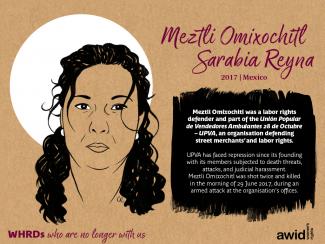
Par le biais de l'organisation syndicale, Sopo, Sabrina et Linda se battent non seulement pour les droits des femmes, des travailleur·euses essentiel·les, des travailleur·euses migrant·e·s et des travailleur·euses du sexe, mais pour les droits de tous·tes les travailleur·euses .
La lutte pour mettre fin à l'exploitation des travailleur·euses est une lutte féministe. C’est pourquoi il n’y a pas d’économies féministes sans syndicats féministes.
✉️ Sólo invitades
📅Martes 12 de marzo
🕒2:00 p. m. - 3:30 p. m. EST
Organiza: Consorcio Observatorio de la Universalidad de los Derechos (OURs)
🏢Blue Gallery, 222 E 46th St, Nueva York
par Nandini Tanya Lallmon
Olajumoke « Jay » Abdullahi et Kym Oliver sont des féministes révolutionnaires à plus d'un titre. (...)
illustration : « Éclose » de Titash Sen >
 |
Hind and Hind were the first documented queer couple in Arab history. In today’s world, they are a queer artist from Lebanon. |
When I was 6, I learned that my grandfather owned a movie theater. My mother recounted to me how it had opened in the early 1960s, when she was also about 6 years old. She remembered that they screened The Sound of Music on the first night.
I would pass by the theater every weekend and watch my grandfather play backgammon with his friends. I didn’t know he was living in the theater, in a room right under the projection booth. I later learned that he moved there after he and my grandmother separated and after the theater closed, in the 1990s, shortly after the Lebanese civil war had ended.
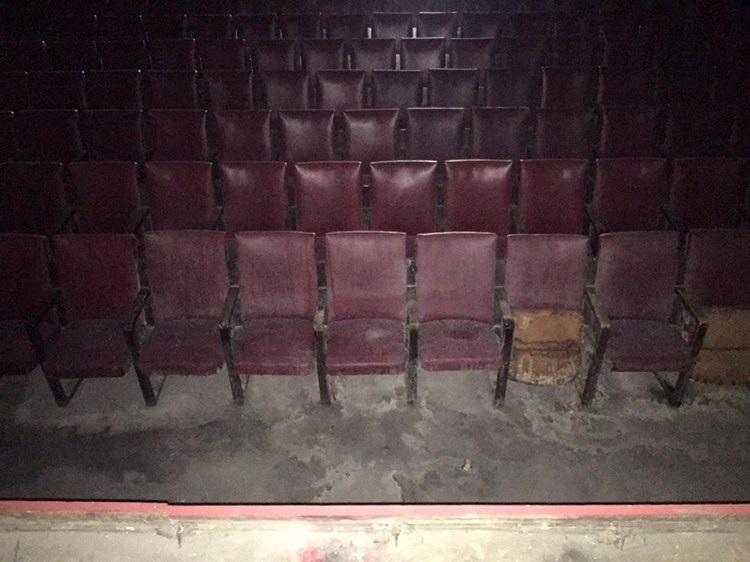
For years and until he passed away, I would mostly see my grandfather play backgammon in the unmaintained reception area of the movie theater. Those repeated scenes are all I remember of him. I never got to properly know him; we never talked about cinema, even though he spent all his time in a run-down movie theater. I never asked him what it was like to live in a place like this. He died when I was 12, on Christmas Eve, from a fall down the spiraling steps that led to the projection booth. It is almost poetic that he passed away in movement, in a house where moving images are perpetually suspended in time.

In the spring of 2020, my cousin called me to say he had cleaned up my grandfather’s movie theater and asked me to meet him there. The two of us had always dreamed of renovating it. I got there before he did. In the reception area, the film poster frames were still there but the posters were gone. I knew there must have been some ticket stubs left somewhere; I found them stacked away in a small rusty tin box, on a shelf in the ticketing booth, and I pocketed some.
I began to walk around. On the main stage, the projection screen was quite dirty and a little torn on the side. I glided my index finger on the screen to remove a patch of dust and noticed that the screen was still white underneath. The fabric seemed to be in good shape too. I looked up to see that my grandmother’s curtains were still in place. They were made of white satin with a little embroidered emblem over the bridge of the curtain, representing the theater. There was a main seating area and a gallery. The chairs seemed to be very worn out.
I noticed the projector peeking out of a small window at the very end of the balcony seating area. I led myself up the spiraling steps of the projection booth.
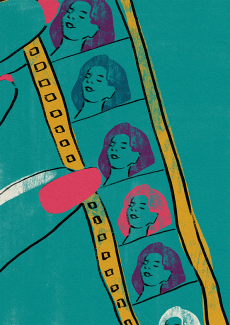
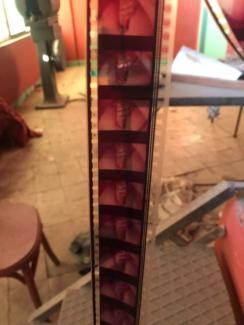
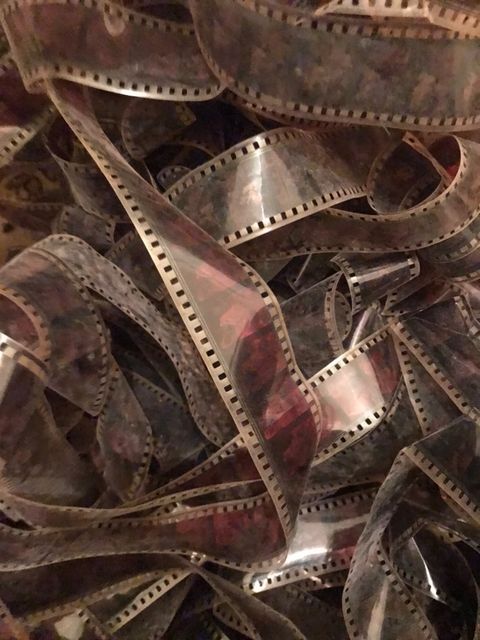
The room was dark, but a source of light coming from the dusty windows revealed a stack of film reels tossed in a corner. Lifeless celluloid strips were tangled up against the foot of the film projector. The dusty reels were all Western, Bollywood, and Science-Fiction genre films with bad titles like The Meteor that Destroyed Earth, or something of the sort. My attention was caught by the dusty film strips – mostly snippets cut out from reels. One by one, the short strips depicted different kissing scenes, what seemed like a suggestive dance, a nondescript scene of a gathering, a close-up of a woman lying down with her mouth open, opening credits to a Bollywood film, and a “Now Showing” tag that went on for several frames.
The Bollywood film credits reminded me of my mother. She used to tell me how they would hand out tissues to audience members on their way out of screenings. I kept the kissing scene and suggestive dance strips; I assumed they had been cut out for censorship reasons. The close-up of the woman reminded me of an excerpt from Béla Balázs’ Visible Man, or The Culture of Film, The Spirit of Film, and Theory of the Film. He said that close-ups in film provided a
silent soliloquy, in which a face can speak with the subtlest shades of meaning without appearing unnatural and arousing the distance of the spectators. In this silent monologue, the solitary human soul can find a tongue more candid and uninhibited than any spoken soliloquy, for it speaks instinctively, subconsciously.
Balázs was mostly describing the close-ups of Joan in the silent film La Passion de Jeanne d’Arc. He pointed out how, “...in the silent (movie), facial expression, isolated from its surroundings, seemed to penetrate to a strange new dimension of the soul.”
I examined the film strip further. The woman looked dead, her face almost mask-like. She reminded me of Ophelia by the painter John Everett Millais. In her book On Photography, Susan Sontag says a photograph is “a trace, something directly stenciled off the real, like a footprint or a death mask.” These death masks are like a presence that reminds of an absence.
I remembered encountering a discourse between death and photography in Roberto Rossellini’s forgotten film The Machine that Kills Bad People. In this film, a cameraman goes around taking photographs of people, who would in turn freeze, and are later suspended in time. French film critic André Bazin used to say that photography snatches bodies away from the flow of death and stores them by embalming them. He described this photographic mummification as “the preservation of life by a representation of life.”
This projection booth, its whole layout, all the things that looked like they were moved, the celluloid strips on the ground, everything my grandfather left a mark on – I felt very protective of.
Underneath the strips was an undone dusty film reel. It seemed like someone had been watching the reel manually. At that moment, my cousin made his way up the spiraling steps to find me examining it. He rubbed his fingers along his chin and, in a very-matter-of-fact way, said, “You found the porn.”

I looked at the film strip in my hand and realized it was not a death scene. The strip was cut out of the porn reel. The woman was moaning in ecstasy. Close-ups are meant to convey feelings of intensity, of climax, but I had never really used Balázs’ theories to describe a porn scene. He wrote how “the dramatic climax between two people will always be shown as dialogue of facial expressions in close-up.” I pocketed the film strip and I named the woman Ishtar. She has lived in my wallet ever since. It seemed strange to compare the close depiction of Joan’s fears and courage with Ishtar’s facial expression in ecstasy.
According to my cousin, my grandfather’s brother would wait until my grandfather left the theater and, instead of closing, invite his friends for some after-hour private screenings. I didn’t think much of it. It was a common practice, especially during and after the Lebanese civil war. After the war, television sets were almost in every Lebanese household. I even remember having one in my bedroom in the late 1990s, when I was around 6 years old. I was told that buying porn films on VHS was popular at the time. Mohammed Soueid, a Lebanese writer and filmmaker, once told me that movie theaters used to screen art films and pornography from the mid-1980s to the mid-1990s, so that they could survive. I also heard that projectionists would cut up porn reels to make different montages, so that they could screen something different every night. Eventually, people stayed within the comforts of their homes to watch VHS tapes on their televisions, and movie theaters began to run out of business.

My cousin went back downstairs to go through an archive of paperwork in the office space. I stayed in the booth and began to slip the film strip between my index and middle finger, sliding it up with my thumbs and slowly running the frames through my hands. I lifted the strip against the dusty window and squinted to make sense of the monochrome vignettes. In this series of frames was an extreme close-up of a dick shoved into a vagina. It went on for several frames until I came across a knot in the film, and I imagined the rest.
Hank is showcasing his hard-on in front of Veronika who is lying in bed across a Louis XIV secrétaire knockoff. She gets up slowly and slides the thin strap of her see-through négligé off her left shoulder. Hank unties her veiled robe, turns her around, slaps her ass, and pushes her down against the secrétaire. He thrusts his dick inside her pussy repeatedly as the back of the furniture bangs against the wallpaper-adorned wall.
I was always attentive to the interior décor, ever since I was told by my Women in Porn Studies professor that the largest porn archives in North America are interestingly used to examine the middle-class furniture of that epoch. So, while Veronika is bending over and being taken from behind by Hank, a university research assistant could very well be trying to guess the design of the gold motif on the secrétaire, or study the rococo relief on a wooden chair in some corner.
For a moment, the booth became a space for female sexual imagination, disrupting a space otherwise promised for the freedom of male sexuality. I was sure that only men were able to access movie theaters that screened porn films. The film reel was too entangled to undo in a projection booth where dust had accumulated for over a decade, so I stuffed it into my duffle bag and walked out of the theater.
I am not sure what came over me, but I felt compelled to keep it. I wanted to feel the thrill of safeguarding something mysterious, something unorthodox. In my mind, I was sure people knew I was hiding something as I walked down the street. A feeling of guilt intertwined with pleasure came over me. It felt kinky.
I got into the house, preoccupied with the thought of having a porn reel in my duffle bag and the stream of thoughts that had unfolded on my walk home. I immediately went to my bedroom. In some distant part of my mind, I remembered that I shared a wall with Layla’s room next door. She was probably not home, but the possibility of being heard excited me. I closed my bedroom door and I took the film strip of Ishtar out.
I imagined her dressed in a light green veiled dress, dancing seductively in front of me, swinging her hips sideways and smiling with her eyes. I got onto my bed. I slipped my fingers into my panties. I lifted my hips. I trailed my hand down my thighs to part them, and slid two fingers in. I tensed up as I palpated my various creases. I moaned before I could stop myself. I panted and swayed. The rays of sun coming through my window planted reluctant kisses onto my skin. I held my breath in and my limbs quivered. I swallowed my breath and laid flat on the mattress.
When I was an undergraduate student, I had taken an introductory film class and Professor Erika Balsom had scheduled a screening of Bette Gordon’s Variety. I was excited to watch producer Christine Vachon’s first film before she moved onto producing films that are now part of the New Queer Cinema movement. Variety was described as a feminist film about Christine, a woman who begins to work as a ticketing clerk in a porn movie theater in New York city called The Variety Theater. Christine overhears the films at the theater but never goes in. Eventually, she becomes interested in a regular customer, whom she watches closely. She follows him to an adult shop where she stands aside and flips through adult magazines for the first time.
Christine’s voyeurism was displayed in different ways throughout the film. The script was also ridden with excess, and erotic monologues that would be considered obscene or vulgar.
In a scene set in an arcade, she reads erotica to her boyfriend. The camera goes back and forth between a close-up of her boyfriend Mark’s butt as he was playing pinball, swinging his hips back and forth against the arcade machine, and a close-up of Christine’s face as she recited her monologue.

“Sky was hitchhiking and he got a ride from a woman in a pick-up truck. It was late at night and he needed a place to stay, so she offered him her place.
She showed him to his room and offered him a drink. They drank and talked and decided to turn in. He couldn’t sleep, so he put on his pants and walked down the hall to the living room. He was a stop short of being seen, but he could see. The woman was naked and spread on the coffee table with only her legs dangling over. Her whole body was excitingly white as if it’d never seen the sun. Her nipples were bright pink, fire-like, almost neon. Her lips were open. Her long auburn hair licking the floor, arms stretched, fingers tickling the air. Her oiled body was round with no points, no edges. Slithering between her breasts was a large snake curving up around one, and down between the other. The snake’s tongue licking toward the cunt, so open, so red in the lamp light. Hot and confused, the man walked back to his room, and with great difficulty, managed to fall asleep. The next morning, over strawberries, the woman asks him to stay another night. Again, he couldn’t sleep […]”
When I was 23, Lynn, the girl I was dating from film class, surprised me by taking me to watch erotica short films on Valentine’s Day. The event took place at The Mayfair Theater, an independent old movie theater. The architecture of the theater recalled North American Nickelodeons, but with a campy touch. Its balconies were decorated with life-size cardboard cutouts of Swamp Thing and Aliens.
That year, the festival was judged by adult star Kacie May and the program consisted of an hour and a half of short films. The content ranged from soft-core machismo-ridden shorts to scat fetish films. We watched a few minutes of what seemed to be heterosexual soft porn. It followed a couple who start making love in a modern living room space, then move to the bedroom. It was mostly footage of them kissing each other, touching each other, and making love missionary-style. Then a woman with a short brown bob crawled onto the bed, licking the back of her own hand in short strokes. She meowed and crawled over the unconcerned couple. They continued to make love. She crawled out to the kitchen, picked up her empty bowl with her teeth, and placed it onto a pillow. She kept walking over them until the end of the short. It seemed quite absurd. I began to laugh, but Lynn looked a bit uncomfortable. I then looked to our left, watching other audience members chugging beers and inhaling popcorn while laughing hysterically. Their uninterrupted laughter and loud comments really set the tone of the festival. Watching the audience became more interesting than watching the erotic films. The Mayfair Theater often showed cult films, and watching cult films is a communal experience.
It’s not exactly how I imagined my mother’s uncle watching porn in my grandfather’s theater. Movie theaters were openly screening porn films at that time, but I could not picture it happening within my mother’s hometown. I pictured him watching the film from the projector in the booth, so he could quickly stop the screening in case any unexpected guests decided to stop by. His friends sat on the balcony in the back. No one could get in from there unless they had a key, so it was safe. They had to think of everything. It was a conservative Christian neighborhood and they would not want to cause any trouble. They were most likely overcome with excitement and guilt. The voices of loud homoerotic banter merged with sound bites of grunting and moaning, but they reminded each other to keep it down every few minutes. They took turns to check the windows to make sure the sound was not loud enough to alarm any neighbors. Sometimes, they would turn off the speaker and there would be no sound.
After a political protest in 2019, I came across a bookstand on Riad El Solh street, close to Martyr’s Square in downtown Beirut. Towards the end of the table, past the copies of Hugo and de Beauvoir, I found a stack of erotica novels and adult magazines. They were all translations of Western publications. I really did not care which one I picked; I just knew I wanted to own a copy for the thrill of it. I looked for the most interesting cover art.
As he was giving me my change back, the vendor asked me, “Don’t I know you from somewhere?”
He scanned my breasts, gliding his eyes downwards. He probably assumed I worked in the porn or sex industry. I looked into his eyes and said, “No.” I turned around, ready to walk away with my magazine. He then stopped me to say that he had a large archive in his basement, and that he regularly sold porn collections and publications on EBay, to Europe and the USA. Although I was interested in rummaging through that archive, I was not comfortable enough to take his offer. It did not feel safe. I asked him where he found these novels. To my surprise, they were produced in Lebanon.
Walking towards the Riad El Solh statue, I read through the journal I had bought and found the format of the text somewhat canted; the font was a bit smudged, making it illegible. The photographs inside were comprised of faded pornographic collages. It looked raw; I liked that. The title of the novel read, Marcel’s Diaries.
The cover art was clearly a magazine cut-out pasted over a blue sheet. In the picture, a shirtless woman is grabbing her lover’s head, digging her fingers in his hair, while he is kissing her neck from behind. Her skirt is zipped down. Her lover has his hand on her lower right hip. She has her hand over his. Her lips are puckered up and open, almost like she is moaning with pleasure, her 1970s straight blonde hair running down her chest and partially covering her nipples.
I opened the first page. The preface read
which either translates to
“Desire
and deviance”
or to
“Desire
and kink”
I read through the first chapter and I found that whoever translated the text had changed the main character’s name to Fouad, an Arabic name. I assumed they wanted their Lebanese male audience to identify. As I read through, I found that all of his lovers had foreign names like Hanna, Marla, Marcel, Marta.
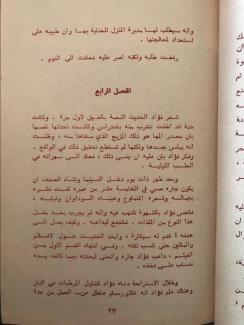
I realized on page 27, chapter four, that Marcel was one of Fouad’s lovers.

The scene took place in a movie theater. Movie theaters were often spaces for sexual freedom in North America, especially since the 1970s after the sexual revolution.
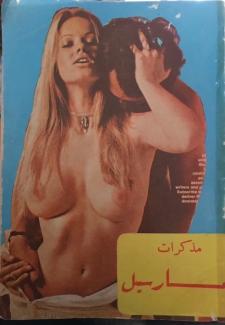
I also assumed they kept all the other foreign names so that it sounds exotic and less taboo. Pornography and erotica were attributed to West Hollywood, despite the fact that the Arab world historically produced erotic texts. Erotica became taboo, and the only way to safely produce it was to market it as foreign, as exotic.
It is interesting how the exotic covers for the erotic. The difference between the two adjectives is rooted in their Greek etymologies: exotic is from exo, “outside,” meaning alien or foreign. Erotic is derived from Eros, the god of sexual love. So, what’s exotic is mysterious and foreign – what’s erotic is sexy.
In Lebanon there is a thin line between the exotic and the erotic in cinema, like the thin line between art films and porn films. In 2015, during a conversation with filmmaker Jocelyne Saab in a Vietnamese restaurant in Paris, I learned that she had to shoot her art film Dunia a second time to change the dialect from Egyptian to Lebanese. She told me that her actors were Egyptian, and that she wasn’t strict about the script. She was not allowed to use Egyptian dialect. It had to be in Lebanese because the producers were concerned about the borderline erotic scenes in the film. So, they made it foreign.

Even in times of climate crisis, governments continue to encourage large-scale agriculture industries to expand. These activities poison the land, threaten biodiversity, and destroy local food production and livelihoods. Meanwhile, while women produce the majority of our food in the world, they own almost none of the land.
What if we perceived land and Nature not as private property to exploit, but as a whole to live in, learn from, and harmoniously coexist with? What if we repaired our relationships with the land and embraced more sustainable alternatives that nurture both the planet and its communities?
Nous Sommes la Solution (We Are the Solution, NSS) is one of many women-led movements striving to do this. This is their story.