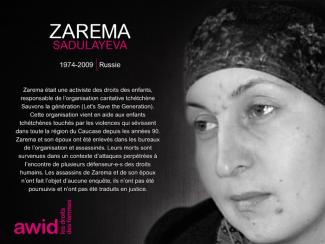
Zarema Sadulayeva

El activismo joven feminista juega un papel fundamental en las organizaciones y los movimientos por los derechos de las mujeres a nivel mundial, ya que aborda los nuevos problemas a los que las feministas se enfrentan en la actualidad. Esta fuerza, creatividad y adaptabilidad son esenciales para la sostenibilidad de la organización feminista.
A la vez, enfrentan obstáculos específicos para ejercer su activismo, como acceso limitado al financiamiento y al apoyo, falta de oportunidades de capacitación, un incremento considerable de los ataques contra las jóvenes defensoras de los derechos humanos. Esto crea una falta de visibilidad que hace más complicada su inclusión y participación efectiva en los movimientos por los derechos de las mujeres.
El programa de activismo joven feminista fue creado para garantizar que las voces de las jóvenes sean escuchadas y se vean reflejadas en el discurso feminista. Queremos garantizar que las jóvenes feministas tengan un mejor acceso al financiamiento, a las oportunidades de desarrollo de las capacidades y a los procesos internacionales.
Además de apoyar directamente a las jóvenes feministas, estamos trabajando con activistas por los derechos de las mujeres de todas las edades, con modelos y estrategias prácticas para procesos efectivos de organización intergeneracionales.
Queremos que las activistas jóvenes feministas jueguen un papel en el proceso de toma de decisiones que afectan sus derechos a través de:
Fomento de la comunidad e intercambio de información a través de la Conexión Joven Feminista. Dada la importancia de los medios virtuales para el trabajo de las jóvenes feministas, nuestro equipo lanzó la Conexión Joven Feminista en mayo de 2010 para compartir información, construir capacidades a través de seminarios web y discusiones electrónicas y para alentar la construcción de la comunidad.
Investigación y generación de conocimientos sobre el activismo joven feminista, que aumenten la visibilidad y el impacto del activismo joven feminista en los movimientos por los derechos de las mujeres y otros actores clave, como los donantes.
Promoción de procesos más efectivos de organización intergeneracional, explorando mejores formas de trabajar en conjunto.
Apoyo a la participación de las jóvenes feministas en los procesos globales de desarrollo, por ejemplo en los procesos de Naciones Unidas.
Colaboración con todas las áreas prioritarias de AWID, incluyendo el Foro, para garantizar así que las contribuciones clave de las jóvenes feministas, así como sus perspectivas, necesidades y activismo se reflejen en los debates, políticas y programas que las afectan.
The survey is open until the end of August 2024. Please complete it within this timeframe to ensure your responses are included in the analysis.
The results of your research will also shape your advocacy – for example, your results will have revealed which sectors fund the most and which sectors you feel need donor education.
In this section
- Build your advocacy strategy
- Reach out to your network
- Adapt your strategy to the sector
1. Women’s rights organizations
2. Bilaterals and multilaterals
3. Private foundations
4. Women’s funds
5. Private sector and new donors
In the “Frame your research” section of this toolkit we recommend that you plot out what goals you hope to accomplish with your research. These goals will allow you to build an advocacy strategy once your research is complete.
An advocacy strategy is a plan of distributing your research results in a way that allows you to accomplish your goals, falling under the broader goal of advocating with key sectors to make positive changes for resources for women’s rights organizing.
Using the goals defined in your research framing:
From this list – as exhaustive as possible, chose which ones are the most efficient for achieve your goals. (See below for specific examples of audiences and advocacy methods)
Once you have a strategy, you can start the dissemination.
To disseminate your results, reach out first to the contacts through whom you distributed your survey, as well as to all your survey and interview participants.
Do not forget to state clearly a contact person and ask for a confirmation once they have published it.
On top of making you able to track who disseminated your report, it will help build stronger relationships within your network.
As an example, we present below a list of sectors AWID engages in advocacy.
Your list of advisory organizations and individuals will also be useful here. They can help you disseminate the report in different spaces, as well as introduce you to new organizations or advocacy spaces.
Sample objectives: Update women’s rights organizations on funding trends; brainstorm collaborative efforts for resource mobilization using research findings; influence how they approach resource mobilization
Examples of possible advocacy methods:
Offer seminars, learning cafés or other events throughout your region, in relevant languages, in order to update women’s rights organizations with the findings of your research.
If you can’t physically reach everyone in your region, think about setting-up a webinar and online presentations.
Present your findings at larger convenings, such as the Commission on the Status of Women (CSW).
Beyond your own organizations’ newsletters and website, write articles on different platforms that are frequented by your target audience.
Some examples: World Pulse, OpenDemocracy, feministing.
Sample Objective: Raising awareness about how funding is not meeting established commitments and how this sector needs to improve funding mechanisms to finance women’s rights organizing.
Identify which bilateral & multilaterals have the most influence on funding – this could include local embassies.
Examples of possible advocacy methods:
Sample Objective: Expand the quality and quantity of support for women’s rights organizations.
Examples of possible advocacy methods:
Sample Objective: Encourage them to continue their work at higher scale.
Examples of possible advocacy methods:
Sample Objective: Increase their understanding of the field and encourage coherence between their philanthropic interests and business practice.
Examples of possible advocacy methods:
Make sure to adapt your presentations, propositions and applications to each targeted group.
We strongly recommend referring to our Ready to Go worksheet to assess your own advancement.

• 1-2 years, depending on advocacy goals
• 1 or more communications person(s)
• List of spaces to advertise research
• List of blogs and online magazines where you can publish articles about your research finding
• List of advisors
• Your WITM information products
• Sample of Advocacy Plan

نكمل مشوار بناء الحشد الذي بدأناه قبل 20 عاماً لموارد أفضل وأكبر لحركات التغيير الاجتماعي بقيادة نسوية، تدعوكم/ن جمعية حقوق المرأة في التنمية لاستكمال استطلاعنا
Related content
The Guardian: Kate Millett Obituary
New York Times: Kate Millett, Ground-Breaking Feminist Writer, Is Dead at 82
The New Yorker: A Last Interview with Kate Millett

La economía solidaria (que incluye la economía cooperativa y la llamada economía del don) es un marco alternativo que adquiere formas diferentes según el contexto y está siempre abierto a los cambios.
Este marco de referencia se asienta sobre los siguientes principios:
En una economía solidaria, quienes producen participan en procesos económicos que guardan íntima relación con sus realidades, con la preservación del medio ambiente y la cooperación mutua.
Según la geógrafa feminista Yvonne Underhill-Sem, la economía del don es un sistema económico en el que los bienes y servicios circulan entre las personas sin que haya acuerdos explícitos acerca de su valor o de una reciprocidad esperada en el futuro.
Lo que hay detrás del otorgamiento de dones es una relación humana, una generación de buena voluntad y el acto de prestar atención a nutrir a toda la sociedad y no solo a lo que concierne a unx mismx y su familia: se trata del colectivo.
En el Pacífico, por ejemplo, esto se manifiesta en la recolección, preparación y procesamiento de recursos terrestres y marinos para tejer alfombras, abanicos, guirnaldas y objetos ceremoniales, así como en la cría de ganado y el almacenamiento de las cosechas estacionales.
Las mujeres tienen diversos incentivos para involucrarse en actividades económicas y que van desde satisfacer sus aspiraciones profesionales y ganar dinero para gozar de una vida confortable en el largo plazo hasta llegar a fin de mes, pagar deudas y huir del desgaste de una vida rutinaria.
Para acomodarse a los diferentes ambientes en los que operan las mujeres, el concepto de economía solidaria está en permanente desarrollo, discusión y debate.
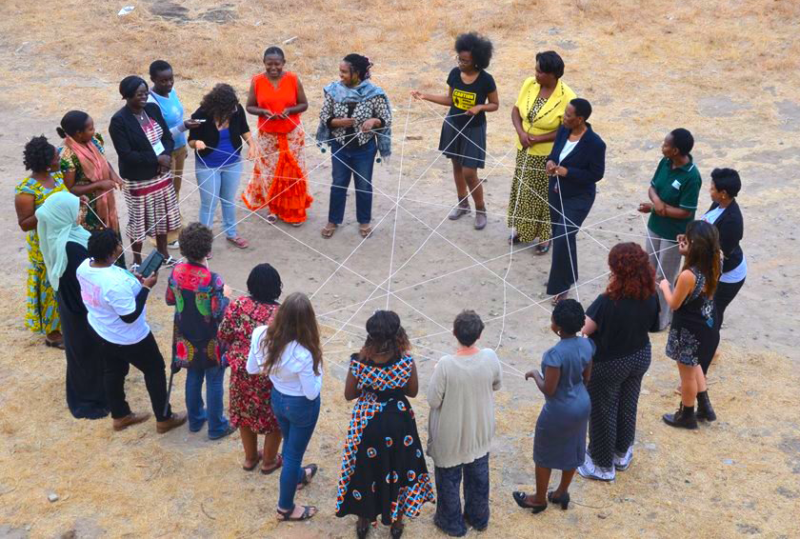


Сделать видимой сложность обеспечения ресурсами различных феминистских организаций
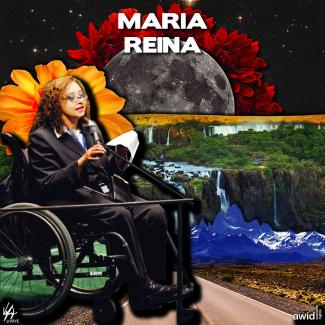
Representó al Consorcio Internacional sobre Discapacidad y Desarrollo (IDDC por su sigla en inglés) durante la negociación de la Convención sobre los Derechos de las Personas con Discapacidad (2001-2006). Su trabajo estaba dedicado a la implementación del objetivo de la Convención: el goce pleno de los derechos humanos universales por, para y con las personas con discapacidades, en pos de un mundo inclusivo, accesible y sostenible.
En sus propias palabras, su liderazgo consistía en «servir a la comunidad de personas con discapacidad, comenzando por aquellas pequeñas tareas que otrxs pueden no querer realizar».
Falleció el 27 de octubre de 2017 en su ciudad natal de Rosario, Argentina.
En esta nota puede leerse más sobre María Verónica Reina, en sus propias palabras.
A latin-american gender identity
The term travesti is often mistakenly translated as "transvestite" in English. However, it is a Latin American gender identity with no equivalent in other languages, and exclusively female. It is a person designated male at birth who identifies as female. They may or may not undergo bodily changes, and should always be addressed with she/her pronouns.
Travesti is not only a gender identity located outside of gender binarism, it is also a cultural identity rooted in Latin American movements. The term was initially pejorative, but it was later re-appropriated as a symbol of resistance and dignity.
Every travesti is trans because she does not identify with the gender designated at birth, however not every travesti considers themselves as a trans woman, since travesti is already a gender identity on its own.
Source: Berkins, Lohana. (2006). Travestis: una Identidad Política [Travestis: a Political Identity]. Trabajo presentado en el Panel Sexualidades contemporáneas en las VIII Jornadas Nacionales de Historia de las Mujeres/ III Congreso Iberoamericano de Estudios de Género Diferencia Desigualdad. Construirnos en la diversidad, Villa Giardino, Córdoba, 25 al 28 de octubre de 2006.
La crise économique mondiale actuelle fournit la preuve évidente que les politiques économiques des trois dernières décennies n’ont pas fonctionné.
La dévastation que la crise a opéré sur les ménages les plus vulnérables dans les pays du Nord et du Sud nous rappelle que la formulation de politiques économiques et la réalisation des droits humains (économiques, sociaux, politiques, civils et culturels) ont été trop longtemps séparées l’une de l'autre. La politique économique et les droits humains ne doivent pas être des forces opposées, elles peuvent coexister en symbiose.
Les politiques macroéconomiques influencent le fonctionnement de l'économie dans son ensemble, elles façonnent la disponibilité et la distribution des ressources. Dans ce contexte, les politiques budgétaires et monétaires sont fondamentales.
La politique budgétaire se réfère à la fois aux recettes et aux dépenses publiques, et aux relations entre elles qui sont formulées dans le budget de l’État.
La politique monétaire regroupe les politiques sur les intérêts et les taux de change et la masse monétaire, ainsi que la réglementation du secteur financier.
Les politiques macroéconomiques sont mises en œuvre à l’aide d'instruments tels la fiscalité, les dépenses du gouvernement, et le contrôle entre la masse monétaire et le crédit.
Ces politiques affectent les taux d’intérêt et les taux de change qui ont une influence directe sur, entre autres choses, le niveau de l'emploi, l'accès à un crédit abordable et le marché du logement.
L'application d'un cadre de droits humains aux politiques macroéconomiques permet aux États de mieux se conformer à leur obligation de respecter, de protéger et de réaliser les droits économiques et sociaux. Les droits humains sont inscrits aux conventions internationales selon des normes universelles. Ces normes juridiques sont énoncées dans les traités des Nations Unies tels la Déclaration universelle des droits de l'homme (DUDH), le Pacte international relatif aux droits civils et politiques (PIDCP) et le Pacte international relatif aux droits économiques, sociaux et culturels (PIDESC).
L’Article 1 de la DUDH stipule que « Tous les êtres humains naissent libres et égaux en dignité et en droits ».
Bien que la DUDH ait été rédigée il y a près de six décennies, sa pertinence est toujours de mise. La plupart des principes énoncés répondent aux problèmes auxquels les gens continuent d’être confrontés à l'échelle mondiale. Les questions concernant les châtiments inhumains (art. 5), la discrimination (art. 7), la propriété (art. 17), un salaire égal pour un travail égal (art. 23/2), et l'accès à l'éducation (art. 26/1) sont des questions pertinentes tant pour les pays au Sud et au Nord de l'équateur.
En particulier, les États ont l'obligation, en vertu du droit international, de respecter, de protéger et de réaliser les droits humains, y compris les droits économiques et sociaux des personnes relevant de leur compétence. Cet aspect est particulièrement pertinent aujourd'hui, compte tenu de la crise financière. Aux États-Unis, la réglementation est faussée en faveur de certains intérêts. Dans le contexte du changement social et économique actuel, l'incapacité des gouvernements à étendre leur rôle de surveillance est un échec cuisant face à l’obligation de protéger les droits humains.
Les États devraient respecter les principes clés des droits humains pour réaliser les droits économiques et sociaux. Certains de ces principes ont des implications potentiellement importantes pour la gouvernance des institutions financières et des marchés. Ces possibilités ont été sous explorées jusqu’à présent.
Les droits économiques et sociaux ont un ancrage institutionnel et juridique concret. Les traités internationaux, les déclarations mondiales, les conventions, et, dans un certain nombre de cas, les constitutions nationales ont intégré certains aspects des cadres de droits économiques et sociaux, ce qui a permis l’élaboration d’infrastructures institutionnelles au niveau du droit national et international.
Certaines personnes avancent que l’idée d’une justice mondiale n’est peut-être pas un exercice utile en raison des complexités institutionnelles en jeu. Toutefois, les institutions mondiales ont sans aucun doute des incidences sur la justice sociale, à la fois positives et négatives.
Il est utile de déterminer ce que ces éléments des cadres alternatifs impliquent pour la gouvernance économique, en particulier ceux qui sont soutenus par les institutions existantes. Le cadre des droits économiques et sociaux est un bon exemple concret : ce cadre évolue constamment et les discussions et les délibérations en cours sont nécessaires afin d'aborder les sections sous développées et les lacunes potentielles.

Cette section est fondée sur le blog du CWGL intitulé Applying a Human Rights Framework to Macroeconomic Policies (L'application d'un cadre de droits humains aux politiques macroéconomiques, 2012).
الرجاء اختيار لغتك في الزاوية اليمنى الرجاء اختيار اللغة المفضلة للإجابة على الاستطلاع في أقصى يمين الصفحة
ذا كنت ترغب في معرفة المزيد، انضم إلى لقاء للأعضاء/ العضوات: أين المال؟ يوم الاثنين 27 مايو (أيار) الساعة 9:00 بالتوقيت العالمي - مع ترجمة
فورية باللغتين الفرنسية والإنجليزية.
14:00 بالتوقيت العالمي - مع ترجمة فورية باللغتين الإسبانية والإنجليزية
سنستمع إلى فريق الحركات النسوية لتوفير الموارد التابع لجمعية حقوق المرأة في التنمية (جمعية حقوق المرأة في التنمية) حول خصوصيات وعموميات تمويل التنظيمات النسوية.
انضم/ي إلينا كعضو/ة في وكن/وني جزءًا من جلسة التواصل هذه.
الرد على الدعوة هنا
(Registration only available in English)
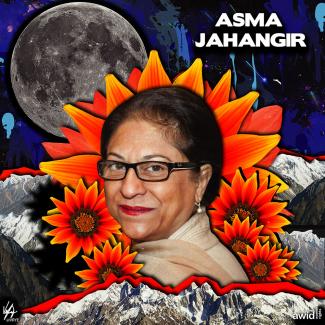
Asma était une militante pakistanaise des droits humains, une critique courageuse de l'ingérence de l'armée dans la politique et une défenseure acharnée de la primauté du droit.
Elle a été la présidente fondatrice de la Commission des droits de l'homme du Pakistan, un groupe indépendant ainsi qu’administratrice de l'International Crisis Group. Elle a remporté des prix internationaux et a été rapporteuse des Nations Unies sur les droits de l'homme et les exécutions extrajudiciaires.
Ses collègues et ami-e-s de l’AWID se souviennent d'elle avec affection
« Grâce à sa vie, Asma a réécrit l'histoire que beaucoup d'entre nous ont racontée en tant que femmes. Asma a changé le monde. Elle l'a changé au Pakistan et elle l'a changé dans notre imaginaire. »
Una de las líderes fundadoras de la cooperativa fue Lohana Berkins, activista, defensora y promotora de la identidad trans. Lohana jugó un papel crucial en la lucha por los derechos de las personas trans y travesti.
A través de su lucha se consiguió, entre muchas otras cosas, la aprobación de la Ley de Identidad de Género. Es una de las legislaciones más progresistas del mundo, garantizando derechos fundamentales a las personas trans y travestis. Ahora, las personas pueden cambiar sus nombres y géneros solo con una declaración jurada, y tener acceso a atención médica integral sin intervención/aprobación judicial o médica (Outright International, 2012).
Les acteurs anti-droits ont eu un impact substantiel sur le cadre relatif aux droits humains et sur l’interprétation progressiste des normes relatives à ces droits, en particulier dans le champ du genre et de la sexualité.
Pour mesurer l’impact de l’action des conservateurs dans les espaces politiques internationaux, il suffit de constater l’immobilisme et les régressions qui caractérisent la situation actuelle.
Nous sommes témoins de l’affaiblissement des accords et des engagements existants ; de négociations dans l’impasse ; du travail de sape continu mené à l’encontre des agences des Nations Unies, des organes de surveillance des traités et des Procédures spéciales ; et enfin de l’intégration d’un langage rétrograde dans les documents internationaux relatifs aux droits humains.
La CSW, qui se réunit chaque année en mars, est depuis longtemps l’un des espaces les plus contestés du système des Nations Unies. En mars 2015, les conservateurs ont donné le ton avant même que les événements ou les négociations ne commencent. Le document final élaboré par la Commission s’est avéré être une Déclaration très peu ambitieuse qui avait été négociée avant même que les activistes des droits des femmes n’aient pu intervenir.
Pendant la CSW 2016, le nouveau Caucus des jeunes a été infiltré par un grand nombre d’activistes anti-avortement et anti-droits sexuels et reproductifs qui ont réussi à réduire les organisations de jeunes progressistes au silence. Une fois de plus, les intenses négociations ont abouti à un texte terne dans lequel les éléments relatifs à « la famille » sont formulés dans un langage rétrograde.
Alors qu’il est devenu particulièrement important et urgent de faire progresser les droits humains des femmes, la CSW est devenue un espace affaibli et dépolitisé. Il est de plus en plus difficile d’envisager d’y faire progresser ces droits dans la mesure où les activistes progressistes utilisent toute leur énergie pour essayer de faire barrage au recul voulu par les conservateurs.
En tant qu’organe intergouvernemental responsable de la promotion et de la protection des droits humains dans le monde entier, le CDH est une porte d’entrée essentielle pour les conservateurs. Ces dernières années, cette institution a été le théâtre d’un certain nombre de démarches anti-droits.
En concertation avec d’autres acteurs anti-droits, certains États et blocs d’États conservateurs ont adopté une stratégie qui vise à faire retirer tout langage progressiste des résolutions et à introduire des amendements hostiles. Ils s’attaquent le plus souvent aux résolutions qui traitent de droits relatifs au genre et à la sexualité.
Par exemple, lors de la session du CDH qui s’est tenue en juin 2016, les États membres de l’Organisation de coopération islamique (OCI) et leurs alliés se sont opposés à l’adoption d’une résolution sur la discrimination à l’égard des femmes. Au cours de négociations tendues, de multiples dispositions ont été supprimées, y compris celles relative au droit des femmes et des filles de contrôler leur sexualité et leur santé ainsi qu’à leurs droits sexuels et reproductifs. Ont également été supprimées toutes les dispositions portant sur la nécessité d’abroger les lois qui perpétuent l’oppression patriarcale des femmes et des filles dans les familles et celles qui criminalisent l’adultère ou pardonnent le viol conjugal.
Le CDH a également été le théâtre d’initiatives pernicieuses des conservateurs visant à coopter les normes relatives aux droits humains et à introduire un langage conservateur en matière de « droits humains » – comme celui utilisé dans les résolutions en faveur des « valeurs traditionnelles » soutenues par la Russie et ses alliés et, plus récemment, dans le cadre de la campagne pour la « protection de la famille ».
En 2015, un certain nombre d’organisations religieuses conservatrices ont ouvert un nouveau front de lutte en commençant à s’attaquer à la Commission des droits de l’homme, organe de contrôle de l’application du Pacte international relatif aux droits civils et politiques (PIDCP) et instrument essentiel pour les droits humains.
Des groupes anti-droits se sont mobilisés dans l’espoir de faire inclure leur rhétorique anti-avortement dans le traité.
Lorsque la Commission a annoncé qu’elle rédigeait une nouvelle interprétation autorisée du droit à la vie, plus de 30 acteurs non étatiques conservateurs ont envoyé des observations écrites, avançant leurs arguments fallacieux sur le « droit à la vie » – à savoir que la vie commence dès la conception et que l’avortement est une violation de ce droit. Ils ont demandé à ce que ces idées soient incorporées dans l’interprétation de l’article 6 par la Commission.
L’action concertée de ces groupes conservateurs auprès de la Commission des droits de l’homme représente une évolution notable dans la mesure où elle concrétise la volonté des acteurs anti-droits de saper et d’invalider le travail essentiel qu’accomplissent les organes de surveillance de l’application des traités, dont celui de la Commission des droits de l’homme elle-même.

En 2015, les acteurs anti-droits ont mené des actions de plaidoyer dans le cadre de l’élaboration des nouveaux objectifs de développement durable (ODD), insistant une nouvelle fois sur les droits relatifs au genre et à la sexualité. Leurs efforts pour faire adopter un langage rétrograde dans le Programme de développement durable à l’horizon 2030 ont été moins fructueux.
Néanmoins, après avoir réussi à empêcher l’inclusion d’un langage progressiste dans le texte final, les conservateurs ont ensuite adopté une autre stratégie. Pour minimiser la responsabilité des États et saper l’universalité des droits, plusieurs États ont émis de multiples réserves sur les ODD.
Au nom du Groupe des États africains membres de l’ONU, le Sénégal a affirmé que les États africains ne « mettraient en œuvre que les ODD alignés sur les valeurs culturelles et religieuses de ses pays membres ».
Le Saint-Siège a également émis un certain nombre de réserves, affirmant qu’il était « certain que l’engagement selon lequel ‘personne ne serait laissé de côté’ serait compris comme une reconnaissance du droit à la vie de la personne, de la conception jusqu’à la mort naturelle ».
L’Arabie saoudite est allée plus loin encore, déclarant que le pays ne suivrait pas les règles internationales relatives aux ODD qui feraient référence à l’orientation sexuelle ou à l’identité de genre, les qualifiant de « contraires à la loi islamique ».
Les acteurs anti-droits ont un pouvoir d’influence de plus en plus marqué au sein de l’Assemblée générale des Nations Unies. En 2016, lors de la 71e session, l’AG a été le théâtre de la féroce opposition des acteurs anti-droits à un nouveau mandat créé en juin 2016 en vertu de la Résolution du Conseil des droits de l’homme sur l’orientation sexuelle et l’identité de genre : le mandat d’Expert indépendant pour la protection contre la violence et la discrimination basées sur l’orientation sexuelle et l’identité de genre[Béné1] (OSIG). Quatre actions ont été mises en œuvre dans les espaces de l’AG pour tenter de réduire la portée de ce mandat.
Le Groupe des États africains a notamment coordonné la présentation d’une résolution hostile auprès de la Troisième Commission[Béné2] , visant essentiellement à faire indéfiniment ajourner ce nouveau mandat. Bien que cette tentative n’ait pas abouti, il s’agit d’une tactique nouvelle et préoccupante visant à bloquer rétroactivement la création d’un mandat présenté par le Conseil des droits de l’homme.
Les acteurs anti-droits œuvrent maintenant à porter directement atteinte à l’autorité du CDH auprès de l’Assemblée générale. Les acteurs anti-droits ont également tenté de nuire à ce mandat en menant une actions auprès de la Cinquième Commission (chargée des questions administratives et budgétaires). Cette initiative inédite a conduit un certain nombre d’États à tenter (encore une fois sans succès) de bloquer le financement des experts des droits humains de l’ONU, dont celui de l’Expert indépendant pour la protection contre la violence et la discrimination basées sur l’orientation sexuelle et l’identité de genre.
Bien que ces multiples tentatives n’aient pas réussi à empêcher la création et le maintien de ce nouveau mandat, le soutien important que ces acteurs ont reçu, les stratégies innovantes qui ont été mise en œuvre et les puissantes alliances régionales qui se sont forgées tout au long des négociations nous donnent une idée des difficultés auxquelles nous allons devoir faire face.
Télécharger le chapitre complet (en anglais)