None On Record

Young Feminist Activism

Organizing creatively, facing an increasing threat

Young feminist activists play a critical role in women’s rights organizations and movements worldwide by bringing up new issues that feminists face today. Their strength, creativity and adaptability are vital to the sustainability of feminist organizing.

At the same time, they face specific impediments to their activism such as limited access to funding and support, lack of capacity-building opportunities, and a significant increase of attacks on young women human rights defenders. This creates a lack of visibility that makes more difficult their inclusion and effective participation within women’s rights movements.

A multigenerational approach

AWID’s young feminist activism program was created to make sure the voices of young women are heard and reflected in feminist discourse. We want to ensure that young feminists have better access to funding, capacity-building opportunities and international processes. In addition to supporting young feminists directly, we are also working with women’s rights activists of all ages on practical models and strategies for effective multigenerational organizing.

Our Actions

We want young feminist activists to play a role in decision-making affecting their rights by:

  • Fostering community and sharing information through the Young Feminist Wire. Recognizing the importance of online media for the work of young feminists, our team launched the Young Feminist Wire in May 2010 to share information, build capacity through online webinars and e-discussions, and encourage community building.

  • Researching and building knowledge on young feminist activism, to increase the visibility and impact of young feminist activism within and across women’s rights movements and other key actors such as donors.

  • Promoting more effective multigenerational organizing, exploring better ways to work together.

  • Supporting young feminists to engage in global development processes such as those within the United Nations

  • Collaboration across all of AWID’s priority areas, including the Forum, to ensure young feminists’ key contributions, perspectives, needs and activism are reflected in debates, policies and programs affecting them.

Related Content

Snippet FEA Avellaneda, Gran Buenos Aires (EN)

Avellaneda, Gran Buenos Aires, Argentina

Cooperativa Textil Nadia Echazú

WEAVING

LIVES

Las realidades de la dotación de recursos y del estado del financiamiento para los movimientos feministas cambia con rapidez, ¿la encuesta es de carácter excepcional?

No, no lo es. Se basa en los 20 años de historia de AWID movilizando más y mejor financiamiento para el cambio social encabezado por los feminismos, y se trata de la tercera edición de la investigación ¿Dónde está el dinero para las organizaciones feministas? Aspiramos a repetir la encuesta ¿Dónde está el dinero? cada tres años.

Mridula Prasad

Mridula fue una firme promotora de la salud de las mujeres en una época en la que el tema de la salud sexual y reproductiva de las mujeres se consideraba tabú en Fiji.

Mridula orientó los primeros trabajos del movimiento por los derechos de las mujeres en Fiji sobre derechos sexuales y reproductivos y, en septiembre de 1999, el Fondo de Población de las Naciones Unidas le otorgó un premio regional sobre salud y derechos reproductivos. Fue una activista férrea, comprometida e incansable y apasionada por la salud y el empoderamiento de las mujeres.

Fue una valiosa integrante del movimiento de mujeres y del movimiento feminista de Fiji y sus aportes se recordarán por siempre. Falleció en 2017 por causas naturales.

Mridula Prasad, Fiji
Body

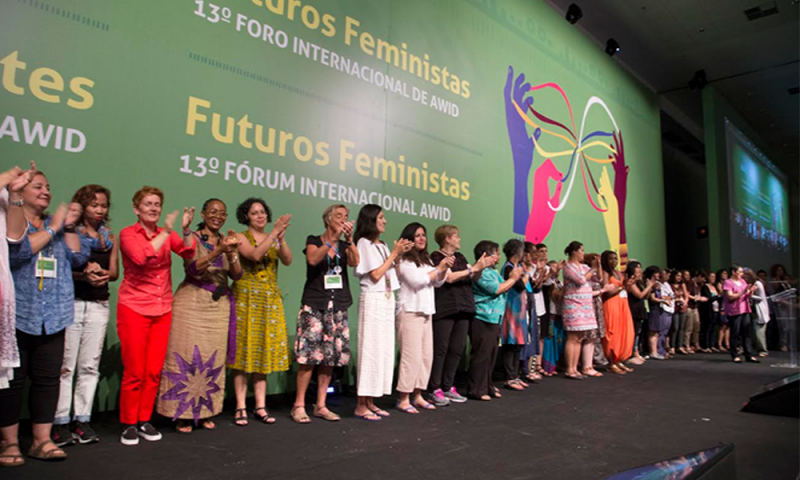
Thank you for co-creating Feminist Futures with us!

A big THANK YOU for being part of the 2016 AWID Forum!

Thank you to all of you who have joined us, physically or virtually, for the past four days of learning, celebrating, envisioning, dreaming and building our Feminist Futures together at the 2016 AWID Forum!

We are incredibly inspired, amazed, and re-energized by all the collective work we have done together in creating our diverse futures.

For images, blogs and resources:

Visit the 2016 AWID Forum website


Get social with the #AWIDForum

Snippet FEA trans and travesti people in Argentina (ES)

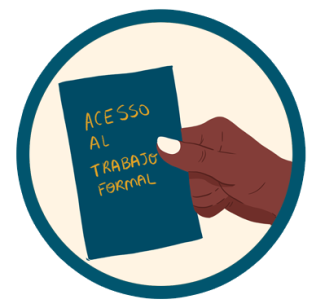
Esta ilustración muestra una mano derecha morena con esmalte de uñas blanco sosteniendo un papel verde azulado en el que está escrito en amarillo: "Acceso al trabajo formal".

Solo el 18% de las personas trans y travestis en Argentina acceden a un trabajo formal

Puis-je vous contacter si j’ai des questions ou des inquiétudes?

Si vous avez des questions ou des inquiétudes, merci de nous contacter par le biais de ce formulaire, en indiquant « Enquête WITM » dans l’objet de votre message. Vous pouvez également nous écrire à witm@awid.org.

Amal Bayou

Amal était une femme politique et une parlementaire de premier plan en Libye.

Membre du corps professoral de l'Université de Benghazi de 1995 jusqu’à sa mort en 2017, elle militait par ailleurs au sein de la société civile et était membre de diverses initiatives sociales et politiques. Elle a aidé les familles des martyrs et des disparus et a été l'une des membres fondateurs-trices d'une initiative de jeunesse intitulée « Jeunesse de Benghazi en Libye ».

Lors des élections législatives de 2014, Amal avait été élue à la Chambre des représentants avec plus de 14 000 voix (le plus grand nombre de voix jamais obtenues aux élections de 2014). Amal restera dans les mémoires de beaucoup comme une femme politique qui a œuvré pour assurer un avenir meilleur dans l'un des contextes les plus difficiles et les plus conflictuels de la région.


Amal Bayou, Libya

Conocimientos comunitarios para construir futuros justos

Contexto

En este momento, muchos sistemas de conocimientos comunitarios están en riesgo.

Los cambios vertiginosos que se dan a nivel económico, político y cultural están arrasando con ambientes, prácticas y medios de vida. Diversas formas de conocimiento están siendo borradas como prácticas, mercantilizadas y colonizadas por una globalización que se lo devora todo y a cambio de la promesa de logros en el corto plazo o paliativos.

Definición

El Buen Vivir /Vivir Bien, un concepto adaptado de los conocimientos de los pueblos indígenas andinos, se define como el logro colectivo de una vida en plenitud, basada en las relaciones armónicas y equilibradas entre los seres humanos y todos los seres vivientes, con reciprocidad y en complementariedad. Implica reconocer que los seres humanos formamos parte de la naturaleza, dependemos de ella y somos interdependientes entre nosotrxs.

Una visión que integra la producción y la reproducción como procesos inseparables de la economía, la producción de riqueza y las condiciones de vida es inherente al Buen Vivir / Vivir Bien.

Perspectiva feminista

Una mirada del Buen Vivir /Vivir Bien desde una óptica feminista valora las relaciones y los recursos que se movilizan en los ciclos de producción y reproducción — a favor de un equilibrio que no tiene que ver solo con el mercado — para garantizar la continuidad y los cambios siempre que sean compatibles con la justicia económica y la sostenibilidad de la vida.

Desde una perspectiva feminista también se ha criticado la concepción binaria del género y de la complementariedad entre hombres y mujeres en el Buen Vivir /Vivir Bien. Las concepciones binarias dejan poco espacio para un análisis más profundo del heteropatriarcado y de las relaciones de género disidentes.

Sin embargo, uno de los principales aportes que ofrece el principio del Buen Vivir / Vivir Bien cuando se le otorga un lugar central en los marcos de referencia políticos, económicos y sociales, es que la igualdad deja de ser el paradigma de los derechos individuales y su lugar pasa a ser ocupado por la transformación de la sociedad como un todo.


Para leer más acerca de esta propuesta:
Snippet FEA What Challenges Story 3 (FR)

À quels défis les personnes Trans et Travesti sont-elles confrontées en Argentine ?

Snippet - WITM To build - AR

لبناء وقائع نسوية ترتكز على الأدلة عن كيف يتحرك المال ولمن يصل

Efua Dorkenoo

Affectionately known as “Mama Efua”, her work to end Female Genital Mutilation (FGM) movement spanned three decades and helped bring international attention and action to end this harmful practice.

In 1983 Efua co-founded FORWARD (The Foundation for Women’s Health, Research and Development), which became a leading organisation in the battle to raise awareness about FGM. Her 1994 book, “Cutting the Rose: Female Genital Mutilation,” is considered the first on FGM and, featured in Columbia University’s “Africa’s 100 Best Books for the 20th Century”.

Originally from Ghana and a nurse by training, Efua joined the WHO in 1995 and successfully pushed for FGM to go on the agendas of WHO member states. She also worked closely with the Nigerian government in formulating a comprehensive National Policy that laid the groundwork for Nigeria’s anti-FGM laws, still in place today.

Her ground breaking work culminated in an Africa-led campaign, “The Girl Generation,” which is committed to ending FGM within a generation. Efua demonstrated how one person can become the unifying voice for a movement, and her wise words - “shared identity can help bring activists from different backgrounds together with a common sense of purpose” – are more relevant than ever.


Efua Dorkenoo, Ghana

Thank you to our partners

Our partners

This project is built in collaboration with:

FEMNET-logo (grey)
Rutgers-logo (grey)

Our contributors

We would also like to thank the following people for their valuable contribution:

  • Nebila Abdulmelik
  • Radhika Balakrishnan
  • Selamawit Tesfaye
  • Hakima Abbas
  • Patita Tingoi
  • Ana Abelenda

Snippet FEA Brisa Escobar Quote (EN)

"My dreams and objectives have always been the same as those of Lohana Berkins: for the cooperative to continue standing and not to close. To continue to give this place to our travesti comrades, to give them work and a place of support"

Brisa Escobar,
president of the Cooperative

Snippet - WITM Why now_col 1 - AR

لماذا الآن؟

A monochromatic orange illustration of a woman with curly hair with her hand on her chin. She seems to inquisitive or posing a question.

تتواجد الحركات النسوية، حركات حقوق النساء، حركات العدالة الجندرية، حركات مجتمع الميم - عين وحلفاءها/ يفاتها في مفترق شديد الأهمية وتواجه هجمات عصيبة على حقوق وحريات حصلت عليها. فتصاعد الاستبداد في الأعوام الأخيرة، وكذلك القمع العنيف للمجتمع المدني وتجريم النساء والأشخاص المتنوعين/ات جندرياً المدافعين عن حقوق الإنسان، تصاعد الحروب والأزمات في الكثير من أنحاء العالم، استمرار الظلم الاقتصادي والتقاطع بين الصحة، البيئة والأزمة المناخية.