Related content
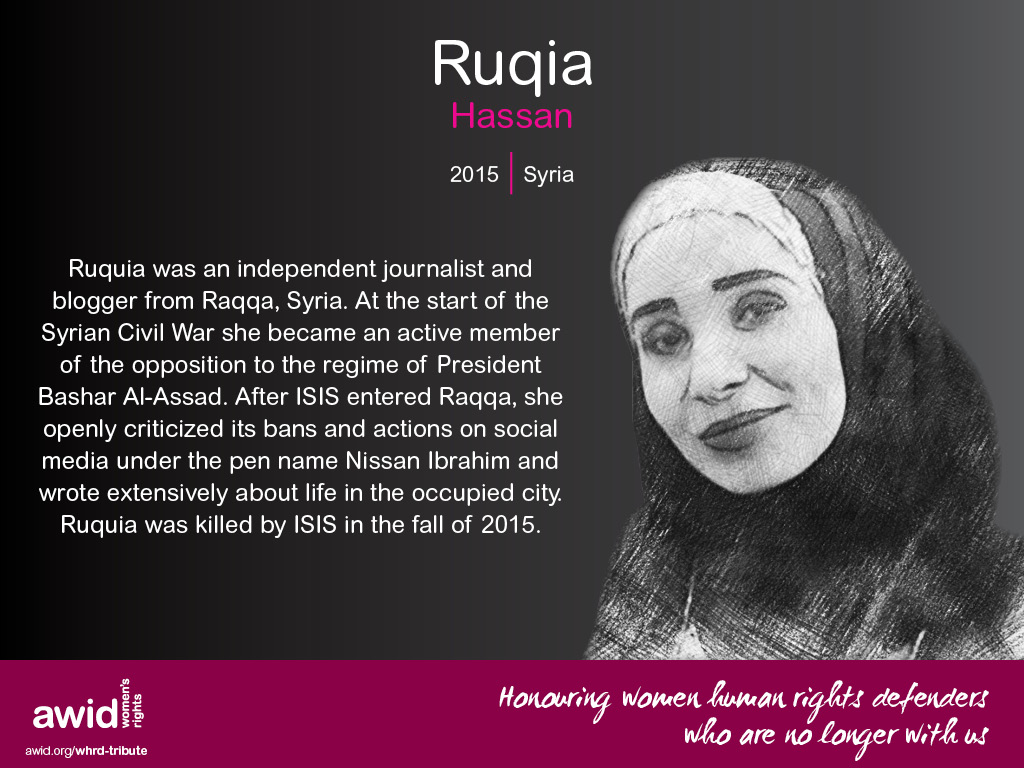
TeleSUR: Indigenous Woman Shot Dead in Colombia as Activists Targeted
TeleSUR: 5 Social Movements Resisting Repression in Latin America
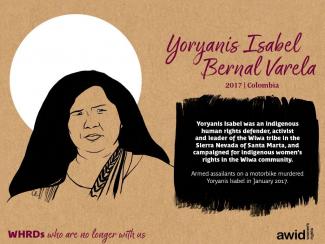

WHRDs are self-identified women and lesbian, bisexual, transgender, queer and intersex (LBTQI) people and others who defend rights and are subject to gender-specific risks and threats due to their human rights work and/or as a direct consequence of their gender identity or sexual orientation.
WHRDs are subject to systematic violence and discrimination due to their identities and unyielding struggles for rights, equality and justice.
The WHRD Program collaborates with international and regional partners as well as the AWID membership to raise awareness about these risks and threats, advocate for feminist and holistic measures of protection and safety, and actively promote a culture of self-care and collective well being in our movements.
WHRDs are exposed to the same types of risks that all other defenders who defend human rights, communities, and the environment face. However, they are also exposed to gender-based violence and gender-specific risks because they challenge existing gender norms within their communities and societies.
We work collaboratively with international and regional networks and our membership
We aim to contribute to a safer world for WHRDs, their families and communities. We believe that action for rights and justice should not put WHRDs at risk; it should be appreciated and celebrated.
Promoting collaboration and coordination among human rights and women’s rights organizations at the international level to strengthen responses concerning safety and wellbeing of WHRDs.
Supporting regional networks of WHRDs and their organizations, such as the Mesoamerican Initiative for WHRDs and the WHRD Middle East and North Africa Coalition, in promoting and strengthening collective action for protection - emphasizing the establishment of solidarity and protection networks, the promotion of self-care, and advocacy and mobilization for the safety of WHRDs;
Increasing the visibility and recognition of WHRDs and their struggles, as well as the risks that they encounter by documenting the attacks that they face, and researching, producing, and disseminating information on their struggles, strategies, and challenges:
Mobilizing urgent responses of international solidarity for WHRDs at risk through our international and regional networks, and our active membership.
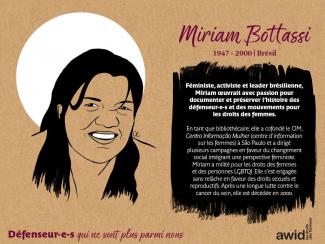
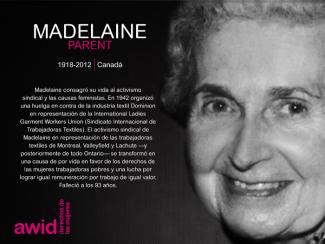
AWID honors feminists and Women Human Rights Defenders (WHRDs) who have died and whose contributions to the advancement of human rights are very much missed.
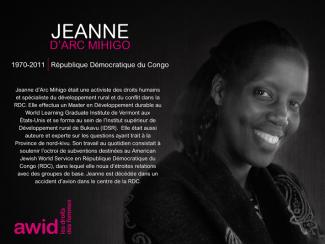
AWID’s WHRD Tribute is a photo exhibition featuring feminist, women’s rights and social justice activists from around the world who are no longer with us.
The Tribute was first launched in 2012, at AWID’s 12th International Forum, in Turkey. It took shape with a physical exhibit of portraits and biographies of feminists and activists who passed away. The initiative was described by Forum participants as being a unique, moving and energizing way to commemorate our collective history.
At the 13th International Forum in Brazil, we honored activists and WHRDs with a mural unveiling ceremony in four languages, a dance performance and a Brazilian ritual.
In between the events, the Tribute lives as an online gallery that is updated every year as part of the 16 Days Campaign Against Gender Based Violence (25 November – 10 December).
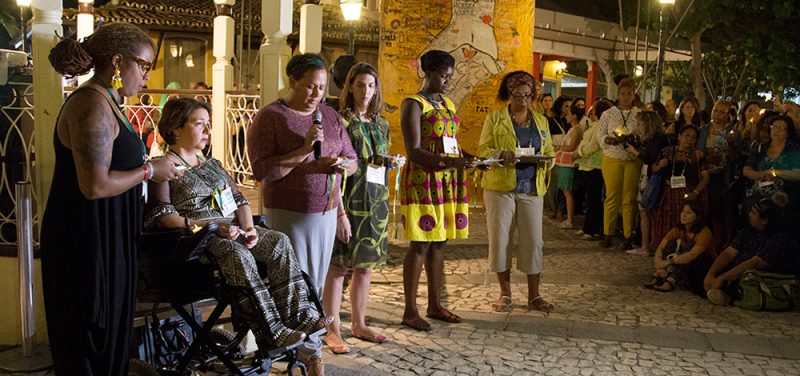
Since 2012, through our annual Tribute to Women Human Rights Defenders (WHRDs) no longer with us, over 400 feminists and WHRDs from 11 regions and 80 countries have been featured.
AWID would like to thank the families and organizations who shared their personal stories and contributed to this memorial. We join them in continuing the remarkable work of these women and forging efforts to ensure justice is achieved in cases that remain in impunity.
Visit the WHRD Tribute online exhibit
In addition to paying homage to these incredible activists, the Tribute particularly sheds light on the plight of WHRDs who have been assassinated or disappeared.
One third of those featured in the Tribute were activists who have been murdered or disappeared in suspicious circumstances. They were specifically targeted for who they were and the work they did to challenge:
Women like Agnes Torres, from Mexico, was killed because of her gender identity and sexual orientation; or Cheryl Ananayo, an environmental activist from the Philippines was assassinated as she struggled against a mining company; or Ruqia Hassan, a Syrian independent journalist and blogger killed for her criticism of ISIS. And so many others.
With the WHRD Tribute, we bring them all into our collective memory and carry their legacy of struggle as our torch in the feminists’ and women’s rights movements. We recognize that security, safety and self-care must be a priority in all our political agendas. And we call on to governments and international bodies to collectively address violence against feminists and WHRDs.
Related content
TeleSUR: Indigenous Woman Shot Dead in Colombia as Activists Targeted
TeleSUR: 5 Social Movements Resisting Repression in Latin America
Simone a 20 ans d’expérience dans le soutien à la gestion et l’administration dans des organisations à but non lucratif, en particulier dans l’enseignement médical post universitaire et la formation aux Technologies de l'Information et de la Communication. Elle possède des qualifications en soutien à la gestion et en études parajuridiques. Elle est basée en Afrique du Sud, aime voyager et agit en tant que généalogiste amatrice.
To claim your power as an expert on the state of resourcing for feminist movements
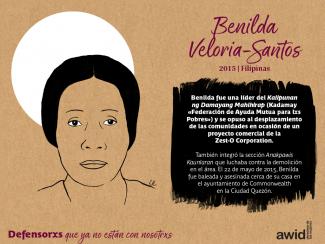
Este año honramos a 19 defensoras de la región de América Latina y el Caribe. De ellas, 16 fueron asesinadas, incluyendo a 6 periodistas y 4 defensoras LGBTQI. Únete a nosotras en la conmemoración de sus vidas y trabajo, compartiendo los memes aquí incluidos con tus colegas, amistades y redes; y tuiteando las etiquetas #WHRDTribute y #16Días.
Por favor, haz click en cada imagen de abajo para ver una versión más grande y para descargar como un archivo.


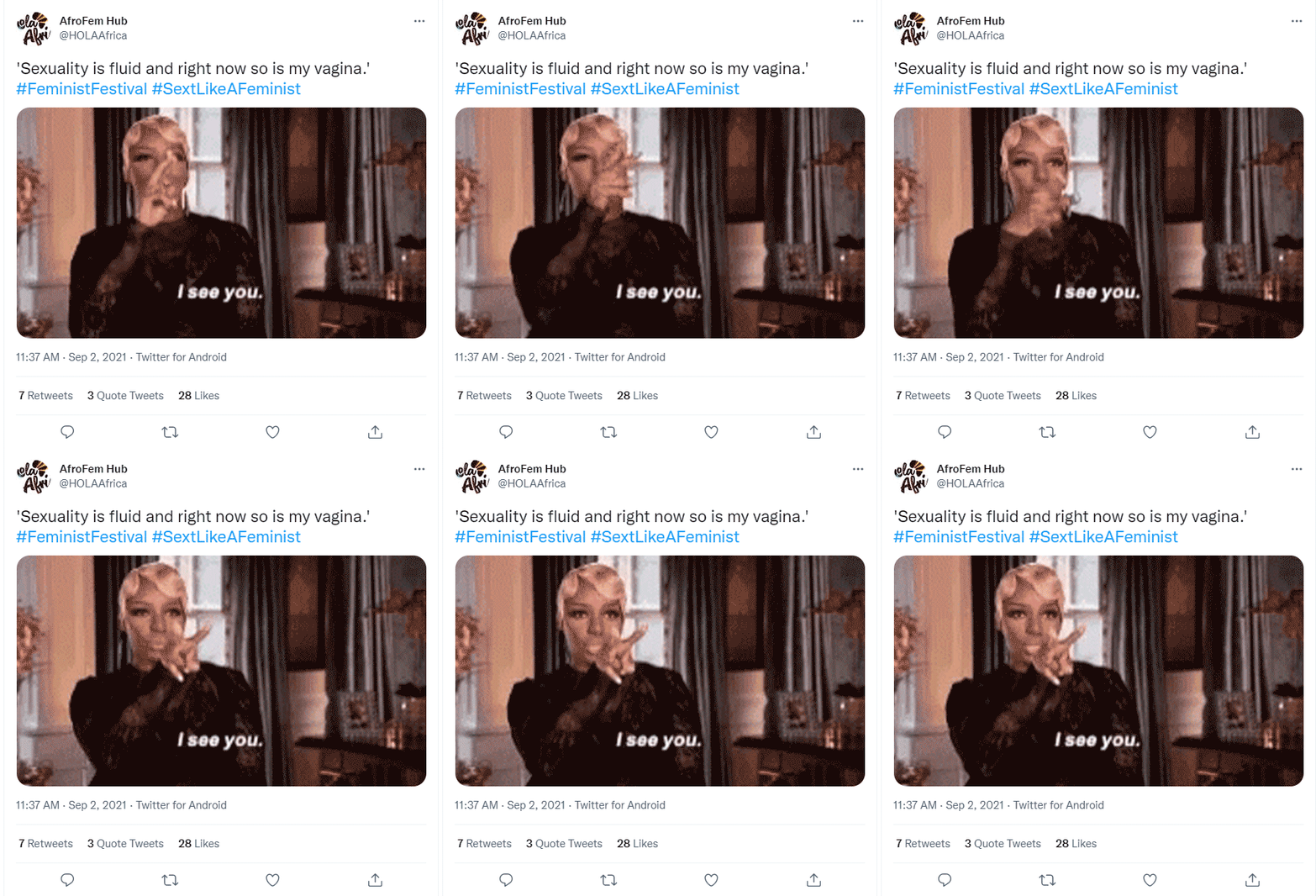
للجنسانيّة تدفّقات متعدّدة ومتبدّلة كحال الغمد الملتهب بين فخذَيّ
Nana is a feminist organizer and a reproductive rights and population policy researcher based in Egypt. She is a member of Realizing Sexual and Reproductive Justice (RESURJ), a member of the Advisory Board of the A Project in Lebanon, and a member of the Community Committee of Mama Cash. Nana holds an MSc in Public Health from KIT Institute and Vrije University in Amsterdam. In her work, she follows and contextualizes national population policies while building evidence that addresses modern eugenics, regressive international aid, and authoritarianism. Previously, she was part of the Geneva Foundation for Medical Education and Research, the Egyptian Initiative for Personal Rights, and Ikhtyar Feminist Collective in Cairo.

Dans le monde entier, les mouvements féministes, de défense des droits des femmes, pour la justice de genre, pour la défense des personnes LBTQI+ et les mouvements alliés vivent un moment critique, face à de puissantes remises en question de droits et libertés pourtant acquis.
Ces dernières années ont vu la rapide montée de l’autoritarisme, de la violente répression de la société civile et de la criminalisation des défenseur·ses des droits humains des femmes et des personnes de genre divers, l’escalade de guerres et de conflits dans plusieurs régions du monde, la perpétuation des injustices économiques et de crises conjuguant la santé, l’écologie et les changements climatiques.
7 Women Human Rights Defenders from across the South and Southeast Asian region are honored in this year’s Online Tribute. These defenders have made key contributions to advancing human and women’s rights, indigenous people’s rights, and the right to education. These WHRDs were lawyers, women’s rights activists, scholars, and politicians. Please join AWID in commemorating t their work and legacy by sharing the memes below with your colleagues, networks and friends and by using the hashtags #WHRDTribute and #16Days.
Please click on each image below to see a larger version and download as a file


Upasana est un·e illustrateurice et artiste non binaire basé·e à Kolkata, en Inde. Son travail explore l'identité et les récits personnels en partant d’un vestige visuel ou d’une preuve des contextes avec lesquels iel travaille. Iel est particulièrement attiré·e par les motifs qui, selon Upasana, communiquent des vérités complexes sur le passé, le présent et l'avenir. Quand Upasana n'est pas en train de dessiner, iel organise et dirige un centre d'art communautaire queer et trans dans la ville.
AWID began in 1982 and has grown and transformed since then into a truly global organization.
Read From WID to GAD to Women's Rights: The First 20 Years of AWID
1 |
Fournir aux membres de l’AWID, partenaires du mouvement et financeurs une analyse actualisée, robuste, éprouvée et orientée sur l’action des réalités du financement des mouvements féministes et de l’état actuel de l’écosystème du financement féministe. |
2 |
Identifier et expliquer les occasions d’orienter davantage de financement de meilleure qualité vers l’organisation des mouvements féministes, mettre en lumière les fausses solutions et mettre un frein aux tendances à cause desquelles les financements ne parviennent pas et/ou vont à l’encontre des programmes de justice de genre et féministes intersectionnels. |
3 |
Formuler les visions, propositions et programmes féministes en faveur de la justice du financement. |
Before starting the WITM research methodology, it is important you prepare the background and know what to expect.
With AWID’s WITM research methodology, we recommend that you first review the entire toolkit.
While this toolkit is designed to democratize WITM research, there are capacity constraints related to resources and research experience that may affect your organization’s ability use this methodology.
Use the “Ready to Go?” Worksheet to assess your readiness to begin your own WITM research. The more questions you can answer on this worksheet, the more prepared you are to undertake your research.
Before beginning any research, we recommend that you assess your organization’s connections and trust within your community.
In many contexts, organizations may be hesitant to openly share financial data with others for reasons ranging from concerns about how the information will be used, to fear of funding competition and anxiety over increasing government restrictions on civil society organizations.
As you build relationships and conduct soft outreach in the lead-up to launching your research, ensuring that your objectives are clear will be useful in creating trust. Transparency will allow participants to understand why you are collecting the data and how it will benefit the entire community.
We highly recommend that you ensure data is collected confidentially and shared anonymously. By doing so, participants will be more comfortable sharing sensitive information with you.
We also recommend referring to our “Ready to Go?” Worksheet to assess your own progress.
Explore these projects put together by AWID teams to promote feminist advocacy and perspectives.