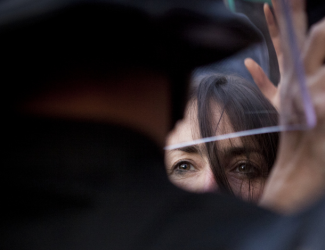
Philippe Leroyer | Flickr (CC BY-NC-ND 2.0)

Women Human Rights Defenders

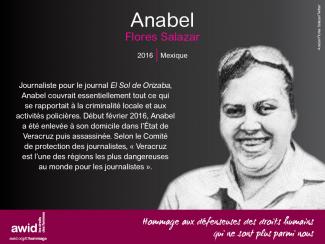
WHRDs are self-identified women and lesbian, bisexual, transgender, queer and intersex (LBTQI) people and others who defend rights and are subject to gender-specific risks and threats due to their human rights work and/or as a direct consequence of their gender identity or sexual orientation.

WHRDs are subject to systematic violence and discrimination due to their identities and unyielding struggles for rights, equality and justice.

The WHRD Program collaborates with international and regional partners as well as the AWID membership to raise awareness about these risks and threats, advocate for feminist and holistic measures of protection and safety, and actively promote a culture of self-care and collective well being in our movements.


Risks and threats targeting WHRDs  

WHRDs are exposed to the same types of risks that all other defenders who defend human rights, communities, and the environment face. However, they are also exposed to gender-based violence and gender-specific risks because they challenge existing gender norms within their communities and societies.

By defending rights, WHRDs are at risk of:

  • Physical assault and death
  • Intimidation and harassment, including in online spaces
  • Judicial harassment and criminalization
  • Burnout

A collaborative, holistic approach to safety

We work collaboratively with international and regional networks and our membership

  • to raise awareness about human rights abuses and violations against WHRDs and the systemic violence and discrimination they experience
  • to strengthen protection mechanisms and ensure more effective and timely responses to WHRDs at risk

We work to promote a holistic approach to protection which includes:

  • emphasizing the importance of self-care and collective well being, and recognizing that what care and wellbeing mean may differ across cultures
  • documenting the violations targeting WHRDs using a feminist intersectional perspective;
  • promoting the social recognition and celebration of the work and resilience of WHRDs ; and
  • building civic spaces that are conducive to dismantling structural inequalities without restrictions or obstacles

Our Actions

We aim to contribute to a safer world for WHRDs, their families and communities. We believe that action for rights and justice should not put WHRDs at risk; it should be appreciated and celebrated.

  • Promoting collaboration and coordination among human rights and women’s rights organizations at the international level to  strengthen  responses concerning safety and wellbeing of WHRDs.

  • Supporting regional networks of WHRDs and their organizations, such as the Mesoamerican Initiative for WHRDs and the WHRD Middle East and North Africa  Coalition, in promoting and strengthening collective action for protection - emphasizing the establishment of solidarity and protection networks, the promotion of self-care, and advocacy and mobilization for the safety of WHRDs;

  • Increasing the visibility and recognition of  WHRDs and their struggles, as well as the risks that they encounter by documenting the attacks that they face, and researching, producing, and disseminating information on their struggles, strategies, and challenges:

  • Mobilizing urgent responses of international solidarity for WHRDs at risk through our international and regional networks, and our active membership.

Related Content

Qu’est-ce que le processus des Nations Unies sur le financement du développement ?

Le processus de l’Organisation des Nations Unies (ONU) sur le financement du développement (FdD) vise à traiter  différentes formes de financement du développement et de coopération pour le développement. Selon le Consensus de Monterrey, ce processus comporte six axes clés :

  • La mobilisation des ressources financières nationales au service du développement.
  • La mobilisation des ressources internationales au service du développement : investissements étrangers directs et autres flux financiers privés.
  • Le commerce international, comme moteur  du développement.
  • L’accroissement de la coopération financière et technique internationale pour le développement.
  • La dette extérieure.
  • L’examen des questions systémiques : amélioration de la cohérence et de la constance des systèmes monétaires, financiers et commerciaux internationaux en faveur du développement. 

¿Por qué en Bangkok?

Cada Foro se lleva a cabo en una región diferente, ¡y es hora de que el Foro de AWID regrese a Asia! Visitamos muchos países de la región, consultamos a los movimientos feministas y realizamos evaluaciones detalladas de logística, accesibilidad, seguridad, visas y más. Finalmente, la Junta Directiva de AWID aprobó con entusiasmo Bangkok, Tailandia, como la mejor opción. Nos sentimos muy emocionadxs de volver a Bangkok, donde celebramos el Foro de AWID en 2005.

Ours report 2021 summary

Today, a complex and evolving network of anti-rights actors is exerting more influence in international and regional spaces as well as domestic politics. Anti-rights actors are entering multilateral spaces (spaces where multiple countries come together for international collaboration) to transform and undermine them from the inside out. They employ a range of persuasive discourses to gain legitimacy, often co-opting the language of rights and justice to hide their true agendas.

This report is the second in a series on human rights trends reports produced by the Observatory on the Universality of Rights (OURs). As well as analysis of key anti-rights actors, discourses, strategies, and impacts, the report features inspiring short stories of feminist action, and knowledge-building exercises to help strengthen our collective resistance.

Read Full Report

The effect on our rights has already been grave, but this is not a done deal. We can all play a part in resisting anti-rights agendas and reclaiming our rights. 

Join the collective call-to-action today! 

Sign Call to Action
 

Roxana Reyes Rivas

Roxana Reyes Rivas, filósofa, feminista, lesbiana, poeta, política y activista por los derechos humanos de las mujeres y las personas LGBTI en Costa Rica. Dueña de una pluma afilada y un humor agudo, con la risa a flor de piel. Nació en 1960 y creció en San Ramón de Alajuela, cuando era una zona rural, y su vida entera rompería con los mandatos de lo que significaba ser mujer. 

Desde El Reguero (grupo de lesbianas en Costa Rica) organizó festivales lésbicos por más de 10 años, espacios lúdico-formativos de encuentro en momentos donde el gobierno y la sociedad costarricense perseguía y criminalizaba la existencia lésbica. Para cientos de mujeres los festivales lésbicos eran el único lugar donde podían ser ellas mismas y encontrarse con otras como ellas.

Roxana decía que fundar partidos políticos era uno de sus pasatiempos. “Es importante que en Costa Rica la gente entienda que hay otras formas de hacer política, que muchos temas es necesario resolverlos colectivamente”. Fue una de lxs fundadores de los partidos Nueva Liga Feminista y VAMOS, un partido centrado en los derechos humanos.  

“El oficio de la filosofía es meter la puya, ayudar a que la gente empiece a preguntarse cosas. La filósofa que no irrita a nadie, no está haciendo bien su trabajo”. Durante 30 años, Roxana fue profesora de filosofía en universidades públicas costarricenses. De su mano generaciones enteras de estudiantes reflexionaron sobre los dilemas éticos en la ciencia y la tecnología. 

La herramienta favorita de Roxana era el humor, ella creó el premio del Chiverre Incandescente, un reconocimiento a la estupidez que otorgaba vía redes sociales a diferentes figuras públicas, ridiculizando sus exabruptos y afirmaciones anti-derechos.

Un cáncer agresivo se llevó a Roxana a fines del 2019, antes de que alcanzara a publicar la compilación de sus poemas, un último regalo de la mente creativa de una feminista que siempre levantó la voz para denunciar la injusticia. 

Snippet - WCFM Registration status - EN

icon-registration status

Registration status:

Search for funders based on their requirements for groups to be registered.

Puis-je soumettre une proposition de session ?

L'appel à propositions est maintenant fermé.

Nous avons lancé un Appel à activités le 19 novembre 2019 et la date limite de réception des propositions était le14 février 2020.  

Trouvez d'autres moyens de vous engager sur le chemin du Forum

À combien s’élèvent les frais de participation ?

Merci de calculer le coût de votre voyage à Bangkok, vos frais d'hébergement et vos indemnités journalières, le montant de votre visa, vos besoins en matière d'accessibilité et les frais accessoires, en plus des frais d'inscription qui seront annoncés sous peu. Les hôtels du quartier de Sukhumvit à Bangkok coûtent entre 50 et 200 dollars américains par nuit pour une chambre double. Les membres de l'AWID bénéficient d'une réduction lors de l'inscription. Si ce n’est pas encore fait, nous vous invitons à envisager de devenir membre et à rejoindre notre communauté féministe mondiale.

ours chapter 5

Capítulo 5

Tácticas, estrategias e impactos anti-derechos

Los actores anti-derechos adoptan una estrategia doble. Además de atacar abiertamente al sistema multilateral, los actores anti-derechos también socavan los derechos humanos desde adentro. Se involucran con el fin de cooptar procesos, consolidar normativas regresivas, y erosionar responsabilidades.

Leer más

Dorothy Masuka

“Je n’avais pas prévu d’être chanteuse; c’est le chant qui avait prévu de m’habiter”  - Dorothy Masuka (interview avec Mail & Guardian)

Dorothy Masuka, née en 1935 à Bulawayo (alors en Rhodésie du Sud, aujourd’hui le Zimbabwe), a grandi en Afrique du Sud. Elle est devenue une auteure, compositrice, chanteuse de jazz et activiste renommée, et fervente partisane de la lutte contre l’apartheid. Qualifiée d’“architecte du discours de la musique populaire de libération africaine”, Dorothy a souvent chanté la politique dans des langues africaines autochtones et tout au long de son oeuvre, et s’est opposée aux politiques racistes du gouvernement sud-africain. 

L’une de ses chansons, intitulée "Dr Malan" (du nom de l'homme politique pro-apartheid D.F. Malan) a été censurée. Elle a poursuivi avec l’enregistrement de "Lumumba" (1961), une chanson sur l'assassinat du leader anticolonialiste Patrice Lumumba. Le travail et l'activisme de Dorothy ont alors attiré l'attention de la section spéciale de la police sud-africaine, ce qui la contraignit à un exil politique qui s’étendit sur plus de 3 décennies. Tout au long de cette période, elle travailla avec des groupes pro-indépendantistes, dont le Congrès national africain. En 1992, alors que l'apartheid commençait à s'effondrer et que Nelson Mandela fut libéré de prison, elle retourna en Afrique du Sud. 

Parmi ses autres œuvres, on peut citer sa première chanson, enregistrée en 1953 et intitulée "Hamba Notsokolo", qui fut un tube des années 1950 et un grand classique. Elle composa également "El Yow Phata Phata", une chanson adaptée par Miriam Makeba qui contribua à offrir une popularité internationale à "Pata, Pata"

Ancrés dans la résistance, la musique et l’activisme de Dorothy étaient entrelacés et laissent un merveilleux héritage inspirant. Elle était également très connue sous le nom de “Auntie Dot”.   

Le 23 février 2019, Dorothy s’est éteinte à Johannesburg à 83 ans des suites d’une maladie.


Regardez l'interview de Dorothy Masuka pour Mail & Guardian (seulement en anglais)

Écoutez sa musique :

Hamba Nontsokolo
El Yow Phata Phata

Clone of Snippet - WITM About the survey - ES

Acerca de la encuesta

  • GLOBAL Y DIVERSA: Reflexiona acerca de las realidades de la dotación de recursos entre las organizaciones feministas a escala mundial y desglosada por regiones.
  • CONTEXTUALIZADA: Se centra en las voces, perspectivas y experiencias de los movimientos feministas en toda su riqueza, audacia y diversidad, en sus respectivos contextos.
  • DE CREACIÓN CONJUNTA: Desarrollada y puesta a prueba en consulta estrecha con lxs afiliadxs y movimientos aliados de AWID.
  • COMPLEMENTARIA: Contribuye a la evidencia disponible acerca del estado de la dotación de recursos para las organizaciones feministas, por los derechos de las mujeres y la justicia de género por parte de activistas, donantes feministas y aliadxs, y la difunde.
  • PLURILINGÜE: Disponible en árabe, español, francés, inglés, portugués y ruso.
  • CONFIDENCIAL: Damos prioridad a tu privacidad y anonimato. En ningún caso, AWID divulgará información acerca de una organización en particular ni exhibirá información que permita identificar a una organización por su ubicación o características. Los detalles de nuestra política de privacidad se encuentran disponibles aquí.
  • ACCESIBLE: Es accesible a personas con distinto grado de capacidades auditivas, de movilidad, visuales y cognitivas, y responderla toma aproximadamente 30 minutos.
  • REPLICABLE: Es susceptible de ser replicada por los movimientos en sus respectivos contextos; las herramientas y los conjuntos de datos de la encuesta estarán disponibles al público como forma de apoyar una mayor investigación y la promoción colectiva.

Quand pourrai-je m’inscrire au Forum ?

Nous vous fournirons cette information sous peu. Restez à l’écoute ! 


I’ve never traveled before. What should I know?

We know that first time travel can be exciting but also stressful. In recognition of the many challenges involved, we will be providing more information and details about how to get to Bangkok when Registration opens early next year.

BD: La super-héroïne féministe qui déboulonne les mythes antidroits

BD: La super-héroïne féministe qui déboulonne les mythes antidroits

Dans cette BD illustrée par Sophia, suivez les aventures de notre super-héroïne féministe qui dément les récits des antidroits dans le monde entier et sauve la mise aux mouvements féministes.

Obtenir la BD!

Leah Tumbalang

Leah Tumbalang was a Lumad woman of Mindanao in the Philippines. The story of Lumad Indigenous peoples encompasses generations of resistance to large-scale corporate mining, protection of ancestral domains, resources, culture, and the fight for the right to self-determination. 

Leah was a Lumad  leader as well as a leader of Kaugalingong Sistema Igpasasindog to Lumadnong Ogpaan (Kasilo), a Lumad and peasant organization advocating against the arrival of mining corporations in Bukidnon, Mindanao province. She was unwavering in her anti-mining activism, fervently campaigning against the devastating effects of mineral extraction on the environment and Indigenous peoples’ lands. Leah was also an organizer of the Bayan Muna party-list, a member of the leftist political party Makabayan.

For almost a decade, Leah (along with other members of Kasilo) had been receiving threats for co-leading opposition against the deployment of paramilitary groups believed to be supported by mining interests. 

“Being a Lumad leader in their community, she is at the forefront in fighting for their rights to ancestral land and self-determination.” - Kalumbay Regional Lumad Organization

Being at the forefront of resistance also often means being a target of violence and impunity and Leah not only received numerous death threats, but was murdered on 23 August 2019 in Valencia City, Bukidnon. 

According to a Global Witness report, “the Philippines was the worst-affected country in sheer numbers” when it comes to murdered environmental activists in 2018. 


Read the Global Witness report, published July 2019

Find out more about Lumad women in the Philippines and their inter-generational struggle for self-determination
 

WITM - Refreshed INFOGRAPHIC 3 EN

How feminists resource themselves

Feminist and women’s rights organizations don’t just rely on institutional funding, we resource ourselves. Our organizing is powered by passion, political commitment, solidarity and collective care.
These resources are self- generated and autonomous, and often invisible in our budgets, but they are the backbone of our organizing.

 Explore the data on autonomous resourcing

Faut-il être membre de l’AWID pour participer au Forum ?

Non, vous n’avez pas besoin d’être membre de l’AWID pour participer, mais les membres de l’AWID bénéficient d’une réduction sur les frais d’inscription ainsi qu’un certain nombre d’autres avantages.

Apprenez-en davantage sur la façon de devenir membre de l’AWID

¿Cuáles son los idiomas del Foro?

Los idiomas de trabajo de AWID son inglés, francés y español. El tailandés se agregará como idioma local, al igual que el lenguaje de señas y otras medidas de accesibilidad. Es posible que se añadan otras lenguas si la financiación lo permite, así que mantente atentx a las actualizaciones. Nos importa la justicia lingüística y trataremos de incluir tantos idiomas como sea posible y según nuestros recursos lo permitan. Esperamos crear múltiples oportunidades para que muchxs de nosotrxs podamos participar en nuestras lenguas y comunicarnos entre nosotrxs.