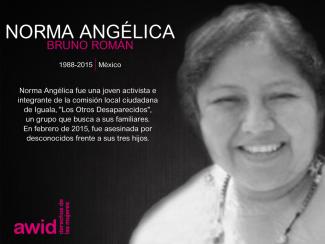
Norma Angelica Bruno Roman
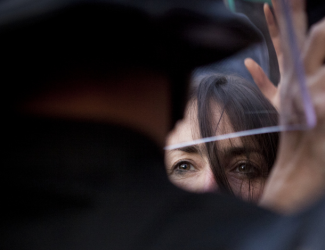
WHRDs are self-identified women and lesbian, bisexual, transgender, queer and intersex (LBTQI) people and others who defend rights and are subject to gender-specific risks and threats due to their human rights work and/or as a direct consequence of their gender identity or sexual orientation.
WHRDs are subject to systematic violence and discrimination due to their identities and unyielding struggles for rights, equality and justice.
The WHRD Program collaborates with international and regional partners as well as the AWID membership to raise awareness about these risks and threats, advocate for feminist and holistic measures of protection and safety, and actively promote a culture of self-care and collective well being in our movements.
WHRDs are exposed to the same types of risks that all other defenders who defend human rights, communities, and the environment face. However, they are also exposed to gender-based violence and gender-specific risks because they challenge existing gender norms within their communities and societies.
We work collaboratively with international and regional networks and our membership
We aim to contribute to a safer world for WHRDs, their families and communities. We believe that action for rights and justice should not put WHRDs at risk; it should be appreciated and celebrated.
Promoting collaboration and coordination among human rights and women’s rights organizations at the international level to strengthen responses concerning safety and wellbeing of WHRDs.
Supporting regional networks of WHRDs and their organizations, such as the Mesoamerican Initiative for WHRDs and the WHRD Middle East and North Africa Coalition, in promoting and strengthening collective action for protection - emphasizing the establishment of solidarity and protection networks, the promotion of self-care, and advocacy and mobilization for the safety of WHRDs;
Increasing the visibility and recognition of WHRDs and their struggles, as well as the risks that they encounter by documenting the attacks that they face, and researching, producing, and disseminating information on their struggles, strategies, and challenges:
Mobilizing urgent responses of international solidarity for WHRDs at risk through our international and regional networks, and our active membership.
par Karina Ocampo
C’est dans un recoin caché du Chiapas, au Mexique, que nous sommes arrivées, femmes et dissidentes sexuelles, pour organiser nos actions. (...)
< illustration : « La muerte sale por el Oriente » [la mort se lève à l’Est], par Sonia Madrigal
Los discursos anti-derechos continúan evolucionando. Además de utilizar argumentos relacionados con la religión, la cultura y la tradición, los actores antiderechos cooptan el lenguaje de la justicia social y los derechos humanos para ocultar sus verdaderas agendas y ganar legitimidad.

Hace tres décadas, un evangelista televisivo estadounidense candidato del Partido Republicano dijo una célebre frase: el feminismo es «un movimiento político antifamilia que alienta a las mujeres a dejar a sus maridos, matar a sus hijos, practicar brujería, destruir el capitalismo y convertirse en lesbianas». Hoy en día, esta idea conspirativa ha logrado un alcance y una legitimidad sin precedentes bajo la forma del discurso de la «ideología de género», un término genérico que, cual enemigo imaginario, ha sido creado por los actores antiderechos para oponerse a él.
Dentro de la serie de discursos empleados por los actores antiderechos (que incluyen nociones de «imperialismo cultural» y «colonización ecológica», apelaciones a la «objeción de conciencia» y la idea de un «genocidio prenatal»), un tema clave es la cooptación. Los actores antiderechos se apropian de problemáticas legítimas, o seleccionan partes de estas, y las distorsionan al servicio de sus agendas opresivas.
Conocida como la Drag Queen de color de Nueva York, Sylvia fue feroz e incansable en su voluntad por cambiar las cosas, y en su defensa de quienes quedaron marginadxs y excluidxs cuando el movimiento por los "derechos de la comunidad gay" se volvió predominante en los Estados Unidos, a principios de los 70.
En 1973, durante un conocido discurso por el día de Christopher Street, Sylvia gritó en medio de la multitud de integrantes de la comunidad LGBT:
"Todos ustedes me dicen, anda y esconde la cola entre las patas.
No voy a seguir aguantando esta mierda.
Me han golpeado.
Me han roto la nariz.
Me han metido en la cárcel.
He perdido mi trabajo.
He perdido mi departamento
por la liberación gay, ¿y todos ustedes me tratan así?
¿Qué carajo les pasa a todos ustedes?
¡Piensen en eso!"
En 1969, a la edad de 17 años, Sylvia participó en los emblemáticos disturbios de Stonewall, al lanzar, presuntamente, el segundo cóctel molotov para protestar por la redada policial en este bar gay de Manhattan. Siguió siendo una figura central en los levantamientos posteriores, organizando mítines y luchando contra la brutalidad policial.
En 1970, Sylvia trabajó junto con Marsha P. Johnson para establecer Street Transvestite Action Revolutionaries [Acción Travesti Callejera Revolucionaria] (S.T.A.R., por sus siglas en inglés), un colectivo político y una organización que establecería proyectos de apoyo mutuo para las personas trans que vivían en la calle, aquellxs que luchaban contra la drogadicción, las que estaban encarceladas y, en particular, para las personas trans de color que vivían en la pobreza.
Desafiante de las etiquetas, Silvia vivió la vida de una manera que retaba a las personas del movimiento de liberación gay a pensar de manera diferente. Ella dijo:
"Me fui de casa a los 10 años, en 1961. Hice la calle en la 42. El inicio de los años 60 no era un buen momento para lxs drag queens, los chicos afeminados o los chicos que usaban maquillaje como nosotrxs. En ese entonces nos golpeaba la policía, y todo el mundo. Yo no salí realmente como drag queen hasta finales de los 60, cuando se arrestaba a lxs drag queens, qué degradación había. Recuerdo que la primera vez que me arrestaron, ni siquiera estaba vestida totalmente en drag. Estaba caminando y los policías me arrebataron de la calle. La gente ahora quiere llamarme lesbiana porque estoy con Julia, y yo digo: "No. Soy sólo yo. No soy lesbiana". Estoy cansada de que me etiqueten. Ni siquiera me gusta la etiqueta transgénero. Estoy cansada de vivir con etiquetas. Sólo quiero ser quien soy. Soy Sylvia Rivera.
A través de su activismo y su coraje, Sylvia ofreció un espejo que reflejaba todo lo que estaba mal en la sociedad, pero también la posibilidad de transformación. Sylvia nació en 1951 y falleció en 2002.
#FreezeFascisms
A 30 años de la adopción de la Declaración y Plataforma de Acción de Beijing, existe una ola creciente de fascismos que ejercen gran poder e influencia en los espacios multilaterales, todo un retroceso para las conquistas de igualdad de género y la protección de los derechos humanos en el mundo entero.
En torno a la CSW69, estamos organizando, en conjunto y de forma horizontal, una serie de valientes espacios sobre el terreno y en línea a fin de compartir estrategias y forjar un poder feminista más allá de Beijing +30. Nuestra presencia colectiva trastorna las prácticas institucionales de exclusión en dichos espacios y, a la vez, apoya los procesos de organización de los movimientos en torno a las alternativas feministas a los sistemas de opresión.
Súmate a las conversaciones desde el 10 al 21 de marzo de 2025, mientras transformamos de forma colectiva la CSW69 en espacios para y sobre la resistencia y la solidaridad.
We would like to thank the Amar.ela collective of women feminists activists and creatives who made this series possible, and especially Natalia Mallo (the team’s octopus) for her support and accompaniment throughout this journey.
We also extend our deepest gratitude and admiration to all the collectives and people who participated in this project, and we thank them for sharing their time, wisdom, dreams and hopes with us. We thank you for making this world a more just, feminist and sustainable one.
We hope the rest of the world will be as inspired by their stories as we are.
by Émilie Herbert-Pontonnier
Remember Esmeralda? The exotic "Gypsy" heroine born under the pen of the French literary giant Victor Hugo and popularized by Disney studios with their Hunchback of Notre Dame. (...)
< artwork: “Si las marronas lo permiten” by Nayare Soledad Otorongx Montes Gavilan
 |
Hind and Hind fue la primera pareja queer documentada en la historia árabe. En el mundo de hoy, es unx artista queer del Líbano. |
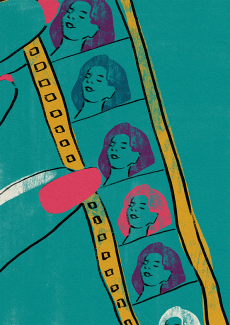
A los seis años, me enteré de que mi abuelo tenía una sala de cine. Mi madre me contó que la había abierto a principios de la década de 1960, cuando ella también tenía unos seis años. Recordaba que la primera noche proyectaron La novicia rebelde / Sonrisas y lágrimas.
Yo pasaba por el cine todos los fines de semana, y miraba a mi abuelo jugar al backgammon con sus amigos. No sabía que él estaba viviendo en la sala, en una habitación que estaba justo debajo de la cabina de proyección. Supe más tarde que se había mudado ahí después de que él y mi abuela se separaran, cuando el cine cerró, en los años 1990, poco después de que terminara la guerra civil en el Líbano.
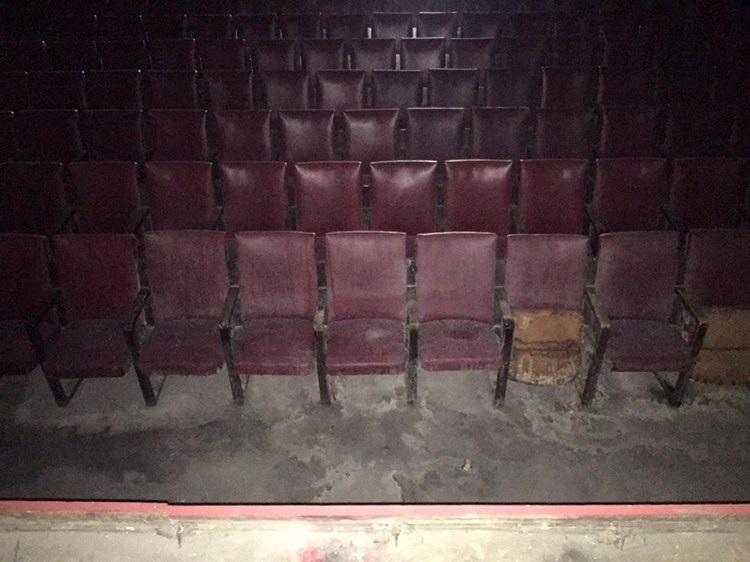
Durante años, y hasta que él falleció, casi siempre veía a mi abuelo jugando al backgammon en el descuidado vestíbulo del cine. Esas escenas repetidas son todo lo que recuerdo de él. Nunca llegué a conocerlo bien, nunca hablamos de cine, aunque él pasaba todo su tiempo en una sala de cine destartalada. Nunca le pregunté cómo era vivir en un lugar como ese. Murió cuando yo tenía doce años, en Nochebuena, a causa de una caída por la escalera caracol que llevaba a la cabina de proyección. Resulta casi poético que haya fallecido en movimiento, en un edificio donde las imágenes animadas están permanentemente suspendidas en el tiempo.

En la primavera de 2020, mi primo me llamó para decirme que había limpiado el cine de mi abuelo, y me pidió que fuera allí para encontrarme con él. Lxs dos siempre habíamos soñado renovarlo. Llegué antes que él. En el vestíbulo seguían estando los marcos de los afiches de las películas, pero faltaban los afiches. Yo sabía que debían haber quedado talonarios de entradas en algún lado; los encontré apilados en una pequeña caja de latón oxidada, sobre un estante de la boletería, y me guardé algunos.
Empecé a dar vueltas por el cine. En el escenario principal, la pantalla de proyección estaba muy sucia y un poco rota en un costado. Deslicé mi dedo índice sobre la pantalla para quitar una mancha de polvo, y vi que, debajo, la pantalla todavía era blanca. La tela también parecía estar en buenas condiciones. Miré hacia arriba para ver si el telón de mi abuela todavía estaba colocado. Estaba hecho de satén blanco, con un pequeño emblema bordado que representaba al cine. Había una sala principal y una galería de palcos. Los asientos parecían muy desgastados.
Noté que el proyector asomaba por una ventanita al fondo del área de los palcos. Subí los escalones en espiral que llevaban a la cabina de proyección.
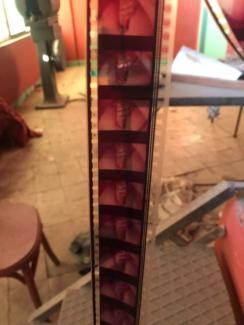
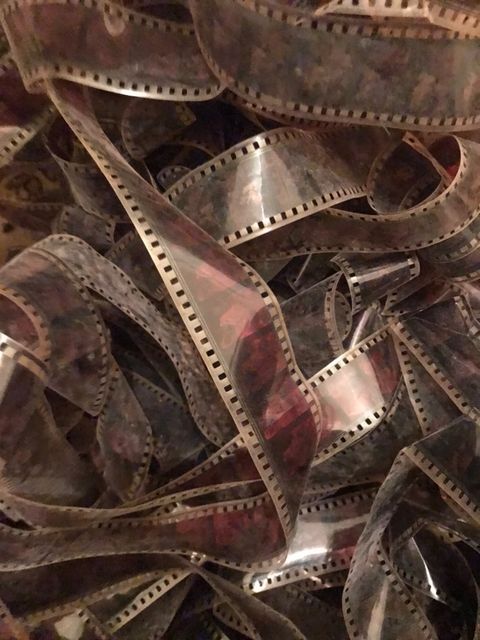
La habitación estaba a oscuras, pero un haz de luz, que entraba por las ventanas polvorientas, mostraba un montón de rollos de película arrojados en un rincón. Había cintas de celuloide inertes enredadas contra el pie del proyector. Los rollos polvorientos eran películas de género: westerns, cine de Bollywood y ciencia ficción con títulos malos como El meteorito que destruyó la Tierra o algo por el estilo. Me llamaron la atención las tiras de película polvorientas que, en su mayoría, eran fragmentos recortados de los rollos. Una por una, las tiras cortas mostraban diferentes escenas de besos, algo que parecía ser una danza sugerente, una escena indefinida de una reunión, un primer plano de una mujer acostada con la boca abierta, los créditos de apertura de una película de Bollywood, y una etiqueta de «Ahora en cartelera» que ocupaba varios fotogramas.
Los créditos de la película de Bollywood me recordaron a mi madre. Ella solía contarme que a la salida entregaban al público pañuelos de papel. Me guardé una escena de besos y las tiras de danza sugerente; supuse que habían sido cortadas por motivos de censura. El primer plano de la mujer me hizo pensar en los libros de Béla Balázs Visible Man, or The Culture of Film, The Spirit of Film y Theory of the Film. Él decía que en el cine los primeros planos proporcionan un
soliloquio silencioso, en el que un rostro puede hablar con los más sutiles matices de significado sin parecer antinatural y provocar la distancia de lxs espectadores. En este monólogo silencioso, la solitaria alma humana puede encontrar una lengua más sincera y desinhibida que en cualquier soliloquio hablado, porque habla instintivamente, en forma inconsciente.
Balázs estaba principalmente describiendo los primeros planos de Juana en la película muda La passion de Jeanne d’Arc. Señalaba cómo «... en la [película] muda, la expresión facial, aislada de su entorno, parecía penetrar en una nueva y extraña dimensión del alma».
Examiné más a fondo la tira de la película. La mujer parecía muerta, su cara era casi como una máscara. Me recordó al cuadro Ophelia del pintor John Everett Millais. En su libro Sobre la fotografía, Susan Sontag dice que una fotografía es «un rastro, algo directamente tomado de lo real, como una huella o una máscara mortuoria». Estas máscaras mortuorias son como una presencia que recuerda una ausencia.
Recordé haber encontrado un diálogo entre la muerte y la fotografía en la olvidada película de Roberto Rossellini La macchina ammazzacattivi [La máquina que mata a los malos]. En esta película, un camarógrafo va por ahí tomando fotos de personas, que a su vez se congelan, y luego quedan suspendidas en el tiempo. El crítico francés de cine André Bazin decía que la fotografía arrebata a los cuerpos del flujo de la muerte y los almacena embalsamándolos. Describía esta momificación fotográfica como «la preservación de la vida mediante la representación de la vida».
Esta cabina de proyección, toda su configuración, todas las cosas que parecían haber sido movidas, las tiras de celuloide en el piso, todo aquello en lo que mi abuelo había dejado una marca... sentí que debía protegerlo.
Debajo de las cintas había un rollo de película polvoriento y desarmado. Parecía que alguien había estado mirando el rollo manualmente. En ese momento, mi primo subió por la escalera caracol y me encontró estudiándolo. Se frotó el mentón con los dedos, y en tono muy objetivo dijo —Encontraste el porno.

Miré la tira de película que tenía en la mano, y me di cuenta de que no era una escena de muerte. La cinta había sido cortada del rollo porno. La mujer estaba gimiendo de éxtasis. Los primeros planos sirven para transmitir sentimientos de intensidad, de clímax, pero en realidad yo nunca había usado las teorías de Balázs para describir una escena porno. Él escribió que «el clímax dramático entre dos personas siempre será mostrado como un diálogo de expresiones faciales en primer plano». Me puse la tira de película en el bolsillo, y decidí llamar a la mujer Ishtar. Desde entonces, Ishtar ha vivido siempre en mi billetera. Parecía extraño comparar la minuciosa descripción de los miedos y el coraje de Juana de Arco con la expresión facial de Ishtar en éxtasis.
Según mi primo, el hermano de mi abuelo esperaba hasta que mi abuelo dejaba el cine y, en lugar de cerrar, invitaba a sus amigos para proyecciones privadas fuera de horario. No me pareció gran cosa. Era una práctica común, especialmente durante y después de la guerra civil del Líbano. Después de la guerra, había aparatos de televisión en casi todas las casas libanesas. Incluso recuerdo que había un televisor en mi dormitorio a finales de la década de 1990, cuando yo tenía unos seis años. Me han contado que comprar películas porno en VHS era algo generalizado en esa época. Mohammed Soueid, un escritor y cineasta libanés, me dijo una vez que, entre mediados de la década de 1980 y mediados de la de 1990, los cines solían proyectar tanto películas artísticas como pornográficas, para poder sobrevivir. También he oído que los proyeccionistas cortaban los rollos de porno para hacer diferentes montajes, y así poder proyectar algo distinto cada noche. Con el tiempo, la gente comenzó a quedarse dentro de la comodidad de sus propios hogares para mirar películas en VHS en sus televisores, y el negocio de los cines comenzó a declinar.

Mi primo volvió abajo para revisar un archivo de papeles que había en la oficina.
Yo me quedé en la cabina y empecé a pasar la tira de película entre mis dedos índice y medio, deslizándola hacia arriba con los pulgares y haciendo correr lentamente los fotogramas por mis manos. Alcé la tira contra la ventana polvorienta, y entrecerré los ojos para entender las viñetas monocromas. En esta serie de fotogramas había un primerísimo primer plano de una verga metida en una vagina. La imagen seguía durante varios fotogramas hasta que llegué a un nudo en la película, y me imaginé el resto.
Hank exhibe su erección frente a Veronika, quien está acostada en la cama al lado de un secrétaire imitación Luis XIV. Ella se levanta lentamente, y desliza el fino bretel de su negligé transparente para que le caiga del hombro izquierdo. Hank le desata la bata de velos, la gira, le da unas palmadas en el culo, y la empuja contra el secrétaire. Le mete la verga en el coño repetidamente, mientras la parte trasera del mueble golpea contra la pared empapelada.
Siempre presté atención a la decoración de interiores, desde la vez que mi profesora de Estudios sobre las Mujeres en la Pornografía dijo que los más grandes archivos de pornografía de América del Norte son utilizados, curiosamente, para examinar el amoblado de la clase media de la época. De modo que, mientras Veronika se agacha y es penetrada desde atrás por Hank, una asistente de investigación universitaria bien podría estar tratando de adivinar el diseño de la decoración dorada del secrétaire, o estudiando el relieve rococó de una silla de madera en algún rincón.
Por un momento, la cabina se convirtió en un espacio para la imaginación sexual femenina, desestabilizando un espacio que, de lo contrario, prometía la libertad de la sexualidad masculina. Estaba segura de que solo los hombres podían acceder a las salas de cine que proyectaban películas porno. El rollo de película estaba demasiado enredado como para arreglarlo en una cabina de proyección donde el polvo se había acumulado durante más de una década, así que lo metí en mi bolso de lona y me fui del cine.
No estoy segura de qué es lo que me ocurrió, pero me sentí obligada a conservarlo. Quería sentir la excitación de salvaguardar algo misterioso, algo no ortodoxo. Mientras iba por la calle, mentalmente estaba segura de que la gente sabía que yo estaba escondiendo algo. Me sobrevino un sentimiento de culpa mezclado con placer. Era algo perverso.
Entré en la casa, preocupada por la idea de tener un rollo pornográfico en mi bolsa de lona y por el fluir de los pensamientos que había tenido en el camino. Fui inmediatamente a mi dormitorio. En algún lugar lejano de mi mente, recordé que compartía una pared con la habitación de al lado, que era de Layla. Probablemente ella no estaba en casa, pero la posibilidad de que me oyeran me excitó. Cerré la puerta de mi dormitorio y saqué la tira de la película de Ishtar.
La imaginé con un vestido transparente color verde claro, bailando seductoramente frente a mí, sacudiendo sus caderas hacia los costados y sonriendo con los ojos. Me metí en la cama. Deslicé los dedos dentro de las bragas. Levanté mis caderas. Pasé la mano por mis muslos, hacia abajo, hasta separarlos, y me metí dos dedos. Me tensé, palpando mis diferentes pliegues. Empecé a gemir antes de poder detenerme. Jadeaba y me mecía. Los rayos de sol que entraban por mi ventana me daban besos renuentes sobre la piel. Aguanté la respiración, y mis brazos y mis piernas se estremecieron. Tragué el aliento y me quedé tumbada sobre el colchón.
Cuando era estudiante universitaria, tomé clases de introducción a la cinematografía. La profesora Erika Balsom había programado una proyección de Variety, de Bette Gordon. Estaba entusiasmada por ver la primera película de la productora Christine Vachon, quien después pasó a producir películas que ahora son parte del movimiento del Nuevo Cine Queer. Variety se describía como una película feminista sobre Christine, una mujer que comienza a trabajar en la boletería de un cine porno de Nueva York, llamado The Variety Theater. Christine oye las películas que se proyectan, pero nunca entra a la sala. Con el tiempo, se siente atraída por un cliente habitual, a quien observa atentamente. Lo sigue hasta una tienda de material pornográfico, en donde se aparta y hojea revistas para adultos por primera vez.
El voyeurismo de Christine se muestra de diferentes maneras a lo largo de la película. El guión también estaba plagado de excesos y de monólogos eróticos que podrían ser considerados obscenos o vulgares.
En una escena ambientada en una sala de juegos, ella le lee un texto erótico a su novio. La cámara va y viene entre un primer plano del culo de Mark mientras él juega al pinball, sacudiendo sus caderas hacia adelante y hacia atrás contra la máquina, y un primer plano del rostro de Christine mientras ella recita su monólogo.

«Sky estaba viajando a dedo y lo levantó una mujer en una pick-up. Era de noche tarde y él necesitaba un lugar donde quedarse, de modo que ella le ofreció su casa.
Ella le acompañó a su habitación y le ofreció un trago. Bebieron y hablaron, y decidieron ir a acostarse. Él no podía dormir, por lo que se puso los pantalones y fue por el pasillo hasta la sala de estar. Casi no podía ser visto, pero sí podía ver. La mujer estaba desnuda y extendida sobre la mesita baja, con las piernas colgando. Todo su cuerpo era de un blanco excitante, como si nunca hubiera estado expuesto al sol. Sus pezones eran color rosa brillante, como de fuego, casi de neón. Tenía los labios abiertos. Su largo cabello cobrizo lamía el suelo, los brazos estirados, los dedos cosquilleando el aire. Su cuerpo aceitado era redondo, sin puntas, sin bordes. Deslizándose entre sus senos había una gran serpiente que se curvaba hacia arriba alrededor de uno, y hacia abajo por el otro. La lengua de la serpiente lamía hacia el coño, tan abierto, tan rojo bajo la luz de la lámpara. Excitado y confundido, el hombre volvió a su habitación, y con gran dificultad logró dormirse. A la mañana siguiente, mientras comen frutillas, la mujer le pide que se quede otra noche. Otra vez, él no podía dormir […]»
Cuando tenía veintitrés años, Lynn, la chica del curso de cine con quien estaba saliendo, me sorprendió llevándome a mirar cortos eróticos el Día de San Valentín. El evento tenía lugar en el Mayfair Theater, un viejo cine independiente. La arquitectura del cine recordaba a los nickelodeons de América del Norte, pero con un toque exagerado. Los palcos estaban decorados con figuras de cartón de tamaño real de El monstruo del pantano y Aliens.
Ese año el jurado del festival era la estrella de cine para adultos Kacie May, y el programa consistía en una hora y media de cortometrajes. El contenido iba desde cortos machistas soft-core hasta películas de coprofilia. Miramos algunos minutos de lo que parecía ser porno suave heterosexual. La filmación mostraba a una pareja que empieza a hacer el amor en una sala de estar moderna, y luego pasa al dormitorio. Eran casi todas imágenes de ellxs besándose, tocándose, y haciendo el amor en la posición del misionero. Después, una mujer con cabello castaño corto se subió a la cama en cuatro patas, lamiendo el dorso de su propia mano a pequeños lengüetazos. Maullaba y se arrastraba sobre la despreocupada pareja. Continuaron haciendo el amor. Ella gateó hasta la cocina, levantó con los dientes su cuenco vacío, y lo colocó sobre una almohada. Siguió caminando encima de ellxs hasta el final del corto. Parecía bastante absurdo. Empecé a reírme, pero a Lynn se la veía un poco incómoda. Entonces, miré a nuestra izquierda, y vi a otras personas del público bebiendo cerveza a borbotones y atragantándose con palomitas de maíz mientras se reían como histéricxs. Sus risas ininterrumpidas y sus comentarios en voz bien alta eran lo que en verdad marcaban el tono del festival. Mirar al público resultó más interesante que mirar las películas eróticas. El Mayfair Theater a menudo proyectaba películas de culto, y mirar películas de culto es una experiencia comunitaria.
No es exactamente la forma en que yo me imaginaba al tío de mi madre mirando pornografía en el cine de mi abuelo. Los cines proyectaban abiertamente películas porno en esa época pero yo no podía imaginar eso sucediendo en el pueblo de mi madre. Lo imaginaba mirando la película desde el proyector de la cabina, para poder detener la proyección rápidamente en el caso de tener alguna visita inesperada. Sus amigos se sentaban en el palco del fondo. Nadie podía entrar por ahí a menos que tuviera una llave, así que era seguro. Tenían que pensar en todo. Era un barrio cristiano conservador, y no habrían querido causar problemas. Lo más probable era que estuvieran abrumados por la excitación y la culpa. Las voces de las bromas homoeróticas en voz alta se mezclaban con los audios de gruñidos y gemidos, pero cada pocos minutos se recordaban unos a otros que debían bajar la voz. Se turnaban para controlar las ventanas, asegurándose de que el sonido no fuera lo suficientemente alto como para alarmar a lxs vecinxs. A veces, apagaban el parlante y no había sonido.
En 2019, después de una protesta política, me encontré un puesto de libros en la calle Riad El Solh, cerca de la Plaza de los Mártires, en el centro de Beirut. Cerca del borde de la mesa, detrás de los libros de Víctor Hugo y Simone de Beauvoir, encontré una pila de novelas eróticas y revistas para adultos. Eran todas traducciones de publicaciones occidentales. En realidad no me importaba cuál elegir; solo sabía que quería tener un ejemplar, por la pura emoción. Busqué el arte de portada más interesante.
Mientras me daba el cambio, el vendedor me preguntó —¿No te conozco de algún lado? Me miró los pechos, deslizando los ojos hacia abajo. Probablemente supuso que yo trabajaba en la industria del porno o del sexo. Lo miré a los ojos y dije —No. Me di vuelta, lista para irme caminando con mi compra. Entonces, él me detuvo para decirme que tenía un gran archivo en su sótano, y que vendía regularmente colecciones y publicaciones porno en EBay a Europa y a los Estados Unidos. Si bien me interesaba revolver ese archivo, no me sentía lo suficientemente cómoda como para aceptar su oferta. No parecía seguro. Le pregunté dónde encontraba esas novelas. Para mi sorpresa, las editaban en el Líbano.
Caminando hacia la estatua de Riad El Solh, miré la publicación que había comprado y vi que el texto estaba algo torcido, con las letras un poco borroneadas, haciéndolas ilegibles. Las fotos internas eran collages pornográficos descoloridos. Parecía algo crudo; me gustaba. El título de la novela era Marcel’s Diaries [Los diarios de Marcel].
El arte de portada era claramente un recorte de una revista pegado sobre una hoja azul. En la ilustración, una mujer sin camisa está agarrando la cabeza de su amante, hundiendo los dedos en el cabello de él, mientras él le besa el cuello desde atrás. La falda de ella tiene el cierre abierto. Su amante tiene la mano apoyada en la zona inferior de su cadera derecha. La mano de ella está sobre la de él. Los labios de la mujer están fruncidos y abiertos, casi como si estuviera gimiendo de placer, y su cabello rubio y liso, al estilo de los años 1970, cae sobre su pecho y le cubre parcialmente los pezones.
Abrí el libro en la primera página. El prefacio decía:
que se puede traducir como
«Deseo
y desviación»
o como
«Deseo
y perversión»
Leí el primer capítulo, y descubrí que quien había traducido el texto había cambiado el nombre del protagonista a Fouad, que es un nombre árabe. Supuse que querían que su público masculino libanés se identificara. Continuando la lectura, vi que todas sus amantes tenían nombres extranjeros como Hanna, Marla, Marcel, Marta.
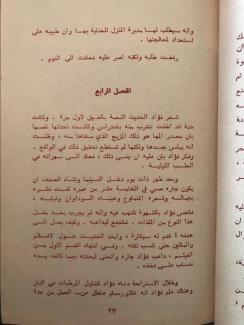
En la página 27, capítulo cuatro, me di cuenta de que Marcel era uno de los amantes de Fouad.

The scene took place in a movie theater. Movie theaters were often spaces for sexual freedom in North America, especially since the 1970s after the sexual revolution.
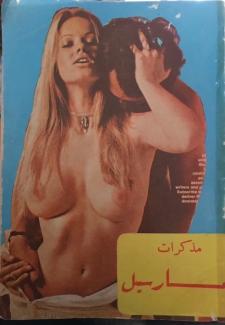
También supuse que habían mantenido todos los otros nombres extranjeros para que el texto sonara exótico y fuera por lo tanto menos tabú. La pornografía y las novelas eróticas eran atribuidas a West Hollywood, a pesar de que históricamente el mundo árabe haya producido textos eróticos. La literatura erótica se convirtió en tabú, y la única manera segura de editarla era comercializarla como extranjera, como exótica.
Es interesante cómo lo exótico encubre a lo erótico. La diferencia entre los dos adjetivos tiene su raíz en las etimologías griegas de las palabras: exótico viene de exo, «afuera», lo que significa extraño o extranjero. Erótico deriva de Eros, el dios del amor sexual. De modo que lo exótico es misterioso y extranjero, y lo erótico es sensual.
En el Líbano existe una línea delgada entre lo exótico y lo erótico en el cine, como la delgada línea entre las películas artísticas y las películas pornográficas. En 2015, durante una conversación con la cineasta Jocelyne Saab en un restaurante vietnamita de París, me enteré de que ella había tenido que filmar su película artística Dunia dos veces, para cambiar el dialecto del egipcio al libanés. Me contó que sus actorxs eran egipcixs, y que ella no era estricta respecto del guión. Pero no le permitieron usar el dialecto egipcio: tenía que ser en libanés, porque a los productores les preocupaban ciertas escenas de la película que bordeaban lo erótico. De modo que lo convirtieron en un film extranjero.
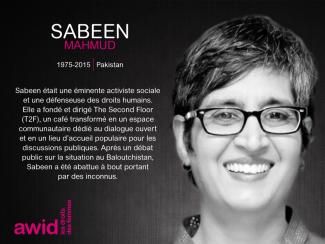
Cynthia Cockburn était une sociologue, écrivaine, universitaire, photographe et militante pour la paix féministe.
Elle a étudié les aspects genrés de la violence et du conflit et fait d’importantes contributions au mouvement pacifiste en explorant les thèmes de la masculinité et de la violence, ainsi que par son activisme local et international.
Ayant introduit une analyse féministe aux questions de militarisation et de guerre, Cynthia figurait parmi les universitaires dont les écrits et analyses illustraient la manière dont la violence basée sur le genre joue un rôle essentiel dans la perpétuation de la guerre. Travaillant en étroite collaboration avec des activistes pacifistes dans des pays en conflit, ses conclusions portaient sur des contextes aussi divers que l’Irlande du Nord, la Bosnie-Herzégovine, Israël et la Palestine, la Corée du Sud, le Japon, l’Espagne et le Royaume-Uni. Sa recherche et ses écrits universitaires ont permis d’éclairer le fait que la violence soit vécue selon un continuum de temps et d’échelle, et perçue très différemment lorsque l’on y applique le prisme du genre.
Elle disait que « [l]e genre nous aide à voir la continuité, la connexion entre les évènements de violence ».
Cynthia a pu mettre ses recherches en pratique grâce à son activisme local et international auprès de mouvements pour la démilitarisation, le désarmement et la paix. Elle a aidé à lancer le camp de femmes pour la paix de Greenham Common, qui prônait le désarmement nucléaire universel en Grande-Bretagne, ainsi que participé à la mise en place de la branche londonienne des Women in Black. Au fil des ans, Cynthia a organisé et participé à des veillées hebdomadaires locales et à la chorale politique Raised Voices, interprétant et écrivant certaines des paroles des chansons. Elle fut également active au sein du groupe Women’s International League for Peace and Freedom (WILPF), du Forum des socialistes féministes européennes et de Women Against Fundamentalism.
« Cynthia émettait une lumière féministe, tissait les communautés féministes entre elles, entonnait des chants de paix, écoutait, écoutait, écoutait, observait les oiseaux – et suspendait le flot de circulation. Je lui serai toujours reconnaissante et redevable, l’« autre » Cynthia. » – Cynthia Enloe
Cynthia est née en juillet 1934 et s’est éteinte en septembre 2019, à l’âge de 85 ans.
✉️ Sur inscription pour les grands groupes. Espace ouvert pour les petits groupes. Inscrivez-vous ici
📅 Mardi 11 mars 2025
🕒12.00h-14.00h et 16.00h-18.00h EST
🏢 Chef's Kitchen Loft with Terrace, 216 East 45th St 13th Floor New York
Organisé par : AWID
L'investissement à impact de genre est désormais considéré comme une solution contre les inégalités de genre. Et pourtant, comme le montre notre rapport, il fait partie du problème. Les institutions publiques et privées en font la promotion en tant que moyen pour parvenir à l'égalité de genre et pour accroître les ressources des femmes et des filles.
Au contraire, l’investissement à impact de genre constitue plutôt une nouvelle version de vies et de sociétés soumises à une même logique financière, qui continue de façonner les profondes inégalités de notre monde.
Avec ce rapport, l'AWID offre aux lecteurs·rices - féministes, défenseur·euse·s de la justice de genre et autres parties prenantes de l'investissement à impact de genre - une analyse critique et des preuves étayées pour comprendre l’investissement à impact de genre, ses récits et les implications économiques et politiques qu’il a pour les mouvements féministes.
por Siufung Law
«¡97…! 98… ¿dónde está 98? ¡98! ¡Por favor, vuelve a la formación!... ¡99! ¡100!...» La dama detrás del escenario le pedía incesantemente a cada atleta que formara una fila en el espacio húmedo, transpirado y abarrotado detrás de escena. (...)
< arte: «When They See Us» [Cuando nos ven], Lame Dilotsotlhe

 |
Tshegofatso Senne est un·e féministe noir·e atteint·e d’une maladie chronique et genderqueer qui fait le maximum. Une grande partie de son travail est axée sur le plaisir, la communauté et le rêve et s’alimente de l’abolitionnisme somatique et du handicap, de la guérison et des justices transformatives. Tshegofatso écrit, fait des recherches et s’exprime sur des questions concernant le féminisme, la communauté, la justice sexuelle et reproductive, le consentement, la culture du viol et la justice, et élabore depuis 8 ans des théories sur la façon dont le plaisir recoupe ces différents thèmes. Tandis qu’iel dirige sa propre entreprise, Thembekile Stationery, sa plateforme communautaire Hedone rassemble les gens pour explorer et comprendre le pouvoir du plaisir et de la prise de conscience de traumatismes dans leur vie quotidienne. |
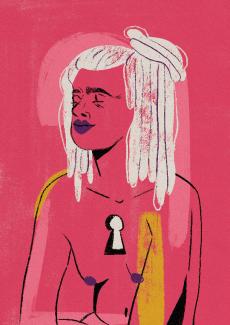
C’est dans notre corps, et non dans notre cerveau pensant, que nous expérimentons la plupart de nos douleurs, nos plaisirs, nos joies, et là où nous traitons la majeure partie de ce qui nous arrive. C’est également là que nous faisons la plupart de notre travail de guérison, et notamment notre guérison émotionnelle et psychologique. Et c’est là où nous faisons l’expérience de la résilience et d’une sorte de flux.
Ces mots, ceux de Resmaa Menakem dans son roman My Grandmother’s Hands résonnent toujours en moi
Le corps contient nos expériences. Nos mémoires. Notre résilience. Et comme l’a écrit Menakem, le corps contient également nos traumatismes. Il emploie des mécanismes spontanés de protection pour arrêter ou prévenir les dommages supplémentaires. Le pouvoir du corps. Le traumatisme, ce n’est pas l’événement, c’est la manière dont nos corps répondent aux événements qui nous semblent dangereux. Et le trauma reste souvent coincé dans notre corps, jusqu’à ce que nous l’abordions. Il n’est pas possible de faire autrement – c’est ainsi que notre corps l’entend.
En utilisant l’appli Digital Superpower de Ling Tan, j’ai observé les réactions de mon corps alors que je me promenais dans différents quartiers de ma ville, Johannesburg, en Afrique du Sud. L’appli est une plateforme en ligne pilotée par le mouvement qui permet de suivre nos perceptions pendant que l’on se déplace dans un lieu, en saisissant et en enregistrant les données. Je m’en suis servie pour faire le suivi de mes symptômes psychosomatiques – les réactions physiques connectées à une cause psychologique. Il pouvait s’agir de flash-backs. D’attaques de panique. De serrement de poitrine. L’accélération du rythme cardiaque. De maux de tête dus à la tension. De douleurs musculaires. D’insomnie. De difficulté à respirer. J’ai suivi ces symptômes tout en marchant et en me déplaçant dans différents coins de Johannesburg. Et je me suis demandé.e :
Où pouvons-nous être en sécurité? Peut-on être en sécurité?
Les réponses psychosomatiques peuvent avoir plusieurs causes, certaines moins sévères que d’autres. Lorsque l’on a vécu un traumatisme, on peut être dans une détresse très intense lors d’événements ou de situations similaires. J’ai fait le relevé de mes sensations, sur une échelle de 1 à 5, où 1 correspond aux cas où je n’ai ressenti presque aucun de ces symptômes – plutôt à l’aise que sur mes gardes et à fleur de peau, ma respiration et mon rythme cardiaque étaient stables, je ne regardais pas par-dessus mon épaule – et 5 à l’opposé : des symptômes qui me rapprochaient de l’attaque de panique.
En tant que personne noire. En tant que personne queer. En tant que personne de genre queer qui pouvait être perçue comme une femme, selon mon expression de genre ce jour-là.
Je me suis demandé.e :
Où pouvons-nous être en sécurité?
Même dans les quartiers que l’on pourrait considérer comme « sûrs », je me sentais constamment en panique. Je regardais autour de moi pour vérifier que je n’étais pas suivie, ajustant la manière dont mon T-shirt tombait pour que mes seins ne soient pas trop moulés, regardant autour de moi pour m’assurer que je connaissais plusieurs sorties, si je sentais tout à coup un danger là où j’étais. Une route sans personne fait monter l’anxiété. Une route bondée aussi. Prendre un Uber aussi. Marcher dans une rue publique également. Et être dans mon appartement aussi. Tout comme de récupérer une livraison au pied de mon immeuble.
Peut-on être en sécurité?
Pumla Dineo Gqola parle de l’usine de peurs féminines. Vous en avez peut-être une vague idée, mais si vous êtes une personne socialisée en tant que femme, vous connaîtrez très bien ce sentiment. Ce sentiment d’avoir à planifier chaque pas que vous faites, que vous vous rendiez au travail, à l’école, ou fassiez simplement une course. Ce sentiment d’avoir à surveiller la manière dont on s’habille, on parle, on s’exprime en public et dans les espaces privés. Ce sentiment au creux de l’estomac si on doit se déplacer la nuit, aller chercher une livraison, ou avoir affaire à toute personne qui continue à se socialiser en tant qu’homme cis. Harcelées dans la rue, toujours sous la menace de la violence. Exister pour nous, quel que soit l’espace, s’accompagne d’une peur innée.
La peur est un phénomène à la fois individuel et sociopolitique. Au niveau individuel, la peur peut faire partie d’un système d’avertissement sain qui se développe bien […] Lorsque l’on pense à la peur, il est important de prendre en compte à la fois les notions d’expérience émotive individuelle et les modalités politiques par lesquelles la peur a été utilisée à des fins de contrôle à diverses époques.
- Pumla Dineo Gqola, dans son ouvrage Rape: A South African Nightmare
En Afrique du Sud, les femmes cis, les femmes et les queers savent que chaque pas que nous faisons à l’extérieur – des pas pour faire des choses ordinaires comme se rendre dans un magasin, prendre un taxi jusqu’au travail, un Uber pour rentrer d’une fête – toutes ces actions sont une négociation avec la violence. Cette peur, elle fait partie du traumatisme. Pour s’adapter au traumatisme que l’on porte dans nos corps, nous élaborons des réponses à la détection du danger – on examine les réactions émotives des personnes autour de nous, à la recherche d’« amabilité ». Nous sommes constamment sur nos gardes.
Jour après jour. Année après année. Vie après vie. Génération après génération.
L’auteur de The Body Keeps the Score, Bessel van der Kolk, explique à propos de la difficulté supplémentaire que pose ce système de défense acquis, que
Elle perturbe la capacité à correctement lire les autres, ce qui rend les survivant·e·s de traumatisme moins à même de détecter le danger, ou plus à même de croire avoir perçu un danger là où il n’y en a pas. Il faut une énergie considérable pour continuer à fonctionner tout en portant la mémoire de la terreur, et la honte d’une faiblesse et d’une vulnérabilité infinie.
Comme le dit Resmaa Menakem, le traumatisme est partout; il s’infiltre dans l’air que nous respirons, l’eau que nous buvons, la nourriture que nous ingérons. Il est présent dans les systèmes qui nous gouvernent, l’institution qui nous enseigne et qui nous traumatise aussi, et au sein des contrats sociaux que nous concluons les un·e·s avec les autres. Plus important encore, nous prenons le traumatisme avec nous partout où nous allons, dans nos corps, nous épuisant et sapant notre santé et notre bonheur. Nous portons cette vérité dans nos corps. Des générations d’entre nous l’ont fait.
Alors, pendant que je marche dans ma ville, que ce soit dans un quartier considéré « sûr » ou non, je porte les traumatismes de générations dont les réactions sont intégrées dans mon corps. Mon cœur palpite, je commence à avoir du mal à respirer, ma poitrine se resserre – parce que mon corps a l’impression que le traumatisme a lieu exactement à ce moment-là. Je vis avec une hypervigilance. Au point où l’on est soit trop sur ses gardes pour profiter de la vie sans souci, soit trop engourdi·e pour absorber de nouvelles expériences.
Pour que nous commencions à guérir, nous devons reconnaître cette vérité.
Ces vérités qui vivent dans nos corps.
Ce traumatisme est ce qui empêche nombre d’entre nous de vivre les vies que nous voulons. Demandez à n’importe quelle femme ou personne queer à quoi ressemble la sécurité pour elle, et elle vous donnera principalement des exemples de tâches très simples – pouvoir simplement vivre une vie joyeuse, sans la menace constante de la violence.
Les sentiments de sécurité, de confort et d’aise sont spatiaux. Incarner nos traumatismes influence la manière dont nous percevons notre propre sécurité, affecte les manières dont nous interagissons avec le monde et modifie les possibilités pour nous de vivre et d’incarner toute chose plaisante ou joyeuse.
Nous devons refuser cette encombrante responsabilité et nous battre pour un monde sûr pour nous toutes et tous. Nous, qui nous déplaçons avec nos blessures, sommes des battantes. Le patriarcat peut nous terroriser et nous brutaliser, nous ne cesserons pas le combat. Alors que nous continuons à descendre dans la rue, en défiant la peur de manière spectaculaire et apparemment insignifiante, nous nous défendons et parlons en notre propre nom.
- Pumla Dineo Gqola, dans son ouvrage Rape: A South African Nightmare
Où pouvons-nous être en sécurité? Comment commencer à se défendre, pas simplement physiquement mais également émotionnellement, psychologiquement et spirituellement?
« Le traumatisme nous transforme en armes » déclarait Adrienne Maree Brown dans un entretien mené par Justin Scott Campbell. Et son ouvrage, Pleasure Activism, propose plusieurs méthodes pour guérir ce traumatisme et nous ancrer dans la compréhension que la guérison, la justice et la libération peuvent également être des expériences plaisantes. Et particulièrement pour celles d’entre nous qui sont les plus marginalisées, qui ont peut-être été éduquées à faire rimer souffrance avec « ce travail ». Ce travail que tant d’entre nous ont entamé en tant qu’activistes, bâtisseuses communautaires et travailleuses, celles qui sont au service des plus marginalisées, ce travail que nous souffrons à réaliser, nous épuisant et ne prenant que rarement soin de nos esprits et de nos corps. L’alternative est d’être mieux informées à propos de nos traumatismes, capables d’identifier nos propres besoins et de devenir profondément incarnées. Cette incarnation signifie que nous sommes tout simplement plus à même de faire l’expérience du monde à travers les sens et les sensations de notre corps, en reconnaissant ce qu’ils nous disent plutôt qu’en supprimant et en ignorant l’information qu’ils nous communiquent.
Être en conversation continue avec notre corps vivant et pratiquer ces conversations avec intention nous connecte plus profondément à l’incarnation. Cela nous permet de rendre tangibles les émotions que nous ressentons lorsque nous interagissons avec le monde, que nous apprenons à apprivoiser notre corps et que nous comprenons tout ce qu’il essaie de nous enseigner. En comprenant le traumatisme et l’incarnation de pair, nous pouvons commencer à débuter la guérison et à accéder au plaisir de manière plus holistique, sainement et dans notre vie de tous les jours sans honte ou culpabilité. Nous pouvons commencer à accéder au plaisir en tant qu’outil de changement individuel et social, en puisant dans le pouvoir de l’érotique, comme le décrivait Audre Lorde. Un pouvoir qui nous permet de partager la joie à laquelle nous accédons et dont nous faisons l’expérience, élargissant notre capacité à être heureuses et à comprendre que nous le méritons, même avec notre traumatisme.
Puiser dans le plaisir et incarner l’érotique nous gratifie de la possibilité d’être délibérément vivantes, de nous sentir ancrées et stables et de comprendre notre système nerveux. Cela nous permet de comprendre et de nous défaire des bagages générationnels que nous portions sans le réaliser; nous pouvons acquérir du pouvoir grâce à la connaissance que même aussi traumatisées que nous le sommes, aussi traumatisées que nous pourrions potentiellement l’être à l’avenir, nous méritons tout de même des vies plaisantes et joyeuses, et que nous pouvons partager ce pouvoir avec nos gens. C’est l’aspect communautaire qui manque aux manières dont nous prenons soin de nous-mêmes; l’autosoin ne peut exister sans soin communautaire. Nous sommes en mesure de sentir une confiance interne plus profonde, une sécurité et un pouvoir en nous-mêmes, particulièrement face à des traumatismes ultérieurs qui déclencheraient des réactions en nous, car nous savons comment nous apaiser et nous stabiliser. Toute cette compréhension nous mène à un pouvoir interne profond et nourri, qui nous permet de relever tous les défis qui se présentent à nous.
Comme celles qui vivent avec des traumatismes générationnels profonds, nous en sommes venues à perdre confiance, voire à penser que nous sommes incapables de contenir et d’accéder au pouvoir que nous avons. Dans « Uses of the Erotic: The Erotic as Power », Lorde nous enseigne que l’érotique offre une source de régénération, une manière d’exiger mieux pour nous-mêmes et pour nos vies.
Car l’érotique n’est pas simplement une question de ce que nous faisons; c’est de savoir dans quelle mesure nous pouvons précisément et entièrement ressentir le faire. Dès lors que nous connaissons la mesure dans laquelle nous sommes capables de ressentir ce sens de satisfaction et de complétude, nous pouvons alors observer quelle activité dans notre vie nous rapproche le plus de cette complétude.
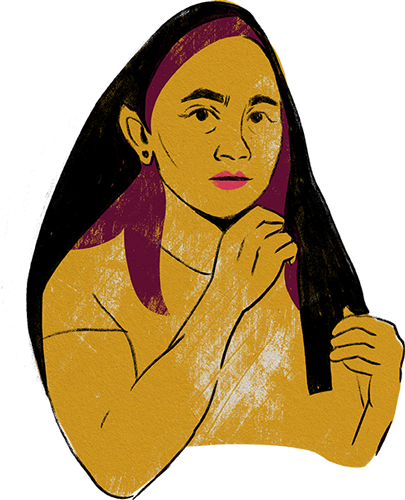
Je ne dis rien de tout ça à la légère – je sais que c’est plus facile à dire qu’à faire. Je sais que nombre d’entre nous sont empêchées de comprendre ces réalités, de les internaliser, voire de les guérir. La résistance s’accompagne d’actes où l’on se sent en insécurité, mais elle n’est pas impossible. Résister à des structures de pouvoir qui maintiennent les plus puissants en sécurité mettra toujours en danger celles d’entre nous qui sont poussées dans la marge. Reconnaître les traumatismes que vous avez affrontés, c’est réclamer vos expériences vécues, celles qui sont passées et celles qui suivront; c’est la résistance qui incarne cette connaissance que nous méritons, plutôt que les miettes que ces systèmes nous ont obligées à avaler. C’est une résistance qui comprend que le plaisir est compliqué par le traumatisme, mais que l’on peut y accéder de manière arbitraire et puissante. C’est une résistance qui reconnaît que notre traumatisme est une ressource qui nous connecte les unes aux autres et qui peut nous permettre de nous sentir mutuellement en sécurité. C’est une résistance qui comprend que même avec le plaisir et la joie, ce n’est pas une utopie; nous blesserons encore et serons de nouveau blessées, mais nous serons mieux outillées pour survivre et nous épanouir dans une communauté de soins et de gentillesse diversifiés. Une résistance qui fait de la place à la guérison et à la connexion à notre être humain en entier. La guérison ne sera jamais une balade agréable, mais elle commence avec la reconnaissance de la possibilité. Lorsque l’oppression nous fait croire que le plaisir est quelque chose auquel tout le monde a un accès égal, une des manières par lesquelles nous commençons à faire le travail de réclamation de nos êtres entiers – nos êtres entiers libérés et libres – est de réclamer notre accès au plaisir.
Leah Lakshmi Piepzna-Samarasinha a écrit dans sa contribution à Pleasure Activism,
Je sais que, pour la plupart des gens, les mots « soins » et « plaisir » ne peuvent absolument pas faire partie d’une même phrase. Nous nageons toutes dans la haine validiste de nos corps qui ont des besoins, et on nous propose un choix vraiment merdique : n’avoir aucun besoin et obtenir l’autonomie, la dignité et le contrôle de notre vie ou admettre que nous avons besoin de soins et perdre tout cela.
Le pouvoir que cela a? Nous comprenons nos traumatismes, donc nous comprenons ceux des autres; nous incarnons les sensations que nous vivons et y prêtons attention plutôt que de les négliger ou les éviter. Les manières dont nous accédons au plaisir nous donnent envie de partager cette joie dans nos communautés. En tenant compte des traumatismes, on se donne davantage de place pour faire l’expérience de tout cela et on se donne à nous-mêmes, et aux autres, la permission de guérir. Imaginez une communauté dans laquelle tout le monde a accès à des ressources et a le temps de vivre une vie plaisante, de la manière dont toutes et tous le veulent et le méritent. Dans laquelle les traumatismes spatiaux sont atténués parce que les personnes qui occupent ces espaces ont conscience des traumatismes, sont pleines d’attention bienveillante. N’est-ce pas ça, la guérison? N’est-ce pas un travail au niveau des traumatismes générationnels? N’est-ce pas la base pour un avenir plus sain et durable pour tout le monde?
Il est temps de nous reconnecter à cette sagesse ancestrale selon laquelle nous méritons de vivre des vies pleines. Nous devons reprendre contact avec notre droit naturel à la joie et à l’existence pour nous-mêmes. De ressentir du plaisir pour le simple plaisir. De ne pas vivre des vies de terreur. Cela paraît radical ; cela semble radical. Dans un monde où nous avons été socialisées et traumatisées à taire, à avoir peur, à ressentir et à rester impuissantes, à être cupides et à vivre avec ces problèmes structurels qui entraînent des maladies mentales, quel cadeau et quel émerveillement que de commencer à ressentir, d’être dans une communauté avec celles qui ressentent, dans laquelle nous sommes sainement interdépendantes, de s’aimer mutuellement et complètement. La sensation est radicale. Le plaisir est radical. La guérison est radicale.
Vous avez la permission de ressentir du plaisir. Vous avez la permission de danser, créer, faire l’amour à vous-même et à d’autres, célébrer et cultiver la joie. Vous êtes encouragées à le faire. Vous avez la permission de guérir. Ne le retenez pas à l’intérieur, n’essayez pas de traverser cela toute seule. Vous avez la permission de faire le deuil. Et vous avez la permission de vivre.
- Adrienne Marre Brown « You Have Permission »
L’incarnation somatique nous permet d’explorer notre traumatisme, d’y travailler et de faire des connexions significatives avec nous-mêmes et avec le collectif. Faire cela sur la durée entretient notre guérison. Tout comme le traumatisme, la guérison n’est pas un événement à occurrence unique. Cette guérison nous aide à aller vers la libération individuelle et collective.
Dans « A Queer Politics of Pleasure », Andy Johnson parle de la manière dont le fait de rendre le plaisir queer nous apporte des sources de guérison, d’acceptation, de relâchement, de jeu, d’entièreté, de défiance, de subversion et de liberté. Quelle ouverture! En incarnant le plaisir de manière si holistique, si queer, nous sommes en mesure de reconnaître la limite.
Rendre le plaisir queer nous pose également les questions à l’intersection de nos rêves et de nos réalités vécues.
Qui est assez libre ou considéré assez méritant pour ressentir du plaisir? Quand sommes-nous autorisés à ressentir le plaisir ou à être satisfaits? Avec qui pouvons-nous faire l’expérience du plaisir? Quel type de plaisir est accessible? Qu’est-ce qui nous limite dans notre accès total à notre potentiel érotique et de satisfaction?
- Andy Johnson, « A Queer Politics of Pleasure »
Lorsque nos pratiques de plaisir, qui prennent en compte le traumatisme, sont ancrées dans les soins communautaires, nous commençons à répondre à quelques-unes de ces questions. Nous commençons à en comprendre le potentiel libérateur. En tant qu’activistes du plaisir, c’est la réalité au sein de laquelle nous nous ancrons. La réalité qui dit : « mon plaisir peut-être fractal, mais il a le potentiel de guérir non seulement moi et ma communauté, mais des lignées futures ».
Je suis un système entier; nous sommes des systèmes entiers. Nous ne sommes pas que nos douleurs, que nos peurs, et que nos pensées. Nous sommes des systèmes entiers prévus pour le plaisir et nous pouvons apprendre comment dire oui depuis l’intérieur.
- Prentis Hemphill, entretien mené par Shar Jossell
Il y a un monde de plaisir qui nous permet de commencer à nous comprendre de manière holistique, avec des façons qui nous donnent la place de reconstruire les réalités qui affirment que nous sommes capables et que nous méritons du plaisir quotidien. Le BDSM, un de mes plaisirs les plus profonds, me permet d’entrevoir ces réalités où je peux sentir et guérir mon traumatisme, tout en sentant les incommensurables possibilités de dire oui depuis l’intérieur. Alors que le traumatisme me bloque dans un cycle de combat ou de fuite, le bondage, l’agenouillement, l’impact et les jeux de respiration m’encouragent à rester ancrée et connectée, me reconnectant à ma restauration. Le plaisir ludique me permet de guérir, d’identifier où l’énergie traumatique est emmagasinée dans mon corps et d’y centrer mon énergie. Il me permet d’exprimer les sensations que ressent mon corps avec des cris de douleur et de satisfaction, d’exprimer mon « non » sans aucune peur et de me délecter dans le « oui, carrément ». Avec un plan de sécurité, des soins après la pratique et une compréhension approfondie du traumatisme, la perversion offre un lieu de plaisir et de guérison d’une valeur inestimable.
Donc, que votre plaisir prenne la forme de la préparation d’un repas à votre rythme, d’avoir des relations sexuelles, de rester au lit plusieurs jours avec vos partenaires, de participer à des collectifs de soins adaptés aux situations de handicap, d’avoir quelqu’un qui vous crache dans la bouche, de faire des sorties accessibles, d’avoir des rendez-vous de câlins, de participer à une soirée dansante en ligne, de passer du temps dans votre jardin, d’être étouffée dans un donjon,
J’espère que vous prenez le plaisir avec vous partout où vous allez. J’espère qu’il vous guérit, vous et celleux qui vous entourent.
Reconnaître le pouvoir de l’érotique au sein de nos vies peut nous donner l’énergie de poursuivre le véritable changement au sein de notre monde.
- Audre Lorde, « Uses of the Erotic: The Erotic as Power »

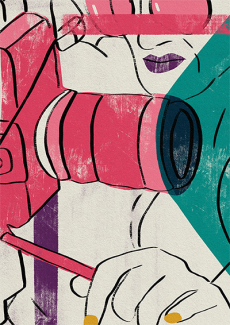
Cette édition du journal, en partenariat avec Kohl : a Journal for Body and Gender Research (Kohl : une revue pour la recherche sur le corps et le genre) explorera les solutions, propositions et réalités féministes afin de transformer notre monde actuel, nos corps et nos sexualités.

نصدر النسخة هذه من المجلة بالشراكة مع «كحل: مجلة لأبحاث الجسد والجندر»، وسنستكشف عبرها الحلول والاقتراحات وأنواع الواقع النسوية لتغيير عالمنا الحالي وكذلك أجسادنا وجنسانياتنا.

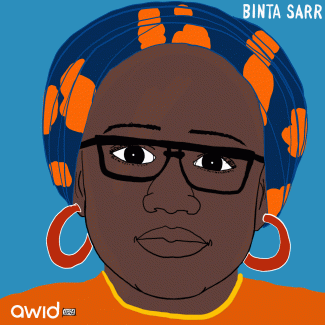
Binta Sarr was an activist for social, economic, cultural and political justice, and a hydraulic engineer in Senegal. After 13 years in civil service, she left this path to work with rural and marginalized women.
Out of this engagement grew the Association for the Advancement of Senegalese Women (APROFES), a grassroots movement and organization Binta founded in 1987. One of her main approaches was leadership training, relating not only to economic activities but also to women's rights and access to positions of decision-making.
“Grassroots populations must organize, mobilize, assume citizen control and demand democratic governance in all sectors of public space. The priority of social movements must go beyond the fight against poverty and must be focused on articulated and coherent development programs in line with human rights principles, while taking into account their needs and concerns both at the national and sub-regional levels and from a perspective of African and global integration.” - Binta Sarr
Rooted in Binta’s conviction that fundamental change in women’s status requires transformation in male attitudes, APROFES took an interdisciplinary approach, using radio, seminars and popular theatre, as well as providing innovative public education and cultural support for awareness-raising actions. Its popular theatre troupe performed original pieces on the caste system in Senegal, alcoholism, and conjugal violence. Binta and her team also looked at the crucial connection between the community and the broader world.
“For APROFES, it is a question of studying and taking into account the interactions between the micro and the macro, the local and the global and also, the different facets of development. From slavery to colonization, neocolonialism and the commodification of human development, most of the resources of Africa and the Third World (oil, gold, minerals and other natural resources) are still under the control of financial cartels and other multinationals that dominate this globalized world.” - Binta Sarr
Binta was one of the founding members of the female section of the Cultural and Sports Association Magg Daan. She received commendations from the Regional Governor and the Minister of Hydrology for her "devotion to rural people."
Born in 1954 in Guiguineo, a small rural town, Binta passed away in September 2019.
“The loss is immeasurable, the pain is heavy and deep but we will resist so as not to mourn Binta; we will not mourn Binta, we will keep the image of her broad smile in all circumstances, to resist and be inspired by her, maintain, consolidate and develop her work…” - Aprofes Facebook page, September 24, 2019
"Farewell Binta! We believe your immense heritage will be preserved." - Elimane FALL, president of ACS Magg-Daan
par Akua Antiwiwaa
J’ai une vieille photo, floue, devant les yeux. J’y suis vêtue tout de blanc, des perles nacrées attachées à mes cheveux, collés contre mes oreilles, à celles qui pendent de mes poignets. (...)
illustration : « Cultura Negra » (“Culture noire”), par Astrid Milena González Quintero >