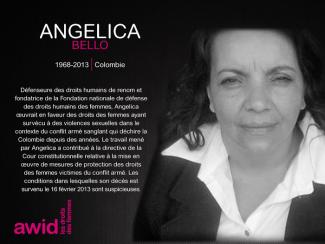
Angelica Bello
WHRDs are self-identified women and lesbian, bisexual, transgender, queer and intersex (LBTQI) people and others who defend rights and are subject to gender-specific risks and threats due to their human rights work and/or as a direct consequence of their gender identity or sexual orientation.
WHRDs are subject to systematic violence and discrimination due to their identities and unyielding struggles for rights, equality and justice.
The WHRD Program collaborates with international and regional partners as well as the AWID membership to raise awareness about these risks and threats, advocate for feminist and holistic measures of protection and safety, and actively promote a culture of self-care and collective well being in our movements.
WHRDs are exposed to the same types of risks that all other defenders who defend human rights, communities, and the environment face. However, they are also exposed to gender-based violence and gender-specific risks because they challenge existing gender norms within their communities and societies.
We work collaboratively with international and regional networks and our membership
We aim to contribute to a safer world for WHRDs, their families and communities. We believe that action for rights and justice should not put WHRDs at risk; it should be appreciated and celebrated.
Promoting collaboration and coordination among human rights and women’s rights organizations at the international level to strengthen responses concerning safety and wellbeing of WHRDs.
Supporting regional networks of WHRDs and their organizations, such as the Mesoamerican Initiative for WHRDs and the WHRD Middle East and North Africa Coalition, in promoting and strengthening collective action for protection - emphasizing the establishment of solidarity and protection networks, the promotion of self-care, and advocacy and mobilization for the safety of WHRDs;
Increasing the visibility and recognition of WHRDs and their struggles, as well as the risks that they encounter by documenting the attacks that they face, and researching, producing, and disseminating information on their struggles, strategies, and challenges:
Mobilizing urgent responses of international solidarity for WHRDs at risk through our international and regional networks, and our active membership.
Estas obras son un trabajo colaborativo de fotografías e ilustraciones realizadas por Siphumeze y Katia durante el confinamiento. Muestran narrativas negras queer de sexo y placer, bondage, sexo seguro, juguetes, salud mental y sexo, y mucho más. Fueron creadas para acompañar la antología Touch.





Meet Sopo Japaridze, fierce feminist, union leader and chair of the independent service trade union at the Solidarity Network.
She left the country when she was very young to go to the United States where she first became very politically active as a labor organizer. She kept Georgia in the back of her mind all that time, until one day, two decades later, she decided to return.
The existing Georgian union confederation back then was less than ideal. So, equipped with her skills, knowledge and labor organizing experience, Sopo went back to Georgia and built her own union.
Sopo is a passionate researcher and writer. She studies labor and social relations, writes for various publications and is the contributing editor of LeftEast, an Eastern European analytical platform. She also co-founded the political history initiative and podcast, Reimagining Soviet Georgia, where she explores the complexities and nuances of the country's experiences under the Soviet Union, to better understand its past in order to shed light on how to build a better future.
O tempo estimado para preencher o inquérito é 30 minutos.
Think big! With our international reach, we combine analytical work with political and practical tools for advocacy and transformation to advance the cause of feminist movements at all levels.
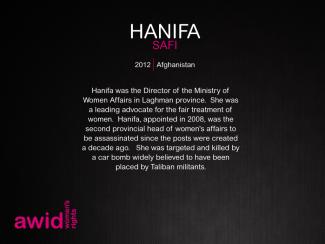
Amal was a prominent politician and parliamentarian in Libya. She was a faculty member at Benghazi University from 1995 until her death in 2017.
Amal was a civil society activist and a member of various social and political initiatives. She assisted the families of martyrs and the disappeared, and was a founding member of a youth initiative called ‘’Youth of Benghazi Libya”. In the 2014 parliamentary elections, Amal was elected to the House of Representatives with more than 14,000 votes (the highest number of votes anyone received in the 2014 elections).
Amal will remain in the memories of many as a woman politician working to ensure a better future in one the most difficult and conflict-ridden contexts in the region.

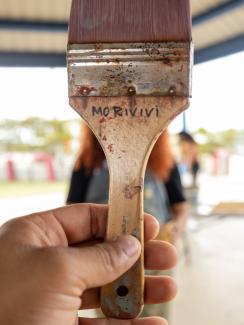
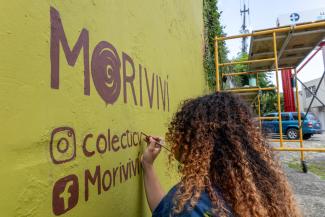
Colectivo Moriviví est un collectif artistique de femmes. Notre production artistique comprend du muralisme, du muralisme communautaire et des performances/actions de manifestation. Notre travail consiste à démocratiser l'art et à amener les récits des communautés portoricaines dans la sphère publique afin de créer des espaces où ils seront validés. Nous croyons qu’à travers l'artivisme, nous pouvons promouvoir la sensibilisation aux questions sociales et renforcer notre mémoire collective.
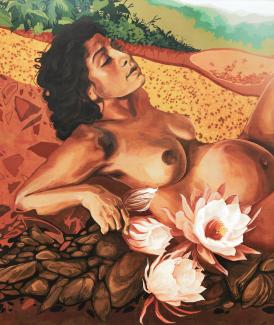
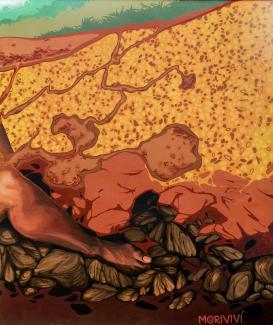
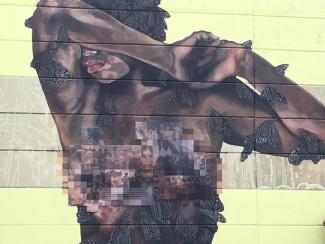
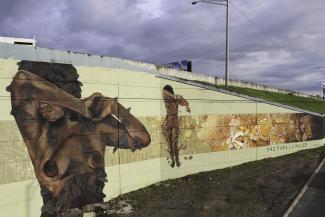
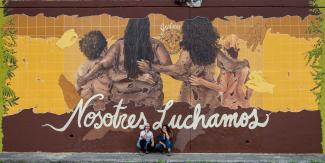
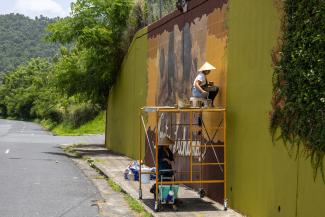
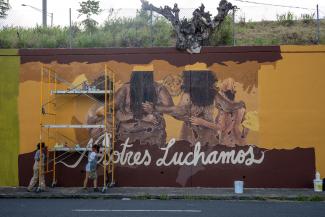
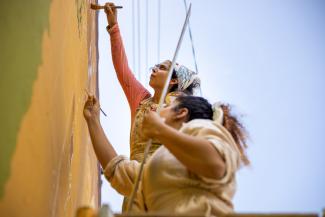
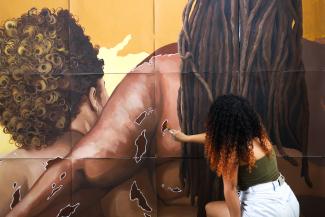
Dans le cadre de sa participation au Groupe de Travail d’Artistes d'AWID, le Colectivo Moriviví a réuni un groupe divers de membres, partenaires et personnel pour faciliter un processus collaboratif visant à imaginer, documenter et déterminer le contenu d'une fresque communautaire par le biais d'un processus de co-création en plusieurs étapes. Le projet a commencé par une conceptualisation à distance avec des féministes de différentes régions du monde réuni·e·s par l'AWID, avant d'évoluer vers sa re-contextualisation et sa réalisation à Porto Rico. Nous avons eu l'honneur de bénéficier de la contribution des artistes locaux·ales Las Nietas de Nonó(@lasnietasdenono), de la participation des femmes locales à la session de peinture communautaire, du soutien logistique de la municipalité de Caguas et du soutien supplémentaire du FRIDA | The Young Feminist Fund.
La fresque explore la transcendance des frontières en présentant les corps tels des cartes, dans une étreinte qui met en évidence l'intersection des différentes manifestations, pratiques et réalités féministes.
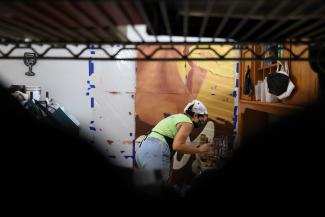
Nous remercions également Kelvin Rodríguez, qui a documenté et capturé les différentes étapes de ce projet à Porto Rico :



La mayoría de los Estados miembros de la Unión Europea tienen leyes y prácticas que penalizan o controlan a las trabajadoras sexuales de formas inaceptables para ellas. La criminalización de las trabajadoras sexuales y/o sus clientes solo contribuye a aumentar la vulnerabilidad de las trabajadoras sexuales, que ya enfrentan el estigma, la discriminación y la exclusión por parte del Estado y de la sociedad a diario, especialmente las mujeres trabajadoras, lxs trabajadorxs trans, migrantes y/o racializadxs. En España por ejemplo, el gobierno esta actualmente intentando pasar una Ley Orgánica para la Abolición de la Prostitución, que resultara en mas clandestinidad y violencia. Ven a conocer las historias de trabajadoras sexuales y organizadores sindicales que luchan para decriminilizar el trabajo sexual y promover derechos laborales y condiciones de trabajo digno para lxs trabajadxs sexuales.
طبعاً! هذه الأسئلة اختيارية. نقدّر جداً حقكم بالسرية. الرجاء تعبئة الاستطلاع دون علاقة بقراركم/ن بمشاركة اسم المجموعة، المنظمة أو الحركة أو تفاصيل التواصل معكم/ن.
Sostenemos la completa aplicación del principio de derechos, incluidos aquellos consagrados en leyes internacionales, y afirmamos la convicción de que todos los derechos humanos están interrelacionados y son interdependientes e indivisibles. Estamos comprometidxs a trabajar por la erradicación de todas las discriminaciones basadas en el género, la sexualidad, la religión, la edad, la capacidad, la etnia, la raza, la nacionalidad, la clase, u otros factores.
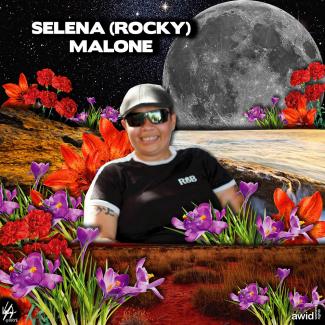
Rocky mostró un liderazgo y una dirección inspiradoras en su trabajo con jóvenes lesbianas, gays, bisexuales, transgénero, intersex, queer, y personas transgénero indígenas de Australia (LGBTIQBBSG) en riesgo.
Rocky comenzó su carrera con el Servicio de Policía de Queensland como Oficial de Policía de Enlace. Para ella, hacer una diferencia era algo importante. Desarrolló una carrera impresionante trabajando con jóvenes LGBTIQBBSG como Gerente del Servicio Juvenil de Puertas Abiertas.
Rocky trabajó con lxs beneficiarixs en situaciones complejas, específicamente relacionadas con la identidad sexual y de género. Esta línea de trabajo le resultaba propia: era una líder comunitaria fuerte, una triunfadora discreta, una amiga leal, una persona que apoyaba compasivamente a lxs demás, alguien que producía el cambio. Rocky fue una de lxs fundadorxs de IndigiLez Leadership y de Support Groes.
En 2016, en la Corte Suprema de Brisbane, Michael Kirby, ex juez del Tribunal Supremo de Apelaciones, mencionó por su nombre a Rocky al elogiar el trabajo que el Servicio Legal LGBTI había desarrollado a lo largo de los años. Rocky luchó de forma extraordinariamente tenaz por los derechos humanos de la comunidad LGBTIQBBSG, corrió los límites y produjo cambios de una forma respetuosa y amorosa.
In the African Commission and the Inter-American System, anti-rights actors push essentialist notions of culture and gender to hamper progress on rights and undermine accountability. As we see, anti-rights actors are exerting influence in regional human rights systems, as well as international spaces.
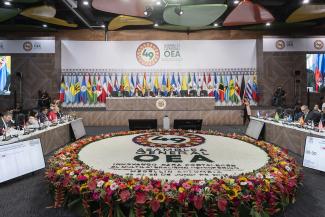
The African Commission on Human and Peoples' Rights has begun framing women’s and sexual rights as jeopardising its ability to deal with “real rights” and contrary to “African values”, setting a worrying anti-rights precedent. The withdrawal of the Coalition of African Lesbians’ observer status is an example of this trend, and points to the way space for feminist, Pan-Africanist engagement is being stifled.
In the Organization of American States (OAS) and the Inter-American Human Rights System, anti-rights strategies include the NGOization of religious groups, the use of secular discourses, and the co-optation of discrimination frameworks. Anti-rights influence has materialized in a number of ways, including the intimidation of trans activists and the blocking the introduction of progressive language in resolutions.
Да, пожалуйста! Мы просим распространить ссылку на опрос среди своих коллег по сети. Чем больше различных точек зрения мы соберем, тем более полным будет наше понимание финансового положения феминистских организаций.
En participant à une activité exclusive pour les membres, j'ai été particulièrement touchée de voir que chacun·e y avait sa place et qu’il n’y avait pas le moindre jugement. Toute la session a été dynamique et vivante.- Kirthi Jayakumar, Fondatrice, The Gender Security Project, Inde