Noxolo Nogwaza
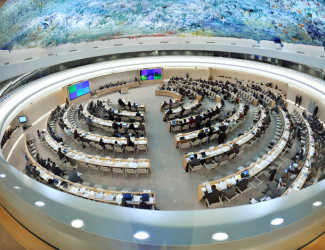
The Human Rights Council (HRC) is the key intergovernmental body within the United Nations system responsible for the promotion and protection of all human rights around the globe. It holds three regular sessions a year: in March, June and September. The Office of the UN High Commissioner for Human Rights (OHCHR) is the secretariat for the HRC.
Debating and passing resolutions on global human rights issues and human rights situations in particular countries
Examining complaints from victims of human rights violations or activist organizations on behalf of victims of human rights violations
Appointing independent experts (known as “Special Procedures”) to review human rights violations in specific countries and examine and further global human rights issues
Engaging in discussions with experts and governments on human rights issues
Assessing the human rights records of all UN Member States every four and a half years through the Universal Periodic Review
AWID works with feminist, progressive and human rights partners to share key knowledge, convene civil society dialogues and events, and influence negotiations and outcomes of the session.
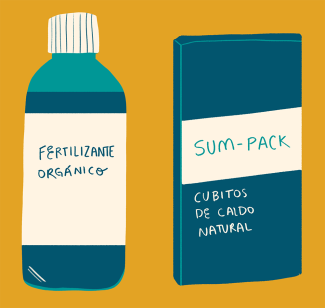
AGROECOLOGY AND FOOD SOVEREIGNTY AS RESISTANCE |
Today, large-scale industrial food production uses single-crop plantations, genetically modified organisms and other pesticides that destroy the land and knowledge of local communities. |
Agroecology is a resistance to corporate-driven agriculture. It prioritizes smaller scale agriculture, multiple crops and diversified food production, and the centering of local knowledge and practices. Agroecology goes hand-in-hand with demands for food sovereignty, or the “right of peoples to healthy and culturally appropriate food produced through ecologically sound and sustainable methods, and their right to define their own food and agriculture systems”(Via Campesina, Declaration of Nyéléni).
The role of women, indigenous and rural communities and people of color from the Global South is absolutely essential when it comes to food systems. Feminist agroecologists are working to dismantle oppressive gender roles and systems of patriarchy embedded within food production. As shown by the heroines of NSS, they are generating a liberatory agroecology by strengthening community resilience, empowering women peasants and farmers, and preserving local traditions, territories, and knowledge of food-producing communities.
Non, nous reconnaissons l’importance de votre travail, mais nous ne collectons pas les réponses fournies à titre individuel à l’heure actuelle.
Avec plus de 30 ans d'expérience en finance, Christine a consacré sa carrière à développer les missions non lucratives à l'échelle mondiale. Ses contributions vont jusqu’au poste de trésorière du conseil d'administration d'une ONG. Christine a rejoint l'AWID en 2007 comme contrôleuse, puis en tant que directrice des finances depuis 2023. Pendant son temps libre, elle aime voyager, jardiner et faire de la randonnée.
Unless there are accessibility issues and/or you are filling the survey in other languages, we strongly encourage you to use KOBO for WITM standardized data collection and analysis.
Ekaete Judith Umoh es una defensora internacional de los derechos de las personas con discapacidad y experta en desarrollo inclusivo, con un agudo análisis de las cuestiones relativas al género, la discapacidad y el desarrollo inclusivo. Su sueño es aumentar la visibilidad de las mujeres y niñas con discapacidad dentro del movimiento feminista internacional y en todos las iniciativas para el desarrollo en el mundo.
Ekaete disfruta con el activismo y la política, y llegó a convertirse en la primera mujer elegida presidenta de la Asociación Nacional Conjunta de Personas con Discapacidad -JONAPWD(www.jonapwd.org ), en Nigeria, donde lideró a organizaciones por los derechos de las personas con discapacidad en las luchas por convertir en ley el Proyecto de Ley de Prohibición de la Discriminación contra las Personas con Discapacidad en Nigeria, tras más de 17 años de trabajo constante de incidencia. Posteriormente, se incorporó a CBM Global como Directora de País pionera y dirigió su equipo durante unos tres años, contribuyendo a acabar con el círculo de pobreza y discapacidad en Nigeria. Aparte del activismo en defensa de las personas con discapacidad, Ekaete ha trabajado como consultora para varias agencias de desarrollo, proporcionando asistencia técnica sobre la inclusión de la discapacidad en el diseño de programas y proyectos.
Contenido relacionado
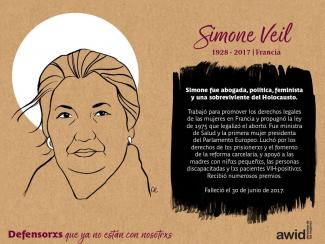
Huffington Post: Muere Simone Veil, la moral de Francia hecha mujer
El Mundo: Muere Simone Veil, superviviente del Holocauso e icono de los derechos de la mujer
La encuesta contiene 47 preguntas en total, de las cuales 27 son de respuesta obligatoria* y las 20 restantes son opcionales. La mayoría de las preguntas de la encuesta son de opción múltiple. Invitamos a responder la totalidad de las preguntas.
Alejandra es una apasionada de los derechos de las mujeres y la justicia de género. Sueña con crear un mundo centrado en el cuidado de las personas y de la naturaleza. Como experta feminista en derechos humanos, ha trabajado en las intersecciones de la justicia de género, climática, social y económica en varias organizaciones internacionales. Sus áreas de experticia incluyen la construcción de conocimiento y de la creación conjunta, la investigación, la facilitación y la incidencia. Tiene un título de maestría de la Universidad de Essex, y es autora y colaboradora de muchas publicaciones, que incluyen el artículo «Enraged: Women and Nature». La campaña Feminist Activism Without Fear se basa en entrevistas e investigaciones realizadas por Alejandra.
Nacida en Argentina, durante las últimas dos décadas ha vivido y trabajado en varios países de Europa y América Latina. Alejandra ama la fotografía, el mar, cocinar con su hija y disfrutar de la comida de todo el mundo. Como madre, su objetivo es cambiar los modelos y patrones establecidos. Alejandra obtiene energía e inspiración de las increíbles mujeres de su vida, que están distribuidas en muchos rincones del mundo.
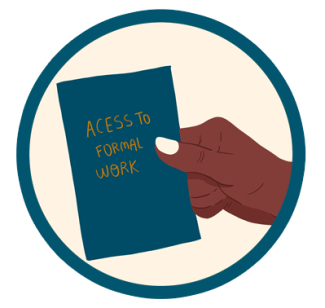
Only 18% of trans and travesti people in Argentina have access to formal work.
Au besoin, vous avez la possibilité de sauvegarder vos réponses en cours d’enquête, pour y revenir plus tard. KOBO enregistrera vos brouillons de réponses dans le coin supérieur gauche de la page de l'enquête et rechargera votre dossier lorsque vous reviendrez à l'enquête. Assurez-vous simplement de continuer à partir du même ordinateur et du même navigateur.
Le travail de l’AWID est rendu possible par la générosité d’un large éventail de donateurs, y compris les agences bilatérales et multilatérales, les fondations privées et les fonds pour les femmes.
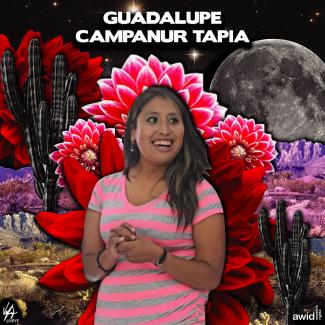
Guadalupe was an environmental activist involved in the fight against crime in Cherán, Mexico.
Guadalupe helped to overthrow the local government in April 2011 and participated in local security patrols including those in municipal forests. She was among the Indigenous leaders of Cherán, who called on people to defend their forests against illegal and merciless logging. Her work for seniors, children, and workers made her an icon in her community.
She was killed in Chilchota, Mexico about 30 kilometers north of her hometown of Cherá.