
Yolanda Santana
Over the past few years, a troubling new trend at the international human rights level is being observed, where discourses on ‘protecting the family’ are being employed to defend violations committed against family members, to bolster and justify impunity, and to restrict equal rights within and to family life.
The campaign to "Protect the Family" is driven by ultra-conservative efforts to impose "traditional" and patriarchal interpretations of the family, and to move rights out of the hands of family members and into the institution of ‘the family’.
Since 2014, a group of states have been operating as a bloc in human rights spaces under the name “Group of Friends of the Family”, and resolutions on “Protection of the Family” have been successfully passed every year since 2014.
This agenda has spread beyond the Human Rights Council. We have seen regressive language on “the family” being introduced at the Commission on the Status of Women, and attempts made to introduce it in negotiations on the Sustainable Development Goals.
AWID works with partners and allies to jointly resist “Protection of the Family” and other regressive agendas, and to uphold the universality of human rights.
In response to the increased influence of regressive actors in human rights spaces, AWID joined allies to form the Observatory on the Universality of Rights (OURs). OURs is a collaborative project that monitors, analyzes, and shares information on anti-rights initiatives like “Protection of the Family”.
Rights at Risk, the first OURs report, charts a map of the actors making up the global anti-rights lobby, identifies their key discourses and strategies, and the effect they are having on our human rights.
The report outlines “Protection of the Family” as an agenda that has fostered collaboration across a broad range of regressive actors at the UN. It describes it as: “a strategic framework that houses “multiple patriarchal and anti-rights positions, where the framework, in turn, aims to justify and institutionalize these positions.”
Le principal objectif de l’enquête WITM est de faire la lumière sur la situation financière de divers mouvements féministes, de défense des droits des femmes, pour la justice de genre, de défense des personnes LBTQI+ et des mouvements alliés dans le monde entier. Sur cette base, nous souhaitons démontrer l’importance d’orienter davantage de fonds, de meilleure qualité, et de transférer le pouvoir vers les mouvements féministes.
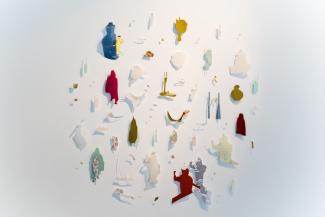
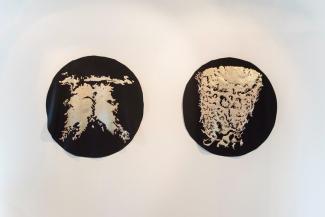

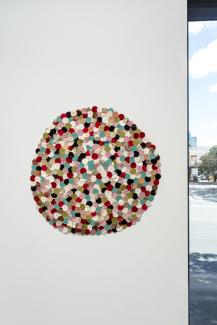
Une exposition de Nicole Barakat qui incarne sa reconnexion avec la diaspora d'objets provenant de ses terres ancestrales dans l'Asie du Sud-Ouest et l'Afrique du Nord.
Barakat présente une collection d'œuvres textiles en tant que manifestations de sa démarche consistant à travailler avec des objets déplacés, souvent volés, détenus dans les collections de musées occidentaux, notamment le Louvre, le British Museum et le Nicholson Museum.
Pour contourner les gardiens et pénétrer dans les vitrines contenant ces objets ancestraux, Barakat récupère des formes de connaissances précoloniales, non linéaires et réceptives qui sont souvent dévaluées et rejetées par les institutions coloniales et patriarcales. Elle utilise ainsi la cafédomancie, le travail du rêve, l'écoute intuitive et les conversations avec les objets eux-mêmes (source).
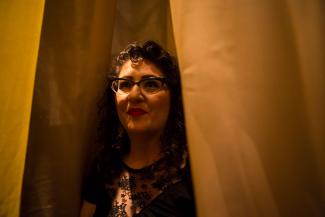
Ses œuvres comprennent des dessins en tissu et en papier cousus et découpés à la main, des formes sculpturales réalisées avec ses propres cheveux, du tissu et des matériaux végétaux, ainsi que des œuvres en direct où elle utilise sa voix comme matériau.
La pratique créative de Nicole s'enracine dans la re-mémoration et le re-couvrement de son savoir ancestral, y compris la cafédomancie et, plus récemment, le travail avec des plantes et des essences de fleurs pour le soin et la guérison de la communauté.

“Now might be a good time to rethink what a revolution can look like. Perhaps it doesn’t look like a march of angry, abled bodies in the streets. Perhaps it looks something more like the world standing still because all the bodies in it are exhausted—because care has to be prioritized before it’s too late.”
- Johanna Hedva (https://getwellsoon.labr.io/)
Hospitals are institutions, living sites of capitalism, and what gets played out when somebody is supposed to be resting is a microcosm of the larger system itself.
Institutions are set out to separate us from our care systems – we find ourselves isolated in structures that are rigidly hierarchical, and it often feels as if care is something done to us rather than given/taken as part of a conversation. Institutional care, because of its integration into capitalist demand, is silo-ed: one person is treating your leg and only your leg, another is treating your blood pressure, etc.
Photographer Mariam Mekiwi had to have surgery last month and documented the process. Her portraits of sanitized environments – neon white lights, rows after rows of repetitive structures – in a washed-out color palette reflect a place that was drained of life and movement. This was one of the ways Mariam kept her own spirit alive. It was a form of protest from within the confines of an institution she had to engage with.
The photos form a portrait of something incredibly vulnerable, because watching someone live through their own body’s breakdown is always a sacred reminder of our own fragility. It is also a reminder of the fragility of these care systems, which can be denied to us for a variety of reasons – from not having money to not being in a body that’s considered valuable enough, one that’s maybe too feminine, too queer or too brown.
Care experienced as disembodied and solitary, that is subject to revocation at any moment, doesn’t help us thrive. And it is very different from how human beings actually behave when they take care of each other. How different would our world look like if we committed to dismantling the current capitalist structures around our health? What would it look like if we radically reimagined it?
No, we very much appreciate your work but are not asking for responses from women’s and feminist funds at this time. We do encourage you to share the survey with your grantee partners and feminist networks.
A complex and evolving network of anti-rights actors is exerting increasing influence in international spaces as well as domestic politics. Often backed by obscure funding, these actors build tactic alliances across issues, regions, and faiths to increase their impact.
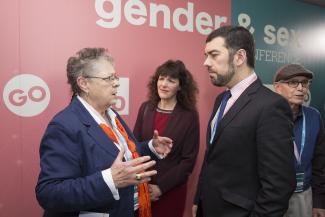
We are witnessing fascist and fundamentalist actors that, while nationalist in their discourse, are completely transnational in their ideological underpinnings, political alliances, and networks of financing. In some cases these groups are backed by obscure funding flows, linked with big business, or far-right political parties. However, they also create strategic alliances, including, in some cases, with segments of the feminist and women’s rights movements, and distance themselves from more outwardly extreme elements to appear more legitimate. Anti-rights actors are also spreading and replicating their brand of anti-rights organizing - be that campaigning and lobbying or strategic litigation - across the globe.
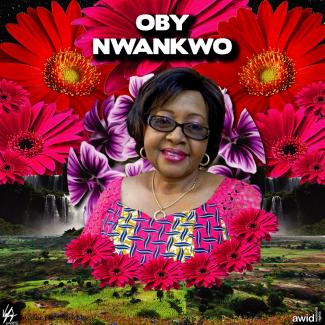
Avec une carrière juridique de plus de 30 ans à son actif, Oby était connue en Afrique et dans le monde comme une ardente défenseure de la justice de genre et des droits humains.
Elle a fondé le Centre de documentation et de développement des ressources civiles (CIRDDOC), une ONG nigériane qui sponsorise des formations et des activités de mise en réseau qui promeuvent les droits humains, la bonne gouvernance, l’accès à la justice et l’État de droit pour les membres de la société civile, les parlementaires, ainsi que d’autres parties prenantes concernées.
Au Nigeria, les activistes se souviennent d’Oby avec émotion, la qualifiant « d’activiste extraordinaire qui a fait preuve d’énergie et de passion pour lutter pour l’égalité de genre et la justice de genre au Nigéria et en Afrique »
|
Editorial Team Design and Illustration Communications Strategist
Translation Manager AWID’s Team |
Arabic Translators English to Spanish Proofreaders Proofreaders Portuguese to English Proofreader |
Sí, es posible acceder a la encuesta mediante un teléfono inteligente.
Sin palabras |
 |
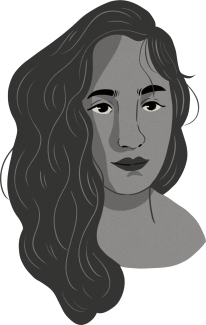 |
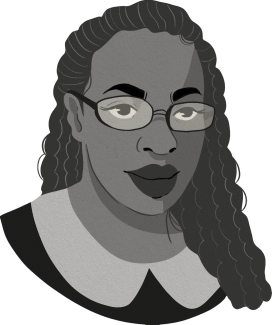
| Chinelo Onwualu | Ghiwa Sayegh |
«Cuando estamos desesperadxs por el cambio, como sucede tanto en la enfermedad como en la insurrección, nuestro lenguaje se vacía de complejidad, se queda con sus componentes más esenciales… Sin embargo, a medida que la enfermedad y la revolución persisten, el lenguaje que se hizo en ellas y sobre ellas se profundiza, admite más matices, inmerso en la aguda experiencia humana de encontrar los propios límites en el lugar del fin del mundo».
Cuando comenzamos a delinear este número con Nana Darkoa, antes de Crear | Résister | Transform: un festival para movimientos feministas! de AWID, partimos de una pregunta que es más bien una observación sobre el estado del mundo, un deseo de cambiar el terreno: ¿por qué nuestras sexualidades y placeres siguen siendo domesticados y criminalizados incluso cuando nos dicen, una y otra vez, que no tienen valor ni contribuyen al progreso? Llegamos a la conclusión de que cuando se corporizan, hay algo en nuestras sexualidades que opera contra un orden del mundo que sigue manifestándose en los controles fronterizos, los apartheids en relación a las vacunas, el colonialismo de asentamiento, la limpieza étnica, y el capitalismo descontrolado. ¿Podemos hablar, entonces, del potencial disruptivo de nuestras sexualidades? ¿Podemos seguir haciendo eso cuando, para poder obtener recursos, nuestros movimientos deben ser cooptados e institucionalizados?
Cuando el trabajo de nuestros cuerpos se convierte en ganancias en las manos de los sistemas que buscamos desmantelar, no sorprende que nuestras sexualidades y placeres queden relegados una vez más a las márgenes, especialmente cuando no son lo suficientemente rentables. En muchos momentos durante la producción de este número, nos preguntamos qué sucedería si nos negáramos a dar cabida a los servicios esenciales del capitalismo. Pero ¿podemos atrevernos a hacer esa pregunta cuando estamos agotadxs por el mundo? Quizás nuestras sexualidades son desestimadas con tanta facilidad porque no son vistas como formas de cuidado. Quizás lo que necesitemos sea reimaginar el placer como una forma radical de cuidado, una que también es anticapitalista y anti-institucional.
Estamos entrando en nuestro segundo año completo de pandemia global y nuestro abordaje de la corporalidad transnacional ha tenido que concentrarse en un único descubrimiento político: que cuidar es una forma de habitar la corporalidad. Y como ahora tanto de nuestro trabajo se hace sin tomar en cuenta los límites entre y dentro de nosotrxs, todxs somos Corporalidades Transnacionales, y eso a todxs nos sale mal. Estamos fallando en cuanto a cuidarnos y, lo que es más grave, en cuidar a lxs otrxs.
Ese fracaso no es producto de nuestras acciones.
Muchxs de nuestras madres y padres pensaban que el trabajo era transaccional, algo que debía darse a cambio de una compensación y una garantía de cuidado. Y si bien ese intercambio no siempre se cumplió, nuestrxs madres y padres no esperaban que su trabajo les diera satisfacción. Para eso tenían su ocio, sus pasatiempos, y sus comunidades. Hoy, nosotrxs, sus hijxs, que hemos sido condicionadxs para pensar en nuestro trabajo como entrelazado con nuestra pasión, no tenemos esas expectativas. Pensamos el trabajo y el ocio como una sola y misma cosa. Para demasiadas personas, el trabajo ha llegado a encarnar todo lo que somos.
Sin embargo, el capitalismo heteropatriarcal no nos valora, ni hablar de que valore nuestro trabajo o nuestras sexualidades. Este es un sistema que solo te exigirá más y más hasta que mueras. Y cuando mueras, te reemplazará por otra persona. Que se espere que estemos en línea todo el día significa que simplemente no podemos tomar distancia del trabajo, ni siquiera cuando queremos hacerlo. Esta comercialización del trabajo, divorciándolo de la persona, ha permeado cada aspecto de nuestras vidas y está siendo perpetuado incluso en los círculos más feministas, más radicales y más revolucionarios.
Las expectativas capitalistas siempre han sido particularmente dañinas para los cuerpos que no se ajustan a su ideal. Y quienes buscan consolidar sus poderes han utilizado la pandemia como una oportunidad para concentrar sus ataques en las mujeres, las minorías sexuales y cualquier otrx a quien subestimen.
Este número especial existe debido a eso y ciertamente a pesar de eso.
Casi todxs lxs colaboradorxs e integrantes del equipo se estaban presionando para ir más allá de su capacidad. Cada una de las colaboraciones fue producida desde un lugar de pasión, pero también de un increíble agotamiento. De una forma muy real, este número encarna el trabajo transnacional y, en el mundo digital en el cual vivimos, todo trabajo se ha convertido en trabajo transnacional. A medida que nos enfrentamos a nuevas fronteras que no han roto un viejo orden sino que lo reifican, experimentamos de primera mano, junto a nuestrxs colaboradorxs, cómo el capitalismo vacía nuestros límites, cómo se hace difícil construir argumentos coherentes, especialmente cuando tenemos una fecha límite para hacerlo. Nos quedamos colectivamente sin palabras, porque nos quedamos sin mundos.
Es precisamente porque nos sentimos perdidxs y solxs en el mundo del capitalismo heteropatriarcal que tenemos que reevaluar y repensar nuestros sistemas de cuidado. En muchos sentidos, hicimos de este número una misión de encontrar placer en el cuidado. Porque se ha vuelto más difícil construir argumentos coherentes, los medios visuales y creativos han pasado al primer plano. Muchas personas que solían escribir se han volcado a estos medios como una vía para producir conocimiento y atravesar la niebla mental que nos ha envuelto a todxs. Trajimos otras voces a este número, además de muchxs a quienes ya escucharon en el Festival, como una manera de abrir nuevas conversaciones y ampliar nuestros horizontes.
Dado que nos roban nuestras palabras, es nuestro deber político seguir encontrando maneras de mantenernos y cuidarnos a nosotrxs mismxs y a lxs otrxs. Muchas de nuestras realidades actuales están tratando de borrarnos y desplazarnos, mientras que siguen explotando nuestro trabajo. Nuestra corporización, por lo tanto, se convierte en una forma de resistencia; es el comienzo de que encontremos nuestro camino hacia afuera y hacia nosotrxs mismxs.
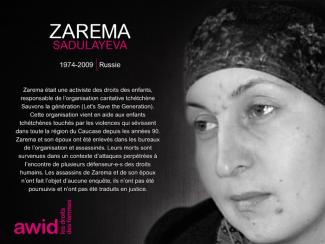
Marielle was a Brazilian politician, feminist, lesbian and human rights activist.
Marielle was an outspoken critic of police brutality and extrajudicial killings. Her openly feminist, Black and favela-centered politics were a source of hope for marginalized groups in Rio de Janeiro, currently governed by a conservative city government and an evangelical mayor.
On March 14, 2018, after delivering a speech in Rio de Janeiro, Franco and her driver were shot multiple times and killed. Following news of her death crowds took to the streets shouting "Marielle presente!" (Marielle is here!) and demanding justice be done.
Read more about Marielle and the situation in Brazil

المضيفة: نحن نميل إلى الاعتقاد أنّ التعبير عن الرغبة يقتصر على العلاقة الحميمة داخل غرفة النوم وعلى علاقاتنا الشخصيّة. ولكن هل يمكننا أيضًا اعتبار هذا النوع من التعبير كبُنية، أو ممارسة أيديولوجيّة توجّه عملنا، وما نحن عليه، وكيف سنكون في هذا العالم؟
Oui, nous vous invitons à détailler des points importants pour vous en répondant à la ou aux questions ouvertes à la fin de l’enquête.