Related content
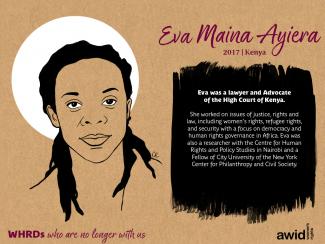
AfriCOG's security forum: Eva Ayiera on key drivers of Kenya's security threats (Video)
Dans le monde entier, les femmes défenseuses des droits humains défendent leurs terres, leurs moyens de subsistance et leurs communautés contre le pouvoir des entreprises et des industries extractives. Elles se mobilisent et défient de puissants intérêts économiques et politiques qui motivent la spoliation de terres, le déplacement de communautés, la perte des moyens de subsistance et la dégradation de l'environnement.
L’extractivisme est un modèle économique et politique de développement qui œuvre à la marchandisation de la nature et privilégie le profit au détriment des droits humains et de l'environnement. Enraciné dans l'histoire coloniale, il creuse les inégalités sociales et économiques au niveau local et mondial. Le plus souvent, les femmes rurales, noires ou autochtones sont les plus touchées par l’extractivisme et sont largement exclues des espaces de prise de décision en la matière. Les femmes se mobilisent pour défier ces forces patriarcales et néocoloniales et défendre les droits, les terres, les personnes et la nature.
Les femmes qui s’opposent aux industries extractives vivent une série de risques, de menaces et de violations de leurs droits comme la criminalisation, la stigmatisation, la violence et l'intimidation. Leurs histoires révèlent des aspects évidents de violences sexuelles et basées sur le genre. Parmi les auteurs de ces abus se trouvent les autorités locales et fédérales, les entreprises, la police, les militaires, les forces de sécurité paramilitaires et privées, et parfois mêmes leurs propres communautés.
L'AWID et la Coalition internationale des femmes défenseures des droits humains (WHRDIC) ont le plaisir d'annoncer la sortie de leur publication « Les défenseuses des droits humains résistent à l’extractivisme et aux pouvoir des entreprises », un rapport basé sur un projet de recherche transrégional qui relate les expériences vécues par des défenseuses en provenance d'Asie, d'Afrique et d'Amérique latine.
Nous encourageons les activistes, les membres de mouvements sociaux, la société civile, les donateurs et les décideurs à lire et à faire usage des documents suivants pour leur travail de plaidoyer, comme outil pédagogique et comme source d’inspiration :
« Les défenseuses des droits humains résistent aux industries extractives : Aperçu des principaux risques et des obligations en matière de droits humains » est une analyse de la situation d’un point de vue du genre. Ce rapport (en anglais, bientôt disponible en français) analyse les formes de violations et les types d'auteurs de ces violations, il reprend les obligations les plus pertinentes en matière de droits humains et formule une série de recommandations politiques à l’intention des États, des entreprises, de la société civile et des donateurs.
« Arrimer la résistance à l'action : Les stratégies des défenseuses des droits humains qui résistent aux industries extractives » est un guide pratique qui décrit des formes créatives et stratégiques d'action, des stratégies qui ont porté leurs fruits et des histoires de résistance inspirantes.
La vidéo « Protéger les personnes et la planète: les femmes qui résistent aux industries extractives. » met en lumière le courage des défenseur-e-s des droits humains d'Afrique, d'Asie et d'Amérique latine. Elles partagent leurs luttes pour la terre et la vie et parlent des risques et des défis auxquels elles sont confrontées dans leur activisme.
« Contester le pouvoir corporatif : Les luttes pour les droits des femmes, la justice économique et la justice de genre » est un rapport de recherche qui décrit les effets du pouvoir des entreprises et offre des perspectives sur des stratégies de résistance.
Faites-nous part de vos commentaires
C’est avec gratitude que l’AWID reconnaît les contributions précieuses de chaque défenseur-e des droits humains qui a participé à ce projet. Cette recherche a été rendue possible grâce à votre volonté à partager vos expériences. Votre courage, créativité et résilience est une source d’inspiration pour nous toutes et tous. Merci !
Las propuestas de decrecimiento cuestionan la premisa de que la economía de los países debe ‘crecer o perecer’ y muestran la falsedad del lugar central que se le otorga al crecimiento medido por un aumento del Producto Bruto Interno (PIB).
Un modelo de decrecimiento propone un cambio hacia niveles de producción y consumo más bajos y sostenibles. En esencia postula una reducción del sistema económico para dejarle más espacio a la cooperación entre personas y a los ecosistemas humanos.
Esta propuesta incluye:
Las perspectivas feministas dentro de la teoría y práctica del decrecimiento sostienen que también es necesario redefinir y revalidar el trabajo no remunerado y remunerado, de cuidados y en el mercado, para superar los estereotipos tradicionales de género así como las brechas laborales y las desigualdades en el ingreso prevalecientes que devalúan el trabajo de cuidado.

NOUS SOMMES LA SOLUTION
Somos la Solución
Related content
AfriCOG's security forum: Eva Ayiera on key drivers of Kenya's security threats (Video)
No. Solicitamos una sola respuesta a la encuesta por agrupación.
Lxs actores ultra conservadores han desarrollado una serie de discursos en la esfera internacional de los derechos humanos. Utilizan argumentos que manipulan la religión, la cultura, la tradición y la soberanía nacional para minar los derechos relacionados con el género y la sexualidad.
Lxs actores anti-derechos se han alejado cada vez más del lenguaje explícitamente religioso. Vemos que actores regresivxs —que antes tal vez ridiculizaban los conceptos de derechos humanos — ahora los manipulan y cooptan para promover sus propios objetivos.
Este discurso emergente y exitoso parece inocuo, pero resulta útil como un tema ‘sombrilla’ bajo el que se cobijan múltiples posiciones patriarcales y anti-derechos. Por eso el tema de la «protección de la familia» resulta un ejemplo clave que muestra la tendencia de lxs actores regresivxs a llevar adelante una incidencia integral e integrada.
El lenguaje de la «protección de la familia» opera desplazando al sujeto de los derechos humanos, reemplazando al individuo por instituciones ya poderosas. También afirma una concepción unitaria, jerárquica y patriarcal de la familia que discrimina a todo formato familiar que esté fuera de estos límites rígidos.
Por último, intenta cambiar el enfoque del reconocimiento y la protección de los derechos de integrantes vulnerables de la familia a la no discriminación, la autonomía y la ausencia de violencia en el contexto de las relaciones familiares.
La Santa Sede y varios grupos de la derecha cristiana buscan apropiarse del derecho a la vida para ponerlo al servicio de su misión contra el aborto. Mezclando el lenguaje de los derechos humanos con la doctrina religiosa conservadora, argumentan que el derecho a la vida, tal como se lo establece en la Declaración Universal de Derechos Humanos y en el Pacto Internacional de Derechos Civiles y Políticos, se aplica a partir del momento de la concepción.
Ningún instrumento universal de derechos humanos apoya ese argumento. Sin embargo, esta es una táctica atractiva para lxs actores anti-derechos, porque el derecho a la vida no puede ser violado bajo ninguna circunstancia y es un estándar legal vinculante.

Lxs actores anti-derechos humanos utilizan una serie de dispositivos retóricos en su campaña para minar los derechos sexuales: sostienen que estos derechos no existen o que son «nuevos derechos»; que causan daño a las niñas, los niños y la sociedad; y/o que se oponen a la cultura, la tradición o las leyes nacionales.
Lxs actores conservadores dedicados a hacer incidencia en la ONU atacan el derecho a una educación sexual integral (ESI) desde varios frentes. Afirman que viola los «derechos parentales»; que perjudica a las niñas y los niños; y que no es educación sino adoctrinamiento ideológico.
También alegan que poderosos grupos de presión les imponen la Educación Sexual Integral a las niñas y los niños, los padres y las Naciones Unidas para beneficiarse de los servicios que estos mismos grupos proporcionan a niñas, niños y jóvenes.
Los intentos de invalidar los derechos relacionados con la orientación sexual y la identidad de género se han multiplicado. Lxs actores ultra conservadores argumentan que aplicar los principios y leyes históricos de derechos humanos a esta temática equivale a crear «nuevos derechos», y proponen un cambio radical en el significado actual de los derechos que resultaría de interpretarlos a la luz de la "cultura" o de las «particularidades nacionales».
Desde hace muchos años, las organizaciones de la derecha cristiana se movilizan en contra de los derechos reproductivos junto con la Santa Sede y otrxs aliadxs anti-derechos. A menudo argumentan que los derechos reproductivos no son más que una forma de control poblacional impuesto por Occidente sobre los países del Sur Global. Irónicamente, esta afirmación proviene a menudo de actores con sede en Estados Unidos y Europa Occidental, que en su mayoría trabajan activamente para exportar sus discursos y políticas fundamentalistas.
Lxs actores regresivxs también citan argumentos «científicos» de grupos de expertxs ultra conservadores y de fuentes que emplean metodologías de investigación poco sólidas, para sugerir que el aborto causa una serie de efectos secundarios psicológicos, sexuales, físicos y relacionales.
Así como lxs actores anti-derechos buscan construir una nueva categoría de «protección de la familia», también proponen otra: los «derechos parentales», que tampoco encuentra respaldo en las normas de derechos humanos vigentes. Este discurso paradójicamente intenta utilizar las protecciones de derechos que les corresponden a los niños y las niñas, tal como las expresa la Convención sobre los Derechos del Niño, para fundamentar el derecho de padres y madres a controlar a sus hijas e hijos y limitar sus derechos.
Cada vez más, lxs actores anti-derechos, están intentando infiltrar y subvertir los estándares y discursos desarrollados por defensoras de derechos humanos, como la violencia contra las mujeres.
En la Comisión de la Condición Jurídica y Social de las Mujeres y en otros escenarios, estos actores insisten en tratar esta forma de violencia como un concepto al que le adosan argumentos anti-derechos reproductivos y otros de cariz patriarcal. Lxs actores ultra conservadores, por ejemplo, han argumentado que las relaciones de pareja no tradicionales ni heteronormativas son un factor de riesgo para la violencia, y enfatizan que los padres son necesarios para proteger a las familias de la violencia.
La Santa Sede ha elaborado y sostenido una crítica al género, a la «ideología de género», lxs «radicales del género» y la teoría de género. Lxs actores anti-derechos a menudo leen el término ‘género’ como un código equivalente a ‘derechos LGBTQ’. La derecha religiosa utiliza el género como un concepto transversal que une muchos de sus discursos. Cada vez más, el pánico que generan en torno a este tema se concentra en la identidad de género y en los derechos de las personas trans.
Varios actores ultra-conservadores emplean el discurso de la complementariedad de los sexos. Estructuran su retórica en torno a una presunción de diferencia: se supone que los hombres y las mujeres tienen roles diferentes pero complementarios en el matrimonio, la vida familiar, y también en su participación en la vida comunitaria, política y económica.
La referencia a los roles «naturales» tiene por objeto rechazar los derechos humanos universales a la igualdad y la no discriminación. También se utiliza para justificar las violaciones de estos derechos por parte de actores estatales y no estatales, y el incumplimiento de las obligaciones del Estado en cuanto a eliminar los prejuicios y las prácticas basadas en roles estereotipados para hombres o mujeres.
Este discurso sugiere que organismos de la ONU o Estados que actúan a través de la ONU atacan injustamente a los gobiernos nacionales. Lo que se intenta aquí es desplazar el sujeto de los derechos humanos de la persona o sector marginado que sufre una violación de sus derechos a una institución poderosa y/o regresiva, el Estado, para justificar excepciones nacionales a los derechos universales o para apoyar la impunidad estatal.
Lxs actores anti-derechos han adoptado el discurso de la libertad religiosa para justificar violaciones a los derechos humanos. Se refieren a la libertad religiosa de una manera que contradice directamente el propósito de este derecho humano y entra seriamente en conflicto con el principio de la universalidad de los derechos.
Su argumento es que la libertad religiosa se ve amenazada y debilitada por la protección a los derechos humanos, particularmente aquellos relacionados con el género y la sexualidad.
Lo que se proponen instalar es que el derecho a la libertad religiosa tiene por objeto proteger a las propias religiones y no a las personas, que son quienes en verdad tienen la libertad de profesar o no distintas creencias. Sin embargo, el derecho internacional de los derechos humanos protege a lxs creyentes y no a las creencias, y el derecho a la libertad de religión, pensamiento y conciencia incluye el derecho a no profesar ninguna religión ni creencia así como a cambiar de religión o de creencias.
El despliegue de referencias a la cultura y la tradición para debilitar los derechos humanos, incluido el derecho a la igualdad, es una táctica común entre lxs actores anti- derechos. Presentan la cultura como algo monolítico, estático e inmutable, y a menudo la oponen a las «normas occidentales».
Las alusiones a la cultura por parte de lxs actores anti-derechos en los debates de política internacional tienen como objetivo debilitar la universalidad de los derechos, defendiendo un relativismo cultural que prevalece sobre las reivindicaciones de derechos o las limita. El uso de los derechos culturales por parte de actores regresivxs se basa en una tergiversación deliberada de la cultura como derecho humano. Los Estados deben velar por que no se utilicen actitudes tradicionales o culturales para justificar violaciones a la igualdad. Las normas de derechos humanos exigen acceso, participación y contribución igualitaria en todos los aspectos de la vida cultural para todas las personas, incluidas las mujeres, las minorías religiosas y raciales y las personas cuya identidad o expresión de género difieren de las normativas.
En espacios políticos internacionales, lxs actores anti-derechos manipulan cada vez más las referencias a los derechos humanos universales o fundamentales para revertir el significado de la universalidad de los derechos.
En lugar de utilizar el término ‘universal’ para describir todo el conjunto de derechos humanos indivisibles e interrelacionados, lxs actores ultra conservadores lo emplean para delimitar y describir un subconjunto de derechos humanos que ellxs consideran «verdaderamente fundamentales». Todos los otros derechos estarían sujetos a la discreción del Estado, serían derechos 'nuevos' u opcionales. Este discurso resulta especialmente poderoso ya que instala una categoría indefinida - lo «verdaderamente universal» - que queda abierta a interpretaciones cambiantes.
Tenemos el placer de presentarte a Mariama Sonko, inspiradora ecofeminista, campesina y defensora de los derechos humanos y de las mujeres, que vive actualmente en Niaguis, en el suroeste de Senegal.
Al crecer en una familia y comunidad campesina rural, fue testigo del papel esencial de la mujer en la producción de alimentos y el almacenamiento de semillas desde la infancia, mientras estaba inmersa en el trabajo y ritmos de la tierra.
Mariama ha defendido el conocimiento agrícola local y las prácticas campesinas desde los años 1990. Como madre de 5 hijos, los alimentos que ella misma cultiva son la principal fuente de sustento de su familia.
Actualmente es presidenta de Nous Sommes la Solution y está comprometida con la promoción de las prácticas agroecológicas y la agricultura familiar, con el fomento de la soberanía alimentaria, la biodiversidad y la preservación de las semillas campesinas, y con la exigencia del acceso equitativo a los recursos y a la tierra en África Occidenta para las mujeres.
Fuente: AWID’s Feminist Realities Festival Crear | Résister | Transform - 2º día

Sauf si vous avez des problèmes d’accessibilité et/ou que vous répondez aux questions de l’enquête dans une autre langue, nous vous encourageons fortement à utiliser KOBO pour une collecte et une analyse standardisées des données WITM.
Notre nouveau rapport de recherche Le Diable est dans les détails aborde les lacunes du secteur du développement en termes de connaissance des fondamentalismes religieux et vise à améliorer la compréhension de la façon dont les fondamentalismes religieux entravent le développement et les droits des femmes en particulier. Il offre des recommandations aux acteurs-trices du développement quant aux manières d’éviter de renforcer les fondamentalismes par inadvertance et sur les stratégies pour les contrer. [CTA download link: Lire le document]
| Graphic1 | 1. Control of women’s bodies, sexuality, and choice are “warning signs” of rising fundamentalisms. |
| 2. Neoliberal economic policies have a particularly negative impact on women, and fuel the growth of religious fundamentalisms. | Graphic2 |
| Graphic3 | 3. Choosing religious organizations as default for partnerships builds their legitimacy and access to resources, and supports their ideology, including gender ideology. |
| 4.Everyone has multiple identities and should be defined by more than just their religion. Foregrounding religious identities tends to reinforce the power of religious fundamentalists. | Graphic4 |
| Graphic5 | 5. Religion, culture, and tradition are constantly changing, being reinterpreted and challenged. What is dominant is always a question of power. |
| 6. Racism, exclusion, and marginalization all add to the appeal of fundamentalists’ offer of a sense of belonging and a “cause”. | Graphic6 |
| Graphic7 | 7. There is strong evidence that the single most important factor in promoting women’s rights and gender equality is an autonomous women’s movement. |
Le Diable est dans les détails détaille les violations graves à l’encontre des droits humains, et ceux des femmes en particulier, légitimées par des fondamentalismes parrainés par les États ainsi que par des acteurs fondamentalistes non étatiques, tels que les milices, les organisations communautaires religieuses et les particuliers. Le renforcement fondamentaliste de normes sociales patriarcales régressives conduit à la montée de la violence contre les femmes, les filles et les femmes défenseuses des droits humains (WHRDs). La rapport met en avant ces éléments-clé pour comprendre et affronter la situation :
Les acteurs du développement sont en mesure de jouer un rôle important dans ce contexte. La capacité collective des acteurs du développement à reconnaître les fondamentalismes religieux et à les affronter de manière concertée est essentielle pour faire progresser la justice sociale, économique et de genre et les droits humains pour tous, dans un contexte de développement durable. En donnant la priorité à des partenaires progressistes dans le cadre de leurs activités, les acteurs du développement peuvent éviter d’octroyer des ressources ou de la légitimité aux fondamentalistes religieux. Les organisations de femmes ont de l’expertise sur le sujet et ont développé des stratégies pour lutter contre les fondamentalismes : Les acteurs du développement pourraient s’appuyer sur ces connaissances et s’engager à leurs côtés au sein de coalitions intersectorielles pour faciliter leur diffusion

Yes, we invite you to share more on issues that are important to you by responding to the open question(s) at the end of the survey.
Aprende más sobre las realidades feministas
Por favor no dudes en contactarnos.