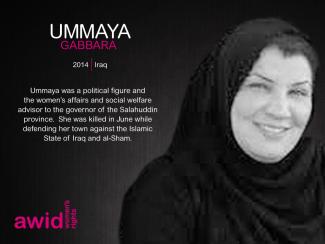
Ummaya Gabbara
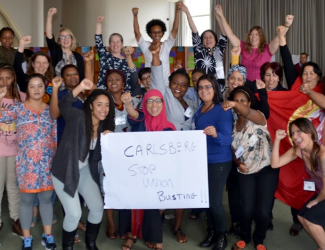
Dans le monde entier, les femmes défenseuses des droits humains défendent leurs terres, leurs moyens de subsistance et leurs communautés contre le pouvoir des entreprises et des industries extractives. Elles se mobilisent et défient de puissants intérêts économiques et politiques qui motivent la spoliation de terres, le déplacement de communautés, la perte des moyens de subsistance et la dégradation de l'environnement.
L’extractivisme est un modèle économique et politique de développement qui œuvre à la marchandisation de la nature et privilégie le profit au détriment des droits humains et de l'environnement. Enraciné dans l'histoire coloniale, il creuse les inégalités sociales et économiques au niveau local et mondial. Le plus souvent, les femmes rurales, noires ou autochtones sont les plus touchées par l’extractivisme et sont largement exclues des espaces de prise de décision en la matière. Les femmes se mobilisent pour défier ces forces patriarcales et néocoloniales et défendre les droits, les terres, les personnes et la nature.
Les femmes qui s’opposent aux industries extractives vivent une série de risques, de menaces et de violations de leurs droits comme la criminalisation, la stigmatisation, la violence et l'intimidation. Leurs histoires révèlent des aspects évidents de violences sexuelles et basées sur le genre. Parmi les auteurs de ces abus se trouvent les autorités locales et fédérales, les entreprises, la police, les militaires, les forces de sécurité paramilitaires et privées, et parfois mêmes leurs propres communautés.
L'AWID et la Coalition internationale des femmes défenseures des droits humains (WHRDIC) ont le plaisir d'annoncer la sortie de leur publication « Les défenseuses des droits humains résistent à l’extractivisme et aux pouvoir des entreprises », un rapport basé sur un projet de recherche transrégional qui relate les expériences vécues par des défenseuses en provenance d'Asie, d'Afrique et d'Amérique latine.
Nous encourageons les activistes, les membres de mouvements sociaux, la société civile, les donateurs et les décideurs à lire et à faire usage des documents suivants pour leur travail de plaidoyer, comme outil pédagogique et comme source d’inspiration :
« Les défenseuses des droits humains résistent aux industries extractives : Aperçu des principaux risques et des obligations en matière de droits humains » est une analyse de la situation d’un point de vue du genre. Ce rapport (en anglais, bientôt disponible en français) analyse les formes de violations et les types d'auteurs de ces violations, il reprend les obligations les plus pertinentes en matière de droits humains et formule une série de recommandations politiques à l’intention des États, des entreprises, de la société civile et des donateurs.
« Arrimer la résistance à l'action : Les stratégies des défenseuses des droits humains qui résistent aux industries extractives » est un guide pratique qui décrit des formes créatives et stratégiques d'action, des stratégies qui ont porté leurs fruits et des histoires de résistance inspirantes.
La vidéo « Protéger les personnes et la planète: les femmes qui résistent aux industries extractives. » met en lumière le courage des défenseur-e-s des droits humains d'Afrique, d'Asie et d'Amérique latine. Elles partagent leurs luttes pour la terre et la vie et parlent des risques et des défis auxquels elles sont confrontées dans leur activisme.
« Contester le pouvoir corporatif : Les luttes pour les droits des femmes, la justice économique et la justice de genre » est un rapport de recherche qui décrit les effets du pouvoir des entreprises et offre des perspectives sur des stratégies de résistance.
Faites-nous part de vos commentaires
C’est avec gratitude que l’AWID reconnaît les contributions précieuses de chaque défenseur-e des droits humains qui a participé à ce projet. Cette recherche a été rendue possible grâce à votre volonté à partager vos expériences. Votre courage, créativité et résilience est une source d’inspiration pour nous toutes et tous. Merci !
Chaque Forum de l’AWID se déroule dans une région différente, et il était temps de retourner en Asie ! Nous avons visité de nombreux pays de la région, consulté des mouvements féministes et procédé à des évaluations détaillées de la logistique, de l'accessibilité, de la sécurité, des visas et bien d’autres choses encore. Finalement, le conseil d'administration de l'AWID a approuvé à l’unanimité Bangkok, en Thaïlande, comme étant la meilleure option. Nous sommes ravi·e·s de retrouver Bangkok, où le Forum de l’AWID avait déjà eu lieu en 2005.
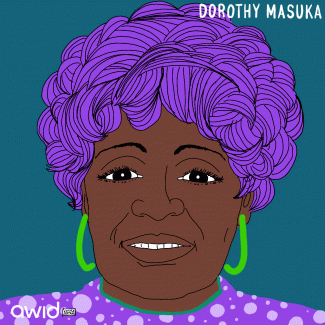
“I didn’t plan to be a singer, singing planned to be in me.” - Dorothy Masuka (interview with Mail & Guardian)
One such song titled “Dr. Malan” (named after the pro-apartheid politician D.F. Malan) was banned. She went on to record “Lumumba” (1961), a song about the assassination of the anti-colonial leader Patrice Lumumba. Dorothy’s work and activism attracted the attention of the Special Branch of the South African police and she was forced into a political exile that would span over three decades. Throughout this time, she worked with pro-independence groups including the African National Congress. In 1992, as apartheid started to crumble and Nelson Mandela was released from prison, she returned to South Africa.
Some of her other work includes the first song she recorded in 1953 entitled “Hamba Notsokolo”, a hit in the 1950s and a valued classic. She also wrote “El Yow Phata Phata”, a song that was adapted by Miriam Makeba, making “Pata, Pata” popular internationally.
Rooted in resistance, Dorothy’s music and activism were intertwined, leaving a magnificent and inspiring legacy. She was also widely known as “Auntie Dot”.
On 23 February 2019 at the age of 83, Dorothy passed away in Johannesburg due to ill health.
Watch Dorothy Masuka in an interview with Mail & Guardian
Listen to some of her music:
Actualmente, una compleja red de actores anti-derechos, en constante evolución, está ejerciendo cada vez más influencia tanto en los espacios internacionales y regionales, como en las políticas nacionales. Los actores anti-derechos están ingresando en los espacios multilaterales (donde múltiples países se reúnen para la colaboración internacional), con el fin de transformarlos y socavarlos desde adentro. Emplean una variedad de discursos persuasivos para ganar legitimidad, a menudo cooptando el lenguaje de los derechos y la justicia para ocultar sus verdaderas agendas.
Este informe es el segundo de una serie de reportes sobre las tendencias en derechos humanos, producido por el Observatorio de la Universalidad de los Derechos (OURs, por sus siglas en inglés). Además del análisis sobre actores anti-derechos clave y sus discursos, estrategias e impactos, el informe presenta breves narrativas inspiradoras de acción feminista y ejercicios de construcción de conocimiento para ayudar a fortalecer nuestra resistencia colectiva.
El efecto sobre nuestros derechos ya ha sido grave, pero esto no ha terminado todavía. Todxs podemos hacer nuestra parte para resistir las agendas anti-derechos y reclamar nuestros derechos.
¡Únete hoy mismo al llamado a la acción colectiva!
Thanks to our global feminist community! From May to August 2024, nearly 1,200 organizations working for Women's rights, gender justice, and LBTQI+ equality shared their experiences in the WITM survey. The results offer a unique picture of how feminist movements are resourced and where gaps remain.
We’re committed to protecting your privacy, so here we explain how we use cookies on our website.
If you have any questions, please get in touch via the form on our contact page.
A cookie is a small data file downloaded by your web browser (for example Chrome or Internet Explorer) and stored on your computer. They are downloaded automatically when you visit websites. Cookies are used to perform essential tasks on a website, to record how people use a website and to gather data for marketing.
We provide essential information on our website to millions of people every year. To do this, we have to manage our website effectively and to reach out to more people who need our support and information. Cookies are a small, but essential way to make all this happen. We use cookies to:
You can update your cookie preferences by clicking on the button below.
In addition, most browsers allow you to manage cookies saved on your device – just go to the help section of your browser. To learn more about cookies and how to manage them, visit the ICO website.
Cookies never record your credit card details or easily identifiable personal data such as your name and address. You have every right to refuse to accept cookies from our website.
If you disable cookies you will still be able to access nearly all the information on our website. But please remember that this may affect some functionality.
You can disable cookies by changing your settings in your web browser or you can use the incognito option on Google Chrome. To find out more about your browser settings, visit the relevant support page below:
全球和區域的合作夥伴已就論壇會前會的一些想法與我們聯繫,我們將很快分享有關這些想法的更多信息。
由諮詢小組組織,AWID資助的2016年黑人女權主義論壇(BFF)湧現出許多美好的事物。BFF產生了一些獨立組織包括巴西的黑人女權組織。儘管今年我們不會再舉辦BFF,但我們仍致力於與有興趣繼續圍繞黑人女權主義組織開展工作的任何人分享一些重要的經驗。
AWID does not provide group discounts, but we do provide registration discounts to members. (Click here to learn more about becoming a member)
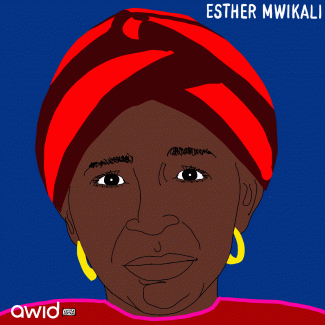
El hogar de Esther Mwikali estaba en la aldea de Mithini, en el condado de Murang'a, Kenya. Esther fue una defensora del derecho a la tierra destacada y valorada que investigó los abusos contra okupas de tierras reclamadas por magnates. La investigación de la que participó Esther incluyó también violaciones del derecho a la tierra cometidas por personas con poder en Makuyu.
Luego de que Esther faltara a una de las reuniones de la aldea, un grupo de búsqueda salió a rastrear a Esther. El 27 de agosto de 2019, dos días después de su desaparición, el cuerpo de Esther fue encontrado en una granja cerca de su casa, con signos de tortura. Esther había sido brutalmente asesinada.
"El trabajo de Esther por evitar el desalojo de lxs integrantes de las comunidades de las tierras reclamadas por magnates era conocido por todxs. Para lxs activistas locales no existía ninguna duda de que su asesinato estaba relacionado con las luchas en la zona por el acceso a la tierra; un trágico recordatorio de la alarmante frecuencia con que se llevan a cabo las ejecuciones extrajudiciales en Kenia."- Global Wittness Report, Julio 2020
"Asociamos la muerte de Mwikali con las luchas locales por el derecho a la tierra, y exigimos al Gobierno que investigue el asunto sin demora." - James Mburu, portavoz de lxs okupas.
"Es necesario tomar medidas con respecto a las personas que presuntamente han amenazado a lxs ocupantes ilegales, incluida la familia de Mwikali". - Alice Karanja, Coalición Nacional de Defensorxs de Derechos Humanos
"El impacto de su trabajo y su tenacidad permanecerán vivos en Kenia durante décadas. El CJGEA consuela a las personas afligidas y pide justicia". - Comunicado de prensa del Centro para la Justicia y la Acción Gubernamental (CJGEA, por sus siglas en inglés), 13 de septiembre de 2019
Les antidroits ont adopté une double stratégie : outre leurs attaques ouvertes sur le système multilatéral, ils et elles sapent les droits humains depuis l’intérieur. Leur implication vise à prendre le contrôle des processus, instaurer des normes régressives et fragiliser la redevabilité.
With 1,773 fossil fuel lobbyists at last year's COP29, we're heading alongside other feminists to Belém, Brazil for COP30, from 10 November – 21 November 2025, where we will continue to denounce false solutions, call out corporate capture, demand that States uphold their commitments under the Common but Differentiated Responsibilities and Respective Capabilities and push for feminist economic alternatives.
$2.7 trillion for the military. $300 billion for climate justice. We're here to flip the script.
This policy governs all pages hosted at www.awid.org, and any other websites under the control of the AWID (the “Website”) and registrations for these sites. It does not apply to pages hosted by organisations other than AWID, to which we may link and whose privacy policies may differ. Please read the following policy to understand our privacy policy regarding nature, purpose, using and sharing of your personal identifiable information that is collected via this website.
Generally, you can browse this website without submitting your personal information to us. However, in some circumstances, we will ask for your personal information.
When you are on the website and are asked for personal information, you are sharing that information only with AWID.
When you register to use the website – for example, subscribe to receive emails from us or apply to become a member - you provide us with the mandatory information about you like Name, country, language to receive email updates and email address. This information is provided by you through secure forms and is stored on secure servers.
Also, while becoming a member or registering for events, you may need to provide payment information. AWID doesn’t store any credit card information on its servers and uses payment gateway to process the payment information.
When you communicate with AWID, provide optional information through forms on the website or use the site to communicate with other members, we collect information about your communication and any information you choose to provide.
When you communicate with us, we collect your communication and any other information you choose to provide us.
In addition, when you interact with the Website, our servers may keep an activity log that does not identify you individually (“Non-Personal Information”). Generally, we collect the following categories of Non-Personal Information:
For more information about cookies, please see www.allaboutcookies.org.
If you do not wish to receive cookies you can easily modify your web browser to refuse cookies, or to notify you when you receive a new cookie, see how here.
AWID uses the information we collect about you to:
If you have subscribed to AWID´s e-newsletters or email updates or you have become a member, we will send you regular communications as specified in the relevant area of the website. You are able to unsubscribe from any of the e-newsletters or email updates at any time by using the unsubscribe information provided in our emails.
The accuracy of your individual identifying information is important to AWID. We are always looking for ways to make it easier for you to review and correct the information that AWID maintains about you through our website. If you change your email address, or if any of the other information we hold is inaccurate or out of date, please write to us here.
Except as explained below, AWID will not disclose any of your personally identifiable information, and will not sell or rent lists containing your information to third parties. AWID may disclose information when it has your permission to do so or under special circumstances, such as when it believes in good faith that the law requires it.
We are continuously implementing and updating administrative, technical, and physical security measures to help protect your information against unauthorized access, loss, destruction, or alteration. Some of the safeguards we use to protect your information are firewalls and data encryption, and information access controls. If you know or have reason to believe that your AWID membership credentials have been lost, stolen, misappropriated, or otherwise compromised or in case of any actual or suspected unauthorized use of your AWID membership account, please contact us through on Contact Us.
This policy may change from time to time. The changed policy will be posted on this website and Last updated date at the end of the policy will be updated. There will be an email update sent to you for the revised policy and if you do not agree with the revised policy, you will have the option to cancel you registration(s) with us. You can also write to us here. We welcome your feedback!
Last updated: May 2019
第十四屆AWID國際論壇將於西元2021年9月20日至23日在台北举行。
Reconocemos que el viaje involucra muchos desafíos y por eso brindaremos más información y detalles sobre cómo llegar a Bangkok cuando abramos el proceso de inscripción a principios del próximo año.
« Je n’y connais pas grand-chose sur la spiritualité ou sur ce qui se passe lorsqu’on meurt, mais ma vie de queer crip coréenne me laisse penser que notre esprit corporel terrestre n’est qu’une petite partie du tout. En ne considérant pas nos ancêtres, nous choisissons de ne voir qu’un aperçu de qui nous sommes. » - Stacey Park Milbern
Stacey a cofondé avec quelques ami·e·s le club de culture sur la justice liée au handicap, un groupe de travail en soutien aux diverses communautés, notamment les plus vulnérables, aidant entre autres les personnes sans-abri à accéder aux ressources durant la pandémie de COVID-19.
Elle a également coproduit une campagne impactante pour le documentaire « Crip Camp » de Netflix. Elle était membre du conseil d’administration de la WITH Foundation et a dirigé plusieurs organisations aux niveaux local, régional et national. Stacey écrivait joliment et vigoureusement :
« Mes ancêtres sont des personnes déchirées de leurs amours par la guerre et les déplacements. C’est grâce à elleux que je connais le pouvoir de construire un foyer avec tout ce que l’on trouve, peu importe l’endroit et les personnes qui sont avec nous. Mes ancêtres sont des queers qui vivaient au Sud américain. Grâce à elleux, j’ai compris l’importance des relations, des lieux et d’une vie vécue en grand, même lorsque cela peut être dangereux. Tou·te·s mes ancêtres connaissent le désir. Ce désir est souvent notre espace de connexion... » - Stacey Park Milbern
Elle est née à Séoul, en Corée, a grandi en Caroline du Nord et continué son parcours dans la région de la baie de San Francisco. Stacey est décédée à la suite de complications chirurgicales le jour de son 33ème anniversaire, le 19 mai 2020.
Lisez un essai écrit par Stacey Park Milbern (en anglais)
Écoutez un entretien avec Stacey Park Milbern (en anglais)
#StaceyTaughtUs : enregistrez votre histoire pour le projet Disability Visibility
« Beaucoup de gens le diraient : c’était une leader. Elle couvrait tous les aspects de ce rôle. Vous savez, parfois il y a des conduites de premier rang, de milieu ou de l’arrière. Et elle était d’une certaine façon capable de mener tous ces rangs. » - Andraéa LaVant, activiste pour les droits des personnes handicapées
« Perdre Stacey au moment où nos communautés ont le plus besoin de son leadership est une réelle épreuve, surtout dans un contexte où sa force, sa vision et son cran étaient de plus en plus reconnus dans des milieux autres que ceux du handicap, lui offrant des leviers plus importants pour faire progresser le travail de toute une vie… Nous n’aurons pas la chance de savoir où son leadership charismatique nous aurait mené·e·s. Mais une chose est sûre : ce que Stacey nous a donné, en un temps relativement court, continuera de bénéficier à d’autres dans les prochaines années. » - Disability Rights Education and Defense Fund (Fonds de défense et d’éducation sur les droits liés au handicap)

Want to join the growing numbers of people saying “enough” to the infiltration of the UN by anti-rights actors?
Panels, workshops, plenaries and spaces for exchange between collectives, activists and organizations in struggle to collectively walk the path towards an agenda and a program of struggle for ecosocialism.
📅 November 8 - November 11, 2025
📍 Buenos Aires, Argentina