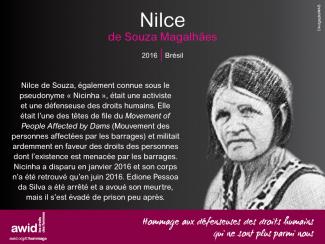
Nilce de Souza Magalhães
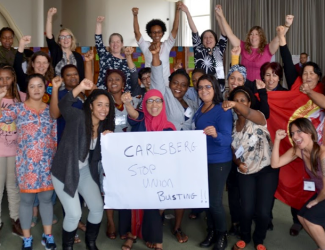
Dans le monde entier, les femmes défenseuses des droits humains défendent leurs terres, leurs moyens de subsistance et leurs communautés contre le pouvoir des entreprises et des industries extractives. Elles se mobilisent et défient de puissants intérêts économiques et politiques qui motivent la spoliation de terres, le déplacement de communautés, la perte des moyens de subsistance et la dégradation de l'environnement.
L’extractivisme est un modèle économique et politique de développement qui œuvre à la marchandisation de la nature et privilégie le profit au détriment des droits humains et de l'environnement. Enraciné dans l'histoire coloniale, il creuse les inégalités sociales et économiques au niveau local et mondial. Le plus souvent, les femmes rurales, noires ou autochtones sont les plus touchées par l’extractivisme et sont largement exclues des espaces de prise de décision en la matière. Les femmes se mobilisent pour défier ces forces patriarcales et néocoloniales et défendre les droits, les terres, les personnes et la nature.
Les femmes qui s’opposent aux industries extractives vivent une série de risques, de menaces et de violations de leurs droits comme la criminalisation, la stigmatisation, la violence et l'intimidation. Leurs histoires révèlent des aspects évidents de violences sexuelles et basées sur le genre. Parmi les auteurs de ces abus se trouvent les autorités locales et fédérales, les entreprises, la police, les militaires, les forces de sécurité paramilitaires et privées, et parfois mêmes leurs propres communautés.
L'AWID et la Coalition internationale des femmes défenseures des droits humains (WHRDIC) ont le plaisir d'annoncer la sortie de leur publication « Les défenseuses des droits humains résistent à l’extractivisme et aux pouvoir des entreprises », un rapport basé sur un projet de recherche transrégional qui relate les expériences vécues par des défenseuses en provenance d'Asie, d'Afrique et d'Amérique latine.
Nous encourageons les activistes, les membres de mouvements sociaux, la société civile, les donateurs et les décideurs à lire et à faire usage des documents suivants pour leur travail de plaidoyer, comme outil pédagogique et comme source d’inspiration :
« Les défenseuses des droits humains résistent aux industries extractives : Aperçu des principaux risques et des obligations en matière de droits humains » est une analyse de la situation d’un point de vue du genre. Ce rapport (en anglais, bientôt disponible en français) analyse les formes de violations et les types d'auteurs de ces violations, il reprend les obligations les plus pertinentes en matière de droits humains et formule une série de recommandations politiques à l’intention des États, des entreprises, de la société civile et des donateurs.
« Arrimer la résistance à l'action : Les stratégies des défenseuses des droits humains qui résistent aux industries extractives » est un guide pratique qui décrit des formes créatives et stratégiques d'action, des stratégies qui ont porté leurs fruits et des histoires de résistance inspirantes.
La vidéo « Protéger les personnes et la planète: les femmes qui résistent aux industries extractives. » met en lumière le courage des défenseur-e-s des droits humains d'Afrique, d'Asie et d'Amérique latine. Elles partagent leurs luttes pour la terre et la vie et parlent des risques et des défis auxquels elles sont confrontées dans leur activisme.
« Contester le pouvoir corporatif : Les luttes pour les droits des femmes, la justice économique et la justice de genre » est un rapport de recherche qui décrit les effets du pouvoir des entreprises et offre des perspectives sur des stratégies de résistance.
Faites-nous part de vos commentaires
C’est avec gratitude que l’AWID reconnaît les contributions précieuses de chaque défenseur-e des droits humains qui a participé à ce projet. Cette recherche a été rendue possible grâce à votre volonté à partager vos expériences. Votre courage, créativité et résilience est une source d’inspiration pour nous toutes et tous. Merci !
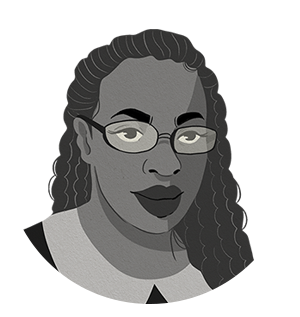
Chinelo Onwualu es una consultora editorial que posee casi 10 años de experiencia en la elaboración de comunicaciones estratégicas para entidades sin fines de lucro de todo el mundo. Algunos de sus clientes han sido ActionAid Nigeria, The BBC World Trust, Open Society Initiative for West Africa (OSIWA) y AWID. Posee una maestría en Periodismo de la Universidad de Siracusa, y ha trabajado como escritora, editora e investigadora en Nigeria, Canadá y Estados Unidos. Es además la editora de no ficción de la revista Anathema y cofundadora de Omenana, una revista de ficción especulativa africana. Sus cuentos se han publicado en diversas antologías galardonadas y ha sido nominada para los Premios Británicos de Ciencia Ficción, el Premio Nommo a la Ficción Africana Especulativa y el Premio Africano del Día de la Narrativa Breve. Es de Nigeria y reside en Toronto con su pareja e hijx.

Panel : Dans le cadre d'une table ronde, explorez une question ou un défi sous différents angles, ou partagez un apprentissage ou une expérience, puis posez des questions à l'auditoire, si le temps le permet.
Talk-show : Organisez une conversation plus spontanée dans le cadre d'un talk-show. Les talk-shows peuvent être une conversation entre plusieurs personnes, animée par un.e présentatrice.eur de talk-show. Les questions du public peuvent déterminer l'orientation de la conversation.
Discussion : Elles peuvent prendre la forme de cafés du monde, de cercles restreints ou fishbowl et d'autres méthodologies qui facilitent l'implication active des participant.e.s dans les conversations. Il s’agit d’un format très participatif.
Atelier : Sessions interactives qui invitent les participant.e.s à acquérir de nouvelles compétences dans tous les domaines de la vie et de l'activisme.
Session stratégique : Il s'agit d'une invitation à réfléchir à une question ou à une stratégie, en profondeur, avec d'autres personnes. Un espace pour apprendre les un.e.s des autres : ce qui fonctionne, ce qui ne fonctionne pas, et comment développer de nouvelles stratégies collectives pour créer les mondes dont nous rêvons.
Cercle de partages (également connu sous le nom de Birds of a Feather) : Idéal pour les petits groupes, dans un cadre plus intime, afin d'écouter les un.e.s et les autres, de susciter la discussion et d'aborder avec soin des sujets qui peuvent être spécifiques, sensibles et complexes.
Arts - Atelier participatif : Activités participatives impliquant les arts et l'expression créative. Qu'il s'agisse d'art visuel, de théâtre, de film, de peinture murale, de danse, de musique, d'artisanat collectif ou de création artistique, etc., nous accueillons toutes les idées célébrant l'art et la créativité féministes en tant que formes de changement social, de guérison, d'expression et de transformation.
Arts - Performances, installations et expositions : Nous accueillons les propositions qui offrent aux participant.e.s du Forum de nouvelles expériences et perspectives, qui élargissent nos horizons et qui nous incitent à penser, ressentir et organiser d'une nouvelle manière.
Guérison : Diverses activités adaptées à la fois aux groupes et aux individus, allant de l'apprentissage de techniques de relaxation à la discussion sur la prévention de l'épuisement professionnel, des pratiques de soins du corps, de l'esprit et de l'âme tenant compte des traumatismes à la guérison et des failles au sein de nos mouvements.
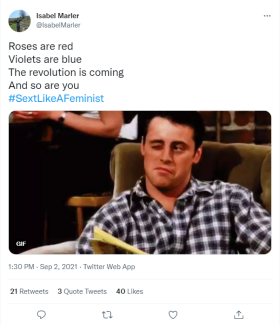
Les fleurs sont en bouton
Le printemps est ici
La révolution gronde
Et toi tu gémis
ونحن نسأل أنفسنا نفس السؤال، ونعتقد أنه لا توجد إجابات بسيطة. بالنسبة للعديد من المشاركين/ات، قد يكون منتدى جمعية حقوق المرأة في التنمية (AWID) أحد الرحلات الدولية القليلة التي يقومون بها في حياتهم/ن. علمتنا الجائحة الإمكانيات والقيود التي تفرضها المساحات الافتراضية لبناء الحركة: لا يوجد شيء أفضل من الاتصال الشخصي. تحتاج الحركات إلى التواصل عبر الحدود لبناء قوتنا الجماعية في مواجهة التهديدات التي نواجهها، ولا سيما أزمة المناخ. نعتقد أن منتدى حقوق المرأة في التنمية القادم يمكن أن يكون مساحة استراتيجية لعقد هذه المحادثات واستكشاف بدائل للسفر الدولي. ويشكل العنصر المختلط للمنتدى جزءًا مهمًا من هذا الاستكشاف.

Nuestro Informe Anual 2013 presenta lo más destacado del trabajo que realizamos el año pasado como aporte para avanzar los derechos de las mujeres y la igualdad de género en el mundo.
El año 2013 marcó el inicio de nuestro Plan Estratégico para el período 2013-2016 que fue elaborado en respuesta al contexto mundial actual.
A continuación les acercamos los puntos destacados de nuestro análisis del contexto mundial, la posición que asumimos como organización mundial feminista y de membresía ante este contexto, los resultados que nos proponemos y cómo organizamos nuestro trabajo para alcanzarlos.
Related Content
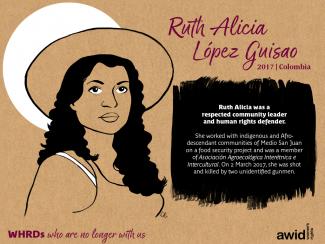
Front Line Defenders: Ruth Alicia López Guisao killed
HRD Memorial: Ruth Alicia Lopez Guisao
Pour la première fois, le Forum de l'AWID propose trois modes de participation :
Les participant.e.s se réuniront à Bangkok, en Thaïlande. Nous sommes impatient.e.s de vous y retrouver!
Day 1

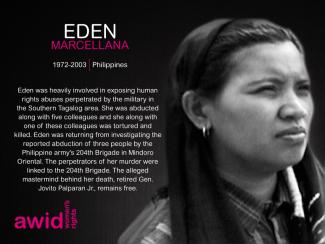
Nous avons contribué à d'importantes victoires, telles que l'élargissement du paysage du financement des droits des femmes grâce à des travaux de recherche et de plaidoyer novateurs de grande envergure. En même temps, nous avons connu des revers dévastateurs, notamment les assassinats de femmes défenseures des droits humains telles que Berta Caceres au Honduras, Gauri Lankesh en Inde et Marielle Franco au Brésil, ainsi que la montée de la mobilisation anti-droits dans les espaces voués aux droits humains.
Il y a cinq ans, nous nous sommes engagées à renforcer notre mouvement en produisant des savoirs sur les tendances des mouvements anti-droits, ainsi que sur des questions avec lesquelles les féministes s'engagent plus rarement, tels les flux financiers illicites. Nous avons mené des plaidoyers côte à côte avec nos partenaires du mouvement, renforçant ainsi l'activisme intergénérationnel et celui des jeunes féministes et élargissant la protection globale des défenseuses des droits humains. Arrivées au terme de notre plan stratégique, nous sommes fières de nos réalisations et de notre évolution en tant qu’organisation. Nous terminons l'année 2017 avec un engagement, des idées et un apprentissage renouvelés pour poursuivre la lutte à venir !
نرحب بالطلبات عبر مجموعة كاملة من المواضيع والتقاطعات المهمة للحركات النسوية وحركات العدالة الجندرية.
Zuhour Mahmoud es la estratega de comunicación de Kohl. Es una escritora y editora y una DJ ocasional radicada en Berlín. Su trabajo se centra en los enfoques críticos a la música, la tecnología y la política y sus ciclos de vida en la esfera digital.
(with special guests!)
📅Tuesday, March 12
🕒6-9.30pm EST
🏢 Blue Gallery, 222 E 46th St, New York
RSVP required
Faits saillants de la manière dont l'AWID a contribué à la co-création et à la résistance féministes: sauvetage féministe, contrer les anti-droits, ressources, série de conversations organisées et magazine des Réalités Féministes