L´AWID est une organisation féministe mondiale qui consacre ses efforts à la justice de genre, au développement durable et aux droits humains des femmes
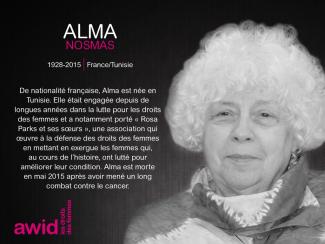
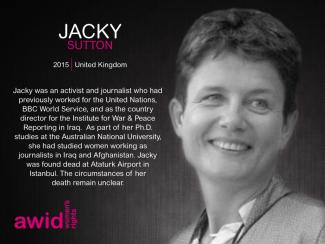
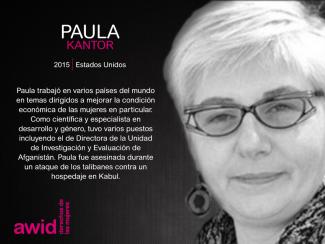
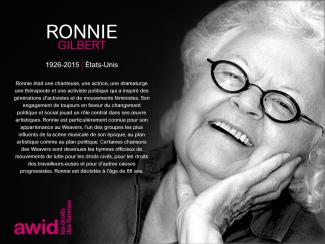
L’hommage se présente sous forme d’une exposition de portraits d’activistes du monde entier qui ne sont plus parmi nous qui ont lutté pour les droits des femmes et la justice sociale.
En 2020, nous adoptons une démarche légèrement différente
Cette année, tout en continuant à convoquer la mémoire de celleux qui ne sont plus parmi nous, nous souhaitons célébrer leur héritage et souligner les manières par lesquelles leur travail continue à avoir un impact sur nos réalités vécues aujourd’hui.
49 nouveaux portraits de féministes et de défenseur·e·s viennent compléter la gallerie. Bien que de nombreuses des personnes que nous honorons dans cet hommage sont décédé·e·s du fait de leur âge ou de la maladie, beaucoup trop d’entre iels ont été tué·e·s à cause de leur travail et de qui iels étaient.
Les histoires des activistes à l'honneur dans cet Hommage font vivre leur héritage et continuent d'inspirer le travail et l’action de nos mouvements.
Les portraits de l'édition 2020 ont été illustrés par Louisa Bertman, artiste et animatrice qui a reçu plusieurs prix.
L’AWID tient à remercier nos membres, les familles, les organisations et les partenaires qui ont contribué à cette commémoration. Nous nous engageons auprès d’elleux à poursuivre le travail remarquable de ces féministes et défenseur·e·s et nous ne ménagerons aucun effort pour que justice soit faite dans les cas qui demeurent impunis.
« Ils ont essayé de nous enterrer. Ils ne savaient pas que nous étions des graines » - Proverbe mexicain
L'Hommage a été inauguré en 2012
Le premier hommage aux défenseur-e-s des droits humains a pris la forme d’une exposition de portraits et de biographies de féministes et d’activistes disparu·e·s lors du 12e Forum international de l’AWID en Turquie. Il se présente maintenant comme une gallerie en ligne, mise à jour chaque année.
Depuis, 467 féministes et défenseur-e-s des droits humains ont été mis·es à l'honneur.
Les interviews génèrent des renseignements détaillés que vous aurez du mal à obtenir à travers un sondage. Le sondage est surtout axé sur les données quantifiables et les questions fermées,par contre les interviews permettent d’obtenir les opinions d’expert-e-s comme des activistes et des donateurs, tout en utilisant des questions ouvertes qui précisent le contexte entourant les données résultant du sondage.
Envoyez aux personnes que vous allez interviewer une note de synthèse qui décrit les objectifs des interviews et de l’ensemble de votre recherche, en plus d’une liste de questions.
Ces personnes pourront ainsi préparer leurs réponses aux questions plus complexes et obtenir les renseignements qu’elles n’ont peut-être pas sous la main.
2. Pendant les interviews
Pour gagner du temps, vous pouvez procéder aux interviews pendant que votre sondage est en cours.
Tentez de rendre les entrevues aussi uniformes que possible pour faciliter une analyse systématique des résultats. Il s’agit notamment de poser les mêmes questions. La codification de réponses identiques sous chacune des questions vous permettra de déceler les tendances cachées.
On peut aussi utiliser les interviews pour étoffer les résultats du sondage.
Ne fondez pas vos questions sur des hypothèses au sujet des connaissances de la personne interviewée.
Tentez plutôt de préciser ce qu’elle sait, ce qui produit également des informations
NE DEMANDEZ PAS : « Compte tenu des tendances actuelles de financement en Suisse, est-ce que vous êtes au courant de certaines occasions de collaboration ? » Cette question présume que la personne interviewée connaît les tendances de financement et que sa compréhension de ces tendances est identique à la vôtre.
DEMANDEZ : En premier lieu, « Quelle est votre compréhension des tendances de financement actuelles en Suisse ? », suivie de « Est-ce que vous êtes au courant de certaines occasions de collaboration ? » Ceci révèlera ce que la personne comprend, vous donnant encore plus d’informations que la première question.
Les interviews auprès des donateurs vous permettront d’approfondir vos relations avec eux, ce qui sera utile lorsque vous entreprendrez les activités de plaidoyer qui succèderont à votre recherche. Vous en tirerez également une connaissance plus poussée des processus de prises de décisions adoptés par les bailleurs de fonds.
Suggestions de thèmes à aborder lors des interviews avec les donateurs :
Quelles sont leurs priorités en matière de financement ? Pourquoi et comment ont-ils choisi ces priorités ? Par exemple, pourquoi choisissent-ils de subventionner des projets plutôt que d’allouer des financements de base ou vice-versa ?
Quelles sont les sommes annuelles allouées à l’avancement des droits humains des femmes ? Ceci renforcera la fiabilité de l’ensemble des données recueillies.
Ont-ils observé certaines tendances de financement et quelles sont les origines et les politiques sous-jacentes à ces tendances ?
Quelle est leur théorie du changement social et comment influence-t-elle leurs relations avec les organisations de droits des femmes ?
2. Interviews auprès d’activistes et d’organisations de droits des femmes
Les interviews auprès d’activistes et d’organisations de droits des femmes vous renseigneront sur leurs réalités sur le terrain. Ici encore, ces interviews vous permettront d’approfondir vos relations qui peuvent être intégrées aux plaidoyers, particulièrement en vue de favoriser la collaboration entre donateurs et activistes.
Suggestions de thèmes à aborder lors des interviews avec les activistes et les organisations de droits des femmes :
Les tendances à long terme des priorités de financement que les organisations de femmes ont observées et leurs incidences.
Des stratégies féministes et collaboratives réussies de mobilisation des ressources, qui créent des mouvements solides et complémentaires.
Expliquer pourquoi il est important de soutenir les mouvements de femmes et leurs efforts en matière d’organisation.
La manière dont différents acteurs et actrices comprennent le processus de changement social et leur rôle en faveur/pour la réalisation de l’égalité de genre et des droits des femmes.
Pendant votre recherche WITM, nous vous recommandons de procéder à l’analyse des résultats préliminaires. La présentation de vos résultats préliminaires offre l’occasion de mener d’autres interviews et de recueillir des réactions sur votre processus de recherche et sur les résultats initiaux. Ces réactions peuvent être intégrées à votre recherche finale.
L’AWID organise des « rencontres WITM » pour partager les résultats préliminaires issus des données de sondage et des interviews. Ces rencontres permettent aux personnes qui y prennent part (activistes, organisations de droits des femmes et donateurs) de débattre et de discuter des résultats, de préciser le contexte, de rehausser le sentiment d’appropriation parmi les membres du mouvement et de fournir plus de commentaires en vue de la recherche finale.
Par exemple, l’AWID a profité du Pôle de mobilisation des ressources (RMH) pour les droits des femmes autochtones, dans le cadre du World Summit on Indigenous Philanthropy (Sommet mondial sur la philanthropie autochtone) pour lancer une présentation de ses résultats préliminaires.
• Liste d’organisations, de donateurs et d’activistes agissant à titre consultatif
• Questions d'interview que vous aurez préparées
• Note conceptuelle (Vous pouvez utiliser de cadre de référence que vous avez déjà préparé)
Nuestro poder colectivo, nuestra sabiduría y nuestro compromiso no tienen límites. Pero nuestras cuentas bancarias sí.
Las instantáneas de datos están basadas en las respuestas de 1.174 organizaciones feministas, por los derechos de las mujeres, LGBTQI+ y aliadas (en adelante «organizaciones feministas y por los derechos de las mujeres») de 128 países a ¿Dónde está el dinero para las organizaciones feministas? la encuesta de AWID.
Y aura-t-il un espace dédié aux jeunes féministes ? Un espace consacré à la justice pour les personnes en situation de handicap ? Un pôle numérique/technologique ? Des réunions- café pour les bailleurs de fonds ? Des espaces bien-être et thérapeutiques ?
Nous partagerons dès que possible les informations concernant le programme, les espaces et la manière dont vous pourrez vous impliquer dans leur élaboration. Vous pourrez également participer au développement de ces espaces dans le temps précédant le Forum et pendant le Forum. Restez à l'écoute !
Snippet Kohl - Plenary: The revolution will be feminist – or it won’t be a revolution
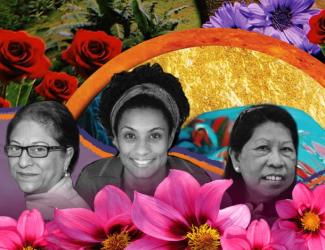
with Manal Tamimi, Bubulina Moreno, Karolina Więckiewicz, and Anwulika Ngozi Okonjo.
We believe that the economy, the market, the financial system and the premises upon which they are built are critical areas of feminist struggle. Thus, our vision for a just economy goes beyond promoting women’s rights and empowerment in the market, to evaluating the role of gendered oppressions in shaping economic arrangements and transforming these to ensure gender and economic justice.
Process
We are neither starting from zero, nor alone in this attempt to put forward feminist propositions for a just economy. Many of the propositions herein have been advanced or exist in practice within diverse communities challenging and resisting the mainstream market and growth-based economic systems.
It is also very important to note that there is growing awareness of the fact that micro solutions are not always the answer to macro problems, even if they represent important spaces for resistance and movement building and that there may be limitations to particular alternatives to address the injustices of the current capitalist system at a global scale.
Goals
However, feminist alternatives for a just economy are critical to create dents in the system and draw lessons for transformative systemic change. Here we cannot presume to offer a comprehensive nor a complete account on how to create a just feminist economic model, or even models. But we can, but rather draw from cross-movement dialogue with trade unions, environmental, rural and peasants movements, to articulate the propositions for the journey towards this vision.
What do we want to change?
The neoliberal model driving the global economy has repeatedly demonstrated its inability to address the root causes of poverty, inequalities, and exclusion. Neoliberalism, and has in fact contributed to the very creation and exacerbation of these injustices.
Characterized by globalisation, liberalization, privatisation, financialisation and conditional aid, mainstream development policies over the past 3 decades have wreaked havoc on livelihoods over the past 3 decades. These policies have also sustained a trajectory of deepening inequalities, gendered injustices, and environmental destruction that the world can no longer afford to endure.
While there are people those who assert that economic growth, facilitated by giving free reign to corporations and businesses, can sustain a tide that will (eventually) raise all boats.
However, the notion of development that has prevailed for the past decades, built for the most part upon the premise of limitless economic growth, is going through an ideological crisis.
The myth of economic growth as a panacea for our problems is being debunked.
«Mi misión en la vida no es meramente sobrevivir sino florecer y hacerlo con pasión, compasión, humor y estilo.» - Maya Angelou
¡Bienvenidx al 15° Foro Internacional de AWID!
El Foro Internacional de AWID es un evento de la comunidad global y, a la vez, un espacio para una transformación personal radical . Es un encuentro único: el Foro reúne los movimientos feministas, por los derechos de las mujeres, por la justicia de género, LBTQI+ y aliados, en toda nuestra diversidad y humanidad, para conectarnos, sanar y florecer. El Foro es un lugar donde lxs feministas del Sur Global y de las comunidades históricamente marginadas ocupan el centro de la escena, elaborando estrategias entre sí y con los movimientos aliados, donantes y creadores de políticas para alterar las relaciones de poder, establecer alianzas e inaugurar un mundo diferente y mejor.
Cuando la gente se reúne a escala global, como personas individuales y como movimientos, se genera una fuerza arrolladora. Únete a nosotrxs en Bangkok, Tailandia, en 2024. Ven a bailar, cantar y rebelarte con nosotrxs.
Cuándo: del 2 al 5 de diciembre de 2024 Dónde: Bangkok, Tailandia, y en línea Quiénes: Aproximadamente unxs 2.500 feministas de todo el mundo participarán en persona, y otrxs 3.000 participarán de manera virtual
La búsqueda de medios alternativos de producción alimentaria a partir de la sostenibilidad ambiental está ganando terreno en todas las regiones. Esta búsqueda mundial presenta una característica común: la necesidad de involucrar a la población rural y sobre todo a las mujeres, teniendo en cuenta sus prioridades y conocimientos locales, aplicando el principio de la agroecología.
Definición
La agroecología es una forma de practicar la agricultura o de utilizar tecnologías sin dañar el ambiente. Se propone quebrar el modelo hegemónico de desarrollo rural basado en los latifundios y monocultivos que beneficia sobre todo a las empresas agrícolas y afianza la exclusión social.
En la agricultura familiar, la agroecología se manifiesta como resistencia al modelo actual de desarrollo y sus problemas sociales, culturales, ambientales y económicos. Se opone a la falta de autonomía de la población campesina en cuanto a capital financiero y encarna una forma de resistencia al modelo de agronegocios actual.
Perspectiva feminista
Las iniciativas que se basan solo en la agroecología pueden no ser suficientes para resolver todos los problemas de marginación e invisibilidad de las mujeres. Por eso, una perspectiva feminista es fundamental para analizar las normas asociadas con la idea de familia que actualmente se postula como institución perfecta, así como con las condiciones de subordinación de las mujeres.
En términos más simples: para que la agroecología pueda liberar su potencial emancipatorio, es importante que los debates en torno a ella incluyan una reflexión sobre los roles de género socialmente construidos.
Alors que les dirigeant·es du monde se réunissent au Brésil, il est vital que les mouvements féministes, en particulier les pays de la Majorité globale, aient des espaces indépendants pour se rassembler, mettre au point des stratégies et bouleverser le cours des choses.
Ces pôles remettent en cause l’élitisme des discussions climat, se concentrent sur les expériences vécues et entendent construire le pouvoir collectif au-delà des frontières. Ils constituent un contrepoids critique aux négociations internationales verticales et souvent excluantes. Les pôles visent à encourager des solutions pilotées par la communauté, amplifier les revendications féministes et veiller à ce que les principes féministes de soin et de solidarité façonnent l’agenda climat. Il ne s’agit pas seulement d’être présentes à la COP30, il faut redéfinir la conversation sur la justice climatique, dans des termes féministes.
CFA 2023 - Forum Theme - ES
Rebelándonos Juntes: Conectar, Sanar, Florecer
El tema del Foro –– Rebelándonos Juntes –– es una invitación a vincularnos con todo nuestro ser, a conectarnos entre nosotrxs en forma focalizada, afectuosa y valiente, para que podamos sentir el latido de los movimientos globales y rebelarnos juntxs para enfrentar los desafíos de esta época.
Los movimientos feministas, por los derechos de las mujeres, por la justicia de género, LBTQI+ y aliados de todo el mundo están en una instancia crítica, ya que deben enfrentar una poderosa reacción contra los derechos y las libertades previamente ganados. Durante los últimos años, hemos asistido al rápido auge de los autoritarismos, a la violenta represión de la sociedad civil y la criminalización de las mujeres y las personas de género no normativo defensoras de los derechos humanos, a la escalada bélica y de los conflictos armados en muchas partes de nuestro mundo, a la perpetuación continua de las injusticias económicas y a las crisis sanitarias, ecológicas y climáticas entrecruzadas.
Nuestros movimientos están sacudidos y, a la vez, buscan construir y mantener la fortaleza necesaria para el trabajo que hay por delante. No podemos hacer este trabajo solxs, en nuestros núcleos aislados. La conexión y la sanación son esenciales para transformar los persistentes desequilibrios de poder y las líneas divisorias dentro de nuestros propios movimientos. Debemos trabajar y elaborar estrategias de manera interconectada, para que podamos florecer juntxs. El Foro de AWID promueve ese ingrediente vital de interconexión en el poder de resistencia, crecimiento e influencia transformadora de las organizaciones feministas de todo el planeta.
Body
Sexting Like a Feminist: Humor in the Digital Feminist Revolution | Content Snippet
Sexting como feminista: el humor en la revolución digital feminista
El 2 de septiembre de 2021 lxs increíbles activistas feministas y por la justicia social del festival Crear | Résister | Transform de AWID nos juntamos no solo para compartir estrategias, crear juntxs y transformar al mundo sino también para decir cosas sucias en Twitter.
Este ejercicio lo facilitó Nana Darkoa Sekyiamah, una de las fundadoras del blog Adventures From The Bedrooms of African Women [Aventuras desde los dormitorios de mujeres africanas] y autora de The Sex Lives of African Women, [Las vidas sexuales de las mujeres africanas] que se asoció con la plataforma digital mujerista y queer panafricana AfroFemHub, para preguntar cómo podemos explorar nuestro placer, nuestros deseos y nuestras fantasías en forma segura y consensuada a través de mensajes de texto.
En resumen: ¿cómo sextea unx feminista?
Creo que esta pregunta es fundamental porque involucra una cuestión más amplia: cómo nos manejamos en el mundo virtual desde una perspectiva feminista. Bajo el capitalismo, los discursos en torno a los cuerpos y al sexo pueden resultar deshumanizadores y distorsionadores; gestionar el placer sexual en espacios virtuales puede sentirse un acto performativo. Por eso, buscar vías para explorar cómo podemos compartir nuestro deseo en formas afirmativas y que nos entusiasmen puede ser una forma de resistir a los modelos dominantes de presentación y consumo así como una reivindicación de estos espacios y sus posibilidades de participación auténtica, demostrando que todo el sexting debería ser exactamente así: feminista.
Además, permitir que el discurso feminista asuma su lado más juguetón en el ámbito virtual nos ayuda a reformular esa narrativa tan difundida por la que actuar como feminista implica hacerlo con amargura y sin placer alguno. Pero, como bien sabemos, divertirnos es parte de nuestro trabajo político y un compomente intrínseco de lo que implica ser feminista.
Utilizando la etiqueta #SextLikeAFeminist, [SextComoFeminista] académiquxs y activistas de distintas partes del mundo aportaron sus tuits feministas más sedientos de placer y aquí les presento a mis diez favoritos.
Como lo demuestran estos tuits, resulta que sextear como feminista es sexy, divertido – y caliente – todo eso sin perder de vista el compromiso con la equidad y la justicia.
La participación de lxs afiliadxs de AWID en la CSW61
Los Estados miembros al igual que activistas y organizaciones por los derechos de las mujeres se reunirán en la sede central de las Naciones Unidas, en Nueva York, para la sexagésima primera sesión de la Comisión de la Condición Jurídica y Social de las Mujeres del 13 al 24 de marzo para abordar el tema «empoderamiento económico de las mujeres» en el contexto del Objetivo 5 para el Desarrollo Sostenible.
Aunque nos dará mucho gusto reunirnos en persona con aquellxs de ustedes que van a estar en Nueva York, también queremos interactuar con todxs aquellxs que no podrán asistir a la CSW y, en la medida que nos sea posible, amplificar sus voces en los espacios relevantes.
A continuación encontrarán información sobre las diferentes maneras en que pueden interactuar con AWID en relación con la CSW:
¡Participa en una toma del poder artística!
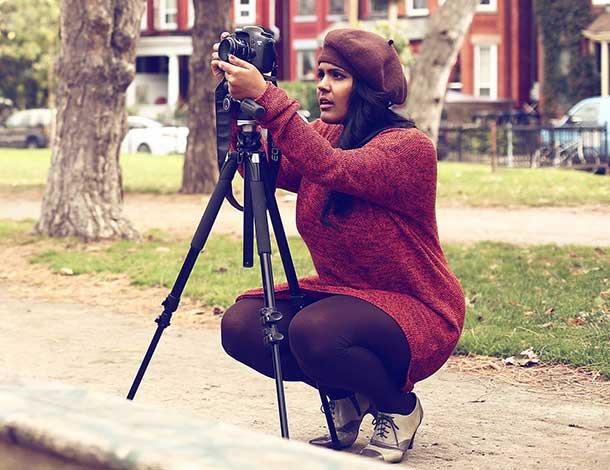
Nos complace anunciar que Nayani Thiyagarajah —afiliada de AWID— asistirá a la CSW este año y estará a cargo de la cuenta de Instagram de AWID. Nayani estará presente y disponible en Nueva York, para conectarse con otrxs afiliadxs, y posiblemente coordinar una presentación en nuestra cuenta de Instagram; también explorará la posibilidad de incluir a algunxs afiliadxs de AWID en un cortometraje sobre el tema «Lo personal es político», una historia de la participación de Nayani en la CSW de este año.
Nayani Thiyagarajah
¿Quién es Nayani?
Nayani Thiyagarajah es una realizadora, productora y escritora que se dedica a crear historias para la pantalla grande. Nayani es hija de la diáspora tamil, vive en Toronto y ha trabajado por más de diez años en las artes y la cultura. Su primer largometraje independiente Shadeism: Digging Deeper (2015) tuvo su estreno mundial en el Festival Internacional de Cine de Zanzíbar 2015, donde ganó un premio especial del jurado. Nayani realizó recientemente la película [RE]FRAME en asociación con la productora Camaro West, una compañía de producción con sede en Atlanta y Toronto, que se enfoca en reformular las historias de las personas negras, indígenas y otras personas de color a través de narraciones para la pantalla grande.
Hablando más seriamente, habría que señalar que Nayani se ríe de una manera extraña, es muy torpe, y su cabeza está siempre en las nubes. Nayani se siente extremadamente bendecida de poder crear historias para el cine, de ganarse la vida jugando a inventar historias y por encima de todo, Nayani cree en el amor.
(La misma Nayani nos envío estas líneas para su biografía)
¿Te interesaría conocer a Nayani y tener la posibilidad de ser incluidx en su película?
Envíanos un email dirigido a membership@awid.org con la línea de asunto «CSW: toma del poder artística»
Antes del 13 de marzo de 2017
Incluye tu nombre completo y tu país.
¿No puedes asistir? ¡Hazlo saber!
Si no puedes asistir a la CSW61 debido a una prohibición de viaje, ya sea impuesta por el gobierno de Trump o por tu propio gobierno, por favor comparte tu historia con nosotrxs.
Envíanos mensajes que quieres que sean escuchados en los espacios de las Naciones Unidas en lo que respecta al financiamiento, el impacto del restablecimiento de la Ley Mordaza Global y la necesidad de luchar en contra de todos los tipos de fundamentalismos religiosos. Puedes enviar tus mensajes en los siguientes formatos:
Video: Que no dure más de dos minutos y por favor envíalo a través de una carpeta de intercambio de archivos (por ejemplo, dropbox, google drive, etc.)
Audio: Que no dure más de dos minutos y por favor envíalo a través de una carpeta de intercambio de archivos (por ejemplo, dropbox, google drive, etc.)
Imagen: puedes enviarnos una foto o un cartel con tu mensaje.
Texto: Que no sea más largo de 200 palabras y por favor envíalo a través de un mail o en un documento Word.
Comparte tu mensaje con nosotrxs
Envíanos un email dirigido a membership@awid.org con la línea de asunto «CSW: ¡Hazlo saber!»
Antes del 15 de marzo de 2017
Reúnete con otrxs afiliadxs en la CSW61
Algunxs afiliadxs de AWID nos han dicho que les parece muy importante poder conectarse con otrxs afiliadxs en la CSW. En un espacio de incidencia tan grande, es útil conectarse con otrxs activistas que trabajan en temas similares, o que provienen del mismo país o región. Al reconocer la importancia de estas conexiones para la construcción de movimientos.
¿Te gustaría reunirte con otrxs afiliadxs de AWID mientras estás en Nueva York?
Envíanos un email dirigido a membership@awid.org con la línea de asunto «CSW: AWID Afiliadxs»
NOTE: Por favor envíanos tu nombre completo, país de origen y déjanos saber si te parece bien que compartamos tu dirección de mail con otrxs afiliadxs interesadxs en reunirse en la CSW.
Toma una fotografía
Si asistes a la CSW, nos gustaría ver lo que sucede a través de tus ojos. Puedes capturar un momento que, en tu opinión, hable de la energía en el espacio del evento, ya sea dentro o fuera de la sede. Tenemos pensado publicar algunas de tus «imágenes» en nuestros canales de redes sociales y compartirlas en awid.org.
Puedes enviarnos fotografías:
a color o en blanco y negro
un título (si lo deseas) y
una leyenda (de 100 palabras como máximo) sobre la historia que cuenta esa imagen.
Incluye además:
tu nombre completo
país de origen
infórmanos si podemos publicar en parte o por completo la información que nos hayas compartido.
Envía tus imágenes
Envíanos un email dirigido a membership@awid.org con la línea de asunto «CSW: fotografías»
Durante toda la duración de la CSW o poco después de haber concluido, hasta el martes 28 de marzo.