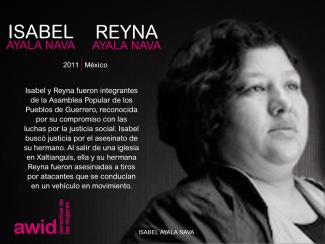
Isabel and Reyna Ayala Nava
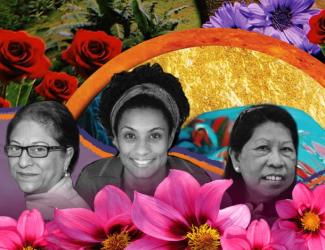
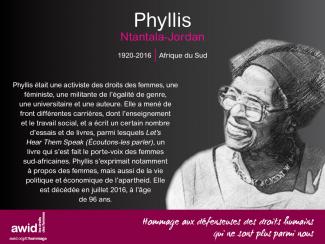
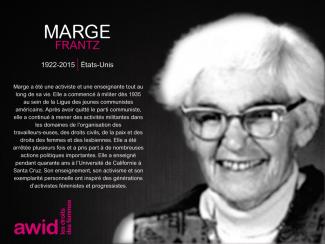
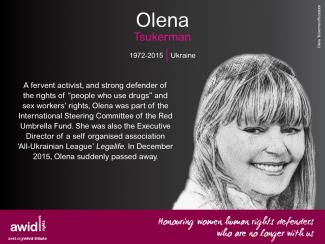
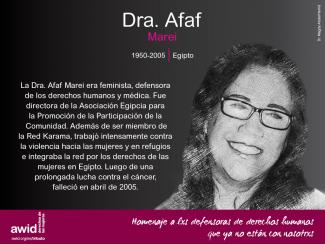
L’hommage se présente sous forme d’une exposition de portraits d’activistes du monde entier qui ne sont plus parmi nous qui ont lutté pour les droits des femmes et la justice sociale.
Cette année, tout en continuant à convoquer la mémoire de celleux qui ne sont plus parmi nous, nous souhaitons célébrer leur héritage et souligner les manières par lesquelles leur travail continue à avoir un impact sur nos réalités vécues aujourd’hui.
49 nouveaux portraits de féministes et de défenseur·e·s viennent compléter la gallerie. Bien que de nombreuses des personnes que nous honorons dans cet hommage sont décédé·e·s du fait de leur âge ou de la maladie, beaucoup trop d’entre iels ont été tué·e·s à cause de leur travail et de qui iels étaient.
Visiter notre exposition virtuelle
Les portraits de l'édition 2020 ont été illustrés par Louisa Bertman, artiste et animatrice qui a reçu plusieurs prix.
L’AWID tient à remercier nos membres, les familles, les organisations et les partenaires qui ont contribué à cette commémoration. Nous nous engageons auprès d’elleux à poursuivre le travail remarquable de ces féministes et défenseur·e·s et nous ne ménagerons aucun effort pour que justice soit faite dans les cas qui demeurent impunis.
« Ils ont essayé de nous enterrer. Ils ne savaient pas que nous étions des graines » - Proverbe mexicain
Le premier hommage aux défenseur-e-s des droits humains a pris la forme d’une exposition de portraits et de biographies de féministes et d’activistes disparu·e·s lors du 12e Forum international de l’AWID en Turquie. Il se présente maintenant comme une gallerie en ligne, mise à jour chaque année.
Depuis, 467 féministes et défenseur-e-s des droits humains ont été mis·es à l'honneur.
En la Comisión Africana y en el Sistema Interamericano, los actores antiderechos impulsan nociones esencialistas de cultura y género para impedir el avance de los derechos y socavar las responsabilidades. Como vemos, los actores anti-derechos están ejerciendo su influencia sobre los sistemas regionales de derechos humanos, así como en los espacios internacionales.
This new report shines a light on the resourcing realities of feminist and women’s rights organizations amid unprecedented political and financial upheaval. Drawing on over a decade of analysis since AWID last Where is the Money? report (Watering the Leaves, Starving the Roots), it takes stock of the gains, gaps, and growing threats in the funding landscape.
The report celebrates the power of movement-led initiatives to shape resourcing on their own terms, while sounding the alarm on massive aid cuts, shrinking philanthropy, and escalating backlash.
It calls on funders to invest abundantly in feminist organizing as essential infrastructure for justice and liberation. It also invites movements to reimagine bold, self-determined models of resourcing rooted in care, solidarity and collective power.
Yes! We are currently exploring innovating technologies to allow for meaningful connection and participation.
Merci de votre visite sur le site d'AWID. Pour plus d'informations sur AWID rendez-vous sur https://www.awid.org/fr
Vous voulez vous joindre au nombre croissant de personnes qui disent « ça suffit ! » face aux infiltrations des antidroits à l’ONU ?
The climate summit by movements, for movements.
📅 November 12 - November 16, 2025
📍 Universidade Federal do Pará, Belém
Nos hemos hecho la misma pregunta y creemos que no hay respuestas simples. Para muchas personas, el Foro de AWID puede ser uno de los pocos viajes internacionales que realicen en su vida. La pandemia nos enseñó las posibilidades pero también las limitaciones de los espacios virtuales para la construcción de movimientos: no hay nada como la conexión en persona. Los movimientos necesitan conexiones transfronterizas para construir nuestro poder colectivo frente a las amenazas que enfrentamos, especialmente la crisis climática. Creemos que el próximo Foro de AWID puede ser un espacio estratégico para abordar estas cuestiones y explorar alternativas al viaje internacional. El formato híbrido del Foro es una parte importante de esta exploración.
Building Feminist Economies is about creating a world with clean air to breath and water to drink, with meaningful labour and care for ourselves and our communities, where we can all enjoy our economic, sexual and political autonomy.
In the world we live in today, the economy continues to rely on women’s unpaid and undervalued care work for the profit of others. The pursuit of “growth” only expands extractivism - a model of development based on massive extraction and exploitation of natural resources that keeps destroying people and planet while concentrating wealth in the hands of global elites. Meanwhile, access to healthcare, education, a decent wage and social security is becoming a privilege to few. This economic model sits upon white supremacy, colonialism and patriarchy.
Adopting solely a “women’s economic empowerment approach” is merely to integrate women deeper into this system. It may be a temporary means of survival. We need to plant the seeds to make another world possible while we tear down the walls of the existing one.
We believe in the ability of feminist movements to work for change with broad alliances across social movements. By amplifying feminist proposals and visions, we aim to build new paradigms of just economies.
Our approach must be interconnected and intersectional, because sexual and bodily autonomy will not be possible until each and every one of us enjoys economic rights and independence. We aim to work with those who resist and counter the global rise of the conservative right and religious fundamentalisms as no just economy is possible until we shake the foundations of the current system.
Advance feminist agendas: We counter corporate power and impunity for human rights abuses by working with allies to ensure that we put forward feminist, women’s rights and gender justice perspectives in policy spaces. For example, learn more about our work on the future international legally binding instrument on “transnational corporations and other business enterprises with respect to human rights” at the United Nations Human Rights Council.
Mobilize solidarity actions: We work to strengthen the links between feminist and tax justice movements, including reclaiming the public resources lost through illicit financial flows (IFFs) to ensure social and gender justice.
Build knowledge: We provide women human rights defenders (WHRDs) with strategic information vital to challenge corporate power and extractivism. We will contribute to build the knowledge about local and global financing and investment mechanisms fuelling extractivism.
Create and amplify alternatives: We engage and mobilize our members and movements in visioning feminist economies and sharing feminist knowledges, practices and agendas for economic justice.
“The corporate revolution will collapse if we refuse to buy what they are selling – their ideas, their version of history, their wars, their weapons, their notion of inevitability. Another world is not only possible, she is on her way. On a quiet day, I can hear her breathing”.
Arundhati Roy, War Talk

Ghiwa Sayegh est une écrivaine anarcho-queer, éditrice indépendante et archiviste. Elle est la rédactrice fondatrice de Kohl : la Revue de Recherche sur les Corps et le Genre et la cofondatrice d’Intersectional Knowledge Publishers. Elle a une maîtrise en études de genre de l’Université Paris 8 Vincennes – Saint-Denis. Elle est passionnée par la théorie queer, les circulations transnationales et les histoires imaginaires ou inconnues. Ses influences sont Audre Lorde et Sara Ahmed.
with Nazik Abylgaziva, Amaranta Gomez Regalado, Cindy Weisner, and Lucineia Freitas.
Denunciar la captura corporativa. Comprender las soluciones falsas. Elaborar alternativas. Todo lo que necesitas para ejecutar la campaña “¿De quién es esta COP?”