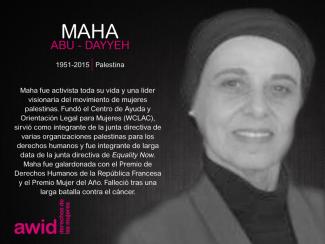
Maha Abu-Dayyeh
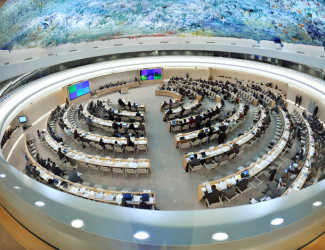
Le Conseil des droits de l'homme (CDH) est un organe intergouvernemental clé du système des Nations Unies, responsable de la promotion et la protection des droits humains autour du globe. Il se réunit trois fois par an en session ordinaire, en Mars, Juin et Septembre. Le Bureau du Haut-Commissariat des Nations Unies aux Droits de l’Homme (HCDH) constitue le secrétariat pour le CDH.
Débat et adopte des résolutions sur les questions globales des droits humains ainsi que sur la situation des droits humains dans des pays particuliers
Examine les plaintes des victimes de violations des droits humains et des organisations activistes, au nom des victimes de violations des droits humains
Nomme des experts indépendants (que l'on connaît sous le nom de « Procédures Spéciales ») pour réviser les cas de violation des droits humains dans des pays spécifiques, ainsi que pour examiner et suivre des questions globales relatives aux droits humains
Prend part à des discussions avec les experts et les gouvernements sur les questions de droits humains
Évalue les bilans des États membres de l'ONU en matière de droits humains tous les quatre ans et demi, dans le cadre de l'examen périodique universel.
La prochaine session du CDH a lieu à Genève, en Suisse, du 30 juin au 17 juillet 2020.
AWID travaille avec des partenaires féministes, progressistes et du domaine des droits humains pour partager nos connaissances clé, convoquer dialogues et évènements avec la société civile, et influencer les négociations et les résultats de la session.
Cuando la gente se reúne a escala global, como personas individuales y como movimientos, se genera una fuerza arrolladora. Únete a nosotrxs en Bangkok, Tailandia, y de manera virtual, en diciembre de 2024.
Andaiye was seen as a transformative figure on the frontlines of the struggles for liberation and freedom. She was an early member and active in the leadership of the Working People’s Alliance (WPA), a socialist party in Guyana which fought against authoritarian rule and continued throughout her life to focus on justice for the working-class and rural women’s rights and on bridging ethnic barriers between Indo and Afro-Guyanese women.
Andaiye was a founding member of Red Thread Women, an organization that advocated for women’s care work to be fairly remunerated, worked at the University of the West Indies and with CARICOM. Never afraid to challenge governments, she pointed out gender imbalances in state boards, laws that discriminated against sex workers, called for abortion rights in Jamaica and spoke out against trade agreements such as the Caribbean Single Market and Economy (CSME) that allowed for the free movement of women domestic migrant workers but did not give their children the same rights.
Andaiye published several scholarly essays, wrote newspaper columns and also edited the last books of Walter Rodney, the Guyanese political activist and fellow WPA leader, who was assassinated in 1980. A cancer survivor, Andaiye was one of the founders of the Guyana Cancer Society and the Cancer Survivors’ Action Group. She also served on the executive of the Caribbean Association for Feminist Research and Action (CAFRA), as a Director of Help and Shelter and as Board Member of the Guyana National Commission on Women. She received a number of awards, including the Golden Arrow of Achievement in Guyana (the fourth highest national award).
Andaiye passed away on 31 May 2019 at the age of 77. The subsequent tributes that flowed in from activists, friends and those inspired by her life spoke eloquently to her amazing legacy and her beautiful humanity.
Here are but a few:
“Andaiye had a profound effect on me...she was so many things, an educator, fighter, she taught me to be self-critical, to think more clearly, she taught me about survival, about incredible courage, about compassion, about going beyond external appearances and treating people as people and not being distracted by status, class, race...anything.”
- Peggy Antrobus, Feminist Activist, Author, Scholar, Barbados
“The kind of confident idealism Andaiye expressed, this willingness to confront the world and a stubborn belief that you could actually change it... That politics of hope...How else to honour her life, legacy and memory but to keep doing the work ethically and with ongoing self-critique? And to put women’s caring work at the center of it.”
- Tonya Haynes, Barbados
“I can hear her quip at our collective keening. So through the tears I can laugh. Deep bows to you beloved Andaiye, thank you for everything. Love and light for your spirit’s journey. Tell Walter and all the ancestors howdy.” - Carol Narcisse, Jamaica

Lxs actores anti-derechos han logrado ejercer un impacto sustancial sobre nuestro marco de derechos humanos y sobre la interpretación progresiva de estas normas, especialmente las relacionadas con el género y la sexualidad.
Cuando se trata del impacto de lxs actores conservadorxs sobre los espacios políticos internacionales, el panorama general de la situación actual es de inmovilidad y retrocesos.
Hemos visto cómo se diluyen los acuerdos y compromisos existentes; se estancan las negociaciones; o se debilitan en forma sostenida las agencias de Naciones Unidas, los organismos de revisión de los tratados y los Procedimientos Especiales, al mismo tiempo que se logra introducir un lenguaje regresivo en documentos internacionales de derechos humanos.
La CSW, que se celebra anualmente en marzo, ha sido durante mucho tiempo uno de los lugares más en disputa dentro del sistema de las Naciones Unidas. En marzo de 2015, los actores conservadores marcaron el tono ya antes de que comenzaran los eventos o las negociaciones: el documento final de la Comisión fue una Declaración muy débil, consensuada antes de que las activistas por los derechos de las mujeres siquiera hubieran arribado a la sede de la CSW.
En la CSW de 2016, el nuevo Caucus de la Juventud fue infiltrado por un gran número de actores que se hicieron oír contra el aborto, la salud y los derechos sexuales y reproductivos, y que a gritos hicieron callar a las organizaciones juveniles progresistas. Una vez más, las intensas negociaciones dieron como resultado un texto deslucido, que incluía lenguaje regresivo sobre «la familia».
Precisamente ahora que los derechos humanos de las mujeres han cobrado una importancia urgente, la CSW se ha convertido en un espacio despolitizado y debilitado. Utilizarla para lograr avances en los derechos resulta cada vez más difícil, ya que la energía de lxs progresistas se agota tratando de defender los logros obtenidos frente a la reacción conservadora.
Como organismo intergubernamental responsable de la promoción y protección de los derechos humanos en todo el mundo, el CDH es un punto de entrada fundamental para lxs actores conservadores. En los últimos años, este mecanismo ha sido el escenario de una serie de acciones anti-derechos que han resultado perjudiciales.
En concordancia con otrxs actores anti-derechos, una estrategia de los Estados y bloques de Estados conservadores es negociar agresivamente para eliminar lenguaje positivo e introducir enmiendas hostiles a las resoluciones, sobre todo a las que tratan de derechos relacionados con género y sexualidad.
Por ejemplo, durante la sesión de junio de 2016 del CDH, los Estados miembros de la Organización para la Cooperación Islámica y sus aliados atacaron una resolución sobre la discriminación contra las mujeres. Las negociaciones fueron muy tensas y tuvieron como resultado que se eliminaran múltiples referencias a temas como el derecho de las mujeres y las niñas a ejercer control sobre su sexualidad, su salud sexual y reproductiva y sus derechos reproductivos; la necesidad de derogar las leyes que perpetúan la opresión patriarcal hacia las mujeres y las niñas en las familias y aquellas que penalizan el adulterio o perdonan la violación dentro del matrimonio.
El CDH también ha sido el espacio en el que se desplegaron iniciativas conservadoras perniciosas para cooptar las normas de derechos humanos e introducir un lenguaje conservador de «derechos humanos», como ocurrió con las resoluciones sobre «valores tradicionales» lideradas por Rusia y, más recientemente, con toda la agenda sobre «Protección de la Familia».
En 2015 varias organizaciones religiosas y de derecha religiosas decidieron abrir un nuevo frente y comenzaron a hacer incidencia en el Comité de Derechos Humanos, el órgano responsable de la supervisión del cumplimiento del Pacto Internacional de Derechos Civiles y Políticos (PIDCP), un instrumento fundamental de derechos humanos.
Cuando el Comité anunció que estaba redactando una nueva interpretación autorizada sobre el derecho a la vida, grupos anti-derechos se movilizaron con la esperanza de incorporar su discurso anti-aborto en el tratado.
Más de 30 actores no estatales conservadores enviaron aportes escritos, defendiendo que su discurso engañoso sobre el «derecho a la vida» — según el cual la vida comienza con la concepción y el aborto constituye una violación a ese derecho — se incorporara en la interpretación del artículo 6 del Comité.
Esta incidencia de los grupos conservadores frente al Comité de Derechos Humanos constituye un giro estratégico ya que históricamente estos actores han intentado socavar e invalidar la labor esencial de los órganos de monitoreo de los tratados, entre ellos el propio Comité de Derechos Humanos.

Lxs actores anti-derechos participaron en el cabildeo por los nuevos Objetivos de Desarrollo Sostenible (ODS) en 2015, centrándose de nuevo en los derechos relacionados con el género y la sexualidad. Tuvieron un éxito limitado en sus intentos por incorporar lenguaje regresivo en la Agenda 2030.
Aun después de haber logrado rechazar lenguaje progresista en el texto final, lxs actores conservadorxs redefinieron su estrategia. En un intento por evadir la responsabilidad estatal y socavar la universalidad de los derechos, varios estados han formulado diversas reservas a los ODS.
En nombre del Grupo Africano, Senegal afirmó que los estados de esta región solo «implementarían los objetivos en consonancia con los valores culturales y religiosos de sus países».
La Santa Sede también hizo algunas reservas, «confiada en que la promesa de ‘Nadie va a quedarse atrás’» se leería «incluyendo el derecho a la vida de la persona, desde la concepción hasta la muerte natural».
Arabia Saudita dio un paso más, declarando que no seguiría ninguna norma internacional relativa a los ODS que hiciera referencia a la orientación sexual o la identidad de género, que considera «contrarias a la ley islámica».
Lxs actores anti-derechos están ocupando cada vez más espacio en la Asamblea General de la ONU (AG). En su sesión 71 (2016), la AG fue escenario de una ferviente manifestación antiderechos en contra del nuevo mandato creado por la resolución del Consejo de Derechos Humanos sobre la orientación sexual y la identidad de género (OSIG) en junio de 2016: el Experto Independiente sobre esta temática. Hubo cuatro intentos de socavar este mandato en el marco de la AG.
Primero , el Grupo Africano lideró un intento de aprobar una resolución hostil al mandato en el Tercer Comité, que en esencia se proponía aplazar indefinidamente su implementación. Si bien este intento no fue exitoso, constituyó una táctica novedosa y preocupante. Al bloquear retroactivamente desde la AG la implementación de un mandato creado por el Consejo de Derechos Humanos lxs actores anti-derechos buscan socavar directamente la autoridad del CDH frente a la Asamblea General. Después se dirigieron al Quinto Comité (responsable de asuntos administrativos y presupuestarios) para atacar el mandato.
En una acción sin precedentes, varios Estados intentaron (de nuevo, sin éxito) bloquear el financiamiento para todxs lxs expertos en derechos humanos de las Naciones Unidas, incluido el nuevo experto sobre OSIG.
Si bien ninguno de estos esfuerzos logró bloquear la creación e implementación del nuevo mandato, el apoyo significativo que recibieron, lo novedoso de la estrategia empleada y las sólidas alianzas construidas con criterios regionales a través de negociaciones marcan dificultades que habrá que enfrentar en el futuro.

Nous tenons à remercier les personnes qui ont contribué à ce projet et qui ont fourni de précieux conseils :
Apprenez-en davantage sur les prochains événements CSW69 co-organisés par l'AWID ci-dessous
"[Ella] era una persona que se caracterizaba por su arduo trabajo a favor de la defensa de los derechos humanos y la construcción de la paz en Nariño, especialmente en el municipio de Samaniego-Nariño". - Jorge Luis Congacha Yunda para Página10.
Paula se especializó en los derechos civiles y políticos, las problemáticas de la impunidad y la justicia, y contribuyó a descubrir abusos de poder, incluida la corrupción. Paula participó también en proyectos para la consolidación de la paz en su ciudad natal, Samaniego, a través del Consejo Municipal de Paz y la Junta Municipal de Mujeres.
Paula recibió amenazas de muerte tras exponer el manejo irregular de los recursos y de denunciar actos de corrupción en el Hospital Lorencita Villegas del municipio nariñense. Fue asesinada el 20 de mayo de 2019, cuando dos hombres se acercaron y le dispararon a corta distancia.
Listen to this story here:
by Maryum Saifee
When you do a search for “Female Genital Mutilation” or “FGM” online, an image of four line-drawings of the female anatomy pop up next to its Wikipedia entry. (...)
artwork: “Dreams” by Neesa Sunar >

✉️ Sur inscription uniquement. Inscrivez-vous ici
📅 Mercredi 12 mars 2025
🕒 17.00h-19.00h EST
🏢 Chef's Kitchen Loft with Terrace, 216 East 45th St 13th Floor New York
Organisé par : Women Enabled International et AWID
Carol Thomas était une pionnière de la défense des droits sexuels et reproductifs des femmes en Afrique du Sud. Gynécologue aguerrie et fondatrice du WomenSpace, elle pratiquait et promouvait des modes de prestation de soins aux femmes non traditionnels, en proposant des soins à la fois de haute qualité, empathiques et accessibles.
« Elle inscrivait cela non seulement dans la joie de la grossesse et des nouveaux bébés, mais également dans les angoisses de la stérilité, des accouchements prématurés et des cancers féminins et dans le déchirement des fausses couches et des mortinaissances. » -Helen Moffett
Carol fonctionnait selon de nouveaux paradigmes, mettant au centre de sa pratique les besoins des femmes ayant le moins d’accès aux services et aux droits dans la société :
« L’environnement socioéconomique dans lequel nous nous trouvons majoritairement implique que les femmes supportent un fardeau disproportionné de maladies et du chômage... En tant que femme noire précédemment désavantagée, je comprends très bien ce qui se passe dans nos communautés. » - Carol Thomas
Son entreprise sociale innovante «iMobiMaMa», s’étant mérité de nombreux prix, prend appui sur les kiosques de téléphonie mobile et la technologie interactive pour connecter directement les femmes avec les services, l’information et le soutien en soins prénataux et de santé sexuelle dans les communautés de toute l’Afrique du Sud.
Carol soutenait les femmes à la fois lors des grossesses désirées et non désirées, et a encadré de nombreux·ses infirmier·ère·s et médecins au cours de sa vie.
On la décrivait également comme la gynécologue chez qui se rendre « pour les trans qui souhaitaient des soins trans affirmatifs. Elle savait y faire lorsque tant d’autres butaient sur les pronoms ou les mots à employer. Ses couvertures chaudes, son écoute attentive et ses mots qui tombaient toujours justes étaient vraiment réconfortants. » - Marion Lynn Stevens
On disait de Carol Thomas qu’elle était au point culminant de sa carrière lorsqu’elle est décédée, le 12 avril 2019, des complications d’une double transplantation pulmonaire.
Les très nombreux hommages qui lui ont été rendus suite à son décès inattendu faisaient mention qu’elle était, entre autres :
« un modèle à suivre, une guerrière, une innovatrice, une leader dynamique, une rebelle, une boule d’énergie, une brillante scientifique, une doctoresse bienveillante ».
Nul doute que Carol Thomas restera dans nos mémoires et que nous lui rendrons hommage pour avoir été tout cela, et bien plus.
Haga clic en la imagen para abrir el PDF.
 |
|
Descargar la guía «Hacia un ecosistema de financiamiento feminista» (PDF)
|
Dónde estamos ahora |
Dónde queremos estar |
Financiamiento actual por sector |
 |
 |
 |
Queremos agradecer al colectivo Amar.ela de mujeres feministas activistas y creativas que hicieron posible esta serie, y especialmente a Natalia Mallo (el pulpo del equipo) por su apoyo y acompañamiento en este viaje.
También extendemos nuestro más profundo agradecimiento y admiración a todos los colectivos y personas que participaron en este proyecto, y les agradecemos por compartir su tiempo, sabiduría, sueños e ilusiones con nosotrxs. Les agradecemos por hacer de este mundo un mundo más justo, feminista y sostenible.
Esperamos que sus historias inspiren al resto del mundo tanto como nos inspiran a nosotrxs.
por Émilie Herbert-Pontonnier
¿Se acuerdan de Esmeralda? La exótica heroína «gitana» nacida de la pluma del gigante literario francés, Víctor Hugo, y popularizada por los Estudios Disney con su Jorobado de Notre Dame. (...)
< arte: «Si las marronas lo permiten», Nayare Soledad Otorongx Montes Gavilan