
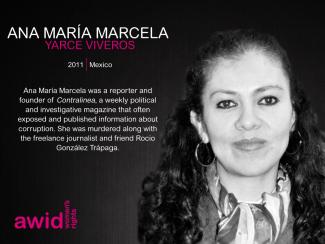
Ana Maria Marcela Yarce Viveros
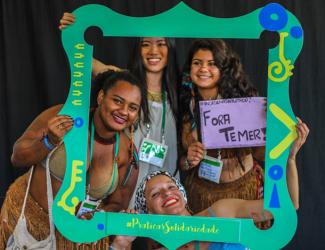
Les jeunes activistes féministes jouent un rôle crucial au sein des organisations et des mouvements pour les droits des femmes à travers le monde. Ce sont elles qui soulèvent les nouveaux problèmes auxquels les féministes sont confrontées aujourd'hui. Leur force, leur créativité et leur adaptabilité sont vitales pour assurer la viabilité des organisations féministes.
Pourtant, elles sont confrontées à toute une série d’obstacles particuliers, notamment l'accès limité au financement et au soutien, le manque de possibilités de renforcement des capacités et une augmentation considérable des agressions sur les jeunes défenseuses des droits humains. Ces obstacles entraînent un manque de visibilité qui rend leur intégration et leur participation effective au sein des mouvements pour les droits des femmes encore plus difficiles.
Le Programme d’activisme des jeunes féministes de l'AWID a été mis en place pour veiller à ce que les voix des jeunes femmes soient entendues et représentées dans le discours féministe. Nous voulons faire en sorte que les jeunes féministes aient un meilleur accès à du financement, à des opportunités de renforcer leurs capacités et aux processus internationaux.
En plus de soutenir directement les jeunes féministes, nous travaillons également avec des activistes des droits des femmes de tout âge pour élaborer des modèles et des stratégies d’organisation multigénérationnelles plus efficaces.
Nous souhaitons que les jeunes féministes puissent jouer un rôle actif dans les prises de décisions qui concernent leurs droits. Nos actions incluent :
Favoriser la mise en commun et le partage d'informations par la Plateforme de jeunes féministes. Étant donné l'importance des médias en ligne pour le travail des jeunes féministes, notre équipe a lancé la Plateforme de jeunes féministes en mai 2010. Elle a pour objectifs d’échanger des renseignements, de renforcer les capacités des membres par le truchement de webinaires et de discussions en ligne, et d'encourager la consolidation d’une communauté de jeunes féministes.
Soutenir la recherche et le renforcement des connaissances sur l'activisme des jeunes féministes, pour accroître la visibilité et l'influence de leur activisme au sein et entre les mouvements pour les droits des femmes et auprès d'autres acteurs-trices clés, tels les donateurs.
Faire la promotion de la collaboration multigénérationnelle, en explorant de meilleures façons de travailler ensemble.
Inciter les jeunes féministes à s’engager dans les processus internationaux relatifs au programme de développement, notamment ceux des Nations Unies.
S’assurer leur collaboration dans tous les domaines prioritaires de l'AWID, y compris le Forum, pour faire en sorte que leurs contributions, leurs perspectives, leurs besoins et leur activisme se traduisent dans les débats, les politiques et les programmes qui les concernent.
By: Marianne Mesfin Asfaw
I have many fond memories in my journey with feminism, but one in particular that stands out. It was during my time at graduate school, at a lecture I attended as part of a Feminist Theory course. This lecture was on African feminism and in it the professor talked about the history of Pan Africanism and the ways in which it was patriarchal, male-centric, and how Pan Africanist scholars perpetuated the erasure of African women. She talked about how African women’s contributions to the anti-colonial and decolonial struggles on the continent are rarely, if ever, discussed and given their due credit. We read about the African feminist scholars challenging this erasure and actively unearthing these stories of African women led movements and resistance efforts. It seems so simple but what stood out to me the most was that somebody put the words African and feminist together. Better yet, that there were many more of us out there wrestling with the complicated history, politics and societal norms in the various corners of the continent and we were all using a feminist lens to do this. I came out of that lecture feeling moved and completely mind-blown. After the lecture three of my friends (all African feminists) and I spent some time debriefing outside the classroom. We were all so struck by the brilliance of the lecture and the content but, more than anything, we all felt so seen. That feeling stood out to me.
Falling in love feminism was thrilling. It felt like finally getting to talk to your longtime crush and finding out that they like you back. I call it my crush because in high school I referred to myself as a feminist but I didn’t feel like I knew enough about it. Was there a right way to be feminist? What if I wasn’t doing it right? Attending my first Women’s Studies lecture answered some of these questions for me. It was thrilling to learn about stories of feminist resistance and dismantling the patriarchy. I felt so affirmed and validated, but I also felt like something was missing.
Deepening my relationship with feminism through academia, at an institution where the students and teaching staff were mostly white meant that, for those first few years, I noticed that we rarely had discussions about how race and anti-blackness show up in mainstream feminist movements. In most courses we had maybe 1 week, or worse 1 lecture, dedicated to race and we would usually read something by bell hooks, Kimberly Crenshaw’s work on intersectionality, and maybe Patricia Hill Collins. The following week we were back to sidelining the topic. I dealt with this by centring race and black feminism in almost all my assignments, by writing about black hair and respectability politics, the hypersexualization of black women’s bodies, and so much more. Over time I realized that I was trying to fill a gap but didn’t quite know what it was.
Encountering and learning about African feminism was a full circle moment. I realized that there was so much more I had to learn.
Mainly that my Africanness and my feminist politics did not have to be separate. In fact, there was so much that they could learn from each other and there were African feminists out there already doing this work. It was the missing piece that felt so elusive during my exploration of feminism throughout my academic journey.
Feminism to me is the antithesis to social and political apathy. It also means once you adopt a feminist lens, nothing can ever be the same. My friends and I used to talk about how it was like putting on glasses that you can never take off because you now see the world for what it is, mess and all. A mess you can’t simply ignore or walk away from. Therefore my vow to the feminist movement is to never stop learning, to keep stretching the bounds of my empathy and to never live passively. To dedicate more time and space in my life to feminist movements and to continue to amplify, celebrate, document and cite the work of African feminists. I also commit to centring care and prioritizing pleasure in this feminist journey because we can’t sustain our movements without this.
No, no es necesario ser afiliadx de AWID para participar, pero lxs afiliadxs de AWID reciben una tarifa de inscripción con descuento, así como otros beneficios.
Obtén más información sobre cómo sumarte a la membresía de AWID.
A living collection of resources to support feminist movements, policy-makers, and allies to resist fascisms, fundamentalisms, and anti-rights trends.


Filter your search by funders’ priority support areas that speak to your organizing efforts
Jaitun, souvent appelée « Amma », œuvrait à la protection des droits reproductifs des femmes et des filles en Inde. Son travail s’est particulièrement centré sur la défense des personnes pauvres et marginalisées, dont les filles et femmes dalits et musulmanes.
Jaitun était la force vitale derrière l’affaire Jaitun contre Janpura Maternity Home & Ors. Sa persévérance à obtenir justice a permis d’aboutir à un jugement sans précédent rendu par la Cour Suprême de Delhi. Le gouvernement indien a ainsi été tenu responsable de n’avoir pas rempli plusieurs de ses obligations juridiques, telles que les soins de santé reproductive et le droit à l’alimentation.
Sa fille Fatema, qui vivait sous le seuil de pauvreté, s’était vu refuser l’accès à des services de santé reproductive et avait dû accoucher en public, sous un arbre. Jaitun et Fatema étaient à cette époque sans domicile, car le gouvernement avait démoli leur maison dans le cadre d’un projet de réaménagement et de gentrification à New Delhi.
« Depuis, le jugement a fait jurisprudence pour de nombreux·euses avocat·e·s et activistes du monde entier, et notamment l’ancien Rapporteur spécial des Nations Unies sur le droit à la santé, non seulement comme source d’inspiration, mais comme solide tremplin pour obtenir la justice. » - Jameen Kaur
Jaitun a inspiré de très nombreuses autres femmes vivant dans la pauvreté à réclamer leurs droits. Elle s’est éteinte en 2017.
« Avec le décès de Jaitun, nous venons de perdre une inimitable guerrière pour la justice, mais son esprit de résistance perdure. » - Jameen Kaur
« Je n’ai, au cours de mes 18 années de plaidoyer pour les droits humains, jamais rencontré de femme qui m’ait tant inspirée et émue qu’Amma. Son courage féroce, son humour inimitable - nous la comparions à l’actrice de Bollywood Hema Malini -, ses colères lorsque l’on passait trop de temps sans venir la voir : elle nous disait, une étincelle dans le regard, « Tu as oublié Amma, Amma ne te parle plus », puis faisait volte-face de manière mélodramatique, pour se retourner en riant et tendre les bras pour une embrassade. Sa gentillesse, et en fin de compte son amour, sa joie d’aimer et sa volonté que chacun·e ait le droit de vivre dignement en faisaient un être à part . Elle me manque terriblement. » - Jameen Kaur
«Mientras estaba en la primera línea de la protesta, fui sometida a violencia sexual, a lesiones físicas y a otras formas de violencia. Pero no me detendré hasta que logremos pleno gobierno civil en Sudán. Debemos impedir la militarización del Estado. Nuestros cuerpos no deben seguir siendo tratados como campos de batalla»
dijo Amal,1 una manifestante de 23 años.2
Durante los últimos cuatro años, las mujeres lideraron la revolución en Sudán. Su liderazgo no fue solo callejero, sino que constituyó el poder que impulsó la resistencia constante en todos los niveles. Las mujeres y las jóvenes feministas se convirtieron en la conciencia alerta del movimiento de cambio y democratización sudanés. Desde la primera protesta del 13 de diciembre de 2018 contra el régimen anterior, en la ciudad de Aldmazein, en el área de conflicto del Nilo Azul, las jóvenes estudiantes fueron las voces que demandaron el fin de la dictadura de los militares y los Hermanos Musulmanes, que ya lleva treinta años en el poder.
El movimiento feminista, liderado por mujeres de entre 16 y 35 años, ha entablado una revolución dentro de la revolución en Sudán durante los últimos cuatro años de lucha ininterrumpida. Las potentes voces de las jóvenes que ocupan espacios en las calles, las redes sociales, la sociedad civil y las organizaciones políticas se elevaron lo suficiente como para reconfigurar la opinión pública y desafiar las normas sociales. Por primera vez en la historia de Sudán, las discusiones sobre violencia sexual y de género y sobre los tabúes de la violencia doméstica y los procesos de toma de decisiones dominados por los hombres se convirtieron en debates generalizados. Los equipos de fútbol de mujeres designaron voceras ante los comités de resistencia, y los sindicatos profesionales liderados por mujeres son parte de la expresión de la nueva ola del movimiento feminista de Sudán. El logro más importante es que las jóvenes se identifican como feministas en forma orgullosa y pública, en un país regido por el fundamentalismo islámico durante tres décadas. Los jóvenes varones que apoyan el activismo feminista -y se identifican como feministas- son otra señal de progreso notable.
Bajo el actual régimen del golpe militar, las jóvenes que lideran estas iniciativas y los grupos de mujeres que trabajan en el territorio no pueden mencionarse aquí debido a varios problemas de seguridad. Pero su resiliencia, su fuerza y su valentía serán incluidas en los libros de historia. Las audaces jóvenes que encabezan la resistencia en las calles y detrás de las pantallas, y que trabajan en diferentes profesiones y áreas de activismo están dando forma al futuro de Sudán. Las jóvenes feministas de Sudán están creando nuevos espacios para que las narrativas y los discursos feministas reestructuren la distribución del poder a nivel político, económico y social.
A pesar de la inmensa violencia, del resurgimiento del islamismo fundamentalista, de la militarización y de la reducción de los espacios cívicos, las activistas feministas de Sudán se mantienen arraigadas en su sororidad. Siguen siendo una gran inspiración para los movimientos feministas de todo el mundo.
Nazik Awad
1 «Amal» es un seudónimo utilizado para proteger a la joven activista citada.
2 Desde 2018, Sudán vive en una revolución constante. Una nueva ola opositora arrancó a partir del golpe militar del 25 de octubre de 2021.
Oui ! Nous explorons actuellement des technologies innovantes qui permettront une connexion et une participation considérables.
¿Quieren juntar a distintas personas para fortalecer la resistencia? Esta metodología de talleres ofrece ejercicios grupales para incrementar el conocimiento y el poder colectivos, con opciones para adaptarlos a las distintas necesidades.
"¿Dónde está el dinero para las organizaciones feministas?
¿Cuánto sabes sobre la movilización de recursos feminista? Responde el cuestionario de AWID “¿Dónde está el dinero para las organizaciones feministas?” y pon a prueba tus conocimientos
Responde el cuestionario en línea Descárgalo e imprímelo.
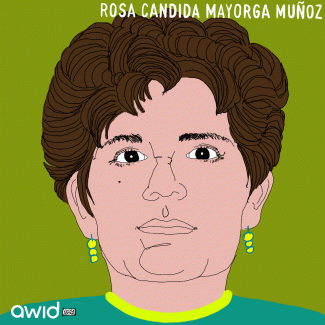
Rosa Candida Mayorga Muñoz was a Guatemalan social worker, union leader and labor rights defender. She was affectionately called Rosita and she inspired change.
In the 1980’s, Rosa became the first female member of the Executive Committee of the Union of Workers of the Institute of National Electrification (STINDE), a union she first joined to advocate for women’s labor rights. For her, this meant fighting for equal opportunities in a company where many women faced a discriminatory and violent system created by company authorities. Rosa had also suffered sexual harassment in her workplace, both by co-workers and managers. She was not to be kept quiet though.
Rosa continued fighting and was part of the effort to mould the struggle into a more specific form, that of the INDE-STINDE Collective Pact of Working conditions. This pact was a pioneer, the first in Guatemala to typify the concept of (sexual) harassment. It serves as a reference for the Guatemalan legislation on labor matters and is an encouragement for other unions.
“She had no fighting tools other than her own ideals... Many times she was intimidated, harassed to put the fight aside, but her courage generated the image of hope for grassroots unionists. Rosita created an image of respect, not only within her union, but before the authorities of the institution, before the women's movement; she was recognized as a pioneer of the trade union women's movement, in a space that had been more dominated by men.” - Maritza Velasquez, ATRAHDOM
Rosa passed away on 4 April 2018 at the age of 77.

When thousands of feminists come together, we create a sweeping force of solidarity that has the power to change the world. The AWID Forum will be a moment for us to rest and heal together, connect across borders, and discover brave new strategic directions.
The date and location will be announced next year, as soon as we can. We’re excited and we know you’re excited too. Stay tuned!
Make sure to follow us on social media and subscribe to our mailing list to stay informed!
We will share information about the program, the spaces, and the way for everyone to participate in shaping them, as soon as we can, and ways for you to participate in shaping them - on the road to the Forum, and during the Forum. Please stay tuned!
Mientras el capitalismo heteropatriarcal continúa forzándonos al consumismo y el acatamiento, observamos que nuestras luchas están siendo compartimentadas y separadas por fronteras tanto físicas como virtuales.
Y con los desafíos adicionales presentados por una pandemia global que todavía deben ser superados, esta estrategia de «divide y vencerás» ha sido favorable para la proliferación de la explotación en muchas áreas.
No obstante esto, desde el 1° hasta el 30 de septiembre de 2021, un festival para movimientos feministas! de AWID nos llevó a un viaje sobre lo que significa encarnar nuestras realidades en espacios virtuales. En el Festival se reunieron activistas feministas de todo el mundo, no solo para compartir experiencias de libertades duramente conquistadas, de resistencias y de solidaridades más allá de las fronteras, sino para articular lo que podría ser una forma transnacional de compañerismo.
Esta solidaridad tiene el potencial de desafiar las fronteras, tejiendo una visión del futuro que es transformadora, porque es abolicionista [del complejo industrial carcelario] y anticapitalista. A lo largo de un mes, a través de las infraestructuras digitales que ocupamos con nuestra cuiridad / queeridad, nuestra resistencia y nuestros imaginarios, el Festival nos mostró una forma de desviarnos de los sistemas que nos hacen cómplices de la opresión de otras personas y de nosotrxs mismxs.
Si bien Audre Lorde nos enseñó que las herramientas del amo nunca desarmarán la casa del amo, Sara Ahmed nos demostró que podemos utilizarlas en forma indebida. Dado que teníamos que dar espacio a la asamblea, y a pesar de todas las otras demandas sobre nuestro tiempo, fue posible imaginar una disrupción de la realidad del capitalismo heteropatriarcal.
Ahora bien, si entendemos la asamblea como una forma de placer, entonces, se hace posible establecer el vínculo entre el placer transgresor y la resistencia transnacional/transdigital: entre las clases de placer que desafían las fronteras por un lado, y la cuiridad / queeridad, lo camp, las luchas por la tierra y los movimientos indigenistas, el anticapitalismo y la organización política anticolonial por el otro.
Esta edición intentó captar un sentido de cómo el ejercicio de la asamblea en el Festival adoptó múltiples formas e imaginaciones. Además de contar con las colaboraciones directas de algunxs de sus conferencistas y soñadorxs, trajimos a una plétora de otras voces del Sur global para que conversaran sobre muchos de sus temas y sujetxs. Lo que sigue es una muestra de algunos de los paneles del Festival que más nos inspiraron.
Ce rapport révèle la réalité du financement des organisations féministes et de défense des droits des femmes dans un contexte de bouleversements politiques et financiers. S’appuyant sur plus de dix ans d’analyse depuis la dernière étude Où est l’argent ? de l’AWID, il dresse un bilan des progrès réalisés, des lacunes persistantes et des menaces croissantes dans le domaine du financement féministe.
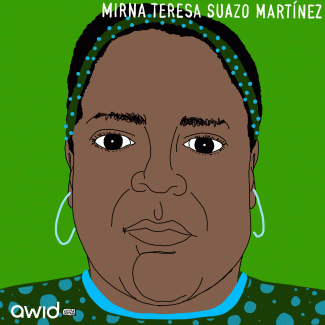
Mirna Teresa Suazo Martínez era parte de la comunidad garífuna (afrodescendiente e indígena) de Masca, en la costa norte del Caribe de Honduras. Era una líder comunitaria, y una ferviente defensora del territorio indígena, tierra que fue vulnerada cuando el Instituto Nacional Agrario de Honduras otorgó licencias territoriales a gente ajena a la comunidad.
Este acto deplorable derivó en repetidos acosos, abusos y violencia contra la comunidad de Masca, dado que los intereses económicos de diferentes grupos se unieron a los de las fuerzas armadas y las autoridades hondureñas. Según la Organización Fraternal Negra Hondureña (OFRANEH), la estrategia de estos grupos es expulsar y exterminar a la población indígena.
«Masca, la comunidad Garífuna localizada junto al valle del Cuyamel, forma parte de la zona de influencia de una de las supuestas ciudades modelo, situación que ha disparado las presiones territoriales a lo largo de la costa Garífuna.» - OFRANEH, 8 de septiembre de 2019
Mirna Teresa, presidenta del Patronato de la comunidad de Masca en Omoa, también rechazaba con firmeza la construcción de dos plantas hidroeléctricas sobre el río que lleva el mismo nombre que su comunidad, Masca.
«La comunidad garífuna atribuye el agravamiento de la situación en su región a su oposición contra la explotación turística, el monocultivo de palma africana y el narcotráfico, al mismo tiempo que busca construir una vida alternativa a través del cultivo del coco y de otros productos de autoconsumo.» - Voces Feministas, 10 de septiembre de 2019
Mirna Teresa fue asesinada el 8 de septiembre de 2019 en su restaurante «Champa los Gemelos».
Fue una de las seis defensoras garífunas asesinadas solo entre septiembre y octubre de 2019. Según OFRANEH, las autoridades no han investigado estos crímenes.
«En el caso de las comunidades Garífunas, buena parte de los homicidios están relacionados con la tenencia y el manejo de la tierra. No obstante, las rencillas entre el crimen organizado han tenido como resultado asesinatos, como los recientemente ocurridos en Santa Rosa de Aguán.» - OFRANEH, 8 de septiembre de 2019
Esta historia es sobre la manera en que un grupo cada vez más diverso de feministas del Pacífico se organizaron a lo largo de los años para asistir a los Foros de AWID, y el modo en que ese proceso lxs transformó en forma personal, como organizaciones y como movimiento a través de lo que aprendieron, descubrieron y experimentaron. Ilustra la importancia de los Foros como espacio que permitió que una región que tiende a ser marginada o ignorada a nivel global pueda construir una presencia sólida en el movimiento feminista, que luego es replicada en otros espacios internacionales de derechos de las mujeres.