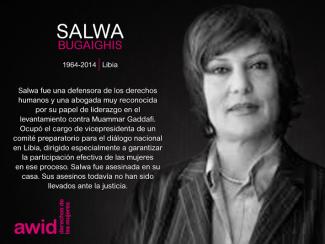
AWID es un organización feminista internacional de membresía, que brinda apoyo a los movimientos que trabajan para lograr la justicia de género y los derechos de las mujeres en todo el mundo.
Esta sección de análisis especial ofrece un análisis feminista crítico y acceso a los recursos clave relacionados con la «protección de la familia» en los espacios internacionales de derechos humanos.
Durante los últimos años, venimos observando una nueva y preocupante tendencia en el ámbito internacional de derechos humanos, donde se están empleando discursos sobre la «protección de la familia» para defender violaciones cometidas contra miembros de la familia, de modo de reforzar y justificar la impunidad y para coartar la igualdad de derechos en el seno de la familia y la vida familiar.
La campaña para «proteger a la familia» es impulsada por proyectos conservadores que tienen como fin imponer interpretaciones «tradicionales» y patriarcales de familia; quitando los derechos de las manos de sus miembros para ponerlos en las de la institución «familia».
Los proyectos de «protección de la familia» tienen su origen en los siguientes fenómenos:
el auge del tradicionalismo,
el auge del conservadurismo cultural, social y religioso, y
posturas hostiles a los derechos humanos de las mujeres, los derechos sexuales, los derechos de las niñas y los niños y los derechos de las personas con identidades de género y orientaciones sexuales no normativas.
Desde 2014 un grupo de estados opera como bloque en espacios de derechos humanos, bajo el nombre «Group of Friends of the Family» [Grupo de amigos de la familia], y a partir de entonces se han aprobado resoluciones sobre la «Protección de la familia» todos los años.
Esta agenda se ha extendido más allá del Consejo de Derechos Humanos (HRC, por sus siglas en inglés). Hemos visto cómo el lenguaje regresivo sobre «la familia» se ha introducido en la Comisión de la Condición Jurídica y Social de las Mujeres (CSW, por sus siglas en inglés), y hemos asistido a intentos por incluir este lenguaje en las negociaciones sobre los Objetivos de Desarrollo Sostenible.
Nuestro enfoque
AWID trabaja con asociadxs y aliadxs para resistir conjuntamente las agendas regresivas de «Protección de la familia» y otras, y para defender la universalidad de los derechos humanos.
En respuesta a la creciente influencia de actores regresivos en los espacios de derechos humanos, AWID se ha unido con aliadxs para formar el Observatorio de la Universalidad de los Derechos (OURs, por sus siglas en inglés). OURs es un proyecto colaborativo que monitorea, analiza y comparte información sobre iniciativas anti-derechos tales como la «Protección de la familia».
Derechos en Riesgo, el primer informe de OURs, traza un mapa de los actores que conforman el cabildeo global anti-derechos e identifica sus discursos y estrategias principales, señalando los efectos que estos discursos y estrategias están teniendo sobre nuestros derechos humanos.
El informe expone a la «Protección de la familia» como una agenda que ha promovido la colaboración entre una amplia gama de actores regresivos en las Naciones Unidas. La describe como un marco estratégico que aloja «múltiples posiciones patriarcales y anti-derechos, cuyo marco, a su vez, apunta a justificar e institucionalizar estas posiciones».
Hevrin Khalaf était une grande dirigeante politique kurde de Syrie dans la région autonome du Rojava, où les femmes kurdes risquent leur vie pour résister aux offensives turques et pour bâtir un système féministe.
Elle a travaillé en tant que secrétaire-générale du Parti du Futur de la Syrie, un groupe qui souhaitait construire des ponts, réconcilier les différents groupes ethniques et mettre sur pied une « Syrie démocratique, pluraliste et décentralisée ».
Véritable symbole de cet effort de réconciliation, elle a également oeuvré à la promotion de l’égalité entre les femmes et les hommes et fut représentante auprès des journalistes en visite, des humanitaires et des diplomates.
Hevrin a de plus été diplômée en tant qu’ingénieure civile, à la ville de Derik, ainsi que l’une des fondatrices de la Fondation pour la Science et la Libre pensée en 2012.
Elle a été torturée et assassinée le 12 octobre 2019 par la milice Ahrar al-Sharqiya, soutenue par la Turquie, lors d’une opération militaire contre les Forces démocratiques syriennes dans le Rojava.
« L’assassinat de Khalaf est un tournant majeur dans l’histoire moderne de la Syrie, celui-ci ayant une fois de plus confirmé la validité du vieux proverbe kurde qui dit : « Il n’y a de véritable ami·e que la montagne ». Je serai toujours ami avec Khalaf et sa vision d’un monde meilleur. » – Ahed Al Hendi
Snippet - Podcast Intro (ES)
Estamos encantadxs de anunciar el lanzamiento del nuevo podcast de AWID: ESE FUEGO FEMINISTA. Esta serie narrativa revela más de 40 años de movimientos feministas e imagina nuevos caminos a seguir.
En nuestra temporada piloto, escucharán cinco historias cautivadoras que forman parte de la actual constelación de activismo feminista. Presentado por nuestra Gopika Bashi, subdirectora de programas de AWID, cada episodio explora realidades feministas únicas pero interconectadas que están logrando una mayor justicia de género y asegurando derechos humanos.
ESE FUEGO FEMINISTA es producido en asociación con lxs ganadorxs de Webby, Hueman Group Media. Puedes suscribirte al podcast y escuchar nuestro primer episodio aquí.
Encuéntranos en Apple Podcasts, Spotify o donde sea que obtengas tus podcasts. ¡Comparte con tu red! Ayúdanos a difundir historias que enciendan nuestro fuego feminista y nos muevan a la acción.
Êtes-vous à la recherche d'un emploi? L'un des avantages de rejoindre la Communauté de l'AWID est d'avoir accès à notre tableau d'offres d'emploi organisé par la communauté. Vous aurez l'occasion d'explorer de nouvelles opportunités et vous aurez également la possibilité de partager des postes vacants et des appels à propositions avec tous les membres.
A Collective Love Print
The Circle’s Conspiracy of Writers | Wazina Zondon
Also known as the Teta Research Network, The Conspiracy of Writers was founded in 2021 in the context of Kohl’s weekly writing circles. The Network is a transnational group of queer and feminist writers who engage in collective writing, thinking, and world-making.
Wazina Zondon is an Afghan raised in New York City. Her storycollecting and storytelling work centers collective memories and rites of passage in the diaspora. Currently, she is working on Faith: in Love/faith in love which (re)traces her parent’s love story and family’s inherited love print.
Love is a contraband in Hell,
cause love is acid
that eats away bars.
But you, me, and tomorrow
hold hands and make vows
that struggle will multiply.
The hacksaw has two blades.
The shotgun has two barrels.
We are pregnant with freedom.
We are a conspiracy.
It is our duty to fight for freedom.
It is our duty to win.
We must love each other and support each other.
We have nothing to lose but our chains.
- “Love” by Assata Shakur
“If we can inherit trauma, can we inherit an imprint related to love?”
That is the question Wazina Zondon asks in her collective memoir Loveprint. Loveprint is a wandering, an overlap, a deviation that (re)creates, at the intersection of interviews and personal essays, our family’s stories and insights on love, partnership and romance. Under Wazina’s guidance, the circle’s conspiracy of writers came together and attempted to reproduce this literal blueprint in the form of collective writing, where our different stories, our genders and sexual identities complement and contradict each other. With our voices overlapping, we complete each other’s sentences to create a conversation, a memorial, pieces of ourselves that speak to a “we.”
What are the origins of your love print?
I am a so-called “happy accident.” There is much narration about this – an accidental life, one that is entirely wanted at the same time. I feel this shaped my way of loving, I don’t just fall in love; I risk the slips that lead to the fall. Perhaps it made me an amor fati kind of person.
I was told that I was an unwanted child. So I grew up to become an unwanted adult. The origins of my love print are based on being eternally unwelcomed. I am not a fruit of love or any happy feelings but rather one pain and burden. I don’t have a love print – at least not in this sense.
I know for a fact that both my parents were in love at some point, but mental health is such a demon, and until one confronts their demons, there is no winning.
I will never associate “love” with my parents or normative family. Love growing up was full of violence and responsibilities I didn’t sign up for or was even ready for. For the longest time, it felt like life and love were about carrying a big rock uphill. While my parents “loved each other,” it was a toxic ethos of violence, jealousy, and insecurity to grow up in. I grew up wanting to crave stability, and this is what is me now. I am a risk taker, but never in my “love space.”
I don’t know why my mother chose to host a child (me) within her. She does not love in this form.
My mother tells me that if I have to think about “finding” love, I should never look at her marriage as a template. My love print comes instead from my raising dogs for the last two decades (18 years to be precise). The other way around is true as well – they raised me. I understand more and more about love and its many layers in their company.
I haven’t known love from a “print.” In our household we don’t talk about love. I had to teach myself how to love. It was hard work. Still, I fail and still, I keep on trying and I fail everyday. Perhaps failure is my love print.
My love print is the care, warmth, and understanding I give to others
surrounding me, whether a stranger, a friend, a relative, a lover. My love print is political – uncalculated and unthought of.
I was born under heavy shelling.
My love print is the negative
print of that.
Lessons learned about love
I know more about what love is not than I know about what love is.
Love is neither anxiety nor panic.
Love is not asking permission to live or breathe. It is always about love and there is no love without freedom.
Everything you do is about using your heart except love. Love is about using your mind.
Sometimes I fear that my love language is lost in translation.
--- There are many ways
to map the origins
of how to
how not to
love
not love
love just enough
love far too much
some love
some loss
to love
to love lost ---
I cannot stand the idea of the couple. I cannot stand the idea of living alone while aging either. I am tired of doing the chores alone, moving houses alone, paying rent and bills alone... I imagine getting a stroke alone, and it scares me. I have no plan of “partnering up.” I want a world where I can get married to a friend, buy a house with a friend, not have sex.
Loving many does not corrupt a love shared between two, and whether love is romantic or not is really not that important.
When I reflect on the shoddy state of my relationships, I realize that I am in the relationship I was trained to be in. With all my “radicalness” I have not yet unlearned shitty gendered norms.
My need for stability feels “not radical” enough. I want to get out of this labeling. I want something I never had. I want to make it beautiful. I want to feel beautiful and safe – and only stability makes me feel that. Safe, sound, knowing home is neither about violence nor strife.
--- Love print – love to smell the books to see
where they were printed
I try to think of the origin of my
understanding and practice of love
Do we need origin, it is not the same as purity?
No purity or origin of love.
Why is it understanding and practice,
and not “emotion” that comes to mind? ---
When I call my parents, I don’t hang up the phone after we’ve said
goodbye, so I can hear the sounds of home.
What do we need to be/feel loved in death?
During my Sunni burial, I want all the women and men to come together for my burial. What’s with not being able to go say goodbye to dead people from a different sex? It will be Sunni because my mother would want it to be. It will be eco-friendly; no need for the headstone. I love all burial rituals. Quran is good, but I also want music. I really like Asmahan, Um Kulthum, and The Stone Roses.
I have a Monday-Friday playlist and two different ones for the weekend: one for Saturday and one for Sunday playlist. I would like those who loved me to play the music that I used to listen to, respecting the days – with some margin of tolerance as long as they stick to the playlists.
I want to be surrounded by the one(s) who have loved me, even for a moment. And in music and embowered in fresh cut flowers. I don’t want to be discovered dead; I want to pass away mid-laugh with loved ones.
I want to be remembered as someone who loved.
I don’t need to feel loved in death. I need the people around me to feel I loved them, even after I die. Being loved in death is about those who are alive. So I think more about how we come together as a living and loving community in the death of those we love and live with. How we take their memories with us. How we become archives of their lives.
--- Sometimes, you can only love people in their death. ---
I have to think back to the body being connected to a space. My family is very tiny and although we come from different places, it is as if every generation moved somewhere new. Perhaps this is the reason why death is not connected to a special place, a cemetery. It is common in our family to bury the dead without names or gravestones, or to distribute the ashes in the wind. I feel at peace with this kind of spaceless remembrance. The idea that my ashes fertilize new life gives me the sense of being loved, being remembered through recreation. My grandmother died earlier this year due to complications after the vaccination. Two hours after she died, my family sat laughing tears about her jokes, her hilarious way to tell stories. We laughed and loved, and it was as though she sat with us again. This is what would make me feel at peace – fertilizing soil, fertilizing conversations, and collective remembrance.
--- There were
Two streets that I used
To walk
To run
To play
To stay
There were
Five hours when the sun
Was hot
The sky was blue
The earth was green
There was
A flower I could
Smell
Touch
Squeeze
Crush
There were
The friends I could
Caress
The food
I could
inhale
The language
That would roll off my
lips
There might still be
Those many places
And things
And people
After me ---
Perhaps a promise that I will be “spatially commemorated” as a plant and taken care of in turns until it becomes a tree is enough. No name, no plaques – just the plant/tree, and knowing that it will be cared for. As for my body, I want to be cremated without any rituals and my bone ashes set free in the Arabian sea.
I need my body to be treated as subversively as it’s lived.
I do not want to be buried next to my family. In this tiny drawer next to all of the people who never knew me. Trapped in death as I was in life. I want to be cremated, and my ashes finally set free.
I want to be allowed to pass, not hang in the in-between, so it is a presence, an active process, a trespassing.
I will ask of you:
To release me and let me pass
To not let nostalgia muddy this moment because I will ask only for the normalcy of your expressions
I have snuck the gentle glimpses and hoarded away the already small and large ways you loved me in order to be sustained. I kept myself alive on these
To set a finite amount of time to grieve
To be be reminded there is no separation in the beauty of loving; it is infinite and it regenerates without the body
I want to be remembered for the love I put into the world.
I want my body to be given away, and my organs
to further fuel love in (an)other live(s).
--- The smell of jasmine ---
ExploreTransnational Embodiments
This journal edition in partnership with Kohl: a Journal for Body and Gender Research, will explore feminist solutions, proposals and realities for transforming our current world, our bodies and our sexualities.
نصدر النسخة هذه من المجلة بالشراكة مع «كحل: مجلة لأبحاث الجسد والجندر»، وسنستكشف عبرها الحلول والاقتراحات وأنواع الواقع النسوية لتغيير عالمنا الحالي وكذلك أجسادنا وجنسانياتنا.
Laurie Carlos was an actor, director, dancer, playwright, and poet in the United States. An extraordinary artist and visionary with powerful ways of bringing the art out in others.
“Laurie walked in the room (any room/every room) with swirling clairvoyance, artistic genius, embodied rigor, fierce realness—and a determination to be free...and to free others. A Magic Maker. A Seer. A Shape Shifter. Laurie told me once that she went inside people’s bodies to find what they needed.” - Sharon Bridgforth
She combined performance styles such as rhythmic gestures and text. Laurie mentored new actors, performers, writers and helped amplify their work through Naked Stages, a fellowship for emerging artists. She was an artistic fellow at Penumbra Theater and supported with identifying scripts to produce, with a goal of “bringing more feminine voices into the theater”. Laurie was also a member of Urban Bush Women, a renowned contemporary dance company telling stories of women of the African diaspora.
In 1976, as Lady in Blue, she made her Broadway debut in Ntozake Shange’s original and award-winning production of the poetic drama For colored girls who have considered suicide / when the rainbow is enuf. Laurie’s own works include White Chocolate, The Cooking Show, and Organdy Falsetto.
“I tell the stories in the movement—the inside dances that occur spontaneously, as in life—the music and the text. If I write a line, it doesn’t necessarily have to be a line that is spoken; it can be a line that’s moved. A line from which music is created. The gesture becomes the sentence. So much of who we are as women, as people, has to do with how we gesture to one another all the time, and particularly through emotional moments. Gesture becomes a sentence or a state of fact. If I put on a script ‘four gestures,’ that doesn’t mean I’m not saying anything; that means I have opened it up for something to be said physically.” Laurie Carlos
Laurie was born and grew up in New York City, worked and lived in Twin Cities. She passed away on 29 December 2016, at the age of 67, after a battle with colon cancer.
Tributes:
“I believe that that was exactly Laurie’s intention. To save us. From mediocrity. From ego. From laziness. From half-realized art making. From being paralyzed by fear.
Laurie wanted to help us Shine fully.
In our artistry.
In our Lives.” - Sharon Bridgforth for Pillsbury House Theatre
“There’s no one that knew Laurie that wouldn’t call her a singular individual. She was her own person. She was her own person, her own artist; she put the world as she knew it on stage with real style and understanding, and she lived her art.” - Lou Bellamy, Founder of Penumbra Theater Company, for Star Tribune
What does an AWID Forum mean to those who have been there? What is this magic that happens when feminists from around the world gather to celebrate, strategize, learn and share joy?
AWID spoke to over forty Forum participants to hear their stories of the transformations that happened to them as activists, to their organizations and to the movements they are part of. We also learned about what we should keep and build on that makes an AWID Forum different and how we can improve.
This report holds lessons and advice invaluable to anyone planning in-person regional and thematic convenings and for us as we plan for the 15th AWID International Forum.
Scroll down to dive in!
FRMag - Looking at me Looking at Safe Spaces
Recherche sur les espaces sécurisés : une prise de perspective
par Judyannet Muchiri
Je suis partie pour le Kenya en octobre de l'année dernière, pour entamer ce que j'en suis venue à considérer comme mon travail le plus important à ce jour. (...)
Chers mouvements féministes : Une lettre du conseil d'administration
Chers mouvements féministes,
Au nom du Conseil d’administration, je souhaite exprimer notre plus profonde gratitude, notre appréciation et tout notre respect pour Hakima Abbas et Cindy Clark, nos deux extraordinaires codirectrices exécutives ces cinq dernières années, qui quittent leurs fonctions pour laisser place à un nouveau leadership de l’AWID, alors que nous entrons dans une nouvelle phase de la vie de notre organisation avec un nouveau plan stratégique. Elles ont systématiquement mis en application les meilleurs principes de leadership organisationnel féministe et d’éthique du soin lorsqu’elles nous guidaient, lors des temps bien troubles et imprévisibles de la récente histoire du monde, cette syndémie de COVID-19 et la spirale politique mondiale descendante qui s’en est suivie. Elles ont tenu l’AWID, notre personnel et notre CA fermement, doucement et avec amour alors que nous éprouvions toutes et tous ces situations inconnues. Elles se sont également accrochées à la vision et à la mission de l’AWID lorsqu’elles ont dû, avec respect et stratégie, réagir aux différents changements, dont la difficile annulation du forum de l’AWID.
La nature, la portée et le poids des responsabilités de la direction de l’AWID nous incitent à choisir de conserver, à l’avenir, ce modèle de codirection. Notre première expérience de cette codirection a été une véritable réussite, comme tout le monde a pu le constater.
Reconnaissant tout à fait le potentiel immense qui existe au sein de l’équipe actuelle, le CA a décidé de privilégier un processus de recrutement en interne dans un premier temps. Nous pensons terminer cette transition d’ici la fin de l’année 2022. Hakima et Cindy décaleront leur départ, pour permettre une transition en douceur vers le nouveau leadership.
Il est difficile pour le Conseil d’administration et d’autres, qui ont travaillé étroitement avec elles et qui les aiment, de voir Cindy et Hakima quitter l’AWID. Rassurez-vous, le CA de l’AWID mène ce processus de transition de manière à ce que les belles marques indélébiles et inspirantes que laissent Hakima et Cindy soient inscrites dans les quatre décennies de notre histoire. Nous assurerons l’arrivée et le soutien de la nouvelle direction et veillerons à ce que ce processus nous inspire à faire mieux encore à cette étape de la vie de l’AWID.
Les grandes transformations dans les organisations ne sont jamais simples ni faciles. Elles sont parfois contraintes, hors du contrôle de quiconque, tendues, voire destructrices. J’ai vu, mais vous aussi, des exemples de telles transitions. Il arrive également que les besoins et les aspirations du personnel soient alignés avec ceux de l’organisation. Bien que nous n’ayons ni choisi ni souhaité le départ de Cindy et Hakima, leur décision et l’entrée de l’AWID dans un nouveau plan stratégique et une nouvelle décennie d’existence sont alignées. Et mieux que tout encore, nous sommes entre les mains merveilleuses, super compétentes, créatives et féministes du personnel et du CA de l’AWID.
Nous vous remercions, chers mouvements féministes, pour votre confiance dans l’AWID. Nous vous demandons également de soutenir notre transition de leadership au cours des mois à venir. Continuons à construire, approfondir et renforcer nos connexions, comme nous le faisons depuis 40 ans.
Nous reviendrons vers vous dans les prochaines semaines pour vous tenir au courant de nos mises à jour et des évolutions concrètes.
Avec solidarité et amour féministes, Margo Okazawa-Rey,
Présidente, Conseil d’administration de l’AWID
Fadila M. fue una activista tribal soulaliyate de Azrú, en la región Ifrane de Marruecos. Luchó contra una forma específica de discriminación territorial dirigida a las mujeres tribales.
Como parte del Movimiento de Mujeres Soulaliyate por el Derecho a la Tierra, trabajó para reformar el marco legislativo relacionado con la administración de la propiedad comunitaria, a través de la adopción, en 2019, de tres proyectos de ley que garantizan la igualdad de mujeres y varones.
Según las leyes consuetudinarias vigentes, las mujeres no tenían derecho a beneficiarse de la tierra, en especial aquellas que eran solteras, viudas o divorciadas. En Marruecos, los derechos a las tierras colectivas eran transmitidos tradicionalmente entre los varones de la familia mayores de 16 años. Desde 2007, Fadila M. ha sido parte del movimiento de mujeres, la primera movilización nacional de base por los derechos a la tierra. Una de sus conquistas ha sido que, en 2012, las mujeres soulaliyate pudieron registrarse por primera vez en las listas de beneficiarixs, y recibir compensaciones relacionadas con la cesión de tierras. El movimiento también logró la enmienda del dahir (decreto del Rey de Marruecos) de 1919, para garantizar el derecho a la igualdad de las mujeres.
Fadila M. falleció el 27 de septiembre de 2018. Las circunstancias de su muerte no son claras. Participó en una marcha de protesta relacionada con el tema de las tierras colectivas y, si bien las autoridades informaron que su muerte fue accidental y que tuvo un paro cardíaco camino al hospital, la sección local de la Asociación de Derechos Humanos de Marruecos (AMDH) señaló que Fadila fue sofocada por un miembro de la fuerza policial utilizando una bandera marroquí. Su familia solicitó una investigación, pero los resultados de la autopsia no fueron dados a conocer.
Nota: Como no ninguna fotografía/imagen de Fadila M. disponible, la obra de arte (en lugar de un retrato) pretende representar por lo que luchó y trabajó: la tierra y los derechos a vivir y tener acceso a esa tierra y lo que crece en ella.
Snippet Watch Stories (EN)
En savoir plus sur l'impact du forum à travers ces histoires.
Film club - Tenderness is the sharpest resistance
Our first Feminist Film Club program is now available to view: “Tenderness is the Sharpest Resistance” is a film series on Asian/Pacific Feminist Realities curated by Jess X Snow
📅 Wednesday, March 12, 2025
🕒 12.00-1.30pm EST
🏢 UNDP, 304 E 45th St. Doha Room, 11th Floor (FF Building)
Organizers: UNDP, Femena, SRI and AWID
Love letter to Feminist Movements #3
Love Letter to Feminism
By: Marianne Mesfin Asfaw
I have many fond memories in my journey with feminism, but one in particular that stands out. It was during my time at graduate school, at a lecture I attended as part of a Feminist Theory course. This lecture was on African feminism and in it the professor talked about the history of Pan Africanism and the ways in which it was patriarchal, male-centric, and how Pan Africanist scholars perpetuated the erasure of African women. She talked about how African women’s contributions to the anti-colonial and decolonial struggles on the continent are rarely, if ever, discussed and given their due credit. We read about the African feminist scholars challenging this erasure and actively unearthing these stories of African women led movements and resistance efforts. It seems so simple but what stood out to me the most was that somebody put the words African and feminist together. Better yet, that there were many more of us out there wrestling with the complicated history, politics and societal norms in the various corners of the continent and we were all using a feminist lens to do this. I came out of that lecture feeling moved and completely mind-blown. After the lecture three of my friends (all African feminists) and I spent some time debriefing outside the classroom. We were all so struck by the brilliance of the lecture and the content but, more than anything, we all felt so seen. That feeling stood out to me.
Falling in love feminism was thrilling. It felt like finally getting to talk to your longtime crush and finding out that they like you back. I call it my crush because in high school I referred to myself as a feminist but I didn’t feel like I knew enough about it. Was there a right way to be feminist? What if I wasn’t doing it right? Attending my first Women’s Studies lecture answered some of these questions for me. It was thrilling to learn about stories of feminist resistance and dismantling the patriarchy. I felt so affirmed and validated, but I also felt like something was missing.
Deepening my relationship with feminism through academia, at an institution where the students and teaching staff were mostly white meant that, for those first few years, I noticed that we rarely had discussions about how race and anti-blackness show up in mainstream feminist movements. In most courses we had maybe 1 week, or worse 1 lecture, dedicated to race and we would usually read something by bell hooks, Kimberly Crenshaw’s work on intersectionality, and maybe Patricia Hill Collins. The following week we were back to sidelining the topic. I dealt with this by centring race and black feminism in almost all my assignments, by writing about black hair and respectability politics, the hypersexualization of black women’s bodies, and so much more. Over time I realized that I was trying to fill a gap but didn’t quite know what it was.
Encountering and learning about African feminism was a full circle moment. I realized that there was so much more I had to learn.
Mainly that my Africanness and my feminist politics did not have to be separate. In fact, there was so much that they could learn from each other and there were African feminists out there already doing this work. It was the missing piece that felt so elusive during my exploration of feminism throughout my academic journey.
Feminism to me is the antithesis to social and political apathy. It also means once you adopt a feminist lens, nothing can ever be the same. My friends and I used to talk about how it was like putting on glasses that you can never take off because you now see the world for what it is, mess and all. A mess you can’t simply ignore or walk away from. Therefore my vow to the feminist movement is to never stop learning, to keep stretching the bounds of my empathy and to never live passively. To dedicate more time and space in my life to feminist movements and to continue to amplify, celebrate, document and cite the work of African feminists. I also commit to centring care and prioritizing pleasure in this feminist journey because we can’t sustain our movements without this.
Rosa Candida Mayorga Muñoz était une travailleuse sociale, leader syndicale et défenseure des droits humains du Guatemala. On la surnommait affectueusement Rosita.
Dans les années 1980, Rosa devient la première femme à siéger au comité exécutif du syndicat de l’Institut d’électrification nationale (STINDE), syndicat qu’elle avait rejoint en premier lieu pour défendre les droits des femmes au travail. Cela signifiait, à ses yeux, de lutter pour l’égalité des chances dans une entreprise où de nombreuses femmes affrontaient un système discriminatoire et violent mis en place par la direction de l’entreprise. Rosa avait également subi du harcèlement sexuel sur son lieu de travail, tant de la part de collègues que de responsables. Elle n’entendait cependant pas rester silencieuse.
Rosa a continué à se battre et fait partie des efforts pour façonner la lutte afin qu’elle prenne la forme du « Pacte collectif pour les conditions de travail du INDE-STINDE ». Ce pacte était le premier du genre et le premier au Guatemala à caractériser le concept de harcèlement (sexuel). Il fait désormais référence dans la loi guatémaltèque pour les questions de travail, et sert d’encouragement aux autres syndicats.
« Elle n’avait d’autres outils pour se battre que ses propres idéaux... Elle a été intimidée à plusieurs reprises, harcelée pour abandonner la lutte, mais son courage a fait naître l’espoir chez les syndicalistes de la base. Rosita a créé une image de respect non seulement au sein de son syndicat mais également face aux autorités de l’institution et au sein du mouvement des femmes. Elle a été reconnue comme une pionnière du mouvement des femmes du syndicat, dans un espace qui avait davantage été dominé par les hommes. » - Maritza Velasquez, ATRAHDOM
Rosa est décédée le 4 avril 2018, elle avait 77 ans.
Snippet Discover Forum Stories (EN)
Feminist movements have changed and adapted tremendously since we last convened in this way - so to remember why AWID Forums matter, we asked activists from around the world to reflect on and share their stories, impressions and memories. This is what we learned.