Benjaline Hernandez
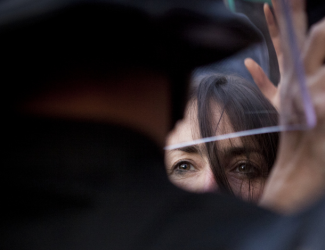
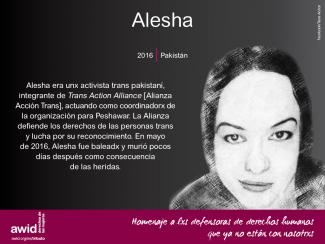
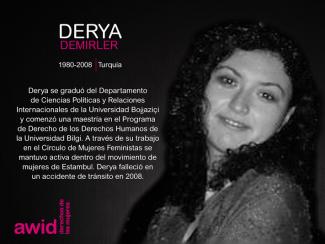
WHRDs are self-identified women and lesbian, bisexual, transgender, queer and intersex (LBTQI) people and others who defend rights and are subject to gender-specific risks and threats due to their human rights work and/or as a direct consequence of their gender identity or sexual orientation.
WHRDs are subject to systematic violence and discrimination due to their identities and unyielding struggles for rights, equality and justice.
The WHRD Program collaborates with international and regional partners as well as the AWID membership to raise awareness about these risks and threats, advocate for feminist and holistic measures of protection and safety, and actively promote a culture of self-care and collective well being in our movements.
WHRDs are exposed to the same types of risks that all other defenders who defend human rights, communities, and the environment face. However, they are also exposed to gender-based violence and gender-specific risks because they challenge existing gender norms within their communities and societies.
We work collaboratively with international and regional networks and our membership
We aim to contribute to a safer world for WHRDs, their families and communities. We believe that action for rights and justice should not put WHRDs at risk; it should be appreciated and celebrated.
Promoting collaboration and coordination among human rights and women’s rights organizations at the international level to strengthen responses concerning safety and wellbeing of WHRDs.
Supporting regional networks of WHRDs and their organizations, such as the Mesoamerican Initiative for WHRDs and the WHRD Middle East and North Africa Coalition, in promoting and strengthening collective action for protection - emphasizing the establishment of solidarity and protection networks, the promotion of self-care, and advocacy and mobilization for the safety of WHRDs;
Increasing the visibility and recognition of WHRDs and their struggles, as well as the risks that they encounter by documenting the attacks that they face, and researching, producing, and disseminating information on their struggles, strategies, and challenges:
Mobilizing urgent responses of international solidarity for WHRDs at risk through our international and regional networks, and our active membership.
Esta edición en alianza con Kohl: una publicación para Body and Gender Research analizará soluciones, propuestas y realidades feministas para transformar nuestro mundo actual, nuestros cuerpos y nuestras sexualidades.
Alexandra is an anglo-colombian feminist with over 20 years of experience in local, national and international HIV and sexual and reproductive health and rights programming. She has extensive experience in resource mobilization and donor relations with private philanthropic foundations and multilateral agencies on behalf of international, national and local NGOs, predominantly in Latin America and the Caribbean. Prior to AWID, Alexandra worked at Fundación Si Mujer, a feminist abortion provider and educator in Colombia, RedTraSex and the International HIV/AIDS Alliance.
Alexandra has a BA in International Relations and Development Studies from Sussex University and a MSc in Public Health from the London School of Hygiene and Tropical Medicine. In rare moments when she is not working or parenting, she loves to swim, eat and has recently begun to play Zelda: Breath of the Wild with her son.
Merci de bien vouloir parcourir les propositions existantes avant de soumettre vos idées. Quelqu'un pourrait déjà avoir pensé à une proposition similaire! Envoyez votre proposition à contribute@awid.org.
Nous examinerons et inclurons les nouvelles propositions qui nous parviendront au fur et à mesure sur cette page Web.
Jemutai is a passionate plant lover who finds inspiration in the natural world and its intricate web of interconnections. This fascination with the universe's interrelatedness is mirrored in their approach to work, community building, care and support.
She believes in the vibrant presence of their ancestors within them and lives to experience, remember, uphold, appreciate and celebrate their struggles, triumphs and values.
As an intersectional queer feminist and human rights activist, Jemutai has dedicated their career to advocating for equity and inclusivity. They are passionate about Organizational Development, with a background in Grants Making and Administration, and now pursuing a path in creating impactful experiences for convenings and providing operational leadership and support, ensuring that spaces are inclusive, safe and curated with precision and care.
Jemutai is also a strong believer in the philosophy of Ubuntu – the idea that "I am because we are." This belief in our shared humanity and mutual interdependence informs their collaborative approach and commitment to fostering a supportive, inclusive environment for all, especially structurally silenced and marginalized people.
Please refer to the Call for Activities for this information, including the section “What you need to know”.
Nuestrxs afiliadxs conforman una dinámica red de personas de todo el mundo, que se desempeñan como investigadorxs, académicxs, estudiantes, educadorxs, activistas, empresarixs, diseñadorxs de políticas públicas, personas que trabajan en desarrollo, donantes, y más. La membresía - de todas las edades – es lo que hace de AWID una asociación feminista mundial única.
Ofrecemos diferentes tipos de membresía según el nivel de ingresos y también según quieras afiliarte a título individual o institucional. En la actualidad contamos con más de 5000 afiliadas/os, individuales e institucionales, de 164 países.
Ofrecemos diferentes tipos de membresía según el nivel de ingresos y también según quieras afiliarte a título individual o institucional. En la actualidad contamos con más de 5000 afiliadxs, individuales e institucionales, de 164 países.
Colaboramos en acciones de incidencia sobre temas específicos; la membresía vota y elige a la Junta Directiva y también puede participar y contribuir en las Áreas Prioritarias, por ejemplo, a través de webinarios, encuestas o acciones urgentes.
La membresía institucional la constituye una amplia gama de organizaciones interesadas en el avance de la justicia de género y los derechos humanos de las mujeres, incluyendo organizaciones por los derechos de las mujeres del ámbito local al mundial, de redes de base, instituciones internacionales de gran escala, departamentos gubernamentales, programas universitarios y más. El 63% de lxs afiliadxs pertenece al sur global y el 38% es menor de 30 años de edad.
Margarita Salas, AWID
Nazik Abylgaziva, Labrys
Amaranta Gómez Regalado, Secretariado Internacional de Pueblos Indígenas frente al VIH/sida, la Sexualidad y los Derechos Humanos
Cindy Weisner, Grassroots Global Justice Alliance
Lucineia Freitas, Movimento Sem Terra
Contarás con todos los materiales estándar para talleres y presentaciones: rotafolios, marcadores, notas autoadhesivas, así como proyectores y equipos audiovisuales. Cualquier material adicional será responsabilidad de lxs organizadorxs de la actividad. El equipo de logística de AWID estará disponible para responder preguntas y aconsejar.
Nous ne pouvons pas examiner les propositions ou les demandes de financement.
Nous vous invitons à consulter notre liste de bailleurs fonds pouvant potentiellement financer votre organisation pour les droits des femmes
Voir notre liste de bailleurs de fonds (en anglais)
Plus de ressources sont disponible depuis la page de Domaine prioriataire Ressources des mouvements féministes

كل ثلاث إلى أربع سنوات، تستضيف جمعية حقوق المرأة في التنمية حدثها الدولي الرئيسي. إنه أكبر حدث في العالم يركز بكل طاقته على الحركات النسوية والعدالة الجندرية بكل تنوعها. إنه تجمع عالمي للناشطين/ات النسويين/ات والحركات المتحالفة والباحثين/ات والممولين/ات وصانعي/ات السياسات. ويتنقل المنتدى بين مناطق وبلدان مختلفة في الجنوب العالمي.