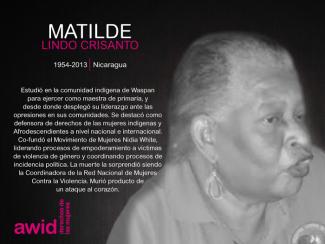
Matilde Lindo Crisanto
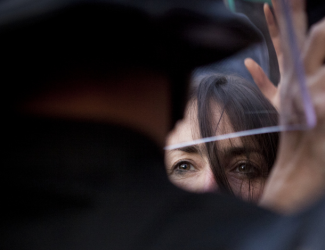
WHRDs are self-identified women and lesbian, bisexual, transgender, queer and intersex (LBTQI) people and others who defend rights and are subject to gender-specific risks and threats due to their human rights work and/or as a direct consequence of their gender identity or sexual orientation.
WHRDs are subject to systematic violence and discrimination due to their identities and unyielding struggles for rights, equality and justice.
The WHRD Program collaborates with international and regional partners as well as the AWID membership to raise awareness about these risks and threats, advocate for feminist and holistic measures of protection and safety, and actively promote a culture of self-care and collective well being in our movements.
WHRDs are exposed to the same types of risks that all other defenders who defend human rights, communities, and the environment face. However, they are also exposed to gender-based violence and gender-specific risks because they challenge existing gender norms within their communities and societies.
We work collaboratively with international and regional networks and our membership
We aim to contribute to a safer world for WHRDs, their families and communities. We believe that action for rights and justice should not put WHRDs at risk; it should be appreciated and celebrated.
Promoting collaboration and coordination among human rights and women’s rights organizations at the international level to strengthen responses concerning safety and wellbeing of WHRDs.
Supporting regional networks of WHRDs and their organizations, such as the Mesoamerican Initiative for WHRDs and the WHRD Middle East and North Africa Coalition, in promoting and strengthening collective action for protection - emphasizing the establishment of solidarity and protection networks, the promotion of self-care, and advocacy and mobilization for the safety of WHRDs;
Increasing the visibility and recognition of WHRDs and their struggles, as well as the risks that they encounter by documenting the attacks that they face, and researching, producing, and disseminating information on their struggles, strategies, and challenges:
Mobilizing urgent responses of international solidarity for WHRDs at risk through our international and regional networks, and our active membership.
No. Solicitamos una sola respuesta a la encuesta por agrupación.
Cooperativa Textil Nadia Echazú

En 2016, nous nous sommes réuni-e-s pour le 13e forum international de l’AWID, à Bahia au Brésil, qui a accueilli 1 800 participant-e-s venu-e-s de 120 pays et territoires à travers le monde. Le Forum a servi d’espace essentiel pour la mise en place de stratégies et la constitution d’alliances au sein des mouvements féministes et d’autres mouvement de justice.
Nous savons que les droits des femmes et les mouvements féministes sont des éléments moteurs pour l’instauration d’un changement transformateur durable. Au sein de nos mouvements, l’organisation, la résistance et la réponse au difficile contexte se précisent, et dans ce monde de plus en plus connecté, le potentiel des actions collectives de mouvements divers s’est fortement accru. C’est précisément là le travail essentiel que l’AWID cherche à amplifier et à soutenir.
Nous cherchons à informer et outiller les organisations et mouvements de droits des femmes afin de les aider à être en mesure de répondre aux opportunités qui se présentent et de contrecarrer les menaces. Nous appuyons une visibilité accrue et une meilleure compréhension des initiatives pour les droits des femmes et les menaces auxquelles elles font face, et nous oeuvrons également à influer sur les acteur-trice-s et les institutions qui façonnent le devenir des droits de la personne et du développement.
Le 13e forum international innovant de l’AWID s’est tenu du 8 au 11 septembre 2016 à Bahia, au Brésil, sur le thème : « Horizons féministes ; Construire un
pouvoir collectif pour les droits et la justice ».
Bien qu’une grande partie de l’énergie de l’AWID ait été investie en 2016 dans la tenue du Forum, la réflexion et l’énergie de près de 500 partenaires, intervenant-e-s, animateur-trice-s, artivistes, facilitateur-trice-s, écrivain-e-s, innovateur-trice-s en TI, performeur-euse-s, dont beaucoup sont des meneur-euse-s dans leur domaine, ont été mises à profit. Et en reconnaissance du passé et du combat de Bahia, nous avons accueilli deux jours de Forum des Féminismes Noirs , à l’initiative d’un groupe de travail de féministes Noires du monde entier.
À propos du défi au pouvoir corporatif : Nous avons publié Contester le pouvoir corporatif : Les luttes pour les droits des femmes, la justice économique et la justice de genre avec le Solidarity Center, qui dévoile la portée et l’ampleur du pouvoir corporatif et souligne comment la collusion qu’entretiennent les entreprises nationales et transnationales avec les élites et autres puissant- e-s acteur-trice-s influence les vies des femmes et des peuples opprimés. Ce rapport présente des clés de stratégies de résistances, en soulignant cinq combats qui se sont saisis de la collaboration entre mouvements pour contester le pouvoir corporatif.
Sur les économies féministes : Nous avons publié Propositions féministes pour une économie juste avec le Centre pour le leadership mondial des femmes (CWGL en anglais) et le Réseau de Développement et de Communication des Femmes Africaines FEMNET.
Sur l’opposition aux fondamentalismes : Le Diable est dans les détails : à la croisée du développement, des droits des femmes et des fondamentalismes religieux détaille la façon dont les fondamentalismes religieux entravent le développement et les droits des femmes en particulier, et offre des recommandations aux acteur-trice-s du développement pour le renforcement des droits des femmes.
Sur le thème de l’activisme des jeunes féministes : Avec FRIDA, nous avons lancé Courageuses, créatives, résilientes : les organisations de jeunes féministes dans le monde : un état de lieux à l’occasion du Pôle d’activisme des jeunes féministes lors du Forum de l’AWID. Ce projet de cartographie des jeunes féministes s’appuie sur les données collectées dans 1 360 demandes de subventions reçues par FRIDA entre 2012 et 2014, qui incluaient 694 interlocutrices issues de 118 pays différents !
l’AWID, en partenariat avec d’autres organisations féministes et de droits des femmes, a lancé des actions de plaidoyer et de dialogue afin de rechercher de meilleures solutions pour les programmes de droits des femmes, dont le travail avec le consortium .Count Me In!
Les expériences des femmes en situation de handicap, les femmes Noires et Afro-descendantes, les travailleuses du sexe, les femmes Autochtones, les personnes trans et intersexes, les travailleuses domestiques, et la manière dont leurs vies sont impactées par les nombreuses oppressions et la violence ont été placées au centre et au premier plan du processus du Forum.
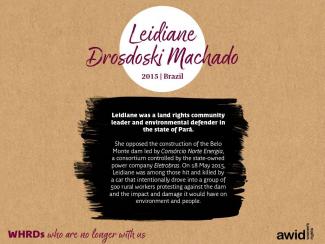
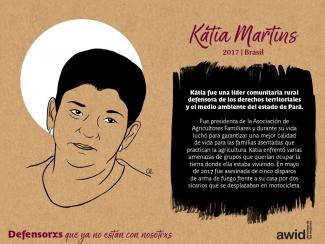
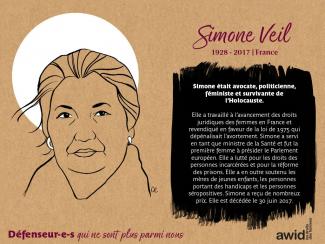
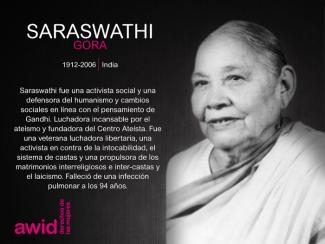
Au cours des 16 jours d’activisme, et grâce aux contributions de nos incroyables membres, nous avons lancé l’Hommage aux défenseur-e-s des droits humains des femmes 2016 pour honorer la mémoire des défenseur-e-s qui nous ont quitté- e-s.
Notre partenariat avec The Guardian et Cash Mama : la section sur les droits des femmes et l’égalité de genre (en anglais) sur le portail du développement dans le monde du Guardian a permis d’attirer davantage d’attention sur les groupes et les problématiques qui ne font généralement pas l’objet d’une couverture médiatique adéquate.

In our 2015 Online Tribute we honor five Women Human Rights Defenders murdered in the Middle East and North Africa region. These defenders worked for women and civil rights as lawyers and activists. Their death highlights the often dangerous and difficult working conditions in their respective countries. Please join AWID in honoring these women, their activism and legacy by sharing the memes below with your colleagues, networks and friends and by using the hashtags #WHRDTribute and 16Days.
Please click on each image below to see a larger version and download as a file


Sauf si vous avez des problèmes d’accessibilité et/ou que vous répondez aux questions de l’enquête dans une autre langue, nous vous encourageons fortement à utiliser KOBO pour une collecte et une analyse standardisées des données WITM.
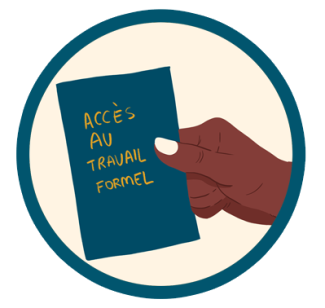
Seul·es 18 % des trans et travestis en Argentine ont accès à un emploi formel.
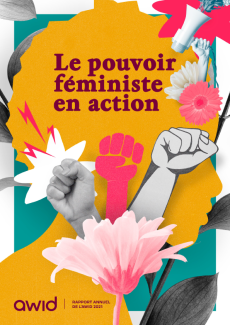
En 2021, l’AWID, comme beaucoup d’autres organisations, a dû faire face aux répercussions de la pandémie mondiale en cours sur notre façon de travailler et notre rôle en ces temps particuliers. L’année nous a appris trois leçons essentielles sur la façon de traverser cette période en tant qu’organisation mondiale de soutien au mouvement féministe.
Téléchargez le rapport annuel 2021
Notre expérience en 2021 nous a permis de constater que l’AWID jouait un rôle important et quelque peu unique dans la création et le maintien d’une communauté féministe mondiale transcendant les identités et les thèmes.
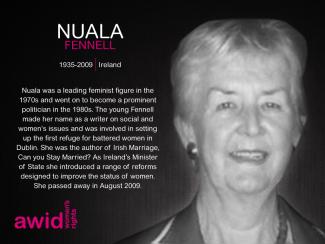
En el transcurso de sus vidas, 6 defensoras de derechos humanos de Europa occidental, Oriental, Central y del Sudeste investigaron, hicieron campañas y participaron en los movimientos de la paz y los derechos de las mujeres a través del activismo político y social o mediante la danza. Agradecemos su legado. Únete a AWID para honrar a estas defensoras de derechos humanos, su trabajo y su legado, compartiendo los memes aquí incluidos con tus colegas, amistades y redes; y tuiteando las etiquetas #WHRDTribute y #16Días.
Por favor, haz click en cada imagen de abajo para ver una versión más grande y para descargar como un archivo.


Yes, we invite you to share more on issues that are important to you by responding to the open question(s) at the end of the survey.
THE TRANS EMPLOYMENT QUOTA
sanctioned by law is not being respected by companies and employers
Contenu lié
Huffington Post: Mort de Simone Veil: l'ancienne ministre de la Santé est décédée ce vendredi
Le Monde: Mort de Simone Veil, icône de la lutte pour les droits des femmes
Con más de 10 años de experiencia en finanzas, Lucy ha dedicado su carrera a misiones con y sin fines de lucro. También ha prestado trabajo voluntario para organizaciones sin fines de lucro. Desde el acelerado mundo de las finanzas, Lucy siente pasión por estar al día con las competencias tecnológicas asociadas con este ámbito. Lucy se incorporó a AWID en 2014. En su tiempo libre disfruta de la música, de viajar y de practicar una variedad de deportes.
El marco para la investigación te servirá de guía durante todo el proceso y el documento que elabores para especificar ese marco también puede servirte como nota conceptual para compartir con las personas a las que consultes, con las organizaciones con las que te asocies o como propuesta de financiamiento para presentar a posibles donantes.
En esta sección
Antes de realizar una investigación:
- Fija las metas para la investigación
- Enumera las principales preguntas que quieres que te responda la investigación
- Explicita qué tipo de información necesitarás obtener y analizar para responder a las principales preguntas
- Define cuáles serán los productos finales de la investigación
Es posible que el marco de la investigación vaya cambiando con el tiempo, a medida que vayas puliendo las preguntas y obteniendo nueva información. Pese a eso, contar con un marco de referencia inicial para la investigación te ayudará a trabajar sobre bases más sólidas.
Para dotar a la investigación WITM de una base sólida, es importante que tengas claro lo que esperas lograr.
Por ejemplo: una meta de la investigación global WITM de AWID fue aportar información precisa para demostrar lo que ya sabíamos a partir de anécdotas, es decir, que las organizaciones por los derechos de las mujeres tienen mucho menos financiamiento del que necesitan. Pensamos que contar con esa información nos permitiría estar mejor posicionadas para influir sobre las decisiones que toman las financiadoras.
Algunas metas que podrías proponerte:
Enmarca el proceso de investigación con un conjunto de preguntas principales a las que solo tu investigación pueda dar respuesta y limítalas a un período determinado (p.ej. los últimos cinco años, el año pasado, etc.)
Para tener en cuenta:
Elegir un marco temporal específico para la investigación te puede aportar resultados más precisos que si trabajas con un marco temporal abierto. Decidir si vas a repetir o no esta investigación a intervalos regulares te permitirá fijar parámetros para la recolección de datos que permitan replicarlos y compararlos fácilmente entre un período y otro.
Las principales preguntas que guiaron el proceso de investigación WITM de AWID fueron:
- ¿Cuál es la situación actual en cuanto a sostenibilidad financiera de las organizaciones de mujeres en todo el mundo?
- ¿Qué tendencias externas e internas influyen en las decisiones de lxs donantes en cuanto al apoyo para organizaciones y movimientos de mujeres?
Ahora que ya decidiste cuáles serán las preguntas principales, puedes determinar qué tipo de información te servirá para responderlas. Esto a su vez te ayudará a planificar el resto del cronograma de la investigación WITM.
Por ejemplo, ¿vas a realizar una encuesta que abarque a una amplia porción de la población que hayas fijado como prioritaria? ¿Vas a analizar las solicitudes que están recibiendo las financiadoras y que provienen de una determinada región? ¿Vas a realizar también entrevistas (te recomendamos que lo hagas)? Cuando ya sabes qué tipo/s de información necesitas, puedes buscar fuentes externas que puedan aportártela desde el comienzo mismo del proceso y planificar el cronograma de acuerdo a eso. Algunas fuentes de información sugeridas son las siguientes:
Contar con una variedad de información es una buena manera de generar análisis sólidos y profundos.
Por ejemplo, la información recogida en la Encuesta Global 2011 de AWID (en inglés) constituyó el eje central de nuestro análisis más reciente. Pero también obtuvimos información de entrevistas e interacciones con distintxs actores de este campo, desde donantes hasta activistas y organizaciones por los derechos de las mujeres.
Además de permitirte fijar un cronograma, formular un plan inicial acerca de los productos que vas a elaborar también te ayudará a decidir qué recursos vas a necesitar.
Por ejemplo, ¿solo vas a producir un informe extenso o también infografías, folletos y presentaciones? Según los productos que decidas elaborar, tal vez necesites contratar a una empresa de diseño, planificar eventos, etc.
Estos productos también serán las herramientas que utilizarás para alcanzar las metas, por eso es importante tenerlas presentes. Por ejemplo, tu investigación WITM, ¿está pensada solo como una herramienta de incidencia para influir sobre donantes? En ese caso, necesitarás productos que te permitan una mayor interacción con ellxs.
Algunos ejemplos de posibles productos:
Elaborar un marco para la investigación que incluya las metas, preguntas principales, tipos de información y productos finales te ayudará a producir un cronograma bien planificado, preparar por anticipado los recursos que necesitas y estimar un presupuesto realista.
Todo esto te facilitará los vínculos con lxs sociaxs externas y podrás ser flexible cuando ocurran contratiempos.

• 1 mes
• 1 persona (o más) de investigación
• Ejemplo 1: Marco para la investigación
• Ejemplo 2: Marco para la investigación
Los datos se procesarán para fines estadísticos y así arrojar luz sobre el estado de la dotación de recursos para los movimientos feministas de todo el mundo, y solo se exhibirán de forma desglosada. AWID no divulgará información acerca de ninguna organización en particular ni publicará información que permita identificar a una organización por su ubicación o características sin el consentimiento acreditado de dicha organización.