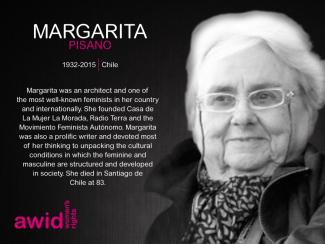
Margarita Pisano
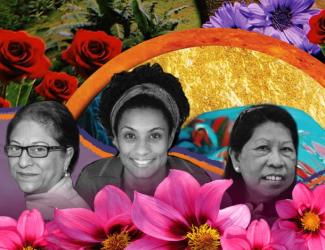
L’hommage se présente sous forme d’une exposition de portraits d’activistes du monde entier qui ne sont plus parmi nous qui ont lutté pour les droits des femmes et la justice sociale.
Cette année, tout en continuant à convoquer la mémoire de celleux qui ne sont plus parmi nous, nous souhaitons célébrer leur héritage et souligner les manières par lesquelles leur travail continue à avoir un impact sur nos réalités vécues aujourd’hui.
49 nouveaux portraits de féministes et de défenseur·e·s viennent compléter la gallerie. Bien que de nombreuses des personnes que nous honorons dans cet hommage sont décédé·e·s du fait de leur âge ou de la maladie, beaucoup trop d’entre iels ont été tué·e·s à cause de leur travail et de qui iels étaient.
Visiter notre exposition virtuelle
Les portraits de l'édition 2020 ont été illustrés par Louisa Bertman, artiste et animatrice qui a reçu plusieurs prix.
L’AWID tient à remercier nos membres, les familles, les organisations et les partenaires qui ont contribué à cette commémoration. Nous nous engageons auprès d’elleux à poursuivre le travail remarquable de ces féministes et défenseur·e·s et nous ne ménagerons aucun effort pour que justice soit faite dans les cas qui demeurent impunis.
« Ils ont essayé de nous enterrer. Ils ne savaient pas que nous étions des graines » - Proverbe mexicain
Le premier hommage aux défenseur-e-s des droits humains a pris la forme d’une exposition de portraits et de biographies de féministes et d’activistes disparu·e·s lors du 12e Forum international de l’AWID en Turquie. Il se présente maintenant comme une gallerie en ligne, mise à jour chaque année.
Depuis, 467 féministes et défenseur-e-s des droits humains ont été mis·es à l'honneur.

GenderJobs.org: This is a platform with a comprehensive list of job opportunities to work on gender equality and LGBTQI+ rights, curated by gender professionals and intersectional feminists who intimately know the sector and are extremely passionate about supporting other gender professionals and anyone who is aspiring to become one! (source: https://genderjobs.org/about)
Le Forum international de l’AWID est un événement phare que l’association organise tous les trois ou quatre ans. C'est la plus importante manifestation au monde entièrement consacrée aux mouvements féministes et de justice de genre dans toute leur diversité. Il s'agit d'un rassemblement mondial qui réunit activistes féministes, mouvements alliés, universitaires, bailleurs de fonds et décideur·e·s politiques. Les forums se tiennent successivement dans différentes régions et différents pays du sud mondial.
Check out the AWID Feminist Film Club program “Holding up the Skies” - a film series on Feminist Realities from Africa and the African Diaspora curated by Gabrielle Tesfaye
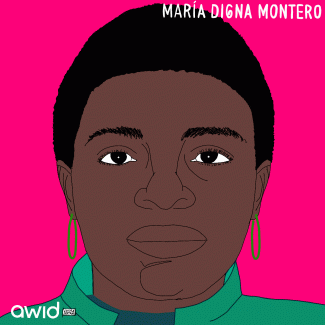
María Digna Montero was a Garifuna (Afro-descendent and indigenous) land defender and a member of the National Black Fraternal Organization of Honduras (OFRANEH), a grassroots organization working to protect the Garifuna communities, their ancestral rights, culture, resources and territory.
María also taught in the local school and was a member of the OFRANEH Intercultural Bilingual Education working group.
On the Day of Indigenous Resistance, October 12, 2019, unknown assailants shot María multiple times in the backyard of her house.
She was one of six Garifuna women defenders murdered between September and October 2019 and according to OFRANEH, there was no investigation by the authorities into these crimes. In an official statement, the organization also highlighted the connection between the violence against Garifuna leaders and the increase in extractive industries which exploit natural resources in their communities calling this violence part of a “strategy of intimidation and systematic expulsion” by the Honduran State.
“The heightened tension and growing risks to the security and human rights of the leaders in the communities and ancestral territories is a product of the dispossession, displacement and criminalization of the communities and of the extractive mega projects promoted by the State together with the national and international corporations.” - OFRANEH communique, October 12, 2019
Hello again, and again, and again. I have known and loved you my entire adult life, since I first met you meaningfully, after graduating from university. I’d seen you one time before then. That was you appearing as Betty Friedan on a local TV talk show in the US Midwest, in the late-1960s. At the time, Mrs. Wells, my other mother, and I commented on what wild, far-fetched ideas this woman was trying to convince us about. Decade after decade since then I have fallen more deeply in love with you, Beloved, and understand and witness your political and theoretical brilliance, ethical and moral authority, creativity, joy, and love, above all. Nearly 60 years later, I know we are partners forever.
The early years of our acquaintanceship was ok. I was quite self-involved--figuring racial, gender, and sexual identity; getting clear on my core politics, values, and ethics; completing my formal education--and you provided numerous settings, intellectual drop-in centers, and comforting holding environments where and through which I was able to craft the young-adult building blocks of the feminist and human being whom I would become.
The predominantly white women’s movement of Cambridge and Boston, including Daughters of Bilitis, was my starting place. That suited me at the time but soon realized I desired something more. Poof! Like magic (serendipity), I connected with a small group of radical, anti-imperialist, Black, socialist lesbian women and we soon became the Combahee River Collective.
That early Combahee experience, combined with critical life lessons and particular African-American/Korean immigrant racial politics of early-1990s in the US, prepared me for the journey that has led me to identify and work as a transnational feminist to address militarism and to dedicate myself to imagining other worlds where all living beings will thrive.
The next two critical women’s-movement moments were decades after Combahee years but deeply linked. First was meeting and being invited into the Korean feminist movement organizing against US military bases and supporting the “kijichon women” the Korean women whose lives, including for some, their mixed-race children, revolved around servicing US military personnel in numerous ways in villages and towns adjacent to the bases. Korean Beloved Feminists, especially Kim Yon-Ja and Ahn Il-Soon, the first sisters I met and traveled with, made me see and understand the critical importance of nation as an analytical and organizing principle. The “capstone” was living, working in occupied Palestine. The late Maha Abu-Dayyeh introduced me to the Palestinian women’s movement, with a profound comment, “you can leave Palestine but Palestine will never leave you.” So true. And, all my work and experiences across many borders brought me to AWID--my second home.
As you know, Beloved, being with you has not been easy or simple. Indeed, you are demanding, consistently riddled with contradictions, and sometimes even hurtful. Nonetheless, you continue to grow and develop, as you are supporting my political, emotional, and spiritual growth and development. I guess we are growing each other--a very profound process to which I will dedicate the rest of my time in my current form.
The through-line of being with you all these decades is this:
Feminists Collectively Engaging the Heads, Hearts, Hands, and Spirits to transform our worlds
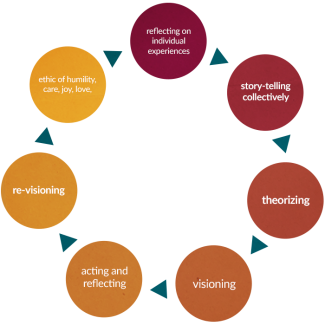
So much love, Feminist Movements!
Your Margo
AKA DJ MOR Love and Joy
Wellfleet Massachusetts USA
Are you a funder? Or do you know funders that support feminist and gender justice movements? Apply to be a part of the Who Can Fund Me? Database now!
Registration will start early 2024. We will announce the exact registration date and registration fee soon. Registration will include participation in the Forum, plus lunch and snacks (breakfast to be provided at the hotels), and one onsite dinner.
Les discours antidroits continuent à évoluer. Outre le recours à des arguments religieux, culturels et traditionnels, les acteur·rice·s antidroits s’approprient le langage de la justice sociale et des droits humains pour travestir leurs véritables programmes et gagner ainsi en légitimité.
Nilcéa Freire fue una activista feminista, política y académica brasileña. Como perseverante defensora de los derechos de las mujeres y de las minorías subrepresentadas de su país, su vida y su trabajo acumularon una larga historia de luchas y victorias.
«Mientras se resiste, tenemos que empujar para avanzar y los avances que vamos a poder lograr en este momento, a mi juicio, serán a través de la organización estupenda que las jóvenes mujeres blancas, pero sobre todo, las mujeres negras, están haciendo en todas las capitales, y las grandes ciudades de Brasil.» - Nilcéa Freire
En 1999, se convirtió en la primera mujer Rectora de la Universidad del Estado de Río de Janeiro (UERJ). Desde ese puesto, impulsó la implementación de la primera política de acción afirmativa para estudiantes que se graduaban de escuelas públicas, que exigía un cupo específico para estudiantes negrxs de sectores de bajos ingresos, sistema adoptado por decenas de otras universidades públicas.
Unos años más tarde, Nilcéa encabezó la Secretaría Especial de Políticas para las Mujeres del gobierno del ex-presidente Luiz Inácio Lula da Silva. Desde esta función, lideró la Primera Conferencia Nacional de Mujeres Brasileñas, en la que participaron más de doce mil mujeres de todo el país. El resultado de este trabajo colectivo fue incorporado en el Plan Nacional de Políticas para las Mujeres.
Su compromiso con las mujeres y las personas afrobrasileñas e indígenas se reflejó también en su trabajo de promoción de sus derechos, a través de iniciativas de la Fundación Ford en Brasil, de la cual fue Directora Regional.
La activista feminista Manoela Miklos describió a Nilcéa como «una mujer sin igual».
Nilcéa falleció en Río de Janeiro el 29 de diciembre de 2019 a los 66 años, víctima de un cáncer.
«No tengo palabras ante la noticia de la muerte de la querida Nilcéa Freire. Es demasiado triste saber que partió tan pronto. Siempre formó parte de las filas de quienes no aceptan las injusticias del mundo. Fue Ministra de las Mujeres, una activista, siempre activa en la causa feminista. ¡La extrañaremos mucho!» - Jandira Feghali, Diputada Federal
La feminista brasileña Nilcéa Freire nos dice por qué es importante solidarizarse con Brasil
El cuerpo es una entidad poderosa. Por ser mujeres, nuestros cuerpos son controlados, oprimidos y vigilados desde que estamos en el útero. Nuestro aspecto, la forma en que nos movemos, nos vestimos, caminamos, hablamos, gesticulamos, reímos. A menudo me he preguntado qué es lo que genera los temores patriarcales respecto del poder de los cuerpos femeninos.
En el lugar de donde provengo, se murmuraba sobre el trabajo sexual y lxs trabajadorxs sexuales con desprecio, asco, fascinación, lástima y condena, todo en simultáneo.
Descubrí el trabajo sexual y a lxs trabajadorxs sexuales cuando tenía 22 años. En conversaciones sencillas, sentadxs en círculo, charlando mientras tomábamos café y té, explorábamos nuestras vidas, experiencias, pensamientos y sentimientos.
Para lxs trabajadorxs sexuales, el trabajo sexual era la opción más conveniente de todas, para pagar las cuentas, para sostener a la familia, para tener un horario laboral más flexible, para tener sexo. Así elegí mi trabajo, como el más conveniente, para pagar las cuentas, para sostener a la familia, para tener un horario laboral más flexible.
Estas personas, mujeres y hombres, me enseñaron que yo tomaba mis propias decisiones sobre mi cuerpo: dónde focalizo su vida y su energía, si lo uso para el placer o para el dolor, si lo comercializo o lo ofrezco en forma gratuita, y cómo quiero sentirme en relación con mi cuerpo. Esta conciencia fue tan excitante como empoderadora.
Crear | Résister | Transform: un festival para movimientos feministas – 2021… ustedes me acompañaron a lo largo de una serie de momentos que cambiaron mi vida (¡!¡!¡!)
Los llamamos «eventos», pero en verdad, para mí, sus espacios de aprendizaje feministas son el lugar adonde llevo un poco de lo que tengo adentro, y de donde me llevo un poco de lo que dicen sus disertantes y algo de las discusiones que penetran más profundamente en nuestra comprensión.
Compartir... Participar... Sumergirse...
en la fortaleza, en la vulnerabilidad, en el placer.
Simplemente siendo la feminista transformadora que soy, sin pretensiones, sin recelos...
Apreciando a la feminista transformadora que siempre he sido, sin siquiera conocer la palabra ni reconocerla de esa manera o en esos términos...
Encontrar un hogar para la feminista ferozmente transformadora que vive dentro de mí...
A pesar de la ira, la rabia y la frustración por no ser tratada como una igual y ser tratada como alguien «menos _ que».
No siempre me consideré feminista ni me reconocí a mí misma dentro del movimiento feminista o del discurso feminista. De verdad, aprecio que las puertas me fueran abiertas, que se me acercaran sillas para sentarme, el reconocimiento como mujer, el reconocimiento de mi feminidad.
Algunas veces desestimé al patriarcado con fastidio, otras veces respondí con frustración y enojo, pero no lo enfrenté... no notaba su toxicidad siniestra e insidiosa... era lo suficientemente privilegiada como para poder trabajar a través de él, para sobrevivir a él, para superarlo, para destacarme a pesar de él... no lo cuestionaba lo suficiente, no lo desafiaba lo suficiente, no sobrepasaba mis límites lo suficiente... no hacía lo suficiente...
…conectándome con trabajadorxs sexuales, explorando la sexualidad y las mujeres para tener paz y seguridad…
Hasta que fui plenamente consciente y comprendí las implicancias tanto del privilegio como de la opresión que eran interseccionales.
Hasta que me di cuenta de lo que significaba pelear por la justicia de género y no simplemente por la «igualdad para todxs».
Ya no más practicante y facilitadora: soy una practicante y facilitadora feminista transformadora.
Ser feminista significa que voy a actuar
Zambulléndome en un futuro incierto, frágil, complejo (y posiblemente bastante violento)…
Estoy profundamente agradecida por tenerlxs a ustedes y les prometo continuar siendo implacable al enfrentar y reparar los temas problemáticos relacionados con el género, la raza, la etnia, la clase social, la orientación sexual y la capacidad, y seguir estando presente y siendo fiel a la lucha por la inclusión, la equidad y la justicia.
- Khin Khin
In contrast, over $1 billion went to three anti-rights groups 2021-2022, with funding for anti-gender networks still rising.1
1 Global Philanthropy Project, 2024
Nuestro Fondo de Acceso ofrecerá un número limitado de becas para financiar la participación de activistas que de otra manera no podrían asistir y que no tienen relaciones con donantes que puedan cubrir su participación. Por lo tanto, si tienes otras posibilidades, te animamos a explorarlas. Haremos todo lo posible para ofrecer la mayor cantidad de becas y compartiremos más información sobre este proceso y cómo postular a principios de 2024.
The most recent report from the Observatory on the Universality of Rights unpicks discourses like “gender ideology”, “prenatal genocide”, and “cultural imperialism”. It also digs into CitizenGo, Alliance Defending Freedom, and anti-rights funding flows. You’ll also find analysis on regional human rights systems and successful feminist strategies and wins!
Leah Tumbalang était une femme lumad de Mindanao, aux Philippines. L’histoire du peuple autochtone Lumad recouvre des générations de résistance à l'exploitation minière à grande échelle par les entreprises, la protection des domaines ancestraux, des ressources et de la culture, et la lutte pour le droit à l'autodétermination.
Leah était une leader lumad, ainsi qu’une dirigeante du Kaugalingong Sistema Igpasasindog tu Lumadnong Ogpaan (Kasilo), une organisation paysanne lumad plaidant contre l'arrivée des sociétés minières à Bukidnon, dans la province de Mindanao. Elle s’est montrée inébranlable dans son activisme antimines, militant avec ferveur contre les effets dévastateurs de l'extraction minière sur l'environnement et les terres des peuples autochtones. Leah était également une organisatrice de la liste du parti Bayan Muna, membre du parti politique de gauche Makabayan.
Depuis près d’une décennie, Leah (ainsi que d’autres membres de Kasilo) recevait des menaces du fait qu'elle codirigeait l'opposition contre le déploiement de groupes paramilitaires soupçonnés d’être soutenus par des intérêts miniers.
« En tant que leader des Lumad au sein de leur communauté, elle est au premier plan pour lutter en faveur de leurs droits à la terre ancestrale et à l'autodétermination ». - Organisation régionale lumad de Kalumbay
Être en première ligne de la résistance implique également souvent d’être la cible de violences et victime de l’impunité. Leah a non seulement reçu de nombreuses menaces de mort, mais elle a été assassinée le 23 août 2019 à Valencia, dans la province de Bukidnon.
Selon un rapport de Global Witness, « les Philippines sont le pays à avoir été le plus touché en chiffre absolu » pour ce qui est des meurtres d’activistes écologistes en 2018.
Lisez le rapport du Global Witness, publié en juillet 2019

Comment réagir quand on sent que le monde nous tombe dessus ? Pour Tidinha, ça a été l’occasion de sentir qu’on pouvait l’écouter lorsqu’elle questionnait le choix du lieu, de découvrir qu’elle partageait des visions et des rêves avec d’autres participantes et de réaliser qu’elle n’était pas seule.
Découvrez toutes les histoires Télécharger le rapport complet
Les mouvements féministes ont besoin de financements de base et pérennes —notamment des économies et des réserves— afin de pouvoir continuer de se focaliser sur le changement systémique. Les réserves ne sont pas des extras, elles sont essentielles à leur viabilité.