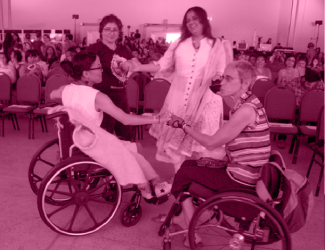
Flickr/Leonardo Veras (CC BY 2.0)

Analyses Spéciales

L´AWID est une organisation féministe mondiale qui consacre ses efforts à la justice de genre, au développement durable et aux droits humains des femmes

Protection de la famille

Contexte

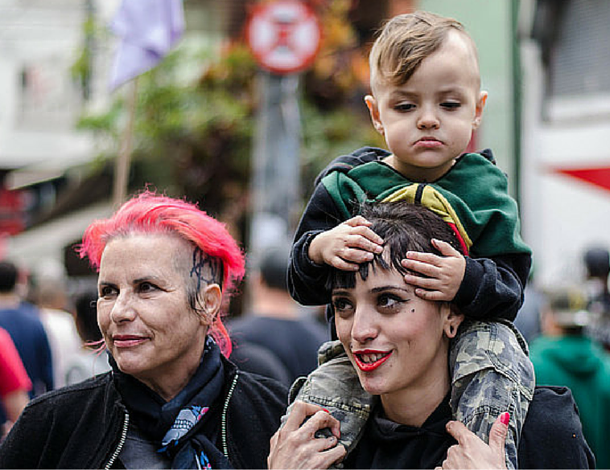
Au cours des dernières années, nous avons observé une nouvelle tendance inquiétante dans les espaces internationaux consacrés aux droits humains. Les discours axés sur « la protection de la famille » sont en effet utilisés pour défendre des violations des droits de membres de la famille, pour renforcer et justifier l’impunité des auteurs de ces violations et pour restreindre l’égalité des droits au niveau de la vie familiale. 

La campagne en faveur de la « Protection de la famille » est motivée par une volonté conservatrice d’imposer des conceptions « traditionnelles » et patriarcales de la famille et de priver les membres de la famille de leurs droits pour les transférer à « l’institution familiale ».

Les initiatives visant à la « Protection de la famille » reposent sur :

  • la montée du traditionalisme,
  • la montée du conservatisme culturel, social et religieux,
  • l’existence d’une hostilité vis-à-vis des droits humains des femmes, des droits sexuels, des droits des enfants et enfin des droits des personnes dont l’identité de genre et l’orientation sexuelle ne sont pas conformes aux normes.

Depuis 2014, un groupe d’Etats travaille de front dans les espaces dédiés aux droits humains sous le nom de « Group of Friends of the Family » (Groupe des ami-e-s de la famille) ; des résolutions sur la « Protection de la famille » ont été adoptées chaque année depuis 2014.

Ce programme s’est propagé au-delà du Conseil des droits humains. Nous avons observé l’introduction d’un discours régressif autour de la « famille » à la Commission sur la condition de la femme, ainsi que des tentatives d’introduction dans les négociations sur les Objectifs de développement durable.


Notre approche

L’AWID travaille avec des partenaires et des allié-e-s pour s’opposer ensemble à la « Protection de la famille » et à d’autres programmes régressifs et défendre l’universalité des droits humains.

En réponse à l’influence croissante d’acteurs régressifs au sein des espaces dédiés aux droits humains, l’AWID a rejoint des allié-e-s afin de créer l’Observatoire sur l'Universalité des droits (OURs) (site en anglais). L’OURs est un projet de collaboration qui surveille, analyse et diffuse les informations concernant les initiatives anti-droits telles que la « Protection de la famille ».

Le premier rapport de l’OURs, Nos droits en danger, trace une cartographie des acteurs et actrices qui constituent le lobby mondial anti-droits et identifie leur réthorique et stratégies clés ainsi que leur impact sur les droits humains.  

Le rapport précise que le programme de « Protection de la famille » a développé une collaboration entre un large éventail d’acteurs régressifs aux Nations Unies, qu’il décrit comme « un cadre stratégique abritant des positions anti-droits et patriarcales multiples, où le cadre vise entre autres à légitimer et institutionnaliser ces positions. »

Contenu lié

Yo, Imposible proyección: la guía de participación

Snippet Watch Stories (EN)

Learn more about the impact of the forum through these stories

FRMag - Resistance Series

Serie Resistencia Feminista

Ver la serie fotográfica

Juli Dugdale

Juli Dugdale was an Australian feminist who practiced intergenerational leadership rooted in principles of feminism, inclusion and equality. She was a leader, peer and mentor for many women and especially young women around the world. 

Juli was a dedicated staff member, volunteer and fervent advocate for young women’s leadership with the Young Women's Christian Association (YWCA) movement for over 30 years.

She offered a strong link between the Australian movement and the World YWCA Office. Her trust in the leadership capacity of young women led to a multi-year partnership with the Australian Department of Foreign Affairs and Trade and the creation of the Rise Up manual, a global guide for young women’s transformative leadership, launched in 2018.

Juli passed away in Geneva on 12 August 2019.


Tributes:

“For those who got to work with Juli, it was a privilege. For those who didn’t, be assured that her legacy continues in the work we do every day and in the mission of the YWCA movement.” - YWCA Australia

“Juli Dugdale will forever hold a deep place in many people's hearts in the YWCA movement, especially here in Aotearoa and across the Pacific. Juli had a special relationship with the Pacific and was an incredible supporter of the young women there. She was humble, gracious, loving, caring, dedicated, passionate and had a generous heart. She embodied the YWCA's vision of 'transformative leadership' with extraordinary vision and foresight, and helped empower generations of young women leaders around the world.” - YWCA New Zealand

Main image
cfa_header_v8.2.png
Body

Snippet2 - WCFM Movement and Struggle - EN

Fist icon

Movement in focus:

Filter your search by funders’ priority support areas that speak to your organizing efforts

Ali Chavez Leeds

tasseography print justice. Print on paper, 4 color screen print, 8.5x11, 2016
Impression sur papier, sérigraphie 4 couleurs, 8.5x11, 2016

«Tasseography» (Tasséomancie)

La tasséomancie est une méthode de divination qui interprète les motifs dans les feuilles de thé et/ou le marc de café. Il s’agit d’une pratique qui se transmet par les femmes de mon côté arménien et qui m’a été enseignée par ma mère, qui elle-même l’a apprise de sa mère, et ainsi de suite. Lorsque je regardais ma grand-mère lire le marc de café du café arménien préparé pour la famille et les amis, je remarquais que, souvent, elle voyait ce qu'elle avait envie de dire. Ces gravures disent certaines des choses que j’ai envie de voir dans le monde ; j'espère que vous aussi.  

Our Promise
Impression relief sur papier, 11 × 14 in, 2021

«Our Promise» (Notre promesse)

Cette gravure célèbre la résilience, le sacrifice et la force des combattant·e·s de la liberté de l’Asie du Sud-Ouest et de l’Afrique du Nord à travers l'histoire et la solidarité qui existe. Elle a été inspirée à l'origine par un article que j'ai lu sur une exposition organisée à Tatvan, un district de Bitlis, qui mettait en lumière la présence arménienne dans la région. Mes ancêtres sont originaires de Bitlis, se situant aujourd'hui sur le territoire de la Turquie actuelle.

looking at the cup
Impression relief sur papier, 8.5 × 11 in, 2020

«Looking at the Cup» (Regarder la tasse)

La tasséomancie (la lecture du marc de café) est une pratique culturelle utilisée par les femmes arméniennes depuis des siècles pour se parler entre elles et les unes aux autres, un langage codé permettant d'entamer des conversations, d'établir des relations et de tisser des liens.

À propos d’Ali Chavez Leeds 

]Ali Chavez Leeds portrait
Ali Cat Leeds (elle/iel) est une artiste et graveuse qui vit sur les territoires non cédés de Cowlitz, Multnomah et des tribus confédérées de Grand Ronde, au confluent de deux rivières, également connu sous le nom de Portland, Oregon. Elle produit ses œuvres sous le nom de Entangled Roots Press. Ses impressions mêlent le littéral et le métaphorique pour éclairer et commenter le monde qui nous entoure. Les impressions en relief, sérigraphiques et typographiques vont du carnage de la déforestation à la beauté des mouvements des peuples. Les impressions d'Ali s'inspirent d'histoires ancestrales et s'orientent vers des avenirs libérateurs ; elles enchevêtrent les leçons des jardins, les symboles dans le marc de café, les fils tissés d'Arménie et d'Euskal Herria, jusqu'à la page imprimée.

Snippet Forum Quoate Nicky Mcintyre (ES)

Todos nuestros procesos de cambio se basan en las relaciones que construimos en espacios como los Foros de AWID donde se baila juntxs, tu humor se trasluce, tu yo real, cuentas historias... eso es lo que hace la diferencia.
- Nicky Mcintyre, Estados Unidos

Film club - Finding Sally

Finding Sally (2020) Amharic | Anglais avec sous-titres anglais

Une enquête personnelle sur la vie mystérieuse de la tante de la réalisatrice Sally, une aristocrate éthiopienne devenue rebelle communiste qui a disparu après la révolution conduisant au renversement de l'empereur Haile Selassie.


Discussion en direct avec Tamara Dawit, réalisatrice de « Finding Sally »

23 juin à 12 h 30 EST sur IG en direct

Sarah Maldoror

«No adhiero al concepto de “Tercer Mundo”. Hago películas para que las personas (no importa de qué raza o color sean) puedan entenderlas. Para mí, solamente existen explotadores y explotadxs, eso es todo. Hacer una película significa tomar una posición.» - Sarah Maldoror

Sarah Maldoror, una cineasta francesa descendiente de una familia de las Indias Occidentales, fue una pionera del cine panafricano. Sus inquietudes políticas ocupaban el centro de su trabajo, junto con su permanente involucramiento en los movimientos de descolonialización.

La innovadora Sambizanga (1972), su «película revolucionaria», sigue la lucha de liberación anticolonial de lxs militantes de Angola y capta la perspectiva de una mujer en el momento histórico en que se encuentra.

«Para muchxs cineastas africanxs, el cine es una herramienta revolucionaria, una educación política para crear consciencia. Se inscribe en la evolución de un Tercer Cine,  que se orienta a descolonizar el pensamiento y promover cambios radicales en la sociedad.» - Sarah Maldoror

A lo largo de su carrera, Sarah (junto con otrxs artistas africanxs y caribeñxs) cofundó, en 1956, la primera troupe de teatro negra de Francia. Realizó alrededor de cuarenta películas, incluidos importantes documentales que difundieron la vida y la obra de artistas negrxs, entre lxs cuales se encuentra su amigo y poeta, Aimé Césaire, quien le escribió:

«A Sarah Maldo
que, cámara en mano,
lucha contra la opresión, la alienación
y se planta de cara
frente a la estupidez humana.»

Sarah estaba también dedicada a lograr que las mujeres africanas se apropiaran más del proceso de filmación. En una entrevista, señaló:

«Las mujeres africanas deben estar en todos lados. Deben estar en las imágenes, detrás de la cámara, en la sala de edición, y participar en todas las etapas de la realización de una película. Ellas deben ser quienes hablen sobre sus problemas.»

Sarah dejó un legado formidable para que sea continuado.

Nacida el 19 de julio de 1929, Sarah falleció el 13 de abril de 2020 debido a complicaciones por el coronavirus.


Mira Sambizanga y lee una reseña de la película en un artículo del New York Times de 1973 (solo en ingles)
 

Body

Snippet - Take the quiz


¡Responde el cuestionario!

"¿Dónde está el dinero para las organizaciones feministas?

¿Cuánto sabes sobre la movilización de recursos feminista?  Responde el cuestionario de AWID “¿Dónde está el dinero para las organizaciones feministas?” y pon a prueba tus conocimientos


Responde el cuestionario en línea      Descárgalo e imprímelo.


Feminist Embodiments of Hope and Power

A Film Series on Feminist Realities from the SWANA region


by Esra Ozban

In a product-obsessed world, prioritizing process is a fundamental feminist method. Processes matter, and curation is no exception. While figuring out which of the films from the SWANA region would speak the loudest to the Feminist Realities theme, the global pandemic we are still facing shifted our everyday lives tremendously. Even to think, write, or express myself has become an everyday struggle. I kept missing all of my deadlines and sending apology emails to Kamee Abrahamian, whom I was working with as an independent curator for AWID’s Feminist Film Club. Kamee’s invaluable support, understanding, and suggestions reminded me that even in two different parts of the world, as colleagues who never met in person, we can co-create micro versions of the Feminist Realities for which we live and yearn. 

Feminist Realities for me have a lot to do with sisterhoods. Sisterhoods that help womxn clearing mines in Artsakh/Nagorno-Karabakh. Sisterhoods baked in Vegan Inclusive Trans Cake by young trans feminists in Ankara that remind cis-ters that they are not welcomed by the Z generation. Sisterhoods that are growing into the mint on Dragica Alafandi’s rooftop in the Dheisheh Refugee Camp in Occupied Palestine in Sowing seeds of resistance. Sisterhoods that embrace intimate, sexual, and revolutionary proximities in Gezi Park in #resistayol. Sisterhoods that unearth an imagined encounter between two generations of womxn in exile in the streets of Haifa in Your father was born 100 years old and so was the Nakba. Cross-species sisterhoods that build in a fictional (brave) space created by Mounia Akl in Submarine for her rebel character Hala, who refuses to evacuate from a city full of garbage and is left behind with a dog friend.
 
This selection gathers bits and pieces of many Feminist Realities that have been realized in the SWANA region over the last couple of years. We will continue to imagine, learn, and share feminist embodiments of hope and power. In the meantime, let’s immerse ourselves in the powerful alternatives brought to life by the filmmakers and protagonists of these films. We may co-create every step, every act, and every attempt as we continue to cohabitate this world with others who are living Feminist Realities and continue to dream more of them into existence. 


MOTHERLAND 


By Emily Mkrtichian& Jesse Soursourian

“With beautiful visuals paired with compelling verité scenes, Motherland is a show of female camaraderie and strength… The film is a testament of women around the world who are willing to work harder to overcome any obstacle they meet.”
    - Nosarieme Garrick, award winning filmmaker

“Motherland is an inspiring visualization of solidarity, courage, and grit…”
    - Hers is Ours Collective, organizers of the Outsider Moving Art & Film Festival

Motherland from jesse soursourian on Vimeo.

Emily Mkrtichian on Feminist Realities and Artsakh/NKR:
We shot the short film, Motherland, in the Republic of Artsakh in 2018. I was drawn to each of these women for their strength, their resilience and their humor -- despite the context in which they lived. In 2018, that context was the aftermath of a brutal war in the 1990’s, after which their country remained an unrecognized (or, in the international community, disputed) territory that was not given the autonomy and independence so many other countries enjoy. Artsakh was also deeply affected by the consequences we see in almost all places that go through violent conflict -- consequences that so often fall on women to bear: PTSD, high rates of alcoholism, high rates of domestic abuse, less equality and freedoms granted to women, little to no representation of women in politics and civil service. In the face of all these challenges, this film tries to capture the fire and power of the women of Artsakh, one that might not fit the traditional Western feminist paradigm, but one they have created for themselves through deep community ties, care for their families, hard work, and the ability to laugh with eachother through it all. Today, the Republic of Artsakh has been newly devastated by another war that left it without 70% of the lands these women grew up understanding were theirs. Yet, I can promise you that these women, and thousands of others, continue to pull their families, communities, and culture together through the same networks of care, commitment to hard work, and deep riotous laughter in the face of an uncertain future. 


SOWING SEEDS OF RESISTANCE


By Baladi-Rooted Resistance

“A timely film to watch after having born witness to the latest bombardment of Gaza by Israeli Defence Forces. A glimpse into the way that women in Palestinian communities survive structural oppression, through the story of a library of traditional seeds.. and the women that sustain them as a form of nourishing rebellion.”

    - Jessica Horn, PanAfrican feminst strategist, writer and co-creator of the temple of her skin


“Watching women coming together and working collectively for food autonomy is both therapeutic and empowering for me.”
    - Hers is Ours Collective, organizers of the Outsider Moving Art & Film Festival

Baladi-Rooted Resistance Team on Feminist Realities:
How to talk about Feminist Realities when you live in Deheisheh, a Palestinian refugee camp, built 70 years ago to serve 3000 refugees, but now home to 15000 people, in the occupied West Bank? Or when the land you farm is under constant threat by illegal settlers.
If you’re a woman in occupied Palestine you will have to struggle not only against patriarchy but also against colonialism and a brutal military occupation. 

Dragiča and Vivien are fighting these multiple systems of domination in their own way. 
Vivien uses native seeds to help Palestinians maintain their identity. Growing traditional food in traditional ways has great significance: “If you’re not a producer anymore, you’re a consumer, and what better way to enslave someone than turning them into your consumer. This is happening all around the world, but here you have it doubled with the military occupation.”

31.5% of households in the West Bank are food insecure. Through a rooftop edible garden, Dragiča managed to increase her family’s food autonomy. In the crowded camp, where the Israeli army conducts regular nighttime incursions to arrest and harass residents, Dragiča’s rooftop garden not only nourishes her family, but it especially nourishes her soul.


#RESISTAYOL


By Ruzgar Buski

Ruzgar Buski on Feminist Realities:
I don’t know what to say about Feminist Realities but as a trans artist, an activist from Turkey, I know our realities are harsh. We live with violences- physical, emotional, economical, sexual! That is why we have to build our own networks, and co-creating micro realities for each other is a Feminist Reality for me. #resistayol is my first film, and at the beginning I was planning to make a film by/for/with trans people that does not try to convince anyone to the fact that trans people are human or focuses on raising awareness on trans issues. However, Gezi Uprising, one of the biggest uprising in the history of Turkey, happened and the film became something different. 

I believe the production process really affects what the film is. We tried very hard for women, trans and non-binary people to work on every step of the film. This film is made by people who gathered with camaraderie and friendship. Kanka Productions is founded on transfeminist comradeship. I want the film to give hope, to heal because we carry a lot of traumas in our bodies- this is what makes us and what bonds us. Healing is a never-ending process and we have to create spaces to breath. #resistayol is an hour of breathing collectively.

Boysan Yakar in #resistayol:
Well lubunyas (queers) were sitting in the park, all of a sudden bulldozers arrived and everyone got pissed off. Actually in summary this is it. It's Lubunya's park,and we had thirty days to explain that to this huge city. Everyone acknowledged that at night ibnes (faggots) fuck in that park...LGBTI Block carried our commune there. We already didn't trust the state and police  and didn't have any security, we've established our own ways of doing things, our own laws and customs to survive... We carried our law to Gezi rapidly...With an effort to establish some common language and understanding among all these groups, the LGBT language of togetherness spread all through the park. Every day was a Pride march, everyone was continuously saying ‘ayol’. We spruced up the stinky, fusty language of the left. I guess we had such an impact because we've been disowned for all these years. From the most radical ones to the most conservative and nationalist ones, they all needed us, because everyone got used to being confronted with everything. Τhey were not used to such energy, our energy. That’s why it was a great political space for us. Every day, we actualized our biggest and main struggle there, that is, a struggle for visibility and recognition. That’s why we left Gezi with a huge gain.


VEGAN INCLUSIVE TRANS CAKE


By Pembe Hayat

“...a multifaceted statement, showing the joy that exists in the friendships within the queer  community in Turkey as a display of rebellion and resistance.”
 
    - Nosarieme Garrick, award winning filmmaker

“...fun, light, and random. In a world constantly marked and scarred by violence against the trans community, nothing, no action, is (unfortunately) deprived of meaning. So to more joy, love, and meaningful randomness!”
 

    - Hers is Ours Collective, organizers of the Outsider Moving Art & Film Festival

Cayan Azadi in Vegan Inclusive Trans Cake:
Hello Barbies, Kens, porcelain dolls,  Olive Oyls, cabbage dolls. Brides of Chucky, sisters of Chucky, brother-in-laws of Chucky and last but not least, esteemed brother-in-law lovers.

So why did we make this cake. 

Now we got the news that a trans woman sex worker has attempted suicide due to the violence from street-guards and police on the street. She’s being kept at a police station now and that’s exactly why we made this cake. This transvestite cake is baked to show that we exist in every part of life, that we exist persistently and this cake shows that won’t be wiped off or ignored in this society. 

Yes, there is violence in our lives, yes there is a lot of shade as well but despite all of that, we can still have fun, enjoying life as much as we can. Bon appetit, sis! 


YOUR FATHER WAS BORN 100 YEARS OLD AND SO WAS THE NAKBA  ابوكي خلق عمره ١٠٠ سنة، زي النكبة


By Razan AlSalah


SUBMARINE

By Mounia Akl

“It is directed as a poem is written… simple, a touch abstract, and moving.” 
 
    - Hers is Ours Collective, organizers of the Outsider Moving Art & Film Festival

Esra Ozban:
Esra Ozban is a film programmer and filmmaker from Turkey. Their artistic, curatorial, and scholarly work intersects critical archival practices, sex work, pornography, feminist/queer film cultures among others.


Follow us on Social Media to receive news about upcoming events and screenings:

  • Facebook: @AWIDWomensRights
  • Instagram: @awidwomensrights
  • Twitter ENG: @awid
  • Twitter FR: @awid_fr
  • Twitter ES: @awid_es
  • LinkedIn: Association for Women's Rights in Development (AWID)

Pourquoi avoir choisi Bangkok ?

Chaque Forum de l’AWID se déroule dans une région différente, et il était temps de retourner en Asie ! Nous avons visité de nombreux pays de la région, consulté des mouvements féministes et procédé à des évaluations détaillées de la logistique, de l'accessibilité, de la sécurité, des visas et bien d’autres choses encore. Finalement, le conseil d'administration de l'AWID a approuvé à l’unanimité Bangkok, en Thaïlande, comme étant la meilleure option. Nous sommes ravi·e·s de retrouver Bangkok, où le Forum de l’AWID avait déjà eu lieu en 2005.

Informe OURS 2021 Resumen

Derechos en riesgo: Hora de Actuar

Actualmente, una compleja red de actores anti-derechos, en constante evolución, está ejerciendo cada vez más influencia tanto en los espacios internacionales y regionales, como en las políticas nacionales. Los actores anti-derechos están ingresando en los espacios multilaterales (donde múltiples países se reúnen para la colaboración internacional), con el fin de transformarlos y socavarlos desde adentro. Emplean una variedad de discursos persuasivos para ganar legitimidad, a menudo cooptando el lenguaje de los derechos y la justicia para ocultar sus verdaderas agendas.

Este informe es el segundo de una serie de reportes sobre las tendencias en derechos humanos, producido por el Observatorio de la Universalidad de los Derechos (OURs, por sus siglas en inglés). Además del análisis sobre actores anti-derechos clave y sus discursos, estrategias e impactos, el informe presenta breves narrativas inspiradoras de acción feminista y ejercicios de construcción de conocimiento para ayudar a fortalecer nuestra resistencia colectiva.

Leer informe completo

El efecto sobre nuestros derechos ya ha sido grave, pero esto no ha terminado todavía. Todxs podemos hacer nuestra parte para resistir las agendas anti-derechos y reclamar nuestros derechos.

¡Únete hoy mismo al llamado a la acción colectiva!

Firmar el llamado a la acción
 

María Digna Montero

María Digna Montero était une défenseuse Garifuna (d’origine africaine et autochtone) du droit à la terre et membre de l’Organisation fraternelle noire hondurienne (OFRANEH), une organisation communautaire oeuvrant à protéger les communautés Garifunas, leurs droits, leur culture, leurs ressources et leur territoire ancestraux.

María a également enseigné dans l'école locale et été membre du groupe de travail sur l'éducation bilingue interculturelle de l'OFRANEH.

Le 12 octobre 2019, jour de la Résistance autochtone, des inconnus ont tiré à plusieurs reprises sur María, alors qu’elle se trouvait dans l’arrière-cour de sa maison. 

Elle est l'une des six défenseuses Garifunas à avoir été assassinées entre septembre et octobre 2019 et selon OFRANEH, ces crimes n’ont fait l’objet d’aucune enquête de la part des autorités. Dans une déclaration officielle, l'organisation a également souligné le lien entre la violence à l’encontre des dirigeants Garifunas et le développement des industries extractives qui exploitent les ressources naturelles de leurs communautés, affirmant que cette violence s’inscrivait dans une "stratégie d'intimidation et d'expulsion systématique" menée par l'État hondurien. 

“La tension accrue et les risques croissants pour la sécurité et les droits humains des dirigeants des communautés et des territoires ancestraux sont le résultat de la dépossession, du déplacement et de la criminalisation des communautés et des mégaprojets d'extraction promus par l'État en collaboration avec les entreprises nationales et internationales". - Communiqué de l'OFRANEH, 12 octobre 2019 

WITM - Refreshed Intro Text (FR)

🚨Nouveau rapport disponible en anglais🚨

Où est l’argent ? Un plaidoyer documenté pour soutenir les organisations féministe

Ce rapport révèle la réalité du financement des organisations féministes et de défense des droits des femmes dans un contexte de bouleversements politiques et financiers. S’appuyant sur plus de dix ans d’analyse depuis la dernière étude Où est l’argent ? de l’AWID, il dresse un bilan des progrès réalisés, des lacunes persistantes et des menaces croissantes dans le domaine du financement féministe.

Téléchargez le rapport ! (en anglais)