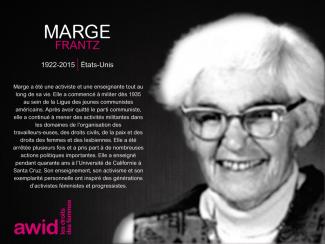
Marge Frantz
Au cours des dernières années, nous avons observé une nouvelle tendance inquiétante dans les espaces internationaux consacrés aux droits humains. Les discours axés sur « la protection de la famille » sont en effet utilisés pour défendre des violations des droits de membres de la famille, pour renforcer et justifier l’impunité des auteurs de ces violations et pour restreindre l’égalité des droits au niveau de la vie familiale.
La campagne en faveur de la « Protection de la famille » est motivée par une volonté conservatrice d’imposer des conceptions « traditionnelles » et patriarcales de la famille et de priver les membres de la famille de leurs droits pour les transférer à « l’institution familiale ».
Depuis 2014, un groupe d’Etats travaille de front dans les espaces dédiés aux droits humains sous le nom de « Group of Friends of the Family » (Groupe des ami-e-s de la famille) ; des résolutions sur la « Protection de la famille » ont été adoptées chaque année depuis 2014.
Ce programme s’est propagé au-delà du Conseil des droits humains. Nous avons observé l’introduction d’un discours régressif autour de la « famille » à la Commission sur la condition de la femme, ainsi que des tentatives d’introduction dans les négociations sur les Objectifs de développement durable.
L’AWID travaille avec des partenaires et des allié-e-s pour s’opposer ensemble à la « Protection de la famille » et à d’autres programmes régressifs et défendre l’universalité des droits humains.
En réponse à l’influence croissante d’acteurs régressifs au sein des espaces dédiés aux droits humains, l’AWID a rejoint des allié-e-s afin de créer l’Observatoire sur l'Universalité des droits (OURs) (site en anglais). L’OURs est un projet de collaboration qui surveille, analyse et diffuse les informations concernant les initiatives anti-droits telles que la « Protection de la famille ».
Le premier rapport de l’OURs, Nos droits en danger, trace une cartographie des acteurs et actrices qui constituent le lobby mondial anti-droits et identifie leur réthorique et stratégies clés ainsi que leur impact sur les droits humains.
Le rapport précise que le programme de « Protection de la famille » a développé une collaboration entre un large éventail d’acteurs régressifs aux Nations Unies, qu’il décrit comme « un cadre stratégique abritant des positions anti-droits et patriarcales multiples, où le cadre vise entre autres à légitimer et institutionnaliser ces positions. »
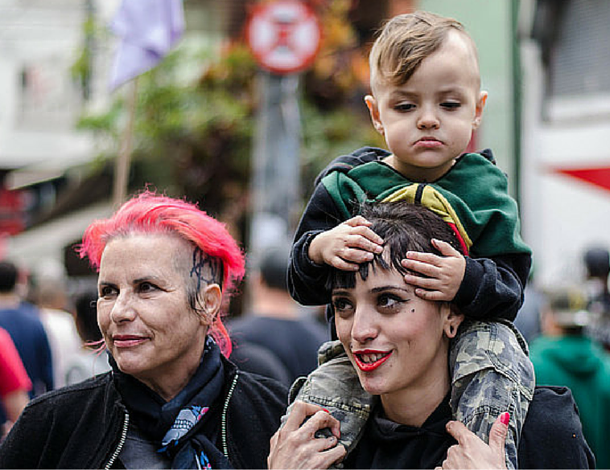
L'une des dirigeantes fondatrices de la coopérative était Lohana Berkins, une militante, défenseuse et promotrice de l'identité trans. Lohana a joué un rôle crucial dans la lutte pour les droits des personnes trans et travestis.
Grâce à sa lutte, entre autres choses, l'approbation de la loi sur l'identité de genre a été obtenue. C'est l'une des lois les plus progressistes au monde, garantissant les droits fondamentaux des personnes trans et des travestis. Désormais, les personnes peuvent changer de nom et de sexe avec un affidavit et ont accès à des soins de santé complets sans intervention/approbation judiciaire ou médicale (Outright International, 2012).
In the current context, we have identified five major threats to the struggle towards feminist just economies.
“Financialisation refers to the increasing importance of financial markets, financial motives, financial institutions, and financial elites in the operation of the economy and its governing institutions both at the national and international levels”. - Gerald Epstein
Epstein Gerald A. 2006: Financialization and the World Economy. Edward Elgar Publishing.
Financial institutions exert a strong influence over economic governance and the direction of development policy. The growing dominance of the corporate sector and international financial institutions in defining local and global public policies, has resulted in the capture of the State in the interest of capital. The current financial system, including controversial credit and debt policies, are integral to the reproduction and expansion of capital accumulation processes.
This raises important questions of how to regulate and re-think the global financial system, not only to avoid serious negative consequences of debt-driven crises,but to allow for sustainable livelihoods and the realization of economic and social rights without retrogression.
For more details, see the article by Balakrishnan and Heintz “Debt, Power, and Crisis: Social Stratification and the Inequitable Governance of Financial Markets”
For the past 20 years, trade agreements (both bilateral or multilateral) have expanded their role demonstrating increased interest in Intellectual Property Rights (IPR) to be given to corporations.
IPR has clearly benefitted transnational corporations with huge impacts on the ability of poorer nations and peoples to realize human rights, notably:
In addition, agriculture import liberalisation resulting in an influx of cheap goods jeopardise women’s self-employed farmers in poor countries and food security. Investment protection clauses included in trade agreements limit the policy space of national governments to create and enforce regulations on issues as crucial as environmental protection, labour rights, and the duration of copyrights.
Feminist movements have been, and are, at the forefront of resistance to these agreements exposing its pitfalls.
(See for example, the reactions by feminist networks around the globe to both the Transatlantic and TransPacific Trade and Investment Partnership Agreement negotiations.)
The commodification of the Earth’s resources and resulting environmental degradation and climate change produced by decades of aggressive industrialisation, plunder and extractivism of the world’s resources, have damaged biodiversity and ecological resilience. These damages are now threatening the existence of human society itself.
The international community has failed to address production and consumption patterns sitting at the root of the problem. Instead, governments –with the support of large corporations interested in making a profit - are leaning towards a “green economy” approach promoting “energy-efficient technologies” (including nuclear energy, biofuels, genetically modified organisms and geo-engineering) and carbon trade schemes as the silver bullet.
While the processes of land and resource appropriation is not new – in fact, they are central struggles in colonial histories- what is new is the advanced means by which land and natural resource wealth are becoming commodities in new markets.
International Financial Institutions play a central role in promoting land markets in developing countries. These institutions finance land reforms that enable powerful actors to use land for speculative gain in exchange of meagre promises of jobs and growth. Land-grabbing has far reaching negative impacts on local peoples’ access to essential goods and services apart from displacement and environmental degradation that are associated with it.
People who are resisting land grabbing, among them women human rights defenders, face diverse forms of violence including physical attacks and sexual abuse, on a daily basis.
This patriarchal foundation is particularly hegemonic in today’s neoliberal models.
The many ways in which political economy and development are connected to sexuality or gender is evident: think how capitalism defines what can even be characterized as labour and ties human worth to wage-labour productivity.
For the most part, women’s position in the global economy continues to be one of gender-based labour exploitation with women’s work undervalued in precarious jobs, domestic subsistence, reproduction, and in unwaged household production. Because reproductive labour has been naturalized as women's unpaid work, it has provided an immense subsidy to capitalism at the same time as a source of gender oppression and subjugation.
This situation is aggravated by the fact that as social protection mechanisms begin to dwindle, women’s care burden increases.
Further, the phenomenon of global migration spurred on by thousands of economic refugees escaping oppressive poverty across the globe is not estranged to that of capitalist gender power relations. Remittances become a major source of development financing for the families and communities, but at a major cost for women migrants who struggle to earn a living wage in their new country.
In the same vein, we have seen how patriarchal capitalist systems are using violence and oppression to maintain their status quo. Rising global expenditures in militarism and violence, both perpetrated by state and non-state actors, is increasingly used to control dissent, women’s bodies and voice and settle economic, political and social disputes.
Across the world, violence, incarceration and discrimination disproportionately targets
An intersectional analysis linking gender, race, ethnicity, age, ability, nationality, sexual orientation and gender identity, among other status is needed to challenge structural violence and its links with a capitalist global system.
A profound crisis in the current global governance system is also evident in the feeble inter-governmental agreements reached and how they often lack the most fundamental accountability mechanisms. The multilateral system that served global governance before is failing to respond to the current multiple crises. The same system continues to be deeply undemocratic, with increasing presence and power by corporations occupying the spaces where States used to be.
These threats challenge feminists to re-think our framework and strategies. To renew and reactivate our commitment to movement building with others for a just economy.
They challenge us to consider broad agendas for socio-economic transformations, from a feminist perspective, in ways that address the realities of the majority of the impoverished. Now is the time to bring about change for a just economy and to address the persistent systemic challenges.
Dénoncer l’emprise des multinationales. Comprendre les fausses solutions. Construire des alternatives. Tout ce qu’il vous faut pour mener votre propre campagne « À qui appartient vraiment la COP ? ».
Only a year after it was founded, the members of Nadia Echazú started to work in haute couture and organized a fashion show in the historic Bauen Hotel.
They showcased five models and some workers of the textile cooperative walked down the runway with their own designs.
This was revolutionary not only because they were designing alternatives to mainstream fashion, but also because they were creating accessible, inclusive clothes for all trans and travesti bodies.
Feminist economies should also be about feeling amazing and comfortable in the clothes we are wearing.
La activista y académica Soma Kishore Parthasarathy señala que existen diversas formas de pensar los bienes comunes.
En un sentido más convencional, se los entiende como recursos naturales destinados a ser usados por quienes dependen de su uso. Sin embargo, el concepto de «bienes comunes» se ha expandido para incluir recursos como los conocimientos, la herencia, la cultura, espacios virtuales e incluso el clima. Es un concepto anterior al régimen de propiedad individual y que aportó las bases para la organización social. Las definiciones que aportan las entidades gubernamentales limitan su alcance a los recursos de la tierra y materiales.
El concepto de los bienes comunes se apoya en la práctica cultural de compartir espacios de subsistencia y recursos como dones de la naturaleza, para el bien común, y para la sostenibilidad de lo que es común a todxs.
Los bienes comunes de la humanidad están cada vez más amenazados porque las naciones y fuerzas del mercado continúan colonizándolos, explotándolos y ocupándolos.
En algunos contextos favorables, los «bienes comunes» tienen el potencial de habilitar una posición de autonomía sobre todo para las mujeres bajo opresión económica desde la que pueden negociar sus múltiples necesidades y aspiraciones.
Cuando a las mujeres y a otros géneros oprimidos se les niega el acceso a los bienes comunes y la posibilidad de controlarlos, se refuerza el patriarcado.
Por eso, una economía feminista busca restaurar los derechos legítimos de las comunidades a estos recursos comunes. Esa autonomía les permite mantenerse a sí mismas al mismo tiempo que desarrollan sistemas más igualitarios de gobernabilidad y de uso de esos recursos. Una economía feminista reconoce los roles de las mujeres y les ofrece las mismas oportunidades para tomar decisiones, es decir, las coloca en igualdad de condiciones como demandantes de esos recursos.
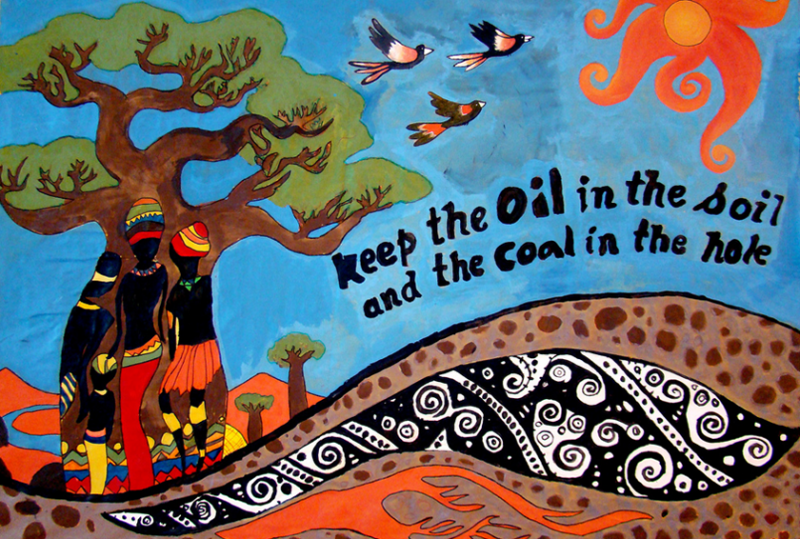
Les afiliades de AWID analizarán y evaluarán críticamente el rol que la ayuda mutua puede cumplir en la dotación de recursos de nuestros movimientos, a través de la creación de collages colectivos.
📅 Miércoles, 12 de noviembre de 2025
📍 Espacio de la COP Popular
La lucha por un mundo lleno de lugares de trabajo libres de todas formas de discriminación, estigma y exclusión es digna. Un mundo en el que el trabajo sexual sea descriminalizado y reconocido como trabajo es parte integrante de esto.
Un mundo donde todxs lxs trabajadorxs tengan condiciones de trabajo seguras, salarios dignos y puedan disfrutar de los mismos derechos como el acceso a la salud, pensiones, permisos por enfermedad, vacaciones, seguridad laboral y más, sin importar su género, raza, etnia, edad o capacidad.
Los derechos laborales son cuestiones feministas, y los sindicatos feministas desempeñan un papel clave en la promoción de los derechos legales, laborales y económicos de todxs lxs trabajadorxs, especialmente lxs trabajadorxs migrantes, lxs trabajadorxs domésticxs, lxs trabajadorxs informales y lxs trabajadorxs sexuales. Estas son personas que recientemente se han visto afectadas de manera desproporcionada por la pandemia, su crisis de cuidados, los confinamientos, toques de queda y el aumento de la vigilancia y represión policial.
Aquí les presentamos las historias de activistas feministas y sindicalistas que luchan por mejores condiciones de trabajo y mejores mundos para todxs.
A pesar de su rigidez en cuestiones doctrinales y de cosmovisión, lxs actores anti-derechos han demostrado una apertura a nuevos tipos de alianzas estratégicas, nuevas técnicas de organización y nuevas formas de discurso. Todo esto les ha permitir detentar mayor poder en los espacios internacionales.
Se ha observado una notable evolución en las estrategias de lxs actores ultra conservadores que operan a este nivel. No solo intentan manipular los límites de los consensos y bloquear cierto lenguaje, sino también transformar el marco conceptual, desarrollar normas y estándares alternativos y encontrar otras vías de influencia.
Lxs actores ultra conservadores trabajan para establecer y mantener vínculos con representantes de los Estados ofreciéndoles oportunidades regulares de capacitación — como el Foro Mundial de Políticas sobre la Familia que es anual — y materiales de capacitación específicos.
Estas capacitaciones y la provisión de recursos en forma periódica les aportan discursos y técnicas de negociación a lxs representantes para que continúen colaborando en pro de los objetivos anti-derechos en el sistema de derechos humanos. Lxs representantes también reciben compilaciones organizadas de «lenguaje consensuado» y referencias a información pseudo-científica o estadística para reforzar sus argumentos.
La transmisión consolidada de estos mensajes explica en parte por qué lxs representantes de los Estados que adoptan posiciones ultra conservadoras en los debates internacionales sobre derechos humanos a menudo lo hacen contradiciendo su propia legislación y políticas nacionales.
La red de reuniones virtuales regionales e internacionales de lxs actores anti-derechos contribuye a crear vínculos más estrechos entre las OSC ultra conservadoras, los Estados y bloques de Estados, y poderosos órganos intergubernamentales. El Congreso Mundial de las Familias que se realiza todos los años es uno de los principales ejemplos de esta estrategia.

Estas reuniones refuerzan los vínculos personales y las alianzas estratégicas, elementos centrales para construir y sostener cualquier movimiento. También facilitan la creación dinámica de relaciones que van más allá de los países o las religiones y se articulan en torno a temáticas e intereses compartidos, lo que conduce a un enfoque más proactivo para formular demandas integrales en la esfera política internacional por parte de lxs actores anti-derechos.
Históricamente, los Estados y los bloques estatales han tratado de socavar el consenso internacional o la rendición de cuentas por parte de cada país frente a las normas internacionales de derechos humanos interponiendo reservas a los acuerdos que ponen en peligro la aplicabilidad universal de los derechos humanos.
La Convención sobre la Eliminación de la Discriminación contra las Mujeres (CEDAW) es la que ha sido objeto del número más alto de reservas, muchas de las cuales se fundamentan en presuntos conflictos con la ley religiosa. Sin embargo, la CEDAW está fuera de discusión como parte del derecho internacional de los derechos humanos, y las referencias a la tradición, cultura o religión no pueden justificar violaciones de los derechos humanos. Muchas reservas a la CEDAW son inválidas porque son «incompatibles con el objeto y el propósito» de este tratado. Sin embargo, los Estados invocan continuamente estas reservas para eludir sus responsabilidades en materia de derechos humanos.
También se están introduciendo cada vez más «reservas» a documentos y acuerdos de Naciones Unidas que no son tratados formales, como las resoluciones del Consejo de Derechos Humanos y de la Asamblea General.
Resulta alarmante observar cómo actores regresivxs que operan en la ONU han comenzado a cooptar estándares de derechos existentes y a hacer campaña para desarrollar un lenguaje consensuado que sea profundamente anti-derechos.
Su objetivo es crear y luego propagar en los escenarios internacionales de derechos humanos un lenguaje que valide normas patriarcales, jerárquicas, discriminatorias y culturalmente relativistas.
Un paso hacia el logro de este propósito es la redacción de textos declarativos, como la Declaración Mundial de la Familia y los Artículos de San José, que se presentan como fuentes no vinculantes en materia de derechos humanos, recogen adhesiones por parte de múltiples actores de la sociedad civil, estatales e institucionales; y luego sirven como base para la promoción y el cabildeo.
Como parte de un cambio estratégico hacia el uso de discursos no religiosos, lxs actores anti-derechos han invertido significativamente en crear sus propios grupos de expertxs en «ciencias sociales». Ayudados por los medios conservadores que son cada vez más numerosos, estos materiales se difunden ampliamente entre grupos conservadores de la sociedad civil y también se utilizan como base para la incidencia en espacios internacionales de derechos humanos.
Mientras que los objetivos y la motivación de lxs actores conservadorxs se derivan de sus interpretaciones extremas de la religión, la cultura y la tradición, a menudo refuerzan sus argumentos con estudios que reivindican para sí una cierta autoridad intelectual. Así se produce un contra-discurso, a través de una mezcla engañosa de doctrina tradicionalista y ciencias sociales.
Esta es una de las estrategias más efectivas empleadas por la derecha religiosa y representa una inversión importante en el futuro de los movimientos anti-derechos.
El reclutamiento de jóvenes y el desarrollo de sus liderazgos, comenzando en el nivel local con iglesias y campus universitarios, son una prioridad para muchos actores conservadores dedicados a influir sobre políticas internacionales.
Esta estrategia les ha permitido infiltrarse en espacios específicos de las Naciones Unidas para jóvenes, incluidos los de la Comisión de la Condición Jurídica y Social de las Mujeres, y crear un fuerte contrapunto a las redes y organizaciones progresistas de la juventud.

Los grupos regresivos han comprendido que dentro del sistema de Naciones Unidas su influencia es mucho menor cuando se trata de mecanismos de expertxs (Procedimientos Especiales y órganos de monitoreo de tratados) o de organismos operativos (agencias) y no de mecanismos políticos.
Por eso , los grupos anti-derechos afirman que las agencias de Naciones Unidas están «sobrepasando su mandato»; el Comité CEDAW y otros organismos de tratados no tienen autoridad para interpretar esos instrumentos; y los Procedimientos Especiales son en realidad expertxs que han tomado partido y que se extralimitan en su mandato. Los grupos anti-derechos también han tenido éxito en su cabildeo para recortar la financiación a organismos como el Fondo de Población de las Naciones Unidas (UNFPA).
Esta invalidación de los mecanismos de las Naciones Unidas alimenta la impunidad estatal. Cuando los gobiernos están bajo escrutinio internacional, pueden defender sus acciones acusando al mecanismo que los examina de tener defectos estructurales o de estar sobrepasando su mandato.
Lxs actores no estatales conservadores invierten cada vez más en las redes sociales y otras plataformas en línea para promover sus actividades, hacer campaña y difundir ampliamente información de los espacios internacionales de derechos humanos.
La organización española CitizenGo, por ejemplo, se presenta como la versión conservadora de Change.org, organizando peticiones y campañas de cartas. Una petición reciente, que se opone a que la ONU instituya un Día Internacional sobre el Aborto Seguro, reunió más de 172 000 firmas.
Si conocemos las estrategias empleadas por lxs actores anti-derechos, podemos contrarrestarlas de manera más efectiva.
Cette année, aux côtés de militant.e.s féministes du monde entier, nous serons à la CSW68 à New York. Nous serons là pour contester les discours capitalistes et néolibéraux et les fausses solutions autour de la pauvreté, du développement et de la finance. À travers des événements en présentiel, des lives sur nos réseaux sociaux, un stand d'exposition et bien plus encore, nous visons à nous rassembler, amplifier et soutenir les voix et la participation de nos membres et allié.e.s.
Apprenez-en davantage sur notre programme cette année ci-dessous.
Le salaire minimum en Géorgie est l’un des plus bas dans le monde. Cette réalité touche surtout les femmes.
Non seulement le pays a un écart de rémunération important entre les genres, mais les femmes travaillent également des heures plus longues et moins réglementées avant de rentrer chez elles pour s'occuper des tâches ménagères et de leur famille. Il n'y a pas de congé de maternité, pas d'augmentation de salaire pour les heures supplémentaires, pas d'assurance-chômage, et pas de congé de maladie ou d'autre protection sociale. Sous la pression d’organisations occidentales, les partis politiques oligarchiques géorgiens ont mis en œuvre des réformes qui détruisent l'État-providence, augmentent les mesures d'austérité et aggravent l'exploitation des travailleur·euses, le tout au profit des grandes entreprises qui applaudissent le pays pour sa «facilité à faire des affaires». Les médias, cooptés par des intérêts privés et corporatifs, sont partiaux sur ces questions ou les réduisent au silence. L'organisation syndicale reste l'une des rares options pour lutter pour les droits humains fondamentaux et pour tenir l'État et les entreprises responsables des violations et persécutions quotidiennes et généralisées contre les travailleur·euses, et en particulier les femmes.
Source: Minimum-Wage et entretien avec Sopo Japaridze dans Open Democracy
La domination croissante des marchés financiers internationaux et des institutions dans la définition des politiques économiques mondiales a pour effet de confisquer le pouvoir des personnes dans l’intérêt des élites mondiales et des grandes entreprises.
Notre rapport sur les flux financiers illégaux explore leur impacts disproportionnés sur la justice de genre. Il expose les cadres politique et juridique qui permettent aux entreprises de jouir d'abus fiscaux au détriment des personnes et de la planète.
Le rapport conclut avec ces sept recommandations politiques féministes pour demander plus de transparence et de responsabilité des entreprises afin de stopper les flux financiers illégaux.
Les flux financiers illicites attirent une attention sans précédent, par exemple dans le cadre de négociations sur le développement autour du Programme de développement à l’horizon 2030 ou lors de la Conférence sur le financement du développement d’Addis-Abeba en 2015. Ils font également les gros titres dans les médias traditionnels avec la diffusion de documents concernant des opérations financières offshore ayant fait l’objet de fuites, une affaire connue sous le nom des « Panama Papers ».
Pour donner un autre exemple, lors d’un référendum en février 2017, le peuple équatorien a voté pour empêcher les politiciens et les fonctionnaires de posséder des actifs, des entreprises ou des capitaux dans des paradis fiscaux. Le gouvernement équatorien est maintenant une voix de premier plan au sein du G77, aux Nations Unies, en faveur de la création d’un organisme fiscal mondial de l’ONU pour mettre un terme aux paradis fiscaux.
Ce coup de projecteur constitue potentiellement une opportunité pour les féministes, les mouvements sociaux et les défenseur-euse-s de la justice fiscale de faire pression en faveur de la transformation du système financier mondial qui renforce les inégalités au niveau mondial, y compris les inégalités de genre.
Nous proposons ci-dessous sept revendications politiques pour contribuer aux actions de plaidoyer des féministes et des activistes oeuvrant en faveur de la justice sociale, des droits des femmes et de l’égalité de genre :
High-level panel discussion on the commemoration of the twenty-fifth anniversary of the adoption of the Durban Declaration and Programme of Action Concept note
Annual high-level panel discussion on human rights mainstreaming
Theme: Role of new and emerging digital technologies in preventing and eliminating female genital mutilation Concept note
Panel discussion on human rights and a culture of peace Concept note
Panel discussion on financing sustainable development in line with economic, social and cultural rights obligations. Concept note
Annual interactive debate on the rights of persons with disabilities
Theme: Disability-inclusive infrastructure, including transport and housing Concept note
Anual full-day meeting on the rights of the child Theme: Rights of the child and violations of the human rights of children in armed conflicts Concept note