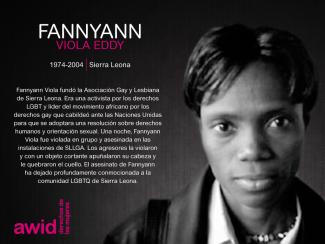
Fannyann Viola Eddy
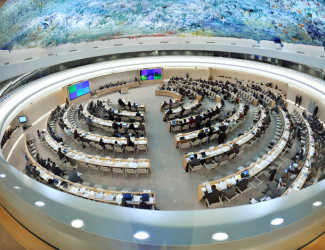
Le Conseil des droits de l'homme (CDH) est un organe intergouvernemental clé du système des Nations Unies, responsable de la promotion et la protection des droits humains autour du globe. Il se réunit trois fois par an en session ordinaire, en Mars, Juin et Septembre. Le Bureau du Haut-Commissariat des Nations Unies aux Droits de l’Homme (HCDH) constitue le secrétariat pour le CDH.
Débat et adopte des résolutions sur les questions globales des droits humains ainsi que sur la situation des droits humains dans des pays particuliers
Examine les plaintes des victimes de violations des droits humains et des organisations activistes, au nom des victimes de violations des droits humains
Nomme des experts indépendants (que l'on connaît sous le nom de « Procédures Spéciales ») pour réviser les cas de violation des droits humains dans des pays spécifiques, ainsi que pour examiner et suivre des questions globales relatives aux droits humains
Prend part à des discussions avec les experts et les gouvernements sur les questions de droits humains
Évalue les bilans des États membres de l'ONU en matière de droits humains tous les quatre ans et demi, dans le cadre de l'examen périodique universel.
La prochaine session du CDH a lieu à Genève, en Suisse, du 30 juin au 17 juillet 2020.
AWID travaille avec des partenaires féministes, progressistes et du domaine des droits humains pour partager nos connaissances clé, convoquer dialogues et évènements avec la société civile, et influencer les négociations et les résultats de la session.
con Manal Tamimi, Bubulina Moreno, Karolina Więckiewicz y Anwulika Ngozi Okonjo
Nunca supe que tenía una familia cercana que me ama y que quiere que crezca. Mi mamá siempre ha estado presente para mí, pero nunca imaginé que tendría miles de familias por otros sitios, con las que no estoy relacionada por lazos de sangre.

Descubrí que la familia no son solo las personas relacionadas por lazos sanguíneos, sino la gente que te ama de forma incondicional, a quienes no les importa tu orientación sexual, ni tu estado de salud, ni tu estatus social, ni tu raza.
Al pensar en los momentos invaluables en que escuché a mis hermanas de todo el mundo que son firmes feministas –gente a quien no he conocido físicamente, pero quienes me apoyan, me enseñan, luchan por mí– me faltan las palabras: las palabras no pueden expresar cuánto las amo a ustedes, mis mentoras, y a las demás feministas. Ustedes son una madre, una hermana, una amiga para millones de chicas jóvenes.
Ustedes son maravillosas, ustedes luchan por personas a quienes no conocen –y eso es lo que las hace tan especiales–.
Mi corazón se alegra de expresar esto por escrito.
Las amo a todas y seguiré amándolas. Nunca he visto a ninguna de ustedes en forma física, pero parece que nos conociéramos desde hace décadas.
Somos feministas y estamos orgullosas de ser mujeres.
Vamos a seguir diciéndole al mundo que nuestra valentía es nuestra corona.
Una carta de amor de FAITH ONUH, una joven feminista de Nigeria
Feminist and women’s rights organizations don’t just rely on institutional funding, we resource ourselves. Our organizing is powered by passion, political commitment, solidarity and collective care.
These resources are self- generated and autonomous, and often invisible in our budgets, but they are the backbone of our organizing.
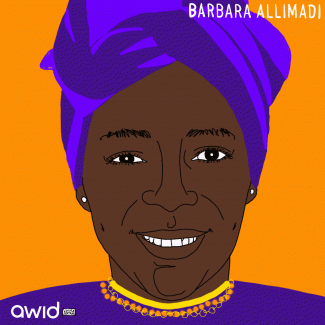
Barbara Allimadi was a political and human rights activist from Uganda. In 2012, she co-organized a protest against a televised police assault of Ingrid Turinawe, an opposition politician who had her breast squeezed by a police officer.
During the protest, Barbara, along with other fellow activists stripped to their bras in front of the Central Police Station in Kampala. This came to be known as the infamous ‘bra protest’ in Uganda.
“We settled on the bra protest. We thought it would be most appropriate for what had happened. It’s not like we were saying we don’t respect ourselves. We were disgusted by what had been done.” - Barbara Allimadi, 2013 (Daily Monitor)
With a Degree in Electronics and Communications Engineering from the London Metropolitan University, Barbara was a network engineer in the United Kingdom and an avid fan of reggae music. She returned to Uganda In 2007, when her mother passed away.
In 2019, she was appointed Coordinator for International and Diaspora Affairs at the Alliance for National Transformation (ANT), a political party launched that year by an opposition leader.
“We want security of life and property, not pain, injury and even death at the hands of security forces who are meant to protect us. Most importantly, we want a stable and enabling environment where we can realize our dreams and aspirations.” - Barbara Allimadi, ANT video
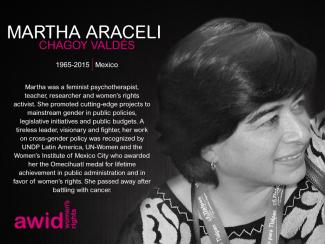
Barbara passed away on 27 April 2020.
“I was so proud of my sister for many things but in particular her fearless pursuit of peace, democracy, justice and equality in Uganda. At the height of her activism she led many marches on the streets of Kampala, to police stations, and Parliament.” - Doris Allimadi, Barbara’s sister
“It is with deep sadness that we have learnt of the untimely passing of Barbara Allimadi. She has been a valiant, relentless and courageous force for the liberation movement of Uganda. Our deepest condolences to her family. She will be sorely missed.” - Akina Mama wa Afrika (tweet on 28 April 2020)
“The passing on of Barbara is so sad for us and her entire family. She dedicated herself to fighting for justice, freedom and rights of others while serving in the civil society until she recently joined us at the party.” Maj Gen Mugisha Muntu, ANT national coordinator
“A beautiful, charming, funny, charismatic and inspirational sister. My children lost their aunty. Uganda lost a brave and courageous freedom fighter. Barbara once said, ‘As long as there is still breath in you, keep working towards your dreams.’” - Doris Allimadi, Barbara’s sister

« Ma mission dans la vie n'est pas simplement de survivre, mais de prospérer; et de le faire avec un peu de passion, un peu de compassion, un peu d'humour et un peu de style. »
Le Forum international de l'AWID est à la fois un événement communautaire mondial et un espace de transformation personnelle radicale. Unique en son genre, le Forum rassemble les mouvements féministes, de défense des droits des femmes, de justice de genre, LBTQI+ et leurs allié.e.s dans toute leur diversité et leur humanité, afin qu'elles.ils se connectent, se soignent et s'épanouissent. Le Forum est un lieu où les féministes du Sud et les communautés historiquement marginalisées occupent le devant de la scène, élaborant des stratégies entre elles et avec les mouvements de justice sociale, afin de modifier le pouvoir, de créer des alliances stratégiques et d'ouvrir la voie à un monde différent et meilleur.
Lorsque les gens se rassemblent à l'échelle mondiale, en tant qu'individus et en tant que mouvements, nous générons une force considérable. Rejoignez-nous à Bangkok, en Thaïlande, en 2024. Venez danser, chanter, rêver et vous élever avec nous.
Quand : du 2 au 5 décembre 2024
Où : Bangkok, Thaïlande; et en ligne
Qui : Environ 2 500 féministes du monde entier participant en personne, et 3 000 participant virtuellement

avec Naike Ledan et Fédorah Pierre-Louis
Dans le monde entier et au sein des mouvements sociaux, les personnes désireuses d’innover ont tendance à se sentir seules et impuissantes face au « statu quo du mouvement ». Historiquement, les Forums de l’AWID ont joué un rôle dans le soutien de ces innovateur·trices en leur offrant une plateforme où leurs idées et pratiques sont accueillies et renforcées par les pensées et actions d’autres personnes de différentes régions et communautés qui les ont déjà explorées. Sara Abu Ghazal, féministe palestinienne au Liban, nous parle de ce qu’ont représenté les Forums pour toute une nouvelle génération de féministes de la région MENA (Moyen-Orient et Afrique du Nord) qui ont introduit de nouvelles façons de s’organiser, de nouvelles conceptions du féminisme et de nouvelles questions dans le paysage régional des droits des femmes.

As the world struggles with multiple intersecting crises, local communities and collectives of various kinds are resisting as also creating constructive alternatives.
📅 Wednesday, November 12, 2025
📍 Seminario Mar Nossa Sra Da Assunção, Pará, Brazil
Le thème du Forum − S'élever ensemble − est une invitation à nous engager avec tout notre être, à nous connecter les un.e.s aux autres de manière ciblée, bienveillante et courageuse, afin que nous puissions sentir le battement de cœur des mouvements mondiaux et nous élever ensemble pour relever les défis de notre époque.
Les mouvements féministes, de défense des droits des femmes, de justice basée sur le genre, LBTQI+ et autres mouvements apparentés du monde entier se trouvent à un tournant décisif, confrontés à un puissant revers/recul sur les droits et libertés précédemment acquis. Ces dernières années ont été marquées par la montée rapide des autoritarismes, la répression violente de la société civile et la criminalisation des femmes et des défenseuses.eurs des droits humains, l'escalade des guerres et des conflits dans de nombreuses régions du monde, la perpétuation des injustices économiques et les crises sanitaires, écologiques et climatiques qui s'entrecroisent.
Nos mouvements sont ébranlés et, en même temps, ils cherchent à construire et à maintenir la force et le courage nécessaires pour le travail à venir. Nous ne pouvons pas faire ce travail seul.e.s, dans nos bulles. La connexion et la guérison sont essentielles pour transformer les déséquilibres de pouvoir persistants et les lignes de faille au sein de nos propres mouvements. Nous devons travailler et élaborer des stratégies de manière interconnectée, afin de pouvoir prospérer ensemble. Le Forum de l'AWID favorise cet ingrédient vital qu'est l'interconnexion dans la pérennité, la croissance et l'influence transformatrice de l'organisation féministe à l'échelle mondiale.
Le 2 septembre 2021, les géniales féministes et activistes pour la justice sociale du festival de l’AWID Crear | Résister | Transform se sont retrouvées, non seulement pour mettre en commun leurs stratégies de résistance, cocréer et transformer le monde, mais également pour parler crûment sur Twitter.
Nana Darkoa Sekyiamah, cofondatrice du blog Adventures From The Bedrooms of African Women et autrice de The Sex Lives of African Women, menait l’exercice, épaulée par la plateforme numérique panafricaine womanist queer AfroFemHub, pour poser la question suivante : Comment pouvons-nous, de manière sûre et consensuelle, explorer notre plaisir, nos désirs et nos fantasmes par textos?
Je pense que c’est une question de très haute importance, parce qu’elle porte sur la question plus large de la navigation en ligne selon un point de vue féministe. Avec le capitalisme, le langage autour des corps et du sexe peut être déshumanisant et perturbant, et aborder le plaisir sexuel sur le numérique peut sembler devoir prendre une tournure performative. Donc, trouver des manières d’examiner comment nous faisons part de notre désir, qu’elles soient à la fois affirmatives et enthousiastes, peut repousser les modèles dominants de présentation et de consommation, et se réapproprier ces espaces comme autant de lieux d’un engagement authentique, prouvant que les sextos devraient tous être justement ça : féministes.
En outre, permettre aux conversations féministes d’incarner leur côté ludique dans les conversations en ligne contribue à recadrer le récit populaire selon lequel les interventions féministes sont tristes et austères. Mais nous le savons bien : s’amuser fait partie de notre politique, et est inhérent à ce qu’être féministe veut dire.
À l’aide du mot-dièse #SextLikeAFeminist des universitaires et des activistes du monde entier se sont donné rendez-vous pour partager leurs tweets féministes les plus affamés, et voici mes dix favoris.
Comme ces tweets le montrent, sextoter comme une féministe est à la fois sexy, drôle – et chaud. Mais sans jamais perdre de vue son engagement en faveur de l’équité et de la justice.
Esta política rige para todas las páginas alojadas en https://www.awid.org/ y para cualquier otro sitio web bajo el control de AWID (el «Sitio web») y para las suscripciones a estos sitios. No se aplica a páginas alojadas por otras organizaciones distintas a AWID, hacia las cuales podemos dirigir un hipervínculo y cuyas políticas de privacidad pueden ser diferentes. Por favor, lee la siguiente política para que puedas comprender nuestra política de privacidad en cuanto a su naturaleza, propósito, uso y divulgación de tu información personal e identificable que es recogida a través de este sitio web.
En general, puedes navegar este sitio web sin enviarnos información personal. Sin embargo, en algunas circunstancias, te pediremos esa información personal.
Cuando te encuentras en el sitio web y se te pide información personal, estás compartiendo esa información sólo con AWID.
1.1.1 La información que nos das para recibir actualizaciones de AWID:
Cuando te registras para usar el sitio (por ejemplo, te suscribes para recibir correos electrónicos o para solicitar membresía) nos das la información necesaria acerca de ti, como tu nombre, país, idioma, para recibir actualizaciones por correo electrónico. Nos das esta información a través de formularios seguros y es almacenada en servidores seguros.
1.1.2 La información de pago que nos das para hacerte miembrx o para anotarte en algún evento:
Además, puede ser necesario que nos des información sobre el pago cuando te haces miembrx o cuando te anotas para eventos. AWID no almacena en sus servidores ninguna información relativa a tarjetas de crédito y usa portales seguros para procesar la información relativa a pagos.
1.1.3 La información opcional que decidiste darnos (con consentimiento)
Cuando te comunicas con AWID o nos das información opcional a través de formularios en el sitio web o utilizas el sitio para comunicarte con otrxs miembrxs, recogemos información sobre tu comunicación y cualquier otra información que elijas dar.
1.1.4 Información que nos das a través de los formularios de contacto o cuando te comunicas directamente con nosotrxs
Cuando te comunicas con nosotrxs, recogemos tu comunicación y toda otra información que decidas darnos.
Además, cuando interactúas con el Sitio web, nuestros servidores pueden llevar un registro de actividad que no te identifica personalmente («Información no personal»). Por lo general, recogemos las siguientes categorías de información no personal:
Para más información sobre las cookies, por favor consulta All about cookies.
Si no deseas recibir cookies puedes cambiar fácilmente tu navegador web para que rechace las cookies o notificarte cuando recibes una nueva cookie. Puedes mirar aquí cómo hacerlo.
AWID utiliza la información que recogemos acerca de ti para:
Si te has subscrito a los boletines electrónicos de AWID o a nuestras actualizaciones por correo electrónico o si te has hecho miembrx, te enviaremos comunicaciones regularmente en la forma especificada en el área correspondiente del sitio web. Puedes cancelar la suscripción de cualquiera de los boletines electrónicos o actualizaciones de correo electrónico en cualquier momento siguiendo los pasos indicados para ello en nuestros correos.
Es importante para AWID que tu información de identificación individual sea precisa. Siempre estamos buscando cómo hacer más fácil que puedas revisar y corregir la información que AWID tiene acerca de ti en nuestro sitio web. Si cambias tu dirección de correo electrónico, o si cualquier otra información que tengamos es incorrecta o desactualizada, por favor escríbenos a esta dirección.
Con excepción de lo explicado más abajo, AWID no revelará ninguna información personal acerca de ti que sea identificable, y no venderá ni alquilará a tercerxs listados conteniendo tu información. AWID podrá revelar información cuando tenga tu permiso para hacerlo o bajo circunstancias especiales, por ejemplo cuando crea de buena fe que la ley se lo exige.
De manera permanente implementamos y actualizamos las medidas administrativas, técnicas y de seguridad física para proteger tu información de accesos no autorizados, pérdida, destrucción o alteración. Algunas de las salvaguardas que usamos para proteger tu información son cortafuegos, encriptación de datos y controles de acceso a la información. Si sabes o tiene razones para creer que tus credenciales de membresía a AWID se han perdido, han sido robadas, malversadas o comprometidas de alguna forma o en caso de que sepas o sospeches de uso no autorizado de tu cuenta de membresía a AWID, por favor ponte en contacto con nosotrxs a través de nuestra página.
Esta política puede cambiar periódicamente. La política modificada será publicada en este sitio web y al final del texto se actualizará la fecha de Última actualización. Se enviará un correo electrónico con la actualización de la política revisada y si no estás de acuerdo con ella tendrás la opción de cancelar tu suscripción o suscripciones con nosotrxs. También puedes escribirnos aquí. ¡Agradecemos tus opiniones!
Última actualización: mayo de 2019
As these tweets show, it turns out that sexting like a feminist is sexy, funny – and horny. Yet, it never loses sight of its commitment to equity and justice.

Ce calendrier est un cadeau que nous vous faisons à vous et aux 8 000 membres de notre communauté féministe mondiale. C’est notre promesse de moments d’activisme et de connexion pour l’année à venir. Ces derniers mois ont porté leur lot d’injustices indescriptibles. Cette année encore, continuons à cultiver la puissance du collectif, à établir des stratégies et à trouver des solutions porteuses d’espoir. Pour un monde plus juste pour toustes.
En feuilletant les pages de ce calendrier, vous remarquerez la diversité des œuvres de nos membres artistes, qui se servent de leur travail pour amplifier et relier nos différents mouvements sous le parapluie féministe. Vous retrouvez-vous dans ces pages ? Y retrouvez-vous votre mouvement, vos communautés ? Nous vous encourageons à utiliser ce calendrier utile pour marquer le temps, l’espace, mais aussi pour inscrire les possibilités d’établir des connexions avec les féministes et les activistes.