Les acteurs anti-droits ont eu un impact substantiel sur le cadre relatif aux droits humains et sur l’interprétation progressiste des normes relatives à ces droits, en particulier dans le champ du genre et de la sexualité.
Pour mesurer l’impact de l’action des conservateurs dans les espaces politiques internationaux, il suffit de constater l’immobilisme et les régressions qui caractérisent la situation actuelle.
Nous sommes témoins de l’affaiblissement des accords et des engagements existants ; de négociations dans l’impasse ; du travail de sape continu mené à l’encontre des agences des Nations Unies, des organes de surveillance des traités et des Procédures spéciales ; et enfin de l’intégration d’un langage rétrograde dans les documents internationaux relatifs aux droits humains.
La commission de la condition de la femme
La CSW, qui se réunit chaque année en mars, est depuis longtemps l’un des espaces les plus contestés du système des Nations Unies. En mars 2015, les conservateurs ont donné le ton avant même que les événements ou les négociations ne commencent. Le document final élaboré par la Commission s’est avéré être une Déclaration très peu ambitieuse qui avait été négociée avant même que les activistes des droits des femmes n’aient pu intervenir.
Pendant la CSW 2016, le nouveau Caucus des jeunes a été infiltré par un grand nombre d’activistes anti-avortement et anti-droits sexuels et reproductifs qui ont réussi à réduire les organisations de jeunes progressistes au silence. Une fois de plus, les intenses négociations ont abouti à un texte terne dans lequel les éléments relatifs à « la famille » sont formulés dans un langage rétrograde.
Alors qu’il est devenu particulièrement important et urgent de faire progresser les droits humains des femmes, la CSW est devenue un espace affaibli et dépolitisé. Il est de plus en plus difficile d’envisager d’y faire progresser ces droits dans la mesure où les activistes progressistes utilisent toute leur énergie pour essayer de faire barrage au recul voulu par les conservateurs.
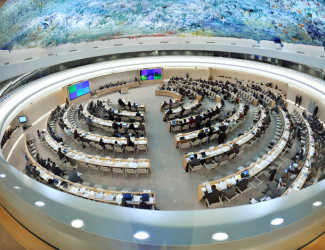
Le Conseil des droits de l’homme
En tant qu’organe intergouvernemental responsable de la promotion et de la protection des droits humains dans le monde entier, le CDH est une porte d’entrée essentielle pour les conservateurs. Ces dernières années, cette institution a été le théâtre d’un certain nombre de démarches anti-droits.
En concertation avec d’autres acteurs anti-droits, certains États et blocs d’États conservateurs ont adopté une stratégie qui vise à faire retirer tout langage progressiste des résolutions et à introduire des amendements hostiles. Ils s’attaquent le plus souvent aux résolutions qui traitent de droits relatifs au genre et à la sexualité.
Par exemple, lors de la session du CDH qui s’est tenue en juin 2016, les États membres de l’Organisation de coopération islamique (OCI) et leurs alliés se sont opposés à l’adoption d’une résolution sur la discrimination à l’égard des femmes. Au cours de négociations tendues, de multiples dispositions ont été supprimées, y compris celles relative au droit des femmes et des filles de contrôler leur sexualité et leur santé ainsi qu’à leurs droits sexuels et reproductifs. Ont également été supprimées toutes les dispositions portant sur la nécessité d’abroger les lois qui perpétuent l’oppression patriarcale des femmes et des filles dans les familles et celles qui criminalisent l’adultère ou pardonnent le viol conjugal.
Le CDH a également été le théâtre d’initiatives pernicieuses des conservateurs visant à coopter les normes relatives aux droits humains et à introduire un langage conservateur en matière de « droits humains » – comme celui utilisé dans les résolutions en faveur des « valeurs traditionnelles » soutenues par la Russie et ses alliés et, plus récemment, dans le cadre de la campagne pour la « protection de la famille ».
La Commission des droits de l’homme
En 2015, un certain nombre d’organisations religieuses conservatrices ont ouvert un nouveau front de lutte en commençant à s’attaquer à la Commission des droits de l’homme, organe de contrôle de l’application du Pacte international relatif aux droits civils et politiques (PIDCP) et instrument essentiel pour les droits humains.
Des groupes anti-droits se sont mobilisés dans l’espoir de faire inclure leur rhétorique anti-avortement dans le traité.
Lorsque la Commission a annoncé qu’elle rédigeait une nouvelle interprétation autorisée du droit à la vie, plus de 30 acteurs non étatiques conservateurs ont envoyé des observations écrites, avançant leurs arguments fallacieux sur le « droit à la vie » – à savoir que la vie commence dès la conception et que l’avortement est une violation de ce droit. Ils ont demandé à ce que ces idées soient incorporées dans l’interprétation de l’article 6 par la Commission.
L’action concertée de ces groupes conservateurs auprès de la Commission des droits de l’homme représente une évolution notable dans la mesure où elle concrétise la volonté des acteurs anti-droits de saper et d’invalider le travail essentiel qu’accomplissent les organes de surveillance de l’application des traités, dont celui de la Commission des droits de l’homme elle-même.
Les négociations sur les ODD et le Programme de développement durable à l’horizon 2030
En 2015, les acteurs anti-droits ont mené des actions de plaidoyer dans le cadre de l’élaboration des nouveaux objectifs de développement durable (ODD), insistant une nouvelle fois sur les droits relatifs au genre et à la sexualité. Leurs efforts pour faire adopter un langage rétrograde dans le Programme de développement durable à l’horizon 2030 ont été moins fructueux.
Néanmoins, après avoir réussi à empêcher l’inclusion d’un langage progressiste dans le texte final, les conservateurs ont ensuite adopté une autre stratégie. Pour minimiser la responsabilité des États et saper l’universalité des droits, plusieurs États ont émis de multiples réserves sur les ODD.
Au nom du Groupe des États africains membres de l’ONU, le Sénégal a affirmé que les États africains ne « mettraient en œuvre que les ODD alignés sur les valeurs culturelles et religieuses de ses pays membres ».
Le Saint-Siège a également émis un certain nombre de réserves, affirmant qu’il était « certain que l’engagement selon lequel ‘personne ne serait laissé de côté’ serait compris comme une reconnaissance du droit à la vie de la personne, de la conception jusqu’à la mort naturelle ».
L’Arabie saoudite est allée plus loin encore, déclarant que le pays ne suivrait pas les règles internationales relatives aux ODD qui feraient référence à l’orientation sexuelle ou à l’identité de genre, les qualifiant de « contraires à la loi islamique ».
L’Assemblée générale des Nations Unies
Les acteurs anti-droits ont un pouvoir d’influence de plus en plus marqué au sein de l’Assemblée générale des Nations Unies. En 2016, lors de la 71e session, l’AG a été le théâtre de la féroce opposition des acteurs anti-droits à un nouveau mandat créé en juin 2016 en vertu de la Résolution du Conseil des droits de l’homme sur l’orientation sexuelle et l’identité de genre : le mandat d’Expert indépendant pour la protection contre la violence et la discrimination basées sur l’orientation sexuelle et l’identité de genre[Béné1] (OSIG). Quatre actions ont été mises en œuvre dans les espaces de l’AG pour tenter de réduire la portée de ce mandat.
Le Groupe des États africains a notamment coordonné la présentation d’une résolution hostile auprès de la Troisième Commission[Béné2] , visant essentiellement à faire indéfiniment ajourner ce nouveau mandat. Bien que cette tentative n’ait pas abouti, il s’agit d’une tactique nouvelle et préoccupante visant à bloquer rétroactivement la création d’un mandat présenté par le Conseil des droits de l’homme.
Les acteurs anti-droits œuvrent maintenant à porter directement atteinte à l’autorité du CDH auprès de l’Assemblée générale. Les acteurs anti-droits ont également tenté de nuire à ce mandat en menant une actions auprès de la Cinquième Commission (chargée des questions administratives et budgétaires). Cette initiative inédite a conduit un certain nombre d’États à tenter (encore une fois sans succès) de bloquer le financement des experts des droits humains de l’ONU, dont celui de l’Expert indépendant pour la protection contre la violence et la discrimination basées sur l’orientation sexuelle et l’identité de genre.
Bien que ces multiples tentatives n’aient pas réussi à empêcher la création et le maintien de ce nouveau mandat, le soutien important que ces acteurs ont reçu, les stratégies innovantes qui ont été mise en œuvre et les puissantes alliances régionales qui se sont forgées tout au long des négociations nous donnent une idée des difficultés auxquelles nous allons devoir faire face.
Télécharger le chapitre complet (en anglais)
Autres chapitres
Lire le rapport complet (en anglais)