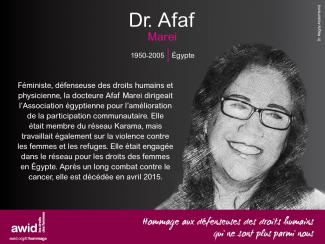
Dr. Afaf Marei
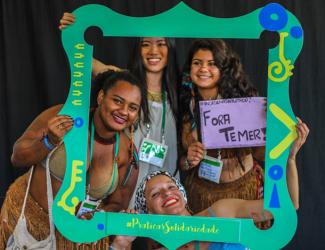
Les jeunes activistes féministes jouent un rôle crucial au sein des organisations et des mouvements pour les droits des femmes à travers le monde. Ce sont elles qui soulèvent les nouveaux problèmes auxquels les féministes sont confrontées aujourd'hui. Leur force, leur créativité et leur adaptabilité sont vitales pour assurer la viabilité des organisations féministes.
Pourtant, elles sont confrontées à toute une série d’obstacles particuliers, notamment l'accès limité au financement et au soutien, le manque de possibilités de renforcement des capacités et une augmentation considérable des agressions sur les jeunes défenseuses des droits humains. Ces obstacles entraînent un manque de visibilité qui rend leur intégration et leur participation effective au sein des mouvements pour les droits des femmes encore plus difficiles.
Le Programme d’activisme des jeunes féministes de l'AWID a été mis en place pour veiller à ce que les voix des jeunes femmes soient entendues et représentées dans le discours féministe. Nous voulons faire en sorte que les jeunes féministes aient un meilleur accès à du financement, à des opportunités de renforcer leurs capacités et aux processus internationaux.
En plus de soutenir directement les jeunes féministes, nous travaillons également avec des activistes des droits des femmes de tout âge pour élaborer des modèles et des stratégies d’organisation multigénérationnelles plus efficaces.
Nous souhaitons que les jeunes féministes puissent jouer un rôle actif dans les prises de décisions qui concernent leurs droits. Nos actions incluent :
Favoriser la mise en commun et le partage d'informations par la Plateforme de jeunes féministes. Étant donné l'importance des médias en ligne pour le travail des jeunes féministes, notre équipe a lancé la Plateforme de jeunes féministes en mai 2010. Elle a pour objectifs d’échanger des renseignements, de renforcer les capacités des membres par le truchement de webinaires et de discussions en ligne, et d'encourager la consolidation d’une communauté de jeunes féministes.
Soutenir la recherche et le renforcement des connaissances sur l'activisme des jeunes féministes, pour accroître la visibilité et l'influence de leur activisme au sein et entre les mouvements pour les droits des femmes et auprès d'autres acteurs-trices clés, tels les donateurs.
Faire la promotion de la collaboration multigénérationnelle, en explorant de meilleures façons de travailler ensemble.
Inciter les jeunes féministes à s’engager dans les processus internationaux relatifs au programme de développement, notamment ceux des Nations Unies.
S’assurer leur collaboration dans tous les domaines prioritaires de l'AWID, y compris le Forum, pour faire en sorte que leurs contributions, leurs perspectives, leurs besoins et leur activisme se traduisent dans les débats, les politiques et les programmes qui les concernent.
Follow the campaign:
Join us!
Join our Membership| Join AWID Community
Stay updated
Questions?
Contact us: communications @ awid.org
Graphics based off illustrations by Vectorarte.
En este momento, muchos sistemas de conocimientos comunitarios están en riesgo.
Los cambios vertiginosos que se dan a nivel económico, político y cultural están arrasando con ambientes, prácticas y medios de vida. Diversas formas de conocimiento están siendo borradas como prácticas, mercantilizadas y colonizadas por una globalización que se lo devora todo y a cambio de la promesa de logros en el corto plazo o paliativos.
El Buen Vivir /Vivir Bien, un concepto adaptado de los conocimientos de los pueblos indígenas andinos, se define como el logro colectivo de una vida en plenitud, basada en las relaciones armónicas y equilibradas entre los seres humanos y todos los seres vivientes, con reciprocidad y en complementariedad. Implica reconocer que los seres humanos formamos parte de la naturaleza, dependemos de ella y somos interdependientes entre nosotrxs.
Una visión que integra la producción y la reproducción como procesos inseparables de la economía, la producción de riqueza y las condiciones de vida es inherente al Buen Vivir / Vivir Bien.
Una mirada del Buen Vivir /Vivir Bien desde una óptica feminista valora las relaciones y los recursos que se movilizan en los ciclos de producción y reproducción — a favor de un equilibrio que no tiene que ver solo con el mercado — para garantizar la continuidad y los cambios siempre que sean compatibles con la justicia económica y la sostenibilidad de la vida.
Desde una perspectiva feminista también se ha criticado la concepción binaria del género y de la complementariedad entre hombres y mujeres en el Buen Vivir /Vivir Bien. Las concepciones binarias dejan poco espacio para un análisis más profundo del heteropatriarcado y de las relaciones de género disidentes.
Sin embargo, uno de los principales aportes que ofrece el principio del Buen Vivir / Vivir Bien cuando se le otorga un lugar central en los marcos de referencia políticos, económicos y sociales, es que la igualdad deja de ser el paradigma de los derechos individuales y su lugar pasa a ser ocupado por la transformación de la sociedad como un todo.

La fecha límite para proponer actividades se extiende hasta el 1ero de Febrero de 2024.
En el espíritu del tema del Foro, invitamos a proponer una diversidad de tópicos y formatos para actividades que:
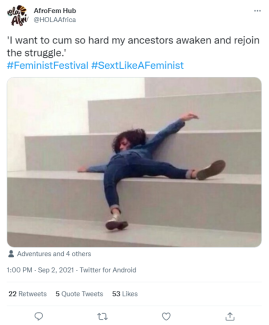
‘Quiero acabar/venirme/correrme tan fuerte que despierte a mis ancestrxs y haga que vuelvan a sumarse a la lucha’
First High-level Dialogue on Financing for Development, 29-30 October 2003
One of the follow up mechanisms to the Monterrey conference are the UN General Assembly High-level Dialogues on Financing for Development held every two years. In total eight roundtable meetings took place following the Dialogue on various issues including agricultural subsidies, trade, debt relief and funding of the MDGs. All the discussions focused on dealing with the structural hindrances on these issues that disadvantaged ‘developing’ nations.
Other follow up mechanisms to Monterrey included:
Este año, junto con activistas feministas de todo el mundo, estaremos en la CSW68 en Nueva York .Estaremos presentes para desafiar las narrativas capitalistas y neoliberales y las falsas soluciones en torno a la pobreza, el desarrollo y la financiación. A través de eventos presenciales, transmisiones en vivo en nuestras redes sociales, un stand de exhibición y más. Nos presentamos para convocar, amplificar y apoyar las voces y la participación de nuestra membresía y aliades.
Conoce más sobre nuestro programa para este año a continuación.
This project is built in collaboration with:


We would also like to thank the following people for their valuable contribution:
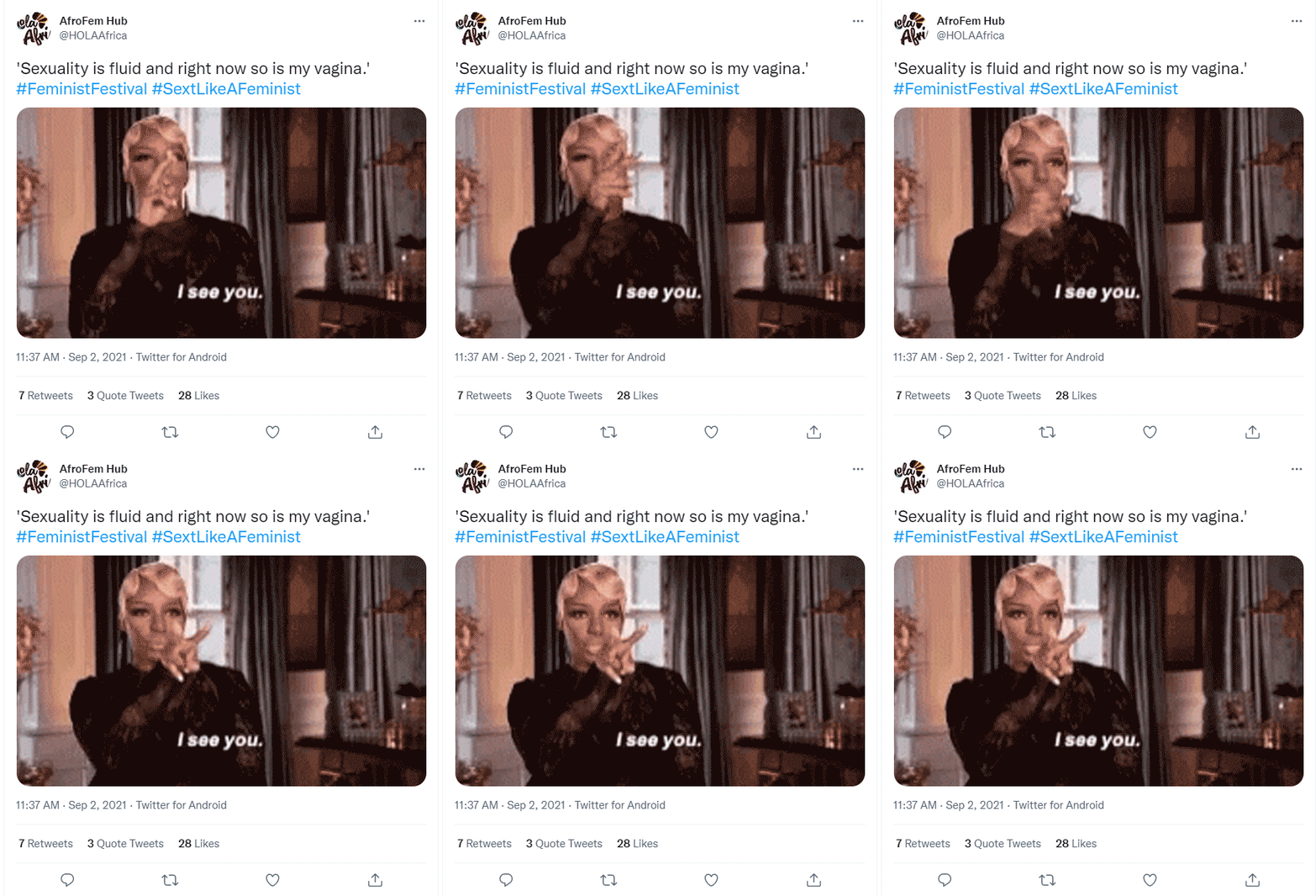
Comme ces tweets le montrent, sextoter comme une féministe est à la fois sexy, drôle – et chaud. Mais sans jamais perdre de vue son engagement en faveur de l’équité et de la justice.
Lisez nos recherches sur le financement, sur les défenseuses des droits humains, sur la création de mouvements, sur les fondamentalismes, la justice économique et beaucoup plus
Nous constatons une implication sans précédent des acteurs anti-droits dans les espaces internationaux consacrés aux droits humains. Pour être plus efficaces et plus audibles, les acteurs anti-droits œuvrent à la constitution d’alliances tactiques qui regroupent différents secteurs et confessions et franchissent les frontières régionales et nationales.
Cette « alliance impie » entre des acteurs traditionalistes issus de milieux catholiques, évangéliques, mormons, orthodoxes russes et musulmans s’est construite autour d’une cause commune qui se concrétise dans un certain nombre de thèmes de discussion et d’efforts communs de plaidoyer visant à réduire à néant les progrès obtenus par les féministes en matière de droits sexuels au niveau international.
Activités clés : en tant que gouvernement de l’Église catholique romaine, le « Saint-Siège » utilise son statut unique d’État observateur permanent auprès de l’ONU pour faire pression en faveur de visions conservatrices, patriarcales et hétéronormatives de la féminité, de l’identité de genre et de la « famille ». Il promeut des politiques anti-avortement et anti-contraception.
Basé à : la Cité du Vatican, Rome, Italie.
Affiliation religieuse : catholique.
Connexions avec d’autres acteurs anti-droits : groupes chrétiens américains ; alliances interreligieuses orthodoxes ; OSC catholiques.
Activités clés : l’OCI se définit comme la « voix collective du monde musulman » et agit comme un bloc d’États au sein des Nations Unies. Elle tente d’ouvrir des brèches dans le système de protection des droits humains en s’appuyant sur des références à la religion, à la culture ou à la souveraineté nationale. Elle promeut le concept de « famille traditionnelle » et contribue à la mise en place d’un régime parallèle de droits humains doté d’un caractère plus restrictif (voir par exemple la Déclaration du Caire de 1990 sur les droits humains dans l’Islam).
Basé à : Djeddah, Arabie Saoudite.
Affiliation religieuse : musulmane.
Connexions à d’autres acteurs anti-droits : missions des États ultraconservateurs auprès de l’ONU, par exemple la Russie.
Activités clés : conférences internationales et régionales ; production et diffusion de recherches et de connaissances ; lobbying auprès des Nations Unies pour « défendre la vie, la foi et la famille ».
Basé à : Rockford, Illinois, États-Unis.
Affiliation religieuse : prédominance catholique et chrétienne évangélique.
Connexions à d’autres acteurs anti-droits : le Sutherland Institute, un groupe de réflexion conservateur ; l’Église des Saints des Derniers Jours ; le département de la famille et de la vie de l’Église orthodoxe russe ; les prêtres catholiques anti-avortement et pro-vie ; la Fondation pour la culture et le patrimoine africains ; la Fédération polonaise des mouvements pro-vie ; la Fédération européenne des associations de familles catholiques ; le Comité des ONG de l’ONU sur la famille ; le Réseau politique pour les valeurs ; la Société démographique géorgienne ; des parlementaires polonais, moldaves, etc. ; FamilyPolicy ; l’Institut russe d’études stratégiques ; HatzeOir ; C-fam ; et d’autres encore.
Activités clés : lobbying auprès des Nations Unies, en particulier auprès la Commission de la condition de la femme, pour la « défense de la vie et de la famille » ; diffusion d’informations diverses (par ex. les bulletins faxés du vendredi) ; travail de construction du mouvement ; formations à l’intention des militants conservateurs.
Basé à : New York et Washington D.C., États-Unis.
Affiliation religieuse : catholique.
Connexions avec d’autres acteurs anti-droits : l’International Youth Coalition (Coalition internationale de la jeunesse) ; l’Alliance mondiale pour la jeunesse ; Human Life International ; le Saint-Siège ; coordination de la Civil Society for the Family ; le Family Research Council (États-Unis) et d’autres OSC anti-droits chrétiennes/catholiques ; délégation des États-Unis auprès de la CSW.
Activités clés : lobbying dans les espaces internationaux consacrés aux droits humains pour des politiques pro-famille, anti-LGBT*Q et anti-ESC (éducation sexuelle complète) ; formations à l’intention des acteurs de la société civile et des délégués d’États membres (par exemple « Le Guide des ressources sur la langue consensuelle des Nations Unies sur les questions familiales ») ; diffusion d’informations ; production de savoirs et d’analyses ; campagnes en ligne.
Basé à : Gilbert, Arizona, États-Unis.
Affiliation religieuse : Mormone.
Connexions avec d’autres acteurs anti-droits : en charge du Caucus sur les droits de la famille à l’ONU ; C-fam ; JONAH (Juifs offrant de nouvelles alternatives à l’homosexualité)[Béné1] ; NARTH, l’Association nationale pour la recherche et la thérapie de l’homosexualité (USA) ; le Congrès mondial des familles ; CitizenGo ; l’Institut Magdalen ; l’Associación La Familia Importa ; le Groupe des amis de la famille (bloc de 25 États).
Activités clés : plaidoyer pour « la famille » et contre les droits sexuels et reproductifs dans les espaces politiques internationaux, y compris les Nations Unies, l’Union européenne et l’Organisation des États américains ; formation des jeunes membres à l’art de la diplomatie et de la négociation, aux relations internationales, aux activités de terrain et au développement d’une communication efficace ; programme de stage pour encourager la participation des jeunes aux activités de l’alliance ; conférences régulière des leaders émergents ; production et diffusion de savoirs.
Basé à : New York (États-Unis) avec des bureaux régionaux à Nairobi (Kenya), Quezon (Philippines), Bruxelles (Belgique), Mexico (Mexique) et Beyrouth (Liban).
Affiliation religieuse : principalement catholique, mais vise l’affiliation interreligieuse.
Connexions avec d’autres acteurs anti-droits : C-Fam ; Human Life International ; le Saint-Siège ; la campagne Life Coalition.
Activités clés : l’Église orthodoxe russe, en capitalisant sur ses liens étroits avec l’État russe, fonctionne comme un « entrepreneur de normes » dans le cadre des débats sur les droits humains. La Russie et l’Église orthodoxe russe ont coopté le langage des droits humains pour souligner l’importance de la « moralité » et des « valeurs traditionnelles » définies comme des fondements prétendument essentiels des droits humains. La Russie a mené une série d’actions pour que le Conseil de l’Europe adopte des résolutions fondées sur les « valeurs traditionnelles » et a été en première ligne du travail visant à proposer des amendements hostiles aux résolutions progressistes dans des domaines tels que la mortalité maternelle, la protection du champ d’action de la société civile et le droit de manifester pacifiquement.
ใหม่
ผู้เข้าร่วมประชุมออนไลน์สามารถดำเนินรายการในโปรแกรมต่างๆ เชื่อมต่อและสนทนากับผู้อื่น และสัมผัสประสบการณ์ความคิดสร้างสรรค์ ศิลปะ และการเฉลิมฉลองของเวที AWID ได้โดยตรง ผู้เข้าร่วม ที่เชื่อมต่อออนไลน์จะได้พบกับกับโปรแกรมที่เข้มข้นและหลากหลาย ตั้งแต่การประชุมเชิงปฏิบัติการ การอภิปราย ไปจนถึงโปรแกรมกิจกรรมเยียวยาและการแสดงดนตรี โดยที่กิจกรรมบางอย่างจะเน้น การเชื่อมต่อระหว่างผู้เข้าร่วมออนไลน์ด้วยกัน ในขณะที่กิจกรรมอื่นๆจะเป็นการเชื่อมต่อแบบผสมผสาน เพื่อการมีปฏิสัมพันธ์กันระหว่างผู้เข้าร่วมออนไลน์และผู้ที่อยู่กรุงเทพฯ

Publication de la version zéro du document final, mars 2015