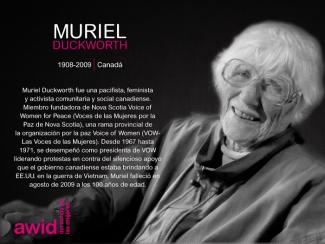
Muriel Duckworth
Au cours des dernières années, nous avons observé une nouvelle tendance inquiétante dans les espaces internationaux consacrés aux droits humains. Les discours axés sur « la protection de la famille » sont en effet utilisés pour défendre des violations des droits de membres de la famille, pour renforcer et justifier l’impunité des auteurs de ces violations et pour restreindre l’égalité des droits au niveau de la vie familiale.
La campagne en faveur de la « Protection de la famille » est motivée par une volonté conservatrice d’imposer des conceptions « traditionnelles » et patriarcales de la famille et de priver les membres de la famille de leurs droits pour les transférer à « l’institution familiale ».
Depuis 2014, un groupe d’Etats travaille de front dans les espaces dédiés aux droits humains sous le nom de « Group of Friends of the Family » (Groupe des ami-e-s de la famille) ; des résolutions sur la « Protection de la famille » ont été adoptées chaque année depuis 2014.
Ce programme s’est propagé au-delà du Conseil des droits humains. Nous avons observé l’introduction d’un discours régressif autour de la « famille » à la Commission sur la condition de la femme, ainsi que des tentatives d’introduction dans les négociations sur les Objectifs de développement durable.
L’AWID travaille avec des partenaires et des allié-e-s pour s’opposer ensemble à la « Protection de la famille » et à d’autres programmes régressifs et défendre l’universalité des droits humains.
En réponse à l’influence croissante d’acteurs régressifs au sein des espaces dédiés aux droits humains, l’AWID a rejoint des allié-e-s afin de créer l’Observatoire sur l'Universalité des droits (OURs) (site en anglais). L’OURs est un projet de collaboration qui surveille, analyse et diffuse les informations concernant les initiatives anti-droits telles que la « Protection de la famille ».
Le premier rapport de l’OURs, Nos droits en danger, trace une cartographie des acteurs et actrices qui constituent le lobby mondial anti-droits et identifie leur réthorique et stratégies clés ainsi que leur impact sur les droits humains.
Le rapport précise que le programme de « Protection de la famille » a développé une collaboration entre un large éventail d’acteurs régressifs aux Nations Unies, qu’il décrit comme « un cadre stratégique abritant des positions anti-droits et patriarcales multiples, où le cadre vise entre autres à légitimer et institutionnaliser ces positions. »
En 2021, AWID, junto con muchas otras organizaciones, comenzábamos a asumir las consecuencias de la pandemia global, todavía en curso, para nuestro modo de trabajo y nuestro rol en este momento tan particular. Fue un año que nos enseñó tres lecciones cruciales sobre cómo transitar este momento como organización global de apoyo a los movimientos feministas.
Descargar el informe anual 2021
Lo que nos queda claro de nuestra experiencia en 2021 es el rol preponderante -y de alguna forma singular- que AWID desempeña en la construcción y el sostenimiento de una comunidad feminista global transversal a diversas identidades y temas.
Nuestros pensamientos acompañan a las numerosas personas de todo el mundo que se ven más afectadas por las repercusiones de la pandemia global del COVID-19, en especial, en las comunidades marginalizadas que han sido oprimidas históricamente.
Esta es una invitación destinada a artistas y activistas creativxs que quieran reunirse en un espacio virtual para conectarse, construir comunidad y apoyarse mutuamente en estos tiempos difíciles. Con este objetivo, hemos creado una comunidad de Slack nueva, para compartir en forma segura pensamientos, aprendizajes, trucos de vida, recursos, consejos, temores y ansiedades, recordatorios esperanzadores y alegres, y para charlar en general sobre cómo estamos.
Después de completar el formulario, le enviaremos una invitación personal a la comunidad.

Para quienes Slack es una herramienta nueva, y después de que se inscriban, les daremos sesiones y materiales de orientación.
Dado que aquí estamos trabajando en tres idiomas (inglés, español y francés), te pedimos que escribas en el idioma que te resulte más cómodo y utilices herramientas de traducción en línea (Google Translate u otras) para participar de las conversaciones.
La creación conjunta de nuestras realidades feministas comienza con nosotrxs mismxs y con cómo nos tratamos mutuamente. Nos esforzamos por crear y proteger espacios seguros para nuestras comunidades, tanto en línea como en forma presencial. También creemos que los espacios seguros y amigables son de propiedad y creación conjuntas. Esperamos que nuestrxs integrantes actúen de manera ética, responsable y consistente con los valores de AWID, y asuman la responsabilidad colectiva de garantizar una atmósfera de respeto y solidaridad recíprocos.
Como parte de nuestras conversaciones en curso, en Slack ofreceremos disparadores semanales, para facilitar el diálogo e inspirar los procesos artísticos en forma amable. Este puede ser un proceso introspectivo, pero para aprovechar al máximo esta comunidad, lxs invitamos a interactuar con lxs demás integrantes y compartir ideas, como parte de nuestras discusiones . La intención es invitar a la gente a responder de manera libre y gradual, escribiendo o produciendo arte como mejor lo sientan.
Esperamos mantener conversaciones relevantes y oportunas con ustedes, y, por lo tanto, apreciaremos tus sugerencias y comentarios. En general, los temas estarán centrados en las experiencias y perspectivas de artistas, escritorxs y creadorxs,que generarán un espacio donde lxs integrantes puedan describir e imaginar el clima global actual (y el que vendrá) a través de la lente de las realidades feministas.
Striking against all odds: the story of Solidarity Network’s unprecedented win.
In January 2022, the Solidarity Network organized a strike with 400 workers. Their main demand? To increase wages. The strike was called following months of unsuccessful talks with the Georgian Ministry of Social Affairs as part of a labor dispute.
After weeks of protesting, negotiating, speaking to the media, withstanding backlash, and enduring the blistering cold of Georgian winter, the workers won unprecedented concessions from the government: wage increase, paid maternity leave, the covering of transportation costs, no lay-offs, compensation for strike days, and more.
The strike did not only result in material gains, it also left the workers feeling united and empowered to stand up for themselves and fight for dignified working conditions now and in the future. They became a source of inspiration for all workers across the country.
You can read more about their victory here.
Всего 47 вопросов, из которых 27 являются обязательными*, а остальные 20 – дополнительными. Большинство вопросов – это вопросы с множественным выбором. Мы надеемся, что вы ответите на все вопросы.
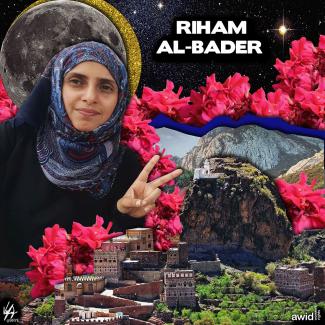
Riham fue una abogada y activista comprometida con el registro y denuncia de las violaciones de derechos en Yemen.
Trabajó junto a otrxs activistas en el suministro de agua y alimentos para la población civil atrapada por las milicias huzíes en las afueras de la ciudad de Taiz.
Riham fue asesinada en febrero de 2018 pero todavía no se confirmó si la mató un francotirador o si fue alcanzada por los disparos de una aeronave. No se ha imputado a nadie por su homicidio.
Expand your boundaries. AWID members increasingly represent a diverse and vibrant cross-section of feminists working on land rights, workers’ rights, sexual rights and bodily autonomy, among other issues. By joining us as a member, you can connect your struggles across movements.
Stephanie Bracken is a feminist who is dedicated to building and supporting strong systems that meet the needs of the moment and the people who interact with them, and serve principles of justice. She holds a Master of Human Rights from the University of Sydney and a BA in Gender Studies, History, and Philosophy from McGill University, and has experience working with feminist and social justice organizations on monitoring, evaluation & learning, strategic work planning, governance, project management, and building operational systems and processes. Stephanie is based in Tiohtià:ke/Montreal, where she enjoys singing with others, camping, fiber arts, and spending time with her kids and community.
par Gabrielle Tesfaye
Quand j’ai créé mon court-métrage d’animation The Water Will Carry Us Home, mon esprit était branché sur un monde magique de résilience téméraire et de sirènes ancestrales transformant leurs cicatrices/plaies les plus profondes en une nouvelle vie. Le film se déroulant à l’époque du commerce transatlantique de l’esclavage, j’ai eu envie de montrer l’histoire de l’esclavage américain, telle qu’elle n’a jamais été racontée précédemment. Je voulais offrir à mes ancêtres la commémoration qu’iels n’ont jamais reçue, et j’avais comme motivation de m’approprier l’histoire qui continue à nous dépeindre comme des victimes désemparées. Je voulais simplement raconter la vérité. En me réappropriant et en réimaginant notre histoire et notre point de vue, je guérissais en même temps les traumatismes générationnels dont nous souffrons aujourd’hui. C’est cet important travail que font de très nombreuses femmes du continent africain et de la diaspora africaine, donnant vie à nos Réalités féministes collectives.
J’ai mené des recherches très systématiques pour la réalisation de ce film, et en consultant ce qui avait été écrit, j’ai vu ce qui ne l’avait pas été. À plusieurs reprises, j’ai eu l’impression d’être confrontée à un mur en essayant de trouver quelque chose qui n’y était pas, et c’est dans ces lacunes que j’ai pris conscience que les conteuses d’aujourd’hui comblent les vides. Les histoires les plus utiles se cachent dans l’art contemporain, dans les films et dans le folklore de la diaspora africaine.
The Water Will Carry Us Home s’est ainsi déplacé dans le monde entier, dans les cœurs de la diaspora. Le film m’a également menée ici, en tant que commissaire des projections de films africains et de la diaspora pour l’initiative de cocréation de Réalités féministes de l’AWID. En sélectionnant ces films, j’étais à la recherche d’histoires totalement uniques, crues et représentatives du pouvoir féministe en action. Avec les trois courts-métrages et le long, ces films révèlent des histoires parmi des communautés d’Afrique et de la diaspora, notamment en Éthiopie, en Ouganda, en République démocratique du Congo, en Afrique du Sud et au Kenya. Ces films présentent les femmes africaines comme elles sont réellement : autogouvernées et autonomisées par l’objectif sans filtre de leur travail.
The Water Will Carry Us Home carried itself around the world into the hearts of the Diaspora. It also led me here, as the curator of the African and Diaspora film screenings of AWID’s Co-Creating Feminist Realities initiative. Whilst curating this collection of films, I looked for stories that were completely unique, raw and representational of feminist power in action. Consisting of three shorts and one feature, they reveal stories through many communities in Africa and the diaspora, including Ethiopia, Uganda, The Democratic Republic of Congo, South Africa and Kenya. These films reposition African women as what they truly are- self governing and empowered through the unfiltered lens of their work.
« Un récit incroyablement beau, attentif et finement observateur de la connexion entre l'Afrique et sa diaspora formée par la traite transatlantique d’esclaves. L'univers visuel qu'il crée est tout simplement magnifique... un écho de la fusion des traditions spirituelles et du temps non linéaire qui montre comment nous vivons encore les moments du passé qui ont formé de « nouveaux » mondes de négritudes pour la diaspora. »
- Jessica Horn, stratège féministe panafricain·e, écrivain·e et cocréateur·rice de The temple of her skin (Le temple de sa peau)
«...vraiment unique, brut et représentatif du pouvoir féministe en action. »
- Collectif Hers is Ours (La sienne est nôtre), organisateur du Festival Outsider Moving Art & Film
Notre documentaire Women Hold Up the Sky, créé par la WoMin African Alliance, raconte l’histoire de femmes activistes en Ouganda et en République démocratique du Congo qui réclament activement leurs droits fonciers menacés localement par les mines et autres activités d’extraction. Le film expose certes la corruption liée à l’extractivisme, mais partage enfin ce qui fait tant défaut sur les écrans : la manière dont les femmes africaines de la base s’organisent activement, créent des stratégies et mènent des analyses au sein de leur communauté, pour créer des alternatives axées sur les femmes et menées par la communauté. Margaret Mapondera, de WoMin, l’explique de manière très poétique : ce sont les « gardiennes des terres, des forêts, des eaux, des rivières et des territoires; les façons selon lesquelles les femmes détiennent et transmettent leurs histoires/les histoires des femmes de notre passé et de nos avenirs; les manières à la fois puissantes et transformatrices d’être femme s’incarnent dans leurs relations entre elles, avec l’environnement et avec elles-mêmes ».
« Une œuvre cinématographique rafraîchissante et indispensable qui met en évidence les nombreuses façons dont les femmes africaines se rassemblent pour créer des alternatives dirigées par les femmes et axées sur la communauté… Le combat est engagé et les femmes en détiennent la clé. »
- Collectif Hers is Ours (La sienne est nôtre), organisateur du Festival Outsider Moving Art & Film
Pumzi, de la réalisatrice Wanuri Kahiu acclamée par la critique, établit un pont entre l’Afrique et la science-fiction en se centrant sur le climat et l’environnementalisme. Pumzi imagine un monde futuriste où l’humanité aura été contrainte de s’installer sur une autre planète. Si Pumzi semble afro-futuriste et nouveau pour l’Afrique en surface, Kahiu révèle que la science-fiction et le fantastique ont toujours existé dans les récits africains, mais qu’ils n’ont simplement jamais été reconnus. Kahiu crée un monde où les femmes cherchent les vérités et sont les héroïnes qui nous guident dans un monde nouveau, soit à l’opposé des images qui placent les femmes en tant que victimes de la guerre et de la destruction. À l’inverse, Pumzi rédige le récit de femmes africaines qui se sauvent elles-mêmes et résolvent leurs propres problèmes, qui ne s’arrêtent à aucun prix dans la poursuite des visions énigmatiques qu’elles insufflent dans leurs rêves.
« Un film de science-fiction africain pionnier, situant les femmes comme scribes du futur et ouvrant nos visions vers d'autres mondes, d'autres univers que nous pourrions occuper en tant qu'Africain·e·s - un exercice toujours important à réaliser lorsqu’on envisage les modes de sortie de crises actuelles. »
- Jessica Horn, stratège féministe panafricain·e, écrivain·e et cocréateur·rice de The temple of her skin (Le temple de sa peau)
Le seul long métrage du programme, Finding Sally, se déroule dans l’Éthiopie des années 1970, à l’époque de la Terreur rouge. Il documente l’étonnante histoire de la tante de la réalisatrice Tamara Mariam Dawit, l’activiste Sally Dawit. Le film nous raconte l’incroyable aventure de Sally, jeune et courageuse activiste qui évolue dans les années les plus violentes de l’histoire de l’Éthiopie. L’histoire de Sally révèle non seulement la gravité de l’époque, mais ses réflexions sur sa propre évolution en tant que jeune femme. Dawit a intentionnellement fait abstraction des voix d’hommes dans son film, pour se centrer sur le point de vue et le regard des femmes. L’histoire de l’Éthiopie a si souvent, et si longtemps, été racontée par des hommes que la réalisation de cette puissante histoire protège la réalité en rendant honneur au point de vue féministe. Dawit explique que « [l]es femmes pendant la révolution et la guerre ne sont souvent mentionnées qu’en tant qu’épouse de quelqu’un, ou que cuisinière ou secrétaire. Je voulais observer et montrer l’activisme autour de la révolution, uniquement à travers les mémoires et les voix des femmes ». Finding Sally démontre la réappropriation de l’histoire que réclament les cinéastes actuelles. C’est un embrasement de pouvoir féministe et de nos réalités connectées, à travers l’histoire.
« La responsabilité nous incombe, de nous souvenir de ces femmes qui nous ont précédé·e·s et de leur brillant travail, pour ne pas être oubliées comme les milliers de femmes qui l’ont déjà été en menant le bon combat. Sally est une sacrée femme, pourvu qu’elle ne soit jamais oubliée. »
- Collectif Hers is Ours (La sienne est nôtre), organisateur du Festival Outsider Moving Art & Film
Inscrivez-vous ici pour regarder ce film du 18 au 22 juin
Ces films constituent maintenant une partie importante de ma psyché. Ils me poussent à continuer à créer des alternatives puissantes vers la justice depuis l’intérieur. Ils affirment que je suis une femme dans un monde de femmes, tenant les cieux à bout de bras et construisant activement des Réalités féministes indestructibles. Ces films sont davantage que des histoires d’Africaines. Tout le monde peut s’y référer, ils sont source d’inspiration et donnent l’exemple de Réalités féministes pour nous toustes dans le monde entier.
Facebook: @AWIDWomensRights
Instagram: @awidwomensrights
Twitter ENG: @awid
Twitter ES: @awid_es
Twitter FR: @awid_fr
LinkedIn: Association for Women's Rights in Development (AWID)
La Organización Sindical de Trabajadoras del Sexo (OTRAS) es el primer sindicato de trabajadoras del sexo de la historia de España. Nació de la necesidad de garantizar los derechos sociales, legales y políticos de las trabajadoras sexuales en un país donde los movimientos de extrema derecha están cada vez más fuertes.
Después de años de luchas contra el sistema legal español y los grupos abolicionistas del trabajo sexual que solicitaron su cierre, OTRAS finalmente obtuvo su estatus legal como sindicato en 2021.
¿Su objetivo? Despenalizar el trabajo sexual y garantizar condiciones y entornos de trabajo dignos para todxs lxs trabajadorxs sexuales.
El sindicato representa a más de 600 trabajadorxs sexualxs, muchxs de lxs cuales son inmigrantes, racializadxs y sexo/genero disidentes.
Se quiser guardar as suas respostas e voltar ao inquérito mais tarde, pode fazê-lo sempre que precisar.
So'oalo était une fervente défenseure des droits humains, notamment en ce qui concerne les droits de la communauté LGBTQI dans le Pacifique.
Elle était membre de la Samoa Fa’afafine Association (SFA) et militait avec passion pour la reconnaissance d’un troisième genre dans le pays insulaire. Sous sa direction, la SFA a fait pression pour la reconnaissance du bien-fondé des droits de la communauté des fa’afafine et leur respect.
Elle a également été une pionnière dans l’articulation des liens entre les droits humains, l’exploitation des fa’afafines à Samoa et dans le Pacifique et la santé, le bien-être et la sécurité de la communauté LGBTQI.
Inspirante et visionnaire, on se souviendra de son dévouement admirable au service des droits de sa communauté.

Celebramos el derecho de todas las personas a elegir sus identidades, relaciones, metas, trabajos, sueños y placeres, y lo que hacen con su mente, cuerpo y espíritu. Trabajamos por el acceso a los recursos, a la información, y a ambientes seguros y habilitantes que permitan que esto suceda.
Margarita es una feminista y activista por los derechos de las personas LGBTIQA de América Latina. Sus pasiones son la transformación social y el bienestar colectivo. Posee títulos en Psicología, Comunicaciones y Administración Pública, y varias certificaciones en Política Pública, Liderazgo, Gestión y Toma de Decisiones. Como profesional, ha tenido una dilatada experiencia con organizaciones de base, ONG nacionales y regionales, universidades y el sector público, en los que se ha abocado a la facilitación, la capacitación, la incidencia política, las comunicaciones y la evaluación de políticas.
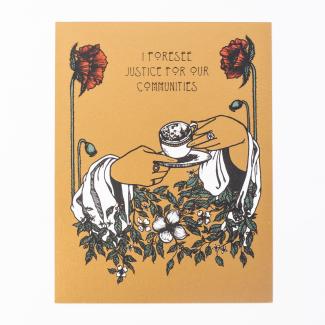
Tasseography is the study of coffee grounds and/or tea leaves for the act of divination. It is a practice that has been passed down through the women on my Armenian side of the family and was taught to me by my mother, she from her mother, and so on. As I would watch my Nana read the coffee grounds from the Armenian coffee prepared for family and friends, I would notice how often times she would see what she would want to say. These prints say some of the things I want to see in the world; I hope you do too.
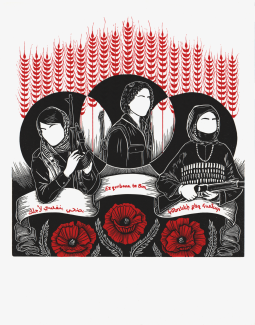
This print celebrates the resilience, sacrifice and strength of SWANA freedom fighters throughout history and the solidarity that exists. It was originally inspired by an article I read about an exhibition held in Tatvan, a district of Bitlis that was highlighting the Armenian presence in the region. My ancestors are from Bitlis, now within the borders of modern day Turkey.
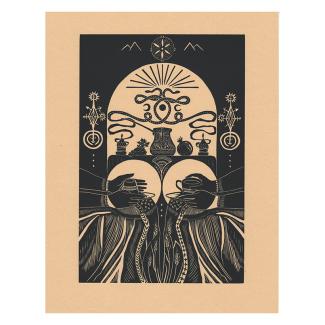
Tasseography (the study of reading coffee grounds) is a cultural practice that Armenian women have used for hundreds of years to speak among and to each other, a coded language to open up conversations, to build inter-relatedness and weave connections.
![]Ali Chavez Leeds portrait](/sites/default/files/styles/max_325x325/public/2021-10/portrait.jpeg?itok=0yU3PqLe)
إن رغبتم/ن في سحب استطلاعكم/ن ومحيه لأي سبب كان، لديكم/ن الحق الكامل بالقيام بذلك. الرجاء التواصل معنا عن طريق هذا النموذج وكتابة "استطلاع المال" في عنوان رسالتكم/ن وسنقوم بسحب ومحي أجوبتكم/ن.
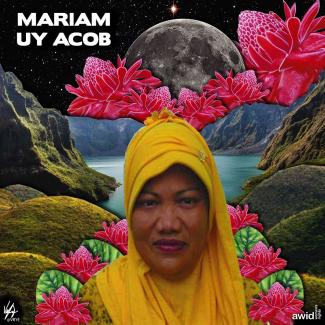
Mariam was a paralegal at the Kawagib Moro Human Rights Alliance.
Mariam was a staunch critic of militarization in Moro communities, and consistently denounced aerial bombardment and encampment. She had to seek sanctuary after exposing and calling out the injustices committed against Muslim communities in the Philippines.
She is believed to have been killed by suspected military agents because of her work as a WHRD. The assailants who killed Mariam waited for her, caught up with the vehicle she was using and shot her seven times.