Contenido relacionado
Front Line Defenders: Asesinato de la defensora de derechos humanos Ruth Alicia López Guisao
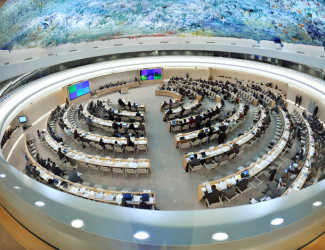
Le Conseil des droits de l'homme (CDH) est un organe intergouvernemental clé du système des Nations Unies, responsable de la promotion et la protection des droits humains autour du globe. Il se réunit trois fois par an en session ordinaire, en Mars, Juin et Septembre. Le Bureau du Haut-Commissariat des Nations Unies aux Droits de l’Homme (HCDH) constitue le secrétariat pour le CDH.
Débat et adopte des résolutions sur les questions globales des droits humains ainsi que sur la situation des droits humains dans des pays particuliers
Examine les plaintes des victimes de violations des droits humains et des organisations activistes, au nom des victimes de violations des droits humains
Nomme des experts indépendants (que l'on connaît sous le nom de « Procédures Spéciales ») pour réviser les cas de violation des droits humains dans des pays spécifiques, ainsi que pour examiner et suivre des questions globales relatives aux droits humains
Prend part à des discussions avec les experts et les gouvernements sur les questions de droits humains
Évalue les bilans des États membres de l'ONU en matière de droits humains tous les quatre ans et demi, dans le cadre de l'examen périodique universel.
La prochaine session du CDH a lieu à Genève, en Suisse, du 30 juin au 17 juillet 2020.
AWID travaille avec des partenaires féministes, progressistes et du domaine des droits humains pour partager nos connaissances clé, convoquer dialogues et évènements avec la société civile, et influencer les négociations et les résultats de la session.
Contenido relacionado
Front Line Defenders: Asesinato de la defensora de derechos humanos Ruth Alicia López Guisao
This is Mariama Sonko, an inspiring small-scale rural farmer, eco-feminist and a woman human rights defender.
She lives in Niaguiss, a town in the southwest of Senegal. Growing up in a family and community of rural farmers, she witnessed the essential role of women in food production and seed preservation from a very early age, while also being immersed in the rhythms and working of the land. Mariama has been defending local agricultural knowledge and peasant practices since the 1990s. As a mother of five children, the food she grows herself is the main source of sustenance for her family.
She is currently the president of “Nous Sommes la Solution'' and is involved in promoting agroecological practices and family farming, encouraging food sovereignty, biodiversity and farmer seed preservation, and demanding equitable access to resources and land for women across West Africa.
Source: AWID’s Feminist Realities Festival Crear | Résister | Transform - Day 2/ 2ème jour/ 2º día
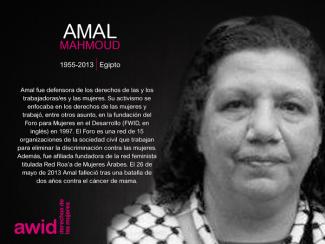
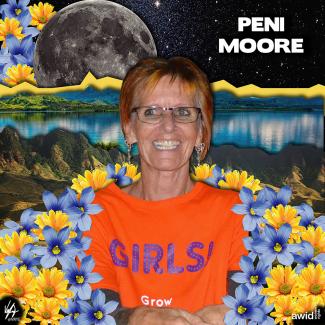
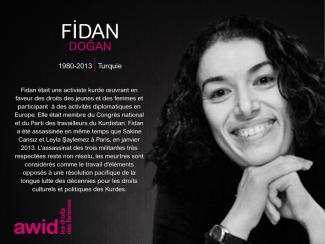
Une étudiante, une scénariste, une leader, une avocate. Les quatre femmes auxquelles nous rendons hommage ci-dessous avait toutes leur propre façon de vivre leur activisme, mais elles avaient en commun la promotion et la défense des droits des personnes lesbiennes, gaies, bisexuelles, trans*, queer et intersexes. Nous vous invitons à vous joindre à nous pour commémorer ces défenseuses, leur travail et l'héritage qu’elles nous ont laissé. Faites circuler ces mèmes auprès de vos collègues et amis ainsi que dans vos réseaux et twittez en utilisant les hashtags #WHRDTribute et #16Jours.
S'il vous plaît cliquez sur chaque image ci-dessous pour voir une version plus grande et pour télécharger comme un fichier


Salvo que existan cuestiones de accesibilidad o que respondas la encuesta en otro idioma, alentamos encarecidamente a usar KOBO a los efectos de contar con una recopilación y un análisis de datos estandarizados para la investigación ¿Dónde está el dinero?
.

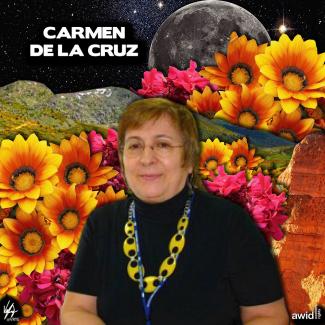
6 Women Human Rights Defenders (WHRDs) across Western and Southeastern Europe have in their lifetime researched, campaigned, participated in and advanced peace and women’s rights movements be it through political and social activism or through dance. We are grateful for the legacy they have left. Please join AWID in honoring these women, their activism and legacy by sharing the memes below with your colleagues, networks and friends and by using the hashtags #WHRDTribute and #16Days.
Please click on each image below to see a larger version and download as a file


Il y a 47 questions au total, dont 27 obligatoires* et 20 autres facultatives. La plupart sont des questions à choix multiple. Nous vous invitons à répondre à toutes les questions.
Écoutez cette histoire ici :
A framework for your research will guide throughout your research process, and the framing document you develop can also serve as a concept note to advisors and partners, and a funding proposal to potential donors.
Before conducting any research:
- Set the goals of your research
- List the key questions you want your research to answer
- Write out the type of data you will need to obtain and review to answer your key questions
- Define the final products you will produce with your research
Your research framing may evolve over time as you refine your questions and gather new information. However, building an initial research framing will allow you to work from a solid foundation.
To create a strong foundation for your WITM research, it is important to clarify what you hope to accomplish.
For example, one goal of AWID’s WITM global research was to provide rigorous data to prove what we already knew anecdotally: that women’s rights organizations are discrepantly underfunded. With this data, we felt we would be better positioned to influence funders in their decision-making.
Your goals could be to:
Frame your research process with key questions that only your research can answer and limit those questions to a specific time frame (e.g. past five years, past year, etc.).
Consider the following points:
Choosing a specific timeframe for your research can result in more precise findings than working with an open-ended timeframe. Also, deciding whether you will repeat this research at regular intervals will allow you to set up data collection benchmarks for easy replication and comparison over time.
These were the key questions that guided AWID’s WITM research process:
Now that you determined your key questions, you can determine what kind of data will help you answer your key questions. This will allow you to plan the rest of your schedule for your WITM research.
For example, will you conduct a survey that covers an extensive portion of your priority population? Will you analyze the applications that funders are receiving from a certain region? Will you also conduct interviews (recommended)? By determining the types of data you need, you can reach out to external parties who will provide this data early on, and plot out your full schedule accordingly. Some suggested sources of data could be:
Diverse data sets are a great way to create robust and rich analysis.
The data from AWID’s 2011 Global Survey formed the backbone of our analysis in Watering the Leaves, Starving the Roots report. However, we also collected data from interviews and interactions with several actors in the field, ranging from donors to activists and women’s rights organizations.
In addition to allowing you to set your schedule, creating an initial plan of what products you will develop will also allow you to work out what resources you need.
For example, will you only produce a long research report or will you also create infographics, brochures and presentations? Depending on your products, you may need to hire a design firm, plan events and so on.
These products will also be the tools you use to achieve your goals, so it is important to keep those goals in mind. For example, is your WITM research exclusively intended as an advocacy tool to influence funders? In that case, your products should allow you to engage with funders at a deep level.
Some sample products:
Framing your research to cover goals, key questions, types of data, and final products will allow you to create a well-planned schedule, prepare your resources in advance, and plan a realistic budget.
This will make interactions with external partners easier and allow you to be nimble when unexpected setbacks occur.

• 1 month
• 1 or more Research person(s)
• AWID Research Framing: sample 1
• AWID Research Framing: sample 2
The data will be processed for statistical purposes to shed light on the state of resourcing for feminist movements globally and will only be displayed in an aggregate form. AWID will not publish information about a particular organization or display information that would allow an organization to be identified by its location or characteristics, without their prior consent.