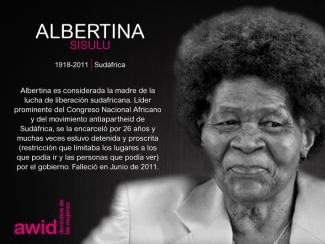
Albertina Sisulu
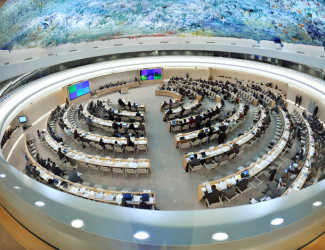
Le Conseil des droits de l'homme (CDH) est un organe intergouvernemental clé du système des Nations Unies, responsable de la promotion et la protection des droits humains autour du globe. Il se réunit trois fois par an en session ordinaire, en Mars, Juin et Septembre. Le Bureau du Haut-Commissariat des Nations Unies aux Droits de l’Homme (HCDH) constitue le secrétariat pour le CDH.
Débat et adopte des résolutions sur les questions globales des droits humains ainsi que sur la situation des droits humains dans des pays particuliers
Examine les plaintes des victimes de violations des droits humains et des organisations activistes, au nom des victimes de violations des droits humains
Nomme des experts indépendants (que l'on connaît sous le nom de « Procédures Spéciales ») pour réviser les cas de violation des droits humains dans des pays spécifiques, ainsi que pour examiner et suivre des questions globales relatives aux droits humains
Prend part à des discussions avec les experts et les gouvernements sur les questions de droits humains
Évalue les bilans des États membres de l'ONU en matière de droits humains tous les quatre ans et demi, dans le cadre de l'examen périodique universel.
La prochaine session du CDH a lieu à Genève, en Suisse, du 30 juin au 17 juillet 2020.
AWID travaille avec des partenaires féministes, progressistes et du domaine des droits humains pour partager nos connaissances clé, convoquer dialogues et évènements avec la société civile, et influencer les négociations et les résultats de la session.
يشمل التمويل الخارجي المنح والأشكال الأخرى من التمويل من المؤسسات الخيرية، الحكومات، الجهات ثنائية الاتجاه أو متعددة الاتجاهات أو الممولين/ات من الشركات أو الممولين/ات الأفراد، إن كان ذلك من دولتكم/ن أو من الخارج. لا يشمل هذا الموارد التي تنتجها المجموعات، المنظمات أو الحركات بشكل مستقل مثل رسوم العضوية، تطوع الطاقم أو الأعضاء/ العضوات أو الداعمين/ات، تجنيد الأموال المجتمعي، تأجير الأماكن أو بيع الخدمات أو المنتجات. لتسهيل عملية تعبئة الاستطلاع، تم شمل تعريف أنواع التمويل ووصفها بشكل قصير في الاستطلاع نفسه.
Forma parte de una organización feminista de membresía internacional y de una comunidad. Nuestrxs afiliadxs residen en todas las regiones del mundo. Aprenden entre sí y se brindan apoyo mutuo en una red global fundada en la solidaridad.
對於每個AWID論壇,我們廣泛地徵集為女權主義和社會正義運動作出貢獻的活動並製定論壇项目。
對於第14屆AWID國際論壇,我們希望使該項目真正代表運動的多樣性。
這就是為什麼我們採用一種新穎且吸引人的方式來選擇將產生最終論壇項目的提案:參與式評選過程(PSP)。
參與式評選過程是審查活動提案並將其選為正式論壇項目的最後一步。
|
步驟 |
第一步:徵集論壇活動:提交提案 |
第二步:初選 |
第三步:入圍 |
第四步:參與式評選過程 |
| 時間表 |
2019年12月-2020年02月中旬
|
2020年01月-02月
|
2020年夏季
|
待調整的日期
|
| 參與人員 | 所有有興趣參與創建論壇項目的人 |
AWID工作人員 |
工作人員;內容和方法委員會成員;可及性委員會 |
入圍的申請人
|
| 活動數量 |
提交約838個活動 |
初選出306個活動提案 |
126個活動入圍 |
最終論壇項目會選擇50-60個投票最多的活動 |
我們認為PSP與AWID論壇息息相關,因為:
最初的想法來自AWID的聯合編輯和員工們。在做出決定之前,我們諮詢了一些已經實施參與式評選過程多年的社區基金。其中包括FRIDA:青年女權主義者基金、國際跨性別基金、UHAI(東非針對性少數群體和性工作者的基金)和中美洲婦女基金。我們諮詢了這些組織,學習其豐富的經驗並獲得了重要的反饋。
Financial autonomy, breaker of silence
ORGANISATION DES FEMMES AFRICAINES DE LA DIASPORA (OFAD) ASSOCIATION LES PETITES MERES PRODADPHE ASSOCIATION AMBE KUNKO (AAK)
Contribution of feminist organisations to the fight against violent extremism in Niger
Femmes Actions et Développement (FAD)
Self-financing: home banking for women
Rassemblement des Femmes pour le développement endogène et solidaire RAFDES
Food and food sovereignty for rural women
Association Song-taaba des Femmes Unies pour le Développement (ASFUD)
Feminist leaders, investing in positive masculinity, creating a new balanced social order: how to change mentalities?
Une societe cooperative, la chefferie traditionnelle des localites, les autorites administratives et les autres associations feminines ONG Centre Solidarite "Investir dans les Filles et les Femmes
Co-creating the sponsorship methodology.
NEGES MAWON
Millennium of opportunities to save the earth (MOST) by supporting climate justice for local and Indigenous communities in Congo Basin.
Jeunesse Congolaise pour les Nations Unies (JCNU), Association Genre et Environnement pour le Développement (AGED)
Envisioning an Asian Queer Feminist Politics
ASEAN Feminist LBQ Womxn Network Sayoni
Supporting the Self-Managed: Abortion Doulas, Acompanantes, and Radical Networks of support
inroads
Online Feminisms: How Women Are Taking Back The Tech
Feminism In India
Committee on the Elimination of Discrimination Against Sex Workers
Asia Pacific Network of Sex Workers (APNSW), The International Women's Rights Action Watch Asia Pacific (IWRAW AP)
Sustainable Feminist Leadership and Organizing - Personal and Collective Experiences
HER Fund, Institute for Women's Empowerment (IWE) ,Kalyanamita, AAF
Caribbean Realities: Black Sauna Radio
WE-Change Jamaica
Telephone Helplines Care and Women Experience
Generation Initiative for Women and Youth Network (GIWYN),Youth Network for Community and Sustainable Development (YNCSD), Community Health Rights Network (CORENET)
Sensuality as resistance; body movement workshop
UHAI EASHRI
Lesbian Disco Eastern European Style
Sapfo Collective
FitcliqueAfrica Feminist Utopia Installation, Trauma Healing and Self Defense Camp
FitcliqueAfrica (Fitclique256 Uganda Limited)
Queering Communications for an Open Internet
Astraea Lesbian Foundation for Justice
Is the Way you Think about Sexual and Reproductive Health (SRHR) Ableist? Good Practices for Disability Inclusive SRHR Programmes and Advocacy.
Asia Pacific Network of Women with Disabilities and Allies
Decolonizing Non-Violent Communication
API Equality-LA, Sayoni, ASEAN Feminist LBQ Womxn Network
Feminist centred approaches to prosecuting sexual harassment in the world of work
Women's Legal Centre
Women in Conflict in Myanmar
Women's League of Burma, Rainfall
Caribbean Feminist Spaces, Creative Expressions & Spiritual Practices for Community Transformation
CAISO: Sex and Gender Justice
POP-UPS: Just Power: Popular Education Tools for a Feminist Future
JASS/Just Associates
UnAnonYmous: Queering Black African Diaspora Feminist Practices Sobriety
Digital Witchcraft: Magical Thinking for Cyberfeminist Futures
The Digital Witchcraft Institute
Building Womanifestos: Grassroot Women's Agenda for Change in Asia Pacific
Asia Pacific Forum on Women Law and Development
Designing your astral travels
EuroNPUD, narcofeminists as a loose group
Collective Care
RENFA Rede Nacional de Feministas Antiproibicionistas
Music of our movements
Radical imagination
From waste to Ecofriendly coal
KEMIT ECOLOGY SARL
Collective care and insurgency of feminist antiracist movements under authoritarian and violent contexts
CFEMEA - Feminist Center of Studies and Advisory Services, CRIOLA - black women`s organization, Iniciativa Mesoamericana de Mujeres Defensoras
Breaking Patriarchal Religion's Stranglehold on Family Laws that Affect Our Lives #FreeOurFamilyLaws
Musawah
Feminist approach to claim and control over lands within investment
Badabon Sangho, APWLD
Women's Global Strike: Our resistance, our future
Asia Pacific Forum on Women, Law & Development, ESCR-Net, Women's March Global
Towards an Inclusive ‘Mother Earth’
Disability Rights Fund, Open Society Foundation
From Inclusion to Infiltration: Strategies for Building Intersectional Feminist Movements
Mobility International USA (MIUSA)
The hidden stories of women with invisible disabilities: Art in action
The Red Door, Merchants of Madness, Improving Mental Wellbeing through Art
Public-Private Partnership and Women´s Human Rights: learnings from case studies in the Global South
Development Alternatives with Women for a New Era (DAWN)
The Interconnected Journey: Our Bodies, Our Sci-Fi! <3
The Interconnected Journey Project, Laboratorio de Interconectividades
Compiling and Building: Alternative feminist vision to challenge the dominant world economic order
IWRAW Asia Pacific
Self-publication as a feminist act
International Women* Space
Good Practices of legal protection for gender & sexual minorities in Pakistan and their Intersectionality
Activists Alliance Foundation, Khawja Sirah Society, Wajood Society, Wasaib Sanwaro
Feminist Approaches to Counter Trafficking
IWRAW Asia Pacific, Business & Human Rights Resource Center
Critiquing individualism and state policies: transnational organizing against targeted violence
Masaha: Accessible Feminist Knowledge
Decolonizing Intimacy: How Queer Identities Challenge Heteronormative Family Structures
WOMANTRA
Yeki Hambe - Sex worker theatre
Sex Worker Education and Advocacy Task Force
Creating the Indigenous feminist reality: honoring the sacred feminine and building new paths for Indigenous women
Cultural Survival, International Funders in Indigenous Peoples
Eyes on Anti-prohibitionism by Brazillian Women
Mulheres Cannabicas, Tulipas do Cerrado
Black Feminist Truth Commission: Addressing Injustices to Revolutionize Intersectional Feminism as the New Reality
Black Women in Development
Community care is self care: true stories are told in safer spaces
Eurasian Harm Reduction Association, Metzineres, Urban Survivor’s Union, Salvage women and children from drug abuse
NO MOVES BARRED:Dancing connections between Disability,trans & sexual rights against violence
National Forum of Women with Disabilities, Autonomy foundation, Nazyk kyz
The Impact of Corporate Capture on Feminist Realities: Developing Tools for Action
ESCR-Net | Economic, Social, Cultural Rights Network
Reimagining AIDS: building a feminist HIV response
Frontline AIDS, Aidsfonds, IPPI (Indonesian Network of Women Living with HIV), UHAI-EASHRI (East African Sexual Health and Rights Initiative)
Advancing Economic Justice towards Realizing Our Vision of a Feminist Planet
International Network for Economic, Social and Cultural Rights, ESCR-Net
Sex Workers Cafe
Hydra e.V.
Adopting an ecofeminist approach in dealing with climate change and food security
Umphakatsi Peace Ecovillage, Human Rights Educational Centre
Connecting the grassroots with the international: experience from creative sex worker mobilisation in Europe
International Committee on the Rights of Sex Workers in Europe, STRASS - French Sex Worker Union, APROSEX, Red Edition
Experiment with how innovative tech can help us feel safer when navigating our cities
Soul City Institute for Social Justice, Safetipin, Womanity Foundation
question “Are hierarchies within organisations UNfeminist?”
Gay and Lesbian Coalition of Kenya National, Gay and Lesbian Human Rights Commission
We all are different, but we do have joint shared values
UNWUD (Ukrainian network of women who use drugs), JurFem Association, Women's Prospects
A World Without Class
Bunge La Wamama Mashinani (Grassroots Women's Parliament)
Women Empower the Community
Institute for Women's Empowerment (IWE), Solidaritas Perempuan, ASEC Indonesia, Komunitas Swabina Pedesaan Salassae (KSPS)
Feminist Organizing: Transformational Leadership - Women Workers in Latin America Creating a Feminist Labor Movement and a Feminist World of Work
Solidarity Center
Acting Out, Acting Up : Disability-Feminism decolonising narratives of Stigma thro' Participatory theatre
Rising Flame, National Indigenous Disabled Women Association, Nepal, The Spectrum & Union of Abilities, The Red Door
Valuing and centering rest, pleasure and play
ATHENA Network
The African feminist judgment project
The Initiative for strategic Ligation in Africa (ISLA)
Voices from the frontlines: Bolstering collective power to end the incarceration of women worldwide
International Drug Policy Consortium, Equis Justicia para las Mujeres, National Council for Incarcerated and Formerly Incarcerated Women and Girls, Women and Harm Reduction International Network
Queer Youth Organising: imagining in an era of human rights and sustainable development
African Queer Youth Initiative, Success Capital Organisation
Our Struggles Our Stories Our Strengths
Oriang Lumalaban, Pambansang Koalisyon ng Kababaihan sa Kanayunan
Breaking barriers for collective Indigenous climate action in Southeast Asia
Cuso International, Asia Indigenous Peoples' Pact
Love Positive Women: Going beyond romantic love to deep community love and social justice
Eurasian Women's Network on AIDS
Intersex and Feminism
Intersex Russia
Understanding the reproductive health experiences and needs of transgender and gender diverse people
Asia Pacific Transgender Network (APTN)
Because She Cares: Critical conversations on HIV activism as (un)caring work
Because We Care Collaborative
The Mississippi Food Systems Manifesto
Center for Ideas, Equity & Transformative Change, National Council of Appropriate Technology - Gulf South, MS Food Justice Collaborative, Malcolm X Grassroots Movement
Kurdish Women's Movement co-presidency experience as an example of a radical feminist realization: Co-presidency is our PURPLE line!
The Free Women’s Movement (TJA)
WOES -"Walking on Egg Shells"
Eldoret Women For Development (ELWOFOD), Mama Cash, Young women against Women Custodial Injustices Network
FREEDOM
Prison Isn’t Feminist: Exploring the impact and alternatives to reliance on police and incarceration
Migrant Sex Workers Project, Showing Up For Racial Justice
Bondo without Blood: A Feminist Reimagining of Sierra Leonean Rites of Passage
Purposeful
Liberated Land & Territories: A Pan-African Conversation
Thousand Currents (USA), Abahlali baseMjondolo (South Africa), Nous Sommes la Solution (west Africa/regional), Movilización de Mujeres Negras por el Cuidado de la Vida y los Territorios Ancestrales (Colombia), and Articulation of Black Rural Quilombola Communities (Brazil)
Popular Education and Organizing for a Feminist Economy
Jamaica Household Workers Union (JHWU), United for a Fair Economy, Centro de Trabajadores Unidos en la Lucha (CTUL)
So You Wish To Mobilise With An Empty Wallet? Let’s Make It Happen!
Breakthrough India
Experience sharing establishing a network for women human rights defenders in East Africa: Ugandan perspective
Women Human Rights Defenders Network Uganda
Tech clinic
Stichting Syrian Female Journalists Netowrk
Building Inclusive Movements: Going Beyond Tokenism
Rising Flame
Justice & Healing for Survivors of GBV: an interactive debate on restorative justice and the anatomy of an apology
One Future Collective
Collective actions to ending transphobia through a feminist lens
Asia Pacific Transgender Network, Iranti, Transgender Europe
LBQ women & Asylum
Sehaq
Abortion and Disability: Towards an Intersectional Human Rights-Based Approach
Women Enabled International
Learn how to support the self-organizing of undocumented, migrant, and criminalized and sex workers communities
Buttrerfly (Asian and Migrant Sex Workers Support Network)
Self Care: A Fundamental Tool for Sustaining LGBTQI & Feminist Organizing
United and Strong Inc., S.H.E Barbados, Lez Connect
Reclaiming Young African Feminist VOICES-REALITIES-POWER for climate justice
Young Feminist organization Gasy Youth Up, Young African Feminist Dialogues
Women in action & solidarity: performing our realities (Asia & Africa)
Young Feminist organization Gasy Youth Up ( co-founder) , Young African Feminist Dialogues ( member)
Women in action & solidarity: performing our realities (Asia & Africa)
Women Performing the World (Asia/Africa)
Challenging patriarchy: Workers in entertainment sector
Women Forum for Women in Nepal (WOFOWON)
The non-citizens: issues of women's citizenship in the context of migrant, vulnerable communities in South Asia
NEthing
Visioning for voice in migration and climate crises
Women's Refugee Commission, The Feminist Humanitarian Network, ActionAid
In It Together: Women's Funds and Feminist Movements Co-Creating Feminist Realities
Mama Cash, Global Fund for Women, Urgent Action Fund - Africa
Co-creating magic with young feminist movements - participatory practices that spark joy
Feminist organizing, FRIDA The Young Feminist Fund (Community), Teia
Protection right of woman’s in difficult realities 3 organizations of women from marginally communities
NGO Asteria, Ermolaeva Irena and Bayazitova Renata. NGO Ganesha Musagalieva Tatiana. NGO Ravniy Ravnomu Kucheryavyh Tanya
Feminnale - traditions against art and expression
Bishkek Feminist Initiatives
Resistance through knowledge, arts and activism: creation of a feminist library in Armenia
FemHouse, Armenia
Conquering the UN System with Feminist Strategies (You Don’t Need to be a Lawyer to Have Fun)
Kazakhstan Feminist Initiative "Feminita", IWRAW Asia Pacific, ILGA World
Data. Huh. What is it good for? Feminist data and organizing for feminist outcomes
International Women's Development Agency, Women's Rights Action Movement, Fiji Women's Rights Movement
Criminalized Women’s voice, leadership and influence on laws, policies and practices in Kenya
Keeping Alive Societies Hope-KASH, Katindi Lawyers and Advocates, Vocal Kenya
From Colombia to the world, African women's changing force
Proceso de Comunidades Negras en Colombia -PCN, Solidarité Féminine por la Paix el le Develppment Integral -SOFEPADI,
Afro Queer Listening Lounge and Story-Telling Booth
AQ Studios, None on Record, AfroQueer Podcast
Reclaiming Bodily Integrity
GBV Prevention Network : Coordinated by Raising Voices
Learning from diversity
Circulo de Mujeres con Discapacidad -CIMUDIS, Alianza Discapacidad por nuestros Derechos -ADIDE, Fundación Dominicana de Ciegos -FUDCI, Filial Puerto Rico de Mujeres con Discapacidad
Football as a feminist tool
Fundación GOLEES (Género, Orgullo, Libertad y Empoderamiento de Ellas en la Sociedad)
Migratory constellations
LasVanders
Ecofeminist dialogues to defend territories
CIEDUR (Centro Interdisciplinario de Estudios sobre el Desarrollo), Equit, Foro permanente de Manaos y Amazonia
La Frida BikesMoviment
La Frida Bike
Witchcraft, shamanism and other insurgent knowledge against patriarchy.
Colectiva Feminista MAPAS-Mujeres Andando Proceso por Autonomías Sororales
Experiences, learnings and challenges in managing holistic security of horizontal feminist organisations and of gender-dissidence in times of social and political crisis. The experience of the popular uprising in Chile of 18 October.
Fudación Comunidades en Interfaz
Food that we all know about
Las Nietas de Nonó, Parceleras Afrocaribeñas por la Transformación barrial (PATBA)
Practices of resistance against climate change of Indigenous women in Peru and Guatemala
Thousand Currents, Red de Mujeres Productoras de la Agricultura Familiar, Asociación de Mujeres Ixpiyakok (ADEMI, Ixpiyakok Women's Association)
Building Feminist Cities
CISCSA, Articulacion Feminista Marcosur
Stand in my place
Alianza Discapacidad por nuestros Derechos - ADIDE, Circulo de Mujeres con Discapacidad -CIMUDIS
Clearing the way for women's fullness of life, healing collective and historical traumas
Grupo de Mujeres Mayas Kaqla
Zapoteca Indigenous women challenged by nature
Houses of Care and Healing for Women Human Rights Defenders as part of Integral Feminist Protection: A Feminist Reality
Iniciativa Mesoamericana De Defensoras de Derechos Humanos, Consorcio Oaxaca para el Diálogo Parlamentario y la Equidad A.C, Red Nacional De Defensoras De Derechos Humanos en Honduras, Coletivo Feminista de Autocuidado
Healing your unicornix voice: Weaving ancient and digital technologies to sharpen the tongue
Feminist trajectories for an assisted motherhood protocol for women with disabilities
Circulo emancipador de mujeres y niñas con discapacidad de Chile, CIMUNIDIS, WEI
School for trans feminist children
Fundación Selena
REDTRASEX: Experience of Organization and Struggle for the Rights of Women Sex Workers in Latin America and the Caribbean
RedTraSex Red de mujeres trabajadoras sexuales LAC
Gender based violence and the world of sex work in Mexico
Brigada Callejera de Apoyo a la Mujer, "Elisa Martínez", A.C., Red Mexicana de Organizaciones Contra la Criminalización del VIH. Red Mexicana de Trabajo Sexual
Migration forces us to draw the path as we walk
Asociación de Trabajadoras del Hogar a Domicilio y de Maquila. ATRAHDOM
New narratives for Black women: body, healing and pleasure
Weaving memories and networks - Black Feminists strengthening Black feminisms in LAC
Red de Mujeres Afrolatinoamericanas, Afrocaribeñas y de la Diáspora, Articulação de Organizações de Mulheres Negras Brasileiras (AMNB), Voces Caribeñas
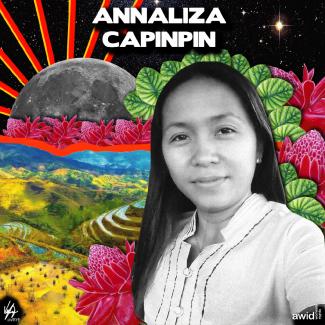
Conocida como «Ate Liza», Annaliza era la presidenta del Consejo de la Reforma Agraria para lxs Pionerxs de Mindanao, un grupo coodinador general en Tacurong City, Filipinas.
Querida madre de cuatro hijxs, maestra y líder comunitaria, Annaliza es recordada por su comunidad como «la que lidera cuando nadie quiere liderar, la que habla cuando nadie quiere hablar, la que se puso de pie con coraje para ayudar a lxs beneficiarxs de la reforma agraria a ser dueñxs de sus tierras».
Atacantes desconocidos la ultimaron a balazos en frente de la Universidad Estatal Sultán Kudarat (SKSU), mientras se dirigía a la Escuela Secundaria Nacional Salabaca, en Esperanza.
Su familia ha dicho: «Naghihintay pa rin kami ng hustisya para sa kanya» (todavía estamos esperando justicia para ella).
Да, опрос доступен людям с различными нарушениями слуха, зрения, движений и когнитивных способностей.
"Nous savons que tout est contre nous et il y a très peu de chances de changer cela. Mais nous croyons en l'intervention et je pense que nous avons une opportunité et nous devrions l'utiliser. C'est pourquoi nous faisons tout ce que nous faisons. Nous sommes prêt·e·s à pousser pour des choses inouïes."
Sopo Japaridze dans OpenDemocracy
Photo @სოლიდარობის ქსელი / Solidarity Network
Participez au Forum international de l'AWID - un rassemblement féministe mondial majeur - et bénéficiez de réductions spéciales et de points d'entrée pour le dialogue virtuel réservés aux membres de l'AWID. Co-créé par des mouvements féministes, le Forum est un espace unique de discussion profonde et d'imagination où nous remettons en question et renforçons notre organisation, et joignons nos luttes et nos réalités féministes.
In a context like Colombia’s, the work of imagining, dreaming and even creating processes of transformation so we can live in worlds that are decent, just, careful, and affectionate is worthy of admiration. It is an attack on life itself. Not just on the life of one official, but an attack on the soul, on the spirit of an entire people who feels frustrated.
In a context like Colombia’s, the work of imagining, dreaming and even creating processes of transformation so we can live in worlds that are decent, just, careful, and affectionate is worthy of admiration. This is an emboldened paragraph.
We are thinking of them and of all the women leaders who are continuing the fight, having gained consciousness, from their respective ethnic, political, cultural, and identity locations and from their work, of their selves and the social problems facing their communities.
This link goes somewhere, but this sentence doesn't, it only exists to show how a link works. Lorem Ipsum is simply dummy text of the printing and typesetting industry.
£2600 is an amount of money that I've wrapped some <strong> tags around, while 4 weeks – a length of time – also has had the same treatment for the purposes of just testing how typography appears on the page. Lorem Ipsum is simply dummy text of the printing and typesetting industry. Lorem Ipsum has been the industry's standard dummy text ever since the 1500s, when an unknown printer took a galley of type and scrambled it to make a type specimen book. It has survived not only five centuries, but also the leap into electronic typesetting, remaining essentially unchanged. It was popularised in the 1960s with the release of Letraset sheets containing Lorem Ipsum passages, and more recently with desktop publishing software like Aldus PageMaker including versions of Lorem Ipsum.
Find out how links are made into buttons
In a context like Colombia’s, the work of imagining, dreaming and even creating processes of transformation so we can live in worlds that are decent, just, careful, and affectionate is worthy of admiration.
We are thinking of them and of all the women leaders who are continuing the fight, having gained consciousness, from their respective ethnic, political, cultural, and identity locations and from their work, of their selves and the social problems facing their communities.
Women leaders and human rights defenders in Colombia: A legacy of dreams, struggles and affection that we will not silence
It is an attack on life itself. Not just on the life of one official, but an attack on the soul, on the spirit of an entire people who feels frustrated.
These are hyperlinks in paragraphs where they're needed the most, right in a demo page.
£2600 is an amount of money that I've wrapped some <strong> tags around, while 4 weeks – a length of time – also has had the same treatment for the purposes of just testing how typography appears on the page. Lorem Ipsum is simply dummy text of the printing and typesetting industry. Lorem Ipsum has been the industry's standard dummy text ever since the 1500s, when an unknown printer took a galley of type and scrambled it to make a type specimen book. It has survived not only five centuries, but also the leap into electronic typesetting, remaining essentially unchanged. It was popularised in the 1960s with the release of Letraset sheets containing Lorem Ipsum passages, and more recently with desktop publishing software like Aldus PageMaker including versions of Lorem Ipsum.
It is an attack on life itself. Not just on the life of one official, but an attack on the soul, on the spirit of an entire people who feels frustrated. These are hyperlinks in paragraphs where they're needed the most, right in a demo page.
£2600 is an amount of money that I've wrapped some <strong> tags around, while 4 weeks – a length of time – also has had the same treatment for the purposes of just testing how typography appears on the page. Lorem Ipsum is simply dummy text of the printing and typesetting industry. Lorem Ipsum has been the industry's standard dummy text ever since the 1500s, when an unknown printer took a galley of type and scrambled it to make a type specimen book. It has survived not only five centuries, but also the leap into electronic typesetting, remaining essentially unchanged. It was popularised in the 1960s with the release of Letraset sheets containing Lorem Ipsum passages, and more recently with desktop publishing software like Aldus PageMaker including versions of Lorem Ipsum.
It is an attack on life itself. Not just on the life of one official, but an attack on the soul, on the spirit of an entire people who feels frustrated. These are hyperlinks in paragraphs where they're needed the most, right in a demo page.
£2600 is an amount of money that I've wrapped some <strong> tags around, while 4 weeks – a length of time – also has had the same treatment for the purposes of just testing how typography appears on the page. Lorem Ipsum is simply dummy text of the printing and typesetting industry. Lorem Ipsum has been the industry's standard dummy text ever since the 1500s, when an unknown printer took a galley of type and scrambled it to make a type specimen book. It has survived not only five centuries, but also the leap into electronic typesetting, remaining essentially unchanged. It was popularised in the 1960s with the release of Letraset sheets containing Lorem Ipsum passages, and more recently with desktop publishing software like Aldus PageMaker including versions of Lorem Ipsum.
It is an attack on life itself. Not just on the life of one official, but an attack on the soul, on the spirit of an entire people who feels frustrated.
These are hyperlinks in paragraphs where they're needed the most, right in a demo page. £2600 is an amount of money that I've wrapped some <strong> tags around, while 4 weeks – a length of time – also has had the same treatment for the purposes of just testing how typography appears on the page.
Lorem Ipsum is simply dummy text of the printing and typesetting industry. Lorem Ipsum has been the industry's standard dummy text ever since the 1500s, when an unknown printer took a galley of type and scrambled it to make a type specimen book. It has survived not only five centuries, but also the leap into electronic typesetting, remaining essentially unchanged. It was popularised in the 1960s with the release of Letraset sheets containing Lorem Ipsum passages, and more recently with desktop publishing software like Aldus PageMaker including versions of Lorem Ipsum.
It is an attack on life itself. Not just on the life of one official, but an attack on the soul, on the spirit of an entire people who feels frustrated.
It is an attack on life itself.
It is an attack on life itself. Not just on the life of one official, but an attack on the soul, on the spirit of an entire people who feels frustrated. It is an attack on life itself. Not just on the life of one official, but an attack on the soul, on the spirit of an entire people who feels frustrated. It is an attack on life itself. Not just on the life of one official, but an attack on the soul, on the spirit of an entire people who feels frustrated.
It is an attack on life itself. Not just on the life of one official, but an attack on the soul, on the spirit of an entire people who feels frustrated.
It is an attack on life itself. Not just on the life of one official, but an attack on the soul, on the spirit of an entire people who feels frustrated.
It is an attack on life itself. Not just on the life of one official, but an attack on the soul, on the spirit of an entire people who feels frustrated.
It is an attack on life itself. Not just on the life of one official, but an attack on the soul, on the spirit of an entire people who feels frustrated.
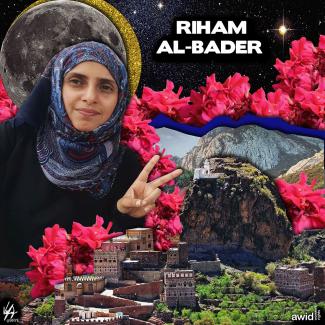
Riham était avocate et activiste engagée à suivre de près la question des violations des droits au Yémen.
Elle a travaillé avec d'autres activistes pour fournir de la nourriture et de l'eau aux civils piégés par les milices houthies dans la banlieue de la ville de Taiz.
Riham a été tuée en février 2018. La cause de son décès, soit par la main d’un tireur d'élite ou par un tir de mortier, n’a pas été confirmée. Personne n'a été tenu responsable de son meurtre.
O tempo estimado para preencher o inquérito é 30 minutos.
We work towards a world based on social, environmental, and economic justice; and interdependence, solidarity, and respect. We work towards dismantling systems of oppressive power and against all its manifestations, including patriarchy, fundamentalisms, militarisms, fascisms and corporate power that threaten our lives and our world. We want a just world where resources and power are shared in ways that enable everyone to thrive.
The #MeToo movement in China was ignited in January 2018, impelled by the momentum of the #MeToo movement around the globe. The movement was a response to cultural and systemic problems in relation to gender and power within China. The foundation of the movement was laid over decades, with many years of debate and advocacy for gender equality finally erupting into a tremendous force across society. #MeToo has been driven mainly by young people, among whom are countless anonymous women and their allies, and they search for opportunities to realize the ultimate “Chinese Dream”: to transform China into a country with gender equality.
The environment for #MeToo movement is extremely adverse in China: the rule of law, the fairness and transparency of government action, and freedom of speech cannot be taken for granted by the movement in China but are the very goals it fights for. From the beginning, it has been an intense struggle, with every victim or activist who comes forward running tremendous risks. From being silenced, humiliated, or retaliated against, to having their safety jeopardized, every success of the #MeToo movement has been won by those who are courageous enough to bear the costs of speaking out and defying censorship.
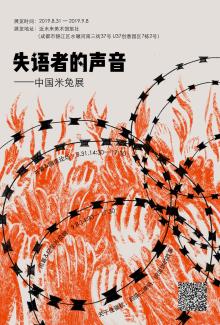
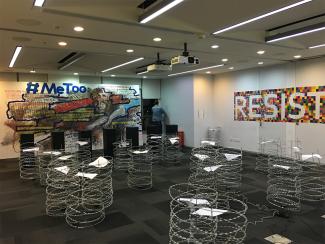
#MeToo in China Exhibition was first held in 2019 and toured in 5 cities. The aim of the exhibition is to bring the personal experiences of the victims and activists to greater prominence and, through engagement with these stories, to inspire our audience to join in the fight. The exhibition has itself become a part of the #MeToo struggle—the exhibition has been beset by challenges on its tour throughout China, on more than one occasion even facing closure.