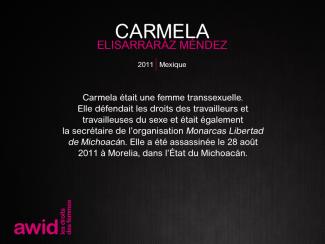
Carmela Elisarraraz Mendez
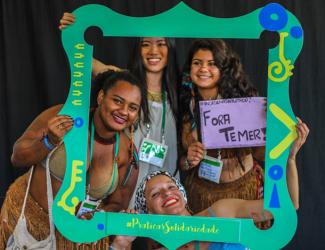
Les jeunes activistes féministes jouent un rôle crucial au sein des organisations et des mouvements pour les droits des femmes à travers le monde. Ce sont elles qui soulèvent les nouveaux problèmes auxquels les féministes sont confrontées aujourd'hui. Leur force, leur créativité et leur adaptabilité sont vitales pour assurer la viabilité des organisations féministes.
Pourtant, elles sont confrontées à toute une série d’obstacles particuliers, notamment l'accès limité au financement et au soutien, le manque de possibilités de renforcement des capacités et une augmentation considérable des agressions sur les jeunes défenseuses des droits humains. Ces obstacles entraînent un manque de visibilité qui rend leur intégration et leur participation effective au sein des mouvements pour les droits des femmes encore plus difficiles.
Le Programme d’activisme des jeunes féministes de l'AWID a été mis en place pour veiller à ce que les voix des jeunes femmes soient entendues et représentées dans le discours féministe. Nous voulons faire en sorte que les jeunes féministes aient un meilleur accès à du financement, à des opportunités de renforcer leurs capacités et aux processus internationaux.
En plus de soutenir directement les jeunes féministes, nous travaillons également avec des activistes des droits des femmes de tout âge pour élaborer des modèles et des stratégies d’organisation multigénérationnelles plus efficaces.
Nous souhaitons que les jeunes féministes puissent jouer un rôle actif dans les prises de décisions qui concernent leurs droits. Nos actions incluent :
Favoriser la mise en commun et le partage d'informations par la Plateforme de jeunes féministes. Étant donné l'importance des médias en ligne pour le travail des jeunes féministes, notre équipe a lancé la Plateforme de jeunes féministes en mai 2010. Elle a pour objectifs d’échanger des renseignements, de renforcer les capacités des membres par le truchement de webinaires et de discussions en ligne, et d'encourager la consolidation d’une communauté de jeunes féministes.
Soutenir la recherche et le renforcement des connaissances sur l'activisme des jeunes féministes, pour accroître la visibilité et l'influence de leur activisme au sein et entre les mouvements pour les droits des femmes et auprès d'autres acteurs-trices clés, tels les donateurs.
Faire la promotion de la collaboration multigénérationnelle, en explorant de meilleures façons de travailler ensemble.
Inciter les jeunes féministes à s’engager dans les processus internationaux relatifs au programme de développement, notamment ceux des Nations Unies.
S’assurer leur collaboration dans tous les domaines prioritaires de l'AWID, y compris le Forum, pour faire en sorte que leurs contributions, leurs perspectives, leurs besoins et leur activisme se traduisent dans les débats, les politiques et les programmes qui les concernent.
Laurie Carlos était une comédienne, réalisatrice, danseuse, dramaturge et poétesse aux États-Unis. Artiste hors pair et visionnaire, c’est avec de puissants modes de communication qu’elle a su transmettre son art.
« Laurie entrait dans la pièce (n’importe quelle pièce/toutes les pièces) avec une perspicacité déroutante, un génie artistique, une rigueur incarnée, une féroce réalité – et une détermination à être libre... et à libérer les autres. Une faiseuse de magie. Une devineresse. Une métamorphe. Laurie m’a dit un jour qu’elle entrait dans le corps des gens pour trouver ce dont ils et elles avaient besoin. » - Sharon Bridgforth
Elle a employé plusieurs styles de performance alliant les gestes rythmiques au texte. Laurie encadrait les nouveaux·elles comédien·ne·s, performeur·euse·s et dramaturges, et a contribué à développer leur travail dans le cadre de la bourse Naked Stages pour les artistes émergent·e·s. Associée artistique au Penumbra Theatre, elle a participé à la sélection de scripts à produire, dans l’objectif « d’intégrer des voix plus féminines dans le théâtre ». Laurie faisait également partie des Urban Bush Women, une compagnie de danse contemporaine reconnue qui contait les histoires de femmes de la diaspora africaine.
Elle fit ses débuts à Broadway dans le rôle de Lady in Blue, en 1976, dans la production originale et primée du drame poétique For colored girls who have considered suicide / when the rainbow is enuf de Ntozake Shange. L’oeuvre de Laurie inclut White Chocolate, The Cooking Show et Organdy Falsetto.
« Je raconte les histoires à travers le mouvement – les danses intérieures qui se produisent spontanément, comme dans la vie – la musique et le texte. Si j’écris une ligne, ce n’est pas forcément une ligne qui sera dite ; ce peut être une ligne qui sera bougée. Une ligne à partir de laquelle de la musique est créée. Le geste devient phrase. Tant de ce que nous sommes en tant que femmes, en tant qu’êtres, tient aux gestes que nous exprimons les un·e·s par rapport aux autres, tout le temps, et particulièrement dans les moments d’émotion. Le geste devient une phrase, ou un état de fait. Si j’écris “quatre gestes” dans un script, cela ne signifie pas que je ne dis rien;cela veut dire que j’ai ouvert la voie à ce que quelque chose soit dit physiquement. » Laurie Carlos
Laurie est née et a grandi à New York, a travaillé et vécu à Minneapolis-Saint-Paul. Elle est décédée le 29 décembre 2016, à l’âge de 67 ans, après un combat contre le cancer du côlon.
« Je pense que c’était exactement l’intention de Laurie. De nous sauver. De la médiocrité. De l’ego. De la paresse. De la création artistique inaboutie. De la paralysie par la peur.
Laurie voulait nous aider à briller pleinement.
Dans notre expression artistique.
Dans nos vies. » - Sharon Bridgforth pour le Pillsbury House Theatre
« Quiconque connaissait Laurie aurait dit que c’était une personne singulière. Elle était sa propre personne. Elle était sa propre personne, sa propre artiste ; elle mettait en scène le monde tel qu’elle le connaissait avec un vrai style et une compréhension fine, et elle habitait son art. » – Lou Bellamy, Fondatrice de la Penumbra Theatre Company, pour le Star Tribune
Lire un hommage complet par Sharon Bridgforth (seulement en anglais)
Devenez membre de l'AWID et participez à notre prochain événement "Forum Dreaming" le 20 juin.
ÉCONOMIES DES SOINS AGROÉCOLOGIE ET SOUVERAINETÉ ALIMENTAIRECOOPÉRATIVISME FÉMINISTESYNDICALISME FÉMINISTE
Crear | Résister | Transform is for you and all the amazing feminist and social justice activists that you know. Let’s come together to share our resistance strategies, co-create some feminist magic, and transform this world together.
Chers mouvements féministes,
L'amour est ce qui entretient notre feu féministe. Avec le souci de nos communautés, la colère et la rage face à l'injustice et le courage d'agir.
En septembre 2022, nous sommes entrés avec beaucoup d'enthousiasme dans nos rôles de leadership à l'AWID, en tant que co-directeurs exécutifs. Nous avons ressenti la chaleur et l'étreinte de la fraternité féministe lorsque vous nous avez accueillis.
En réfléchissant à nos souvenirs les plus précieux en tant que féministes, nous nous souvenons de puissants moments de solidarité lors de manifestations de rue, d'analyses pointues et de voix courageuses ébranlant le statu quo lors de rassemblements. Nous avons tenu ces conversations intimes la nuit, ri pendant des heures et dansé ensemble lors de fêtes.
Les feux féministes doivent être alimentés, en particulier dans les moments difficiles où les défis extérieurs ne manquent pas, de la crise climatique et de la montée des forces de droite aux économies d'exploitation et aux schémas persistants d'oppression au sein de nos propres mouvements sociaux. Ce sont ces feux, brûlant partout, qui éclairent nos voies et nous gardent au chaud, mais nous ne pouvons pas ignorer les effets épuisants de la violence politique et de la répression dirigées contre nombre de nos luttes, mouvements et communautés.
Nous comprenons le désir de changer le monde comme un ingrédient essentiel de l'organisation féministe. Nous ne pouvons jamais oublier que nous sommes ceux que nous attendions pour construire des alternatives et façonner notre avenir. Pourtant, l'énergie féministe dynamique ne peut être tenue pour acquise et doit être préservée de plusieurs façons. En cela, nous continuerons d'être vigilants. Un accès plus grand et égal aux soins et au bien-être, à la guérison et au plaisir, ne sont pas seulement des instruments pour prévenir l'épuisement professionnel et soutenir nos mouvements, même si c'est une fonction importante ; d'abord et avant tout, ils sont la façon dont nous espérons vivre nos vies.
"Fierce Feminisms: Together We Rise" reflète notre conviction que le moment est venu pour nous d'être féroces et sans vergogne dans nos agendas tout en faisant un effort pour nous connecter entre les mouvements et vraiment connaître les réalités de chacun, afin que nous puissions nous élever ensemble - car, pour nous, c'est le seul moyen.
Nos plans incluent le Forum de l’AWID tant attendu ! Nous sommes impatients de vous rencontrer tous en personne et en ligne en 2024. Nous entendons de vous le besoin de vous connecter et de vous ressourcer, de vous reposer et de guérir, d'être mis au défi et inspiré, de partager de la bonne nourriture, de rire et de danser ensemble. Peu de choses dans ce monde sont aussi puissantes et transformatrices que des féministes de toutes les régions du monde qui se réunissent, et nous retenons vraiment notre souffle pour ce moment, car nous connaissons la magie que nous pouvons créer ensemble.
L'engagement de nos membres a pris vie grâce à la communauté AWID (notre plate-forme en ligne pour les membres), et notre objectif de créer des liens et de la solidarité trouve un écho chez beaucoup d'entre vous. Rejoignez-nous et connectez-vous avec nous et d'autres dans les mouvements féministes du monde entier. Nous connaissons l'importance de la connexion dans un temps et un espace où les règles ne sont pas faites pour nous, et nous tenons à notre communauté, où chacun de nous compte.
Avec nos fantastiques collègues de l'AWID, nous promettons de faire de notre mieux pour soutenir les mouvements féministes, comme c'est la mission et le but de l'AWID. Veuillez nous demander des comptes.
Au cours des 40 dernières années, vous - les mouvements féministes - avez façonné l'histoire de l'AWID et nous avez poussés à être plus courageuses, créatives et radicales. 40 ans est un âge fabuleux, et nous attendons avec impatience 40 autres années avec vous tous. Nous attendons avec impatience les partenariats, les appels à la justice, la collaboration, l'influence sur les politiques et le pouvoir féministe dur à cuire que vous apportez tous pour naviguer dans le contrecoup toujours croissant de la justice de genre, raciale et environnementale. Nous avons tant à apprendre de vous et les uns des autres, alors que nous construisons collectivement les mondes auxquels nous croyons.
Cindy Clark et Hakima Abbas, merci de nous avoir ouvert la voie et de nous préparer à remplir leurs énormes chaussures. Nous apprécions toujours tous ceux sur les épaules desquels nous nous sommes tenus et continuons de nous tenir debout. Nous nous comprenons comme faisant partie d'un paysage de mouvement plus large, d'histoires féministes, de présents et d'avenirs audacieux.
Et pour le Conseil d'administration de l'AWID, nous vous sommes reconnaissants pour le soutien et l'amour féministe que vous nous témoignez, ainsi que pour votre engagement envers le leadership des pays du Sud et le modèle de co-leadership. Nous envoyons notre amour et notre respect à chaque collègue de l'AWID, nous nous sentons honorées de travailler avec une équipe féministe aussi exceptionnelle de professionnelles dévouées.
C'est la première fois que nous écrivons une lettre d'amour ensemble, comment pourrions-nous la conclure sans exprimer de l'amour, de l'attention et du respect l'un envers l'autre ? C'est une relation assez intense dans laquelle nous sommes entrés! Nous apportons tous deux nos perspectives et compétences différentes et diverses à notre travail, et en tant qu'individus, nous apportons également nos expériences vécues et notre moi authentique.
Avec vous tous, nous sommes une histoire en devenir, une partie d'un beau tissage - et souvent magnifiquement stimulant - une tapisserie qui se poursuit à l'avenir. Nous nous sommes amusés à commencer ce voyage les uns avec les autres et avec vous, et nous espérons vraiment que la romance restera vivante.
En solidarité avec l'amour et les soins
Inna and Faye
21 février 2023, membre Mixer 5 sur la politique féministe avec Faye et Inna.
Pas encore membre? En savoir plus sur l'adhésion à l'AWID.
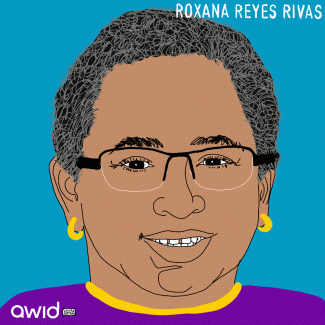
Roxana Reyes Rivas, philosopher, feminist, lesbian, poet, politician and LGBT and women’s rights activist from Costa Rica. Owner of a sharp pen and incisive humour, a laugh a minute. She was born in 1960 and raised in San Ramón of Alajuela, when it was a rural town, and her whole life she would break away from the mandates of what it meant to be a woman.
With El Reguero (Costa Rican lesbian group) she organized lesbian festivals for over a decade, fun-filled formative spaces to come together at a time when the Costa Rican government and society persecuted and criminalized the lesbian existence. For hundreds of women the lesbian festivals where the only place they could be themselves and come together with others like them.
Roxana would often say founding political parties was one of her hobbies. “It’s important for people to understand there are other ways to do politics, that many issues need to be solved collectively”. She was one of the founders of the New Feminist League and VAMOS, a human rights focused political party.
“The philosophical trade is meant to jab, to help people ask themselves questions. A philosopher who doesn’t irritate anyone is not doing her job”. For 30 years Roxana taught philosophy at several Costa Rican public universities. Through her guidance, generations of students reflected about the ethical dilemmas in science and technology.
Roxana’s favourite tool was humour, she created the Glowing Pumpkin award, an acknowledgement to ignorance that she would bestow upon public figures, through her social media channels, mocking their anti-rights expressions and statements.
An aggressive cancer took Roxana at the end of 2019, before she could publish a compilation of her poems, a departing gift from the creative mind of a feminist who always raised her voice against injustice.
With up to 2,500 participants on-site and 3,000 virtual/hybrid participants, it will be the largest AWID Forum ever. We envision multiple spaces for meaningful connection, learning, exchange, strategic conversations, healing and celebration. It is the first time we gather in this space since the pandemic, and we can’t wait.
En 2023, le budget annuel médian des organisations féministes et de défense des droits des femmes était de 22 000 USD. Cette médiane masque de profondes inégalités : quelques groupes accèdent à des ressources considérables, tandis que la grande majorité survit avec des budgets très limités.
Un examen plus attentif des budgets réels révèle une immense diversité et une grande disparité dans les revenus.
Explorez les données relatives à la taille des budgets féministes
Alors que les fondamentalismes, les fascismes et autres systèmes d’oppression se métamorphosent et trouvent de nouvelles tactiques et stratégies pour consolider leur pouvoir et influence, les mouvements féministes persévèrent et célèbrent leurs victoires nationales, régionales et internationales.
This story is about how an increasingly diverse group of feminists from the Pacific organized through the years to attend the AWID Forums and how that process changed them personally, as organizations, and as a movement through what they learned, discovered and experienced. It illustrates the importance of the Forums as a space through which a region that tends to be marginalized or ignored at the global level can build a strong presence in the feminist movement that is then replicated at other international women’s rights spaces.