
Activisme des jeunes féministes
S'organiser de manière créative face à des menaces croissantes
Les jeunes activistes féministes jouent un rôle crucial au sein des organisations et des mouvements pour les droits des femmes à travers le monde. Ce sont elles qui soulèvent les nouveaux problèmes auxquels les féministes sont confrontées aujourd'hui. Leur force, leur créativité et leur adaptabilité sont vitales pour assurer la viabilité des organisations féministes.
Pourtant, elles sont confrontées à toute une série d’obstacles particuliers, notamment l'accès limité au financement et au soutien, le manque de possibilités de renforcement des capacités et une augmentation considérable des agressions sur les jeunes défenseuses des droits humains. Ces obstacles entraînent un manque de visibilité qui rend leur intégration et leur participation effective au sein des mouvements pour les droits des femmes encore plus difficiles.
Une approche multigénérationnelle
Le Programme d’activisme des jeunes féministes de l'AWID a été mis en place pour veiller à ce que les voix des jeunes femmes soient entendues et représentées dans le discours féministe. Nous voulons faire en sorte que les jeunes féministes aient un meilleur accès à du financement, à des opportunités de renforcer leurs capacités et aux processus internationaux.
En plus de soutenir directement les jeunes féministes, nous travaillons également avec des activistes des droits des femmes de tout âge pour élaborer des modèles et des stratégies d’organisation multigénérationnelles plus efficaces.
Nos actions
Nous souhaitons que les jeunes féministes puissent jouer un rôle actif dans les prises de décisions qui concernent leurs droits. Nos actions incluent :
-
Favoriser la mise en commun et le partage d'informations par la Plateforme de jeunes féministes. Étant donné l'importance des médias en ligne pour le travail des jeunes féministes, notre équipe a lancé la Plateforme de jeunes féministes en mai 2010. Elle a pour objectifs d’échanger des renseignements, de renforcer les capacités des membres par le truchement de webinaires et de discussions en ligne, et d'encourager la consolidation d’une communauté de jeunes féministes.
-
Soutenir la recherche et le renforcement des connaissances sur l'activisme des jeunes féministes, pour accroître la visibilité et l'influence de leur activisme au sein et entre les mouvements pour les droits des femmes et auprès d'autres acteurs-trices clés, tels les donateurs.
-
Faire la promotion de la collaboration multigénérationnelle, en explorant de meilleures façons de travailler ensemble.
-
Inciter les jeunes féministes à s’engager dans les processus internationaux relatifs au programme de développement, notamment ceux des Nations Unies.
-
S’assurer leur collaboration dans tous les domaines prioritaires de l'AWID, y compris le Forum, pour faire en sorte que leurs contributions, leurs perspectives, leurs besoins et leur activisme se traduisent dans les débats, les politiques et les programmes qui les concernent.
Contenu lié
En su lucha por los derechos humanos enfrentan la injusticia en América Latina
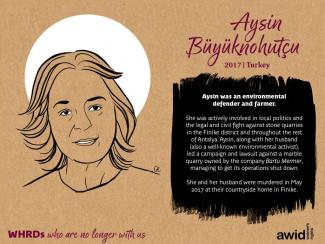
Este año honramos a 19 defensoras de la región de América Latina y el Caribe. De ellas, 16 fueron asesinadas, incluyendo a 6 periodistas y 4 defensoras LGBTQI. Únete a nosotras en la conmemoración de sus vidas y trabajo, compartiendo los memes aquí incluidos con tus colegas, amistades y redes; y tuiteando las etiquetas #WHRDTribute y #16Días.
Por favor, haz click en cada imagen de abajo para ver una versión más grande y para descargar como un archivo.


Should I do any preparation to respond to the survey?
As the WITM survey is focused on resourcing realities for feminist organizations, most questions ask about your group’s funding between 2021–2023. You will need to have this information with you to fill out the survey (e.g., your annual budgets and key sources of funding).
Snippet FEA We are living in a world (ES)
Vivimos en un mundo donde la destrucción de la naturaleza alimenta nuestra economía global actual. |
Incluso en tiempos de crisis climática, los gobiernos continúan alentando el crecimiento de las industrias agrícolas a gran escala. Estas actividades envenenan la tierra, amenazan la biodiversidad y destruyen la producción de alimentos y los medios de vida locales. Mientras tanto, aunque las mujeres producen la mayoría de nuestros alimentos en el mundo, casi no poseen tierra. |
|
¿Qué pasaría si percibiéramos la tierra y la Naturaleza no como una propiedad privada para ser explotada, sino como una totalidad con la cual aprender y coexistir en armonía? ¿Y si repararíamos nuestras relaciones con la tierra y adoptaríamos alternativas más sostenibles que nutran tanto al planeta como a sus comunidades? Nous Sommes la Solution (Somos la Solución, NSS) es uno de los muchos movimientos liderados por mujeres que se esfuerzan por lograr este objetivo. Esta es su historia. |
|
July 2015
Women's Forum on Financing for Gender Equality
- The Forum took place on 10 July 2015 in Addis Ababa and convened feminists, grassroots women, gender advocates, academics and representatives of women’s rights organizations/networks with specific inputs by UN representatives and other policy makers.
- The objectives of the Women's Forum were to: share information on the state of play in the latest FfD negotiations; jointly analyze the FfD panorama and follow-up; build a common women’s rights positioning; and strategize on how to meaningfully and substantively engage from a feminist perspective at the Addis FfD Conference.
- The Women's Forum was organized by the Women's Working Group on FfD, in collaboration with FEMNET, African Women's Development Fund (AWDF) and the Post 2015 Women's Coalition with support from UN Women.
- Read the Women's Working Group reaction to the Addis Ababa Action Agenda
- The CSO FfD Forum took place in Addis Ababa on 11-12 July 2015 and aimed to: inform participating CSOs on the state of play of the official process and coordinate civil society participation in the 3rd FfD Conference; develop a collective CSO Forum Declaration as well as the CSO messages for the FfD Conference Roundtables, the CSO FfD Group-led side events and any other opportunities that might emerge; and plan and organize future areas of CSO engagement on Financing for Development, beyond the 3rd FfD Conference.
- Read the Declaration from the Addis Ababa Civil Society Forum on Financing for Development
- For more information, please visit the CSO FfD Group's website or contact the Addis Ababa CSO Coordinating Group (addiscoordinatinggroup@gmail.com).
The Third UN International Conference on Financing for Development
- The third Conference on Financing For Development took place in Addis Ababa, Ethiopia, from 13-16 July 2015 and focused on: assessing the progress made in the implementation of the 2002 Monterrey Consensus and the 2008 Doha Declaration; addressing new and emerging issues, including in the context of the recent multilateral efforts to promote international development cooperation. Taking into account: the current evolving development cooperation landscape; the interrelationship of all sources of development finance; the synergies between financing objectives across the three dimensions of sustainable development (economic, social and environmental); and the need to support the United Nations development agenda beyond 2015; and reinvigorating and strengthening the financing for development follow-up process.
- The Addis Ababa Action Agenda was adopted on 15 July 2015 by Heads of State, Governments and High Representatives at the UN.
- The feeling however from developing countries, CSOs and more specifically women's organisations was that the Addis Ababa Action Agenda failed to meet the target. The Women's Working Group expressed its strong disappointment and demanded structural changes in the global economic governance and development architecture. Read their reaction to the outcome document. Hundreds of civil society organizations and networks from around the world also expressed deep concerns and reservations. Read their response to the outcome document.
WHRDs from the South and Southeast Asian region
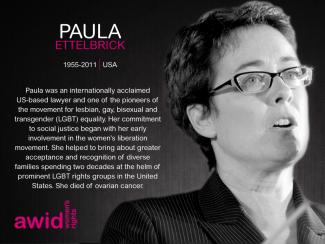
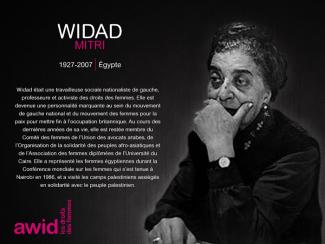
7 Women Human Rights Defenders from across the South and Southeast Asian region are honored in this year’s Online Tribute. These defenders have made key contributions to advancing human and women’s rights, indigenous people’s rights, and the right to education. These WHRDs were lawyers, women’s rights activists, scholars, and politicians. Please join AWID in commemorating t their work and legacy by sharing the memes below with your colleagues, networks and friends and by using the hashtags #WHRDTribute and #16Days.
Please click on each image below to see a larger version and download as a file


¿Mi participación es confidencial?
Sí, es absolutamente confidencial. Tus respuestas se borrarán al término del procesamiento y el análisis de los datos, y se utilizarán únicamente a los fines de la investigación. Los datos NUNCA se compartirán fuera de AWID y solo los procesarán el personal y consultorxs de AWID abocadxs al proyecto ¿Dónde está el dinero?
Damos prioridad a tu privacidad y anonimato. Los detalles de nuestra política de privacidad se encuentran disponibles aquí.
Snippet FEA Agroecology And Food (ES)
AGROECOLOGÍA Y SOBERANÍA ALIMENTARIA COMO RESISTENCIA |
Hoy en día, la producción industrial de alimentos a gran escala utiliza plantaciones de monocultivo, organismos genéticamente modificados y otros pesticidas que destruyen la tierra y el conocimiento de las comunidades locales. |
La agroecología es una resistencia a la agricultura hiper-industrializada utilizada por las multinacionales. La agroecología prioriza la agricultura a pequeña escala, los cultivos múltiples y la producción de alimentos diversificados, al tiempo que se centra en el conocimiento y las prácticas tradicionales locales. La agroecología va de la mano con los reclamos de soberanía alimentaria, o el "derecho de los pueblos a alimentos sanos y culturalmente apropiados producidos por métodos ecológicamente racionales y sostenibles, y su derecho a definir sus propios sistemas alimentarios y agrícolas" (Vía Campesina, Declaración de Nyéléni).
El papel de las mujeres, las comunidades indígenas y rurales y las personas racializadas en los países del Sur Global es fundamental para mantener los sistemas alimentarios. Lxs agroecologistxs feministas trabajan para desmantelar los roles de género opresivos y los sistemas patriarcales arraigados en la producción de alimentos. Como lo muestran las heroínas de Nous Sommes la Solution, generan una agroecología liberadora al fortalecer la resiliencia de las comunidades, empoderar a las mujeres campesinas y agricultoras mientras preservan las tradiciones locales, los territorios y los conocimientos de las comunidades productoras de alimentos.
¿Cuál es el tema del 14° Foro Internacional de AWID?
El tema del 14° Foro Internacional de AWID es «Realidades feministas: nuestro poder en acción».
Entendemos las realidades feministas como los diferentes modos de existir y ser que nos muestran lo que es posible, a pesar de los sistemas de poder dominantes, y en desafío y resistencia contra ellos. Entendemos estas realidades feministas como recuperaciones y corporizaciones de esperanza y poder, multidimensionales, dinámicas, y arraigadas en contextos y momentos históricos específicos.
Domitila Barrios de Chungara
Before you begin
Before starting the WITM research methodology, it is important you prepare the background and know what to expect.
Capacity
With AWID’s WITM research methodology, we recommend that you first review the entire toolkit.
While this toolkit is designed to democratize WITM research, there are capacity constraints related to resources and research experience that may affect your organization’s ability use this methodology.
Use the “Ready to Go?” Worksheet to assess your readiness to begin your own WITM research. The more questions you can answer on this worksheet, the more prepared you are to undertake your research.
Trust
Before beginning any research, we recommend that you assess your organization’s connections and trust within your community.
In many contexts, organizations may be hesitant to openly share financial data with others for reasons ranging from concerns about how the information will be used, to fear of funding competition and anxiety over increasing government restrictions on civil society organizations.
As you build relationships and conduct soft outreach in the lead-up to launching your research, ensuring that your objectives are clear will be useful in creating trust. Transparency will allow participants to understand why you are collecting the data and how it will benefit the entire community.
We highly recommend that you ensure data is collected confidentially and shared anonymously. By doing so, participants will be more comfortable sharing sensitive information with you.
First step
We also recommend referring to our “Ready to Go?” Worksheet to assess your own progress.
Combien de réponses souhaitez-vous recueillir?
Notre objectif est de recueillir 2 000 réponses à l’enquête, soit près du double de la dernière enquête WITM de 2011.
Snippet FEA Bio fertilizer and Sum-Pack (FR)

¿En qué será diferente este Foro?
Siempre hemos trabajado para garantizar que nuestros Foros sean desarrollados conjuntamente con nuestrxs afiliadxs, los movimientos, y nuestros colectivos prioritarios.
Para el Foro 2020 queremos profundizar y fortalecer este espíritu y esta práctica de creación conjunta y colaboración. También reconocemos la necesidad de mejorar el equilibrio entre la inclusión de muchas voces y experiencias y el espacio para que lxs participantes y el equipo respiren, se tomen una pausa, y disfruten de un poco de tiempo de inactividad.
Este Foro será diferente en cuanto a que:
- Tendremos muchas menos actividades organizadas, porque queremos que la gente tenga tiempo para relacionarse y hablar entre sí, experimentar, procesar, etc. Es fundamental que sepas que puedes venir al Foro, participar y ser muy activx, y no facilitar ninguna actividad organizada (o «sesión»).
- Tendremos Espacios Abiertos (al menos una tarde entera sin ninguna actividad organizada), y también espacios físicos disponibles durante todo el Foro para que la gente organice sus propias reuniones.
- Tendremos un Comité de Contenido y Metodología compuesto por feministas de distintas regiones con experiencia en metodologías participativas, para apoyar al equipo de AWID y a quienes lideren actividades en el Foro en el uso de formatos creativos e interesantes para las actividades del Foro.
Evelinda Ramirez Reyes
4. Collect and analyze your data
This section will guide you on how to ensure your research findings are representative and reliable.
In this section:
- Collect your data
1. Before launch
2. Launch
3. During launch- Prepare your data for analysis
1. Clean your data
2. Code open-ended responses
3. Remove unecessary data
4. Make it safe- Create your topline report
- Analyze your data
1. Statistical programs
2. Suggested points for analysis
Collect your data
1. Before launch
- First determine the best way to reach your survey population.
For example, if you want to focus on indigenous women’s rights organizers, do you know who the key networks are? Do you have contacts there, people who can introduce you to these organizations or ways of reaching them? - Determine if your key population can be easily reached with an online survey, if you need to focus on paper survey distribution and collection or a mix of both. This decision is very important to ensure accessibility and inclusiveness.
- Be prepared! Prior to advertizing, create a list of online spaces where you can promote your survey.
If you are distributing paper versions, create a list of events, spaces and methods for distributing and collecting results. - Plan your timeline in advance, so you can avoid launching your survey during major holidays or long vacation periods.
- Make it easy for your advisors and partners to advertize the survey – offer them pre-written Twitter, Facebook and email messages that they can copy and paste.
2. Launch
- Send the link to the survey via email through your organization’s email databases.
- Advertize on your organization’s social media. Similar to your newsletter, you can regularly advertize the survey while it is open.
- If your organization is hosting events that reach members of your survey population, this is a good space to advertize the survey and distribute paper versions as needed.
- Invite your advisors to promote the survey with their email lists and ask them to copy you so you are aware of their promotional messages. Remember to send them follow-up reminders if they’ve agreed to disseminate.
- Approach funders to share your survey with their grantees. It is in their interest that their constituencies respond to a survey that will improve their own work in the field.
3. During launch
- Keep the survey open for a minimum of four weeks to ensure everyone has time to take it and you have time to widely advertize it.
- Send reminders through your email databases and your partners databases asking people to participate in the survey. To avoid irritating recipients with too many emails, we recommend sending two additional reminder emails: one at midway point while your survey is open and another a week before your survey closes.
- As part of your outreach, remember to state that you are only collecting one response per organization. This will make cleaning your data much easier when you are preparing it for analysis.
- Save an extra week! Halfway through the open window for survey taking, check your data set. How have you done so far? Run initial numbers to see how many groups have responded, from which locations, etc. If you see gaps, reach out to those specific populations. Also, consider extending your deadline by a week – if you do so, include this extension deadline in one of your reminder emails, informing people know there is more time to complete the survey. Many answers tend to come in during the last week of the survey or after the extended deadline.
If you also plan to collect data from applications sent to grant-making institutions, this is a good time to reach out them.
When collecting this data, consider what type of applications you would like to review. Your research framing will guide you in determining this.
Also, it may be unnecessary to see every application sent to the organization – instead, it will be more useful and efficient to review only eligible applications (regardless of whether they were funded).
You can also ask grant-making institutions to share their data with you.
Prepare your data for analysis
Your survey has closed and now you have all this information! Now you need to ensure your data is as accurate as possible.
Depending on your sample size and amount of completed surveys, this step can be lengthy. Tapping into a strong pool of detail-oriented staff will speed up the process and ensure greater accuracy at this stage.
Also, along with your surveys, you may have collected data from applications sent to grant-making institutions. Use these same steps to sort that data as well. Do not get discouraged if you cannot compare the two data sets! Funders collect different information from what you collected in the surveys. In your final research report and products, you can analyze and present the datasets (survey versus grant-making institution data) separately.
1. Clean your data
- Resolve and remove duplications: If there is more than one completed survey for one organization, reach out to the organization and determine which one is the most accurate.
- Remove ineligible responses: Go through each completed survey and remove any responses that did not properly answer the question. Replace it with “null”, thus keeping it out of your analysis.
- Consistently format numerical data: For example, you may remove commas, decimals and dollar signs from numerical responses. Financial figures provided in different currencies may need to be converted.
2. Code open-ended responses
There are two styles of open-ended responses that require coding.
Questions with open-ended responses
For these questions, you will need to code responses in order to track trends.
Some challenges you will face with this is:
- People will not use the exact same words to describe similar responses
- Surveys with multiple language options will require translation and then coding
- Staff capacity to review and code each open-ended response.
If using more than one staff member to review and code, you will need to ensure consistency of coding. Thus, this is why we recommend limiting your open-ended questions and as specific as possible for open-ended questions you do ask.
For example, if you had the open-ended question “What specific challenges did you face in fundraising this year?” and some common responses cite “lack of staff,” or “economic recession,” you will need to code each of those responses so you can analyze how many participants are responding in a similar way.
For closed-end questions
If you provided the participant with the option of elaborating on their response, you will also need to “up-code” these responses.
For several questions in the survey, you may have offered the option of selecting the category “Other” With “Other” options, it is common to offer a field in which the participant can elaborate.
You will need to “up-code” such responses by either:
- Converting open-ended responses to the correct existing categories (this is known as “up-coding”). As a simple example, consider your survey asks participants “what is your favorite color?” and you offer the options “blue,” “green,” and “other.” There may be some participants that choose “other” and in their explanation they write “the color of the sky is my favorite color.” You would then “up-code” answers like these to the correct category, in this case, the category “blue.”
- Creating a new category if there are several “others” that have a common theme. (This is similar to coding the first type of open-ended responses). Consider the previous example question of favorite color. Perhaps many participants chose “other” and then wrote “red” is their favorite. In this case, you would create a new category of “red” to track all responses that answered “red.”
- Removing “others” that do not fit any existing or newly created categories.
3. Remove unecessary data
Analyze the frequency of the results
For each quantitative question, you can decide whether you should remove the top or bottom 5% or 1% to prevent outliers* from skewing your results. You can also address the skewing effect of outliers by using median average rather than the mean average. Calculate the median by sorting responses in order, and selecting the number in the middle. However, keep in mind that you may still find outlier data useful. It will give you an idea of the range and diversity of your survey participants and you may want to do case studies on the outliers.
* An outlier is a data point that is much bigger or much smaller than the majority of data points. For example, imagine you live in a middle-class neighborhood with one billionaire. You decide that you want to learn what the range of income is for middle-class families in your neighborhood. In order to do so, you must remove the billionaire income from your dataset, as it is an outlier. Otherwise, your mean middle-class income will seem much higher than it really is.
Remove the entire survey for participants who do not fit your target population. Generally you can recognize this by the organizations’ names or through their responses to qualitative questions.
4. Make it safe
To ensure confidentiality of the information shared by respondents, at this stage you can replace organization names with a new set of ID numbers and save the coding, matching names with IDs in a separate file.
With your team, determine how the coding file and data should be stored and protected.
For example, will all data be stored on a password-protected computer or server that only the research team can access?
Create your topline report
A topline report will list every question that was asked in your survey, with the response percentages listed under each question. This presents the collective results of all individual responses.
Tips:
- Consistency is important: the same rules should be applied to every outlier when determining if it should stay or be removed from the dataset.
- For all open (“other”) responses that are up-coded, ensure the coding matches. Appoint a dedicated point person to randomly check codes for consistency and reliability and recode if necessary.
- If possible, try to ensure that you can work at least in a team of two, so that there is always someone to check your work.
Analyze your data
Now that your data is clean and sorted, what does it all mean? This is the fun part where you begin to analyze for trends.
Are there prominent types of funders (government versus corporate)? Are there regions that receive more funding? Your data will reveal some interesting information.
1. Statistical programs
-
Smaller samples (under 150 responses) may be done in-house using an Excel spreadsheet.
-
Larger samples (above 150 responses) may be done in-house using Excel if your analysis will be limited to tallying overall responses, simple averages or other simple analysis.
-
If you plan to do more advanced analysis, such as multivariate analysis, then we recommend using statistical software such as SPSS, Stata or R.
NOTE: SPSS and Stata are expensive whereas R is free.
All three types of software require staff knowledge and are not easy to learn quickly.
Try searching for interns or temporary staff from local universities. Many students must learn statistical analysis as part of their coursework and may have free access to SPSS or Stata software through their university. They may also be knowledgeable in R, which is free to download and use.
2. Suggested points for analysis
- Analysis of collective budget sizes
- Analysis of budget sizes by region or type of organization
- Most common funders
- Total amount of all funding reported
- Total percentages of type of funding (corporate, government, etc)
- Most funded issues/populations
- Changes over time in any of these results.
Previous step
Next step

Estimated time:
• 2 - 3 months
People needed:
• 1 or more research person(s)
• Translator(s), if offering survey in multiple languages
• 1 or more person(s) to assist with publicizing survey to target population
• 1 or more data analysis person(s)
Resources needed:
• List of desired advisors: organizations, donors, and activists
• Optional: an incentive prize to persuade people to complete your survey
• Optional: an incentive for your advisors
Resources available:
Survey platforms:
• Survey Monkey
• Survey Gizmo (Converts to SPSS for analysis very easily)
Examples:
• 2011 WITM Global Survey
• Sample of WITM Global Survey
• Sample letter to grantmakers requesting access to databases
Visualising Information for Advocacy:
• Cleaning Data Tools
• Tools to present your data in compelling ways
• Tutorial: Gentle Introduction to Cleaning Data
Previous step
Next step
Ready to Go? Worksheet
Snippet - Intro WITM - RU
Основываясь на 20-летней истории привлечения более объемного и качественного финансирования для достижения социальных изменений под руководством феминисток(-ов), AWID приглашает вас принять участие в новом опросе:
«Где же деньги для феминистских объединений?»
(далее – «Где деньги?»)
Пожалуйста выберите язык, на котором вы хотите отвечать на вопросы в правом верхнем углу страницыSnippet FEA Avellaneda, Gran Buenos Aires (EN)
Avellaneda, Gran Buenos Aires, Argentina
Cooperativa Textil Nadia Echazú
WEAVING
LIVES
¿Cómo puedo financiar mi participación en el Foro de AWID? Muchxs activistas no podrán costearse el Foro: ¿AWID está haciendo algo para brindar asistencia?
Por favor consulta la página «Financiamiento» para obtener algunas ideas sobre cómo puedes financiar tu participación en el próximo Foro. Esto incluye el limitado apoyo que AWID podrá brindar.