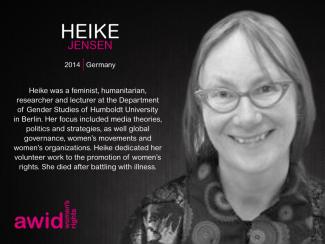
Heike Jensen
Au cours des dernières années, nous avons observé une nouvelle tendance inquiétante dans les espaces internationaux consacrés aux droits humains. Les discours axés sur « la protection de la famille » sont en effet utilisés pour défendre des violations des droits de membres de la famille, pour renforcer et justifier l’impunité des auteurs de ces violations et pour restreindre l’égalité des droits au niveau de la vie familiale.
La campagne en faveur de la « Protection de la famille » est motivée par une volonté conservatrice d’imposer des conceptions « traditionnelles » et patriarcales de la famille et de priver les membres de la famille de leurs droits pour les transférer à « l’institution familiale ».
Depuis 2014, un groupe d’Etats travaille de front dans les espaces dédiés aux droits humains sous le nom de « Group of Friends of the Family » (Groupe des ami-e-s de la famille) ; des résolutions sur la « Protection de la famille » ont été adoptées chaque année depuis 2014.
Ce programme s’est propagé au-delà du Conseil des droits humains. Nous avons observé l’introduction d’un discours régressif autour de la « famille » à la Commission sur la condition de la femme, ainsi que des tentatives d’introduction dans les négociations sur les Objectifs de développement durable.
L’AWID travaille avec des partenaires et des allié-e-s pour s’opposer ensemble à la « Protection de la famille » et à d’autres programmes régressifs et défendre l’universalité des droits humains.
En réponse à l’influence croissante d’acteurs régressifs au sein des espaces dédiés aux droits humains, l’AWID a rejoint des allié-e-s afin de créer l’Observatoire sur l'Universalité des droits (OURs) (site en anglais). L’OURs est un projet de collaboration qui surveille, analyse et diffuse les informations concernant les initiatives anti-droits telles que la « Protection de la famille ».
Le premier rapport de l’OURs, Nos droits en danger, trace une cartographie des acteurs et actrices qui constituent le lobby mondial anti-droits et identifie leur réthorique et stratégies clés ainsi que leur impact sur les droits humains.
Le rapport précise que le programme de « Protection de la famille » a développé une collaboration entre un large éventail d’acteurs régressifs aux Nations Unies, qu’il décrit comme « un cadre stratégique abritant des positions anti-droits et patriarcales multiples, où le cadre vise entre autres à légitimer et institutionnaliser ces positions. »
Una red compleja de actores anti-derechos, en constante evolución, está ejerciendo cada vez más influencia en los espacios internacionales y en las políticas nacionales. Respaldados a menudo por financiaciones poco transparentes, estos actores construyen alianzas tácticas sobre distintos temas y cruzando diferentes regiones y credos para aumentar su impacto.
If your funding institution is already a part of the Database and you would like to contact us to update your record, or if you would like to leave some feedback for us, please use the form above.
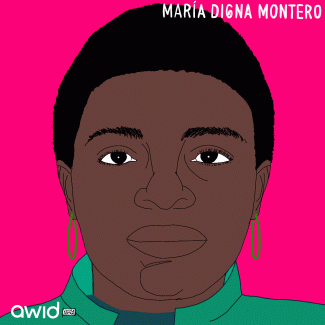
María Digna Montero was a Garifuna (Afro-descendent and indigenous) land defender and a member of the National Black Fraternal Organization of Honduras (OFRANEH), a grassroots organization working to protect the Garifuna communities, their ancestral rights, culture, resources and territory.
María also taught in the local school and was a member of the OFRANEH Intercultural Bilingual Education working group.
On the Day of Indigenous Resistance, October 12, 2019, unknown assailants shot María multiple times in the backyard of her house.
She was one of six Garifuna women defenders murdered between September and October 2019 and according to OFRANEH, there was no investigation by the authorities into these crimes. In an official statement, the organization also highlighted the connection between the violence against Garifuna leaders and the increase in extractive industries which exploit natural resources in their communities calling this violence part of a “strategy of intimidation and systematic expulsion” by the Honduran State.
“The heightened tension and growing risks to the security and human rights of the leaders in the communities and ancestral territories is a product of the dispossession, displacement and criminalization of the communities and of the extractive mega projects promoted by the State together with the national and international corporations.” - OFRANEH communique, October 12, 2019
par Marianne Mesfin Asfaw
J’ai de nombreux souvenirs émotifs de mon aventure vers le féminisme, mais un en particulier me vient à l’esprit. Je suis alors en études supérieures, à une conférence dans le cadre d’un cours sur la théorie féministe. La conférence porte sur le féminisme africain et la professeure nous parle de l’histoire du panafricanisme et explique en quoi ce mouvement est patriarcal, centré sur les hommes, et comment les universitaires panafricanistes perpétuent l’effacement des femmes africaines. Elle commente la manière dont les contributions des Africaines aux luttes anticoloniales et décoloniales sur le continent ne sont que rarement, voire jamais l’objet de discussions et que l’on ne crédite que rarement les autrices. Nous lisons alors des textes sur des universitaires africaines féministes qui remettent en question cet effacement et mettent en lumière les récits de mouvements et efforts de résistance menés par des Africaines. Cela semble naïf, mais ce qui me paraissait le plus frappant était que l’on puisse juxtaposer les termes « africaine » et « féministe ». Et également que nous étions très nombreuses dans les différents coins du continent à nous débattre avec une histoire, des politiques et des normes sociétales compliquées, que nous envisagions cependant toutes selon le prisme du féminisme. Je suis sortie de cette conférence à la fois émue et complètement chamboulée. Trois de mes amies (toutes féministes africaines) et moi-même sommes sorties discuter du contenu de ce que nous venions d’entendre. Nous étions ébahies par l’excellence de la conférence et du contenu mais, plus que tout encore, nous nous sentions véritablement vues. Et c’est cette sensation qui m’est restée.
Tomber en amour avec le féminisme était époustouflant. C’était comme de finalement pouvoir parler à un coup de cœur de longue date, et de se rendre compte qu’on lui plaît aussi. Je parle de coup de cœur parce qu’au lycée je me disais féministe, tout en sentant que je n’en savais pas assez. Y avait-il une bonne manière d’être féministe? Et si je ne m’y prenais pas bien? Ma première conférence en Études féministes a répondu à toutes ces questions. C’était génial d’apprendre toutes ces histoires de résistance féministe et de démantèlement du patriarcat. Je sentais que je m’affirmais et que j’étais validée, mais je sentais également qu’il manquait quelque chose.
Approfondir ma relation avec le féminisme dans une institution universitaire où la majorité des élèves et du corps enseignant étaient blancs signifiait que pendant ces premières années, nous ne discutions que rarement de la place de la race ou du dénigrement des Noir·es dans les mouvements féministes traditionnels. Dans la plupart des cours, il y avait peut-être une semaine, ou pire une seule séance qui portait sur la race et nous lisions alors généralement un texte de bell hooks ou de Kimberly Crenshaw sur l’intersectionnalité, et peut-être un autre de Patricia Hill Collins. Et la semaine suivante, nous continuions à botter le sujet en touche. Je gérais cette situation en incluant la race et le féminisme noir dans presque tous mes travaux, en écrivant sur les cheveux des Noir·es et la politique de respectabilité, sur l’hypersexualisation du corps des femmes noires, et bien plus encore. Avec le temps, j’ai pris conscience que je tentais de combler une lacune, sans toutefois saisir laquelle.
Découvrir le féminisme africain et en apprendre davantage me permettait de boucler la boucle. Je comprenais que j’avais encore tant de choses à apprendre. Et principalement, que mon africanité et mon féminisme politique n’avaient pas à être écartés. Ils avaient en réalité tant à apprendre l’un de l’autre, et des féministes africaines faisaient déjà ce travail. C’était la pièce manquante et insaisissable lors de mon exploration du féminisme pendant mes années universitaires.
Pour moi, le féminisme est l’antithèse de l’apathie sociale et politique. Il signifie également que dès lors que l’on adopte une optique féministe, plus rien ne peut être pareil. Mes amies et moi parlions de ce que ça fait de mettre des lunettes qu’on ne peut plus jamais enlever, parce que l’on voit le monde pour ce qu’il est, avec tout son désordre. Un désordre qu’on ne peut pas simplement ignorer ou laisser tomber. J’ai donc fait la promesse aux mouvements féministes de ne jamais arrêter d’apprendre, de continuer à étirer les limites de mon empathie et de ne jamais vivre passivement. De dédier davantage de temps et d’espace dans ma vie aux mouvements féministes et de continuer à amplifier, célébrer, documenter et citer les travaux de féministes africaines. Je m’engage également à placer l’attention et le soin au centre de tout et à donner la priorité au plaisir dans cette aventure féministe, parce que nos mouvements en ont besoin pour durer.
We are acutely aware of the practical hurdles and emotional distress associated with international travel, particularly from the Global South. AWID is working with TCEB (the Thailand Convention and Exhibition Bureau) to support Forum participants with acquiring visas. More information about this visa assistance will be available upon registration, including contact information for where and how to apply.
Le tout dernier rapport de l’Observatoire sur l’universalité des droits (OURs) détricote les discours de « l’idéologie du genre », du « génocide prénatal » et de « l’impérialisme culturel ». Il creuse également la réalité de CitizenGo, de l’Alliance Defending Freedom et des flux de financement antidroits. Vous y trouverez, en outre, une analyse des systèmes régionaux des droits humains et des stratégies féministes victorieuses !
In contrast, over $1 billion went to three anti-rights groups 2021-2022, with funding for anti-gender networks still rising.1
1 Global Philanthropy Project, 2024
Nilcéa Freire fue una activista feminista, política y académica brasileña. Como perseverante defensora de los derechos de las mujeres y de las minorías subrepresentadas de su país, su vida y su trabajo acumularon una larga historia de luchas y victorias.
«Mientras se resiste, tenemos que empujar para avanzar y los avances que vamos a poder lograr en este momento, a mi juicio, serán a través de la organización estupenda que las jóvenes mujeres blancas, pero sobre todo, las mujeres negras, están haciendo en todas las capitales, y las grandes ciudades de Brasil.» - Nilcéa Freire
En 1999, se convirtió en la primera mujer Rectora de la Universidad del Estado de Río de Janeiro (UERJ). Desde ese puesto, impulsó la implementación de la primera política de acción afirmativa para estudiantes que se graduaban de escuelas públicas, que exigía un cupo específico para estudiantes negrxs de sectores de bajos ingresos, sistema adoptado por decenas de otras universidades públicas.
Unos años más tarde, Nilcéa encabezó la Secretaría Especial de Políticas para las Mujeres del gobierno del ex-presidente Luiz Inácio Lula da Silva. Desde esta función, lideró la Primera Conferencia Nacional de Mujeres Brasileñas, en la que participaron más de doce mil mujeres de todo el país. El resultado de este trabajo colectivo fue incorporado en el Plan Nacional de Políticas para las Mujeres.
Su compromiso con las mujeres y las personas afrobrasileñas e indígenas se reflejó también en su trabajo de promoción de sus derechos, a través de iniciativas de la Fundación Ford en Brasil, de la cual fue Directora Regional.
La activista feminista Manoela Miklos describió a Nilcéa como «una mujer sin igual».
Nilcéa falleció en Río de Janeiro el 29 de diciembre de 2019 a los 66 años, víctima de un cáncer.
«No tengo palabras ante la noticia de la muerte de la querida Nilcéa Freire. Es demasiado triste saber que partió tan pronto. Siempre formó parte de las filas de quienes no aceptan las injusticias del mundo. Fue Ministra de las Mujeres, una activista, siempre activa en la causa feminista. ¡La extrañaremos mucho!» - Jandira Feghali, Diputada Federal
La feminista brasileña Nilcéa Freire nos dice por qué es importante solidarizarse con Brasil

How does a movement start?
we get expelled by ghosts from a house, a family, and a nation
we arrive fatigued to a space (sometimes an actual address) but mainly to a state of being
preceded by a fallen star
perhaps our arrival isn’t accompanied by fatigue,
maybe accompanied by fear
perhaps our arrival isn’t accompanied by fear
maybe accompanied by anger
from issues that keep on repeating themselves:
a stab in the heart (read heartache)
a bullet in the back (read betrayal)
forced disappearances
bodies sentenced by marriage, disfiguration, and chronic fatigue
yet when we arrive, we gather, whisper, speak and weep.
This is how our movements begin when we arrive at each other
We become seeds,
This is how our movements start when we plant each other
Becoming flowers, sometimes just thorns, sometimes fruits,
we are each other’s oasis
to sing for the battles
to make remedies
to place the faces of our lovers, the shape of their smiles, the sound of their laughter
the secret of turning silences into language
the detailed instructions of witches
our movement is: for all of us
when we arrive as seeds with the purpose of flowering.
Sara AbuGhazal
www.badiya.blog
Volveremos a ponernos en contacto con contrapartes que hayan colaborado en el pasado, para asegurarnos de que se respetan los esfuerzos realizados.Si tus datos de contacto han cambiado desde el último proceso del Foro, por favor, actualízalos para que podamos contactarte.
When our embodied labor becomes profit in the hands of the systems we seek to dismantle, it is no wonder that our sexualities and pleasures are once again relegated to the sidelines – especially when they are not profitable enough. In many instances during the production of this issue, we asked ourselves what would happen if we refused to accommodate the essential services of capitalism.
Las organizaciones feministas y por los derechos de las mujeres no solo dependemos del financiamiento institucional, también nos autofinanciamos. Son la pasión, el compromiso político, la solidaridad y el cuidado colectivo lo que empuja a nuestras organizaciones.
Estos recursos se autogeneran y son autónomos y, aunque a menudo no se reflejan en nuestros presupuestos, son la columna vertebral de las organizaciones.
Leah Tumbalang était une femme lumad de Mindanao, aux Philippines. L’histoire du peuple autochtone Lumad recouvre des générations de résistance à l'exploitation minière à grande échelle par les entreprises, la protection des domaines ancestraux, des ressources et de la culture, et la lutte pour le droit à l'autodétermination.
Leah était une leader lumad, ainsi qu’une dirigeante du Kaugalingong Sistema Igpasasindog tu Lumadnong Ogpaan (Kasilo), une organisation paysanne lumad plaidant contre l'arrivée des sociétés minières à Bukidnon, dans la province de Mindanao. Elle s’est montrée inébranlable dans son activisme antimines, militant avec ferveur contre les effets dévastateurs de l'extraction minière sur l'environnement et les terres des peuples autochtones. Leah était également une organisatrice de la liste du parti Bayan Muna, membre du parti politique de gauche Makabayan.
Depuis près d’une décennie, Leah (ainsi que d’autres membres de Kasilo) recevait des menaces du fait qu'elle codirigeait l'opposition contre le déploiement de groupes paramilitaires soupçonnés d’être soutenus par des intérêts miniers.
« En tant que leader des Lumad au sein de leur communauté, elle est au premier plan pour lutter en faveur de leurs droits à la terre ancestrale et à l'autodétermination ». - Organisation régionale lumad de Kalumbay
Être en première ligne de la résistance implique également souvent d’être la cible de violences et victime de l’impunité. Leah a non seulement reçu de nombreuses menaces de mort, mais elle a été assassinée le 23 août 2019 à Valencia, dans la province de Bukidnon.
Selon un rapport de Global Witness, « les Philippines sont le pays à avoir été le plus touché en chiffre absolu » pour ce qui est des meurtres d’activistes écologistes en 2018.
Lisez le rapport du Global Witness, publié en juillet 2019

Lorsque des milliers de féministes se réunissent, nous créons une grande force de solidarité qui a le pouvoir de changer le monde. Le Forum de l’AWID sera pour nous un moment de repos et de guérison ensemble, de connexion au-delà des frontières et de découverte de nouvelles orientations stratégiques courageuses.
La date et le lieu seront annoncés l'année prochaine, dès que possible. Nous sommes ravi.es et nous savons que vous le serez aussi. Restez à l'écoute!
Assurez-vous de nous suivre sur les médias sociaux et de vous inscrire à notre liste de diffusion pour rester informé!
Pour toute question supplémentaire, veuillez utiliser notre formulaire de contact. Nous continuerons d’actualiser ce document en fonction des questions que nous recevrons de votre part !
with Dr. Vandana Shiva, Dr. Dilar Dirik, and Nana Akosua Hanson.