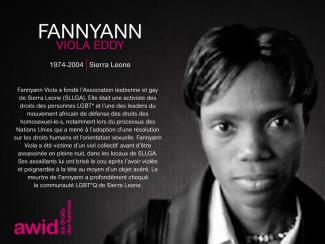
Fannyann Viola Eddy
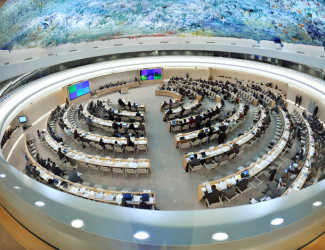
Le Conseil des droits de l'homme (CDH) est un organe intergouvernemental clé du système des Nations Unies, responsable de la promotion et la protection des droits humains autour du globe. Il se réunit trois fois par an en session ordinaire, en Mars, Juin et Septembre. Le Bureau du Haut-Commissariat des Nations Unies aux Droits de l’Homme (HCDH) constitue le secrétariat pour le CDH.
Débat et adopte des résolutions sur les questions globales des droits humains ainsi que sur la situation des droits humains dans des pays particuliers
Examine les plaintes des victimes de violations des droits humains et des organisations activistes, au nom des victimes de violations des droits humains
Nomme des experts indépendants (que l'on connaît sous le nom de « Procédures Spéciales ») pour réviser les cas de violation des droits humains dans des pays spécifiques, ainsi que pour examiner et suivre des questions globales relatives aux droits humains
Prend part à des discussions avec les experts et les gouvernements sur les questions de droits humains
Évalue les bilans des États membres de l'ONU en matière de droits humains tous les quatre ans et demi, dans le cadre de l'examen périodique universel.
La prochaine session du CDH a lieu à Genève, en Suisse, du 30 juin au 17 juillet 2020.
AWID travaille avec des partenaires féministes, progressistes et du domaine des droits humains pour partager nos connaissances clé, convoquer dialogues et évènements avec la société civile, et influencer les négociations et les résultats de la session.
Cada año, en AWID buscamos renovar y enriquecer las perspectivas y la experiencia reflejadas en nuestra Junta Directiva a través de la incorporación de nuevxs afiliadxs.
Por favor, ayúdanos a identificar a feministas audaces y dedicadxs a fin de incluirlxs en la lista de nominaciones para la elección a la Junta Directiva de AWID, a realizarse el 29 de julio de 2022.
Las personas elegidxs se sumarán por un período de 3 años, a partir de principios de 2023. Esta es una oportunidad para contribuir a la gobernanza de nuestra organización y formar parte de un grupo increíble de feministas de todo el mundo
Por favor, también comparte esta invitación a candidaturas entre tus redes.
Ante todo, estamos buscando candidatxs comprometidxs con la misión de AWID, capaces de establecer conexiones entre las luchas locales y globales, y que puedan ayudarnos en la reflexión sobre cómo optimizar el posicionamiento y las fortalezas de AWID en un contexto en constante evolución. Además, lxs candidatxs deben estar dispuestxs a cumplir con los deberes y las responsabilidades legales de la Junta Directiva de AWID en beneficio de la organización.
La participación en la Junta de AWID es una función voluntaria que requiere compromiso y dedicación durante todo el año. Se espera que lxs integrantes de la Junta se comprometan a dedicar un mínimo de 10 a 15 días al año para asistir a reuniones presenciales y virtuales, y contribuir con otras comunicaciones.
En AWID, aspiramos a que nuestro Consejo refleje la diversidad en todas sus formas, especialmente, en términos de identidad de género, orientación sexual, edad, geografía y origen. Además, buscamos integrantes de la Junta con experiencia relevante para las áreas de trabajo prioritarias de AWID.
Si bien consideraremos todas las candidaturas recibidas, teniendo en cuenta la composición actual de la Junta, daremos prioridad a los siguientes aspectos:
Candidatxs con experiencia de trabajo en las intersecciones de los derechos de las mujeres / justicia de género y
Candidatxs de las siguientes regiones:
La Junta Directiva es clave para orientar la dirección estratégica de AWID y apoyar a nuestra organización para que cumpla su misión en coherencia con el mundo en el que vivimos y las necesidades de nuestros movimientos.
Lxs integrantes de la Junta Directiva contribuyen al día a día de la organización de muchas maneras: aportando su experiencia en gobernanza en otros espacios, como también perspectivas de diversos sectores de los movimientos feministas y experiencia sustantiva en áreas relevantes para la estrategia de AWID.
Lxs candidatxs que finalmente resulten elegidxs se incorporarán a la Junta Directiva de AWID en 2023, acompañándonos en el lanzamiento de nuestro nuevo plan estratégico liderado por lxs nuevxs Codirectorxs Ejecutivxs de AWID, y en la planificación de nuestro próximo Foro internacional.
(Puedes nominarte a ti mismx o a alguien que conozcas, con su consentimiento
Por favor, ayúdanos a difundir este llamado a candidaturas compartiéndolo en tus redes.
¡Gracias, desde ya, por ayudarnos a encontrar a lxs próximxs maravillosxs integrantes de la Junta Directiva que apoyarán a AWID en su camino hacia el futuro!
Te invitamos a que te pongas en contacto con nosotrxs para explorar formas de colaborar de manera más significativa con el Foro.
Las organizaciones feministas y por los derechos de las mujeres no solo dependemos del financiamiento institucional, también nos autofinanciamos. Son la pasión, el compromiso político, la solidaridad y el cuidado colectivo lo que empuja a nuestras organizaciones.
Estos recursos se autogeneran y son autónomos y, aunque a menudo no se reflejan en nuestros presupuestos, son la columna vertebral de las organizaciones.
Leah Tumbalang était une femme lumad de Mindanao, aux Philippines. L’histoire du peuple autochtone Lumad recouvre des générations de résistance à l'exploitation minière à grande échelle par les entreprises, la protection des domaines ancestraux, des ressources et de la culture, et la lutte pour le droit à l'autodétermination.
Leah était une leader lumad, ainsi qu’une dirigeante du Kaugalingong Sistema Igpasasindog tu Lumadnong Ogpaan (Kasilo), une organisation paysanne lumad plaidant contre l'arrivée des sociétés minières à Bukidnon, dans la province de Mindanao. Elle s’est montrée inébranlable dans son activisme antimines, militant avec ferveur contre les effets dévastateurs de l'extraction minière sur l'environnement et les terres des peuples autochtones. Leah était également une organisatrice de la liste du parti Bayan Muna, membre du parti politique de gauche Makabayan.
Depuis près d’une décennie, Leah (ainsi que d’autres membres de Kasilo) recevait des menaces du fait qu'elle codirigeait l'opposition contre le déploiement de groupes paramilitaires soupçonnés d’être soutenus par des intérêts miniers.
« En tant que leader des Lumad au sein de leur communauté, elle est au premier plan pour lutter en faveur de leurs droits à la terre ancestrale et à l'autodétermination ». - Organisation régionale lumad de Kalumbay
Être en première ligne de la résistance implique également souvent d’être la cible de violences et victime de l’impunité. Leah a non seulement reçu de nombreuses menaces de mort, mais elle a été assassinée le 23 août 2019 à Valencia, dans la province de Bukidnon.
Selon un rapport de Global Witness, « les Philippines sont le pays à avoir été le plus touché en chiffre absolu » pour ce qui est des meurtres d’activistes écologistes en 2018.
Lisez le rapport du Global Witness, publié en juillet 2019

Avec Manal Tamimi, Bubulina Moreno, Karolina Więckiewicz et Anwulika Ngozi Okonjo..
Les deux amies se font appeler les Triple Cripples (invalides en triple) parce qu'elles subissent trois niveaux de discrimination en tant que femmes noires handicapées. Jay, aujourd'hui âgée de 31 ans, a eu la polio bébé et utilise une attelle de jambe et des béquilles pour se soutenir, tandis que Kym, âgée de 25 ans, a la sclérose en plaques et utilise un fauteuil roulant pour se déplacer. Le nom de leur duo découle d'une tentative de redéfinir le mot « invalide », qui, selon elles, « a été affligé aux personnes handicapées comme une insulte, une façon certaine de nous rappeler que nous étions « défectueuses » et allions toujours être moins que. »
En tant que femmes noires, Kym et Jay ont été victimes du stéréotype racial mondialisé qui hypersexualise les peaux foncées. Dans leur livre intitulé Heart of The Race: Black Women's Lives in Britain, Bryan, Dadzie et Scafe décrivent comment les femmes noires ont été historiquement décrites comme un « risque élevé de promiscuité » par les médecins en raison de leur libido et de leur fertilité. Jay explique que « les gens pensent que je suis toujours prête à tout faire, n'importe où n'importe quand, parce que je suis une femme noire. » Alors que les deux femmes ont été soumises à une fétichisation intense en raison de leur couleur de peau, leurs handicaps ont semé la confusion totale dans l'esprit de plusieurs. Kym décrit ainsi son expérience de femme à courbes : « J'ai le type de corps que les gens veulent malmener et ils ont l'impression que je devrais être capable de supporter cela, mais parallèlement, il y a cette idée que je ne devrais pas avoir de critères à cause de mon handicap. »
Sur les sites de rencontre en ligne, on a demandé à Jay si elle pouvait effectuer certaines positions sexuelles car des partenaires potentiel.le.s « ont décidé qu'ielles voulaient être avec vous de cette façon et savoir si votre physicalité pouvait permettre cela. » Lors d'un contrôle, Kym s'est même fait demander des excuses par un professionnel de la santé, remplissant un formulaire, pour lui avoir demandé combien de partenaires sexuel.le.s elle avait eu.e.s, avec une nuance sous-entendant « je sais que (ces questions) ne s'appliquent pas à vous, mais nous devons suivre le processus d'interrogation normé. »
L'idée fausse selon laquelle le manque d'autonomie physique équivaut à un manque de désir sexuel est omniprésente.
À l'école, Jay a été exclue des cours d'éducation sexuelle en raison de son incapacité présumée à avoir des relations sexuelles. Elle explique que même les organisations bien intentionnées qui militent pour l'accès aux services de santé sexuelle et reproductive ne tiennent souvent pas compte des besoins spécifiques des femmes handicapées. Par exemple, les pilules contraceptives sont souvent saluées comme une méthode efficace de contrôle des naissances, sans aucune mention qu'elles peuvent accentuer les risques de caillots sanguins pour les femmes en fauteuil roulant.
Basées à Londres, les Triples Cripples attendaient avec impatience leur participation aux côtés de l'équipe Décoloniser la Contraception à SexFest2020, un festival d'une journée créé pour les personnes racisées, dédié à la santé et au bien-être sexuels. Malheureusement, l'évènement a été annulé en raison de la pandémie de la COVID-19. Néanmoins, sans se décourager, Jay et Kym se sont tournées vers leurs plateformes de plaidoyer en ligne pour contrer la façon dont la sexualité est vue d'un point de vue strictement hétéronormatif et pour contester l'idée que la féminité est définie par la capacité de procréer. Le duo a lancé une chaîne YouTube et un podcast, également appelé The Triple Cripples, pour promouvoir la représentation des personnes subissant des discriminations multiples en tant qu'êtres humains holistiques. Leurs projets futurs comprennent un documentaire artistique et une exposition photographique consacrée à la lutte contre la discrimination et à l'amplification des voix des personnes handicapées racisées.
Bien que les femmes handicapées raciées partagent des expériences de capacitisme avec d'autres personnes handicapées, des expériences de sexisme avec d'autres femmes et des expériences de racisme avec d'autres personnes racisées, ces expériences interagissent et ne peuvent être séparées : les femmes handicapées racisées subissent une discrimination unique en tant que femmes handicapées racisées.
Alors que les Triple Cripples reconnaissent que les approches toutes faites et superficielles à la diversité ne se transformeront pas comme par magie en espaces inclusifs du jour au lendemain, elles restent confiantes que leurs petits coups de hache finiront par faire tomber les grands chênes que les pratiques discriminatoires représentent pour elles.
La joie de s’accepter soi-même et de grandir dans cette lumière.

La féminité obligatoire est un dispositif de violence colonial hétéro-cis-patriarcal envers les corps assignés féminins à la naissance. Les corps trans continuent de résister malgré l’invisibilisation et le silencement historique. Je ne suis pas une
![“Asignado Nderentendei Al Nacer” [Assigned Nderentendei at Birth] by Bastión Moral](https://web.archive.org/web/20210928161447/https://www.awid.org/sites/default/files/thumbnails/image/web_bastion-nderentendei.png "“Asignado Nderentendei Al Nacer” [Assigned Nderentendei at Birth] by Bastión Moral")
For the first time, the AWID Forum offers three modes of participation
Participants will come together in Bangkok, Thailand. We can’t wait!
Modelos de gobernanza alternativos como vías para salir de la crisis climática.
📅 Miércoles 12 de noviembre de 2025
📍 Seminario Mar Nossa Sra Da Assunção, Pará, Brasil
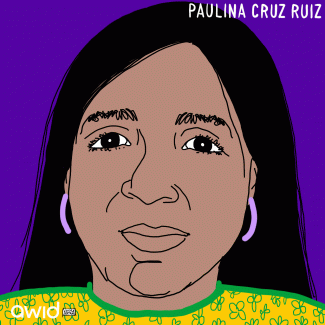
Paulina Cruz Ruiz, from the Rabinal, Baja Verapaz region of Guatemala, was an ancestral Maya Achí (Indigenous) authority and a human rights defender.
She was actively involved in community organizing and resistance, including legal measures against mining projects on Indigenous territory, projects that would severely affect and damage the socio-environmental fabric.
“The extractive industry model promoted by the Guatemalan government and the construction of large-scale development projects on indigenous lands without community consent has been a source of ongoing disputes with resistance movements.” - Minority Rights Group International
Paulina was also part of the March for Dignity, Life and Justice, in which on 1 May 2019 thousands of Guatemalans started a march of eight days against corruption and impunity in the prosecution and assassinations of human rights, peasant and Indigenous leaders and land defenders.
Paulina was murdered on 14 September 2019 near her home in the village of Xococ.
According to the Minority Rights Group International, “one of the major ongoing issues affecting Mayan communities is the increasing activity of the mining industry.”
Read more about the Mayans of Guatemala
Read more about the March for Dignity, Life and Justice
As heteropatriarchal capitalism continues to force us into consumerism and compliance, we are finding that our struggles are being siloed and separated by physical as well as virtual borders.
Queridos movimientos feministas,
El amor es lo que mantiene encendido nuestro fuego feminista. Junto con el cuidado de nuestras comunidades, la ira y la rabia ante la injusticia, y el coraje para actuar.
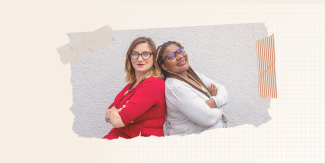
En septiembre de 2022, asumimos con gran entusiasmo nuestros roles de liderazgo en AWID, como Co-Directoras Ejecutivas. Sentimos el calor y el abrazo de la sororidad feminista cuando ustedes nos recibieron.
Reflexionando sobre nuestras memorias más preciadas como feministas, recordamos momentos poderosos de unión en protestas callejeras, análisis agudos y voces valientes que sacuden el status quo en las reuniones. Mantuvimos esas conversaciones íntimas hasta bien entrada la noche, nos reímos durante horas y bailamos juntes en fiestas.
Es necesario alimentar los fuegos feministas, especialmente en tiempos difíciles cuando no faltan los desafíos externos, desde la crisis climática y el ascenso de las fuerzas de derecha, hasta las economías explotadoras y los patrones persistentes de opresión dentro de nuestros propios movimientos sociales. Son estos fuegos, que arden por todas partes, los que iluminan nuestros caminos y nos mantienen calientes, pero no podemos ignorar los efectos agotadores de la violencia política y la represión dirigida contra muchas de nuestras luchas, movimientos y comunidades
Entendemos el deseo de cambiar el mundo como un ingrediente esencial de la organización feminista. Nunca podemos olvidar que somos quienes hemos estado esperando, en la construcción de alternativas y la configuración de nuestro futuro. Sin embargo, la vibrante energía feminista no puede darse por sentada y debe salvaguardarse de muchas maneras. En este sentido, seguiremos vigilantes. Mejor y más equitativo acceso a la atención y el bienestar, a la sanación y al placer, no son solo instrumentales para prevenir el agotamiento y sostener nuestros movimientos, aunque esa es una función importante; ante todo, son la forma en que esperamos vivir nuestras vidas.
Estamos encantades de arremangarnos y trabajar con ustedes. El nuevo plan estratégico de AWID "Fierce Feminisms: Together We Rise" (“Feminismos Osados: Juntos Nos Levantamos”) refleja nuestra convicción de que ahora es el momento de ser desenfadades y sin temores en nuestras agendas mientras hacemos un esfuerzo por conectar a través de los movimientos y llegar a conocer verdaderamente las realidades individuales, para que podamos ponernos en pie juntes, porque, para nosotres, este es el único camino.
¡Nuestros planes incluyen el tan esperado Foro de AWID! Esperamos conocerles a todes en persona y en línea en 2024. Escuchamos de ustedes la necesidad de conectarse y recargar energías, descansar y sanar, ser desafiados e inspirados, compartir buena comida y reír y bailar juntes. Pocas cosas en este mundo son tan poderosas y transformadoras, como la unión de feministas de todas partes del mundo, y realmente esperamos con ansias por este momento, porque sabemos la magia que podemos crear juntes.
Nuestra conexión con la membresía ha cobrado vida propia a través de la Comunidad AWID (nuestra plataforma en línea), y nuestro enfoque en construir conexión y solidaridad resuena con muches de ustedes. Únase y conéctese con nosotres y otras personas en los movimientos feministas de todo el mundo. Conocemos la importancia de la conexión en un tiempo y espacio donde las reglas no están hechas para nosotres, y mantenemos cerca nuestra comunidad, donde cada uno de nosotres importa.
Junto con nuestres fantásticas colegas de AWID, prometemos hacer todo lo posible para apoyar los movimientos feministas, como es la misión y el propósito de AWID. Por favor, observen y exijan lo mejor de nosotres.
Durante los últimos 40 años, ustedes, los movimientos feministas, han dado forma a la historia de AWID y nos han impulsado a ser más valientes, creatives y radicales. 40 es una edad fabulosa, y esperamos cumplir otros 40 años más junto a ustedes. Esperamos con ansias las asociaciones, los llamados a la justicia, la colaboración, la influencia política y el poder feminista genial que todes traen para navegar la resistencia cada vez mayor a la justicia de género, racial y ambiental. Tenemos mucho que aprender de ustedes y unes de otres, mientras construimos colectivamente los mundos en los que creemos.
Cindy Clark y Hakima Abbas, gracias por abrirnos el camino y prepararnos para llenar sus enormes zapatos. Siempre apreciamos a todes sobre cuyos hombros nos apoyamos y continuamos de pie. Nos entendemos como parte de un panorama de movimiento más amplio, historias feministas, presentes y futuros valientes.
A la Junta Directiva de AWID, les agradecemos el apoyo y el amor feminista que nos muestran, y su compromiso con el liderazgo del Sur Global y el modelo de co-liderazgo. Enviamos nuestro amor y respeto a todes y cada une de les compañeres de AWID, nos sentimos honradas de trabajar con un equipo feminista tan excepcional de profesionales dedicadas.
Esta es la primera vez que escribimos una carta de amor juntes, ¿cómo podríamos concluir sin expresar amor, cuidado y respeto mutuo? ¡Es una relación bastante intensa en la que hemos entrado! Ambas aportamos nuestras diferentes y diversas perspectivas y habilidades a nuestro trabajo y, de manera individual, también aportamos nuestras experiencias vividas y nuestras “yo” auténticas.
Junto con todes ustedes, somos una historia en desarrollo, una parte de un bello tejido, y a menudo hermosamente desafiante, un tapiz que continuará en el futuro. Nos divertimos al comenzar este viaje juntes y con ustedes, y tenemos muchas esperanzas de mantener vivo el romance.
En solidaridad, con amor y cuidado.
Inna y Faye
21 de febrero de 2023, Fiesta Feminista #5, sobre Políticas Feministas con Faye e Inna.
¿No estás afiliade todavía? Obtén más información sobre la Membresía de AWID.
The Deadline to submit activities has been extended to February 1st, 2024
In the spirit of the Forum’s theme, we invite a diversity of activity topics and formats that: