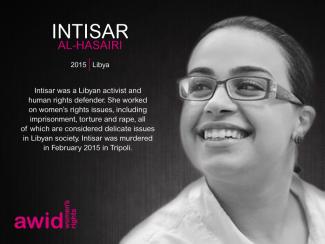
Intisar Al-Hasairi
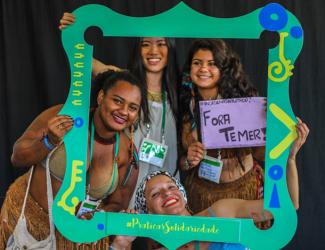
Les jeunes activistes féministes jouent un rôle crucial au sein des organisations et des mouvements pour les droits des femmes à travers le monde. Ce sont elles qui soulèvent les nouveaux problèmes auxquels les féministes sont confrontées aujourd'hui. Leur force, leur créativité et leur adaptabilité sont vitales pour assurer la viabilité des organisations féministes.
Pourtant, elles sont confrontées à toute une série d’obstacles particuliers, notamment l'accès limité au financement et au soutien, le manque de possibilités de renforcement des capacités et une augmentation considérable des agressions sur les jeunes défenseuses des droits humains. Ces obstacles entraînent un manque de visibilité qui rend leur intégration et leur participation effective au sein des mouvements pour les droits des femmes encore plus difficiles.
Le Programme d’activisme des jeunes féministes de l'AWID a été mis en place pour veiller à ce que les voix des jeunes femmes soient entendues et représentées dans le discours féministe. Nous voulons faire en sorte que les jeunes féministes aient un meilleur accès à du financement, à des opportunités de renforcer leurs capacités et aux processus internationaux.
En plus de soutenir directement les jeunes féministes, nous travaillons également avec des activistes des droits des femmes de tout âge pour élaborer des modèles et des stratégies d’organisation multigénérationnelles plus efficaces.
Nous souhaitons que les jeunes féministes puissent jouer un rôle actif dans les prises de décisions qui concernent leurs droits. Nos actions incluent :
Favoriser la mise en commun et le partage d'informations par la Plateforme de jeunes féministes. Étant donné l'importance des médias en ligne pour le travail des jeunes féministes, notre équipe a lancé la Plateforme de jeunes féministes en mai 2010. Elle a pour objectifs d’échanger des renseignements, de renforcer les capacités des membres par le truchement de webinaires et de discussions en ligne, et d'encourager la consolidation d’une communauté de jeunes féministes.
Soutenir la recherche et le renforcement des connaissances sur l'activisme des jeunes féministes, pour accroître la visibilité et l'influence de leur activisme au sein et entre les mouvements pour les droits des femmes et auprès d'autres acteurs-trices clés, tels les donateurs.
Faire la promotion de la collaboration multigénérationnelle, en explorant de meilleures façons de travailler ensemble.
Inciter les jeunes féministes à s’engager dans les processus internationaux relatifs au programme de développement, notamment ceux des Nations Unies.
S’assurer leur collaboration dans tous les domaines prioritaires de l'AWID, y compris le Forum, pour faire en sorte que leurs contributions, leurs perspectives, leurs besoins et leur activisme se traduisent dans les débats, les politiques et les programmes qui les concernent.
Pour toute question supplémentaire, veuillez utiliser notre formulaire de contact. Nous continuerons d’actualiser ce document en fonction des questions que nous recevrons de votre part !
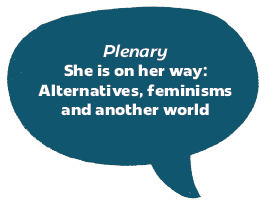
with Dr. Vandana Shiva, Dr. Dilar Dirik, and Nana Akosua Hanson.
Mientras atravesamos las múltiples crisis globales, los movimientos infatigablemente construimos el poder más allá de las estructuras de poder tradicionales. La ola de órdenes ejecutivas que ha emitido la presidencia de los EE.UU. tiene la intención de amedrentarnos, pero no hay ideología fascista capaz de borrar nuestra existencia y resistencia.
Te invitamos a formar parte de la campaña de construcción de solidaridad para poner al descubierto y resistir a las fuerzas fascistas que socavan los movimientos feministas y por la justicia de género en tu contexto.
Mereani Naisua Senibici, también llamada "Sua", fue, durante mucho tiempo, integrante del movimiento de la Asociación Cristiana de Mujeres Jóvenes de Fiji (YWCA, por sus siglas en inglés).
Trabajó con diversos grupos de mujeres en entornos multirraciales, rurales y urbanos y se comprometió a apoyar y promover los derechos de las mujeres y las jóvenes.
En el YWCA de Lautoka, Sua trabajó con mujeres de ascendencia india, y se convirtió en una figura destacada en el desarrollo del deporte y de la participación de atletas mujeres y personas trans en Lautoka.
"Sua es muy querida por lxs integrantes del YWCA de Fiji, a causa de su dedicación y apoyo persistente a todo lo que la organización se ha esforzado por hacer". - Tupou Vere
Mereani formaba parte de House of Sarah [La Casa de Sarah] (HoS, por sus siglas en inglés ), una iniciativa de la Asociación de Mujeres Anglicanas (AAW), lanzada en 2009, que tenía por objetivos tanto sensibilizar sobre los problemas relacionados con la violencia de género, como brindar apoyo a las mujeres que sufren violencia. Mereani empezó como una voluntaria comprometida y ofreció apoyo a las mujeres de todo el Pacífico.
Mereani falleció en 2019.
"Una persona con don de gente y una trabajadora todoterreno en el empoderamiento de las mujeres y construcción de movimientos a nivel comunitario. Descansa en paz, Sua". - Tupou Vere
Por Nkhensani Manabe
El título de la conversación «¿Pansexual, ginosexual o abrosexual? Una exploración de lo queer, el placer y la positividad sexual» da mucho para pensar. Tiffany Kagure Mugo (escritora, educadora y curadora de HOLAAfrica) comienza la sesión con una lectura de Touch [Tocar/Tacto], una compilación recientemente publicada de ensayos de ficción y no ficción sobre sexo, sexualidad y placer. En este fragmento, la autora propone la idea de que el placer es constante y continuo, que está presente en las actividades cotidianas, y que no se circunscribe a las relaciones sexuales.
Esta idea de que el placer es parte de la vida diaria (al igual que tantas otras cosas) atraviesa la conversación, que también abarca temas sobre el deseo, la atracción y la orientación sexual.
Desde el comienzo, existe una sensación de esperanza y posibilidad. Tiffany presenta opciones y explica alternativas, dándonos un nuevo lenguaje para hablar sobre quiénes somos, qué nos gusta, y cómo lo queremos. Esto se refiere al deseo y al sexo, pero se trata primordialmente de autoconocimiento y empoderamiento. Tiffany habla apasionadamente sobre tomar decisiones desde un lugar de poder: aprender sobre la propia identidad para poder elegir lo mejor para unx mismx.
En una conversación abierta y libre, que representa la actitud que Tiffany propone que todxs adoptemos, aprendemos que el conocimiento sobre sexo y sexualidad está en permanente cambio, que los límites se están desplazando. Lo que podemos haber aprendido o, más fundamentalmente, aquello que se nos ocultó durante la infancia o la adultez es exactamente el lugar desde donde deberíamos comenzar a desaprender y reprogramarnos. Tiffany señala que, actualmente, las personas jóvenes necesitan herramientas para comprender las experiencias que ya están teniendo, un recordatorio para no subestimar jamás lo que lxs niñxs y adolescentes saben sobre la clase de placer/es que quieren procurarse en la vida.
La conversación abrió mi mente a esto: conocerme a mí misma me ayudará a desarrollar mi confianza; podré encarar relaciones con cuidado no solo de mí misma sino de otras personas también. Aprender el lenguaje de orientación, atracción, deseo y placer contribuirá a profundizar mis futuras conexiones. Valoré el espacio para pensar sobre este aspecto de mi vida: las partes privadas e íntimas a las que no accedo habitualmente. El entusiasmo de Tiffany sobre el placer y la identidad desplazó mis propias barreras, permitiéndome considerar nuevas posibilidades personales.
La idea de aprender a establecer conexiones holísticas no es algo común todavía. En general, vivimos en una cultura de conexiones instantáneas y pasajeras. Casi no hay tiempo para reflexionar verdaderamente sobre cómo y por qué buscamos relaciones o parejas... al menos, no hasta que llega un momento de crisis.
Por supuesto, existen espacios privilegiados que están abiertos a preguntas y conversaciones, tales como el festival «Crear Résister Transform» de AWID y otras plataformas o publicaciones en línea que promueven la libertad de pensamiento. Pero el acceso a la información de fuentes útiles y sin prejuicios es algo que todavía debe ser descifrado. Esto puede deberse en parte al hecho de que la gente no se siente segura en el lenguaje de la sexualidad y el placer.
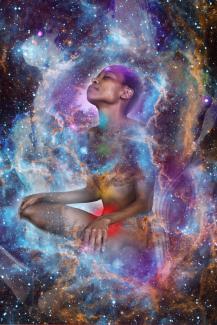
La idea del lenguaje y las herramientas se repite durante toda la presentación de Tiffany. Ella y sus colegas están haciendo el trabajo de hablar, enseñar y nutrir, viendo qué es lo que cada persona necesita, dónde están esas personas, qué quieren para sí mismxs, y caminando junto con ellxs mientras construyen sus mundos ideales, brindándoles nuevas palabras y definiciones para ayudarlxs a configurar sus identidades en las diferentes etapas de sus vidas.
Esta es la clase de conversaciones que se necesita, incluso en una sociedad que permanentemente difunde un sinfín de mensajes sobre el cuidado de la salud, con diferentes grados de detalle. A veces la gente debe retrotraerse de las instancias de perspectiva global, y sentirse alentada a aprender sobre sus opiniones y deseos individuales. Esto es lo que hace la ponencia de Tiffany: genera un espacio para cada persona, dentro del rompecabezas general.
Sexual: el deseo expreso de tener relaciones sexuales con una o varias personas
Sensual: el deseo de tocar a una o varias personas, de estar físicamente cerca, sin necesariamente incluir una relación sexual
Romántica: el deseo de salir con una o varias personas, o de estar en una relación con una o varias personas
Platónica: el deseo de construir amistades profundas
Estética: el deseo de mirar a una o varias personas, sintiendo placer por su apariencia
Estos cinco tipos o niveles de atracción ofrecen una forma abreviada para definir el deseo y el placer, y ayudan a contextualizar las distintas clases de placer que pueden experimentar las personas.
Pensar la atracción más allá de lo físico o sexual ofrece una nueva perspectiva sobre la conexión. Es una oportunidad para restar presión a las relaciones, abriendo oportunidades para asociaciones diferentes, más esclarecidas y satisfactorias.
Esta libertad y este conocimiento que propone Tiffany configuran una hoja de ruta hacia el futuro. La presentación ofreció una nueva perspectiva sobre aquello que es posible.
Tal como lo expresa el fragmento de apertura, el placer es continuo. A la luz de la ponencia de Tiffany, también resulta claro que el placer es dinámico y apasionante. Siempre hay más para aprender.
Esto puede parecer abrumador al comienzo, pero del otro lado del titubeo se encuentran la esperanza, el potencial y la libertad.
Nuevo
Como participante en línea, puedes facilitar actividades, conectarte y conversar con otras personas, y experimentar de primera mano la creatividad, el arte y la celebración del Foro de AWID. Lxs participantes que se conecten en línea disfrutarán de un programa rico y diverso: desde talleres y conversaciones hasta actividades de sanación y espectáculos musicales. Algunas actividades estarán centradas en la conexión entre participantes en línea, y otras serán verdaderamente híbridas, centradas en la conexión y la interacción entre lxs participantes en línea y quienes estén en Bangkok.

Desde siempre el feminismo sostiene que lo personal es político. El Festival Crear, Resister, Transform generó espacios en los que el feminismo pudo discutir las cuestiones relativas al cuerpo, el género y las sexualidades, y analizar las interconexiones de estos asuntos entendidos como experiencias profundas del cuerpo y, a la vez, un terreno en los que los derechos están en constante disputa y riesgo en la sociedad.
El poder de los movimientos feministas radica en el modo de organizarnos y emprender acciones coordinadas, no solo en nuestras propias comunidades y movimientos, sino también con otras causas y grupos aliados por la justicia social. El espacio brindó la oportunidad de que los movimientos compartieran y reforzaran los procesos de organización y las estrategias tácticas de forma mutua.
La pandemia mundial sanitaria del COVID-19 ha puesto de manifiesto como nunca antes el fracaso del capitalismo neoliberal, expuesto las fallas de nuestros sistemas y acentuado la necesidad de construir nuevas realidades y las oportunidades para ello. Una recuperación económica y social feminista exige el trabajo conjunto. Esta edición, en alianza con Kohl: una publicación para la investigación sobre cuerpo y género, analizará soluciones, propuestas y realidades feministas para transformar nuestro mundo actual, nuestros cuerpos y nuestras sexualidades.
Puedes explorar los artículos en línea o
Descargar en PDF
✉️ Requiere inscripción previa. Regístrate aquí
📅 Martes 11 de marzo de 2025
🕒 De 06:00 a 08:00 p. m.,
🏢 Chef's Kitchen Loft with Terrace, 216 East 45th St 13th Floor New York
Organiza: AWID
« La vie... c’est vivre dans la joie, se lever avec un but, sentir son énergie créative, répondre à son appel. » – Sylvia Robinson
Cet espace de performances créatrices foisonnantes rassemblait des initiatives d’éducation, d’engagement citoyen, d’arts, de services sociaux et spirituels et de pratiques de développement durable. Sylvia considérait cet endroit comme une maison où « il existe un équilibre et une synergie avec les activités dont les gens ont besoin pour entretenir la vie ».
Elle comptait également parmi les membres fondateur·trice·s du Georgia Avenue Community Development Taskforce, dans le nord-ouest de la capitale, un groupe de quartier actif dans le domaine de la justice sociale et de l’organisation qui veillait à ce que la communauté ait son mot à dire dans le redéveloppement et l’embourgeoisement du secteur.
« Nous demandons des logements abordables. Nous demandons que les petits commerces qui sont ici depuis longtemps ne soient pas balayés par de nouvelles enseignes. Nous demandons des espaces verts et des lieux où les gens peuvent se rencontrer. Nous demandons à ce que le paysage urbain soit amélioré, avec des rues en meilleur état et des éclairages publics. » – Sylvia Robinson, à propos du travail de la Taskforce
Avant de devenir organisatrice, et après avoir obtenu son diplôme en informatique, Sylvia avait travaillé dans le domaine des systèmes de contrôle du trafic aérien pendant plus d’une décennie. Elle s’est ensuite orientée vers le conseil relatif à la consommation d’alcool et de drogue, s’impliquant davantage dans le travail communautaire.
« Cette implication dans la communauté, c’était ma vocation. » – Sylvia Robinson
Née à Washington D.C. le 14 août 1961, Sylvia est décédée le 18 septembre 2017 après avoir lutté contre le cancer.
« L’esprit et l’héritage de Sylvia continueront d’inspirer cette communauté pour de nombreuses années. » – ECAC
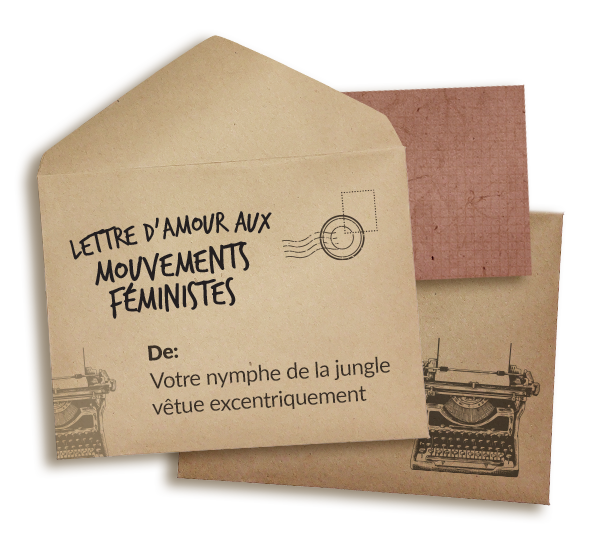
Chers êtres splendides,
Je sais que vous y êtes presque. Vous le sentez, non? La manière dont les choses doivent changer et que vous devez recentrer.
Ceci est une lettre pour vous dire de le faire. Choisissez votre guérison. Choisissez d’aller bien. Mieux que bien. Choisissez d’être entières, être heureuses. De pleurer pour vous-même et pour personne d’autre. Choisissez de laisser le monde dehors et de lui dire « Je reviens dans cinq minutes ». Ou dans cinq jours. Ou dans cinq ans.
Ou jamais.
Choisissez de ne pas tout prendre. Choisissez de ne rien en prendre. Parce que rien de tout cela n’est à vous. Et ça ne l’a jamais été. On vous dit depuis votre naissance que c’est à vous. Les problèmes de votre famille. Les problèmes de votre amoureuxse. Les problèmes du quartier. Les problèmes du monde. Cette petite voix constante qui vous dit que ces problèmes vous appartiennent. Ils sont à vous. C’est à vous de les tenir, à vous de les supporter. À vous de les régler.
C’était un mensonge.
Un bobard.
Une arnaque.
Une escroquerie.
Les problèmes de l’univers ne sont pas les vôtres.
Les seuls problèmes qui sont à vous sont les vôtres. Tout le reste peut aller se faire voir.
Permettez-vous de tout lâcher et de partir en courant dans la jungle. Faites connaissance avec une nymphe vêtue de marguerites, ouvrez une petite librairie dans les racines d’un arbre. Dansez toute nue et hurlez à la lune. Discutez avec Ochun sur les berges de la rivière.
Ou buvez simplement une tasse de thé quand vous avez besoin de prendre le temps de vous poser.
Donnez-vous la permission de disparaître dans la brume et réapparaissez trois pays plus loin en tant que mystérieuse chocolatière au passé un peu trouble avec un penchant pour les habits excentriques et les cigares.
Ou arrêtez de prendre les appels du travail cette fin de semaine.
Nagez jusqu’à une île déserte avec votre amoureuxse et habillez-vous de noix de coco avec lesquelles vous aurez fait un rhum que vous savourerez au coucher du soleil.
Ou dites non quand vous n’avez pas la capacité de faire de la place à quelqu’un.
Les options pour vous retenir sont innombrables.
Quoi que vous fassiez, sachez que le monde continuera de tourner. C’est là toute la beauté et la douleur de l’expérience. Qui ou quoi que vous choisissiez plutôt que vous-même et votre âme, le monde continuera toujours de tourner.
Donc, choisissez-vous.
Le matin, quand la première lueur apparaît, choisissez-vous. Quand arrive midi et qu’il est l’heure de pleurer pendant vos heures de travail, choisissez-vous. Le soir, quand vous réchauffez des restes parce que vous n’avez pas eu le temps de cuisiner, choisissez-vous. Quand l’anxiété vous réveille et que l’existence fait silence à 3 h 45 du matin.
Choisissez-vous.
Parce que le monde continuera toujours à tournoyer, de guingois, et que vous méritez d’avoir quelqu’un·e qui essaie toujours de le redresser pour vous.
Avec amour,
Votre nymphe de la jungle vêtue excentriquement

Apreciaremos propuestas de actividades referidas a todo el rango de áreas temáticas e intersecciones que son importantes para los movimientos feministas y por la justicia de género. En el formulario de propuesta podrás marcar más de un tema que se adecúe a tu actividad.
por Chinelo Onwualu
El 2 de septiembre de 2021 lxs increíbles activistas feministas y por la justicia social del festival Crear | Résister | Transform de AWID nos juntamos no solo para compartir estrategias, crear juntxs y transformar al mundo sino también para decir cosas sucias en Twitter.
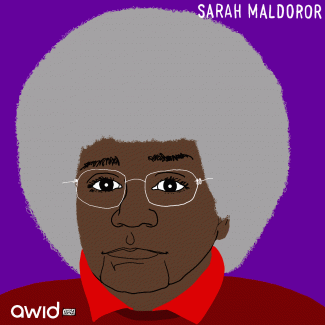
“I’m no adherent to the concept of the ‘Third World’. I make films so that people - no matter what race or color they are - can understand them. For me there are only exploiters and the exploited, that’s all. To make a film means to take a position.” - Sarah Maldoror
Her groundbreaking film and “revolutionary picture” Sambizanga (1972) follows Angolan militants’ anti-colonial liberation struggle, as well as captures a woman’s perspective in a historical moment she finds herself in.
“For many African filmmakers, cinema is a revolutionary tool, a political education to raise consciousness. It is inscribed in the evolution of a Third Cinema striving to decolonize thought and advocate radical changes in society.” - Sarah Maldoror
Throughout her career, Sarah - together with a number of African and Caribbean artists - co-founded (1956) the first Black theatre troupe in France. She made around 40 films, comprising important documentaries that amplify the lives and work of black artists, including her friend and poet Aimé Césaire who wrote to her:
“To Sarah Maldo
who, a camera in hand,
fights oppression, alienation
and flies in the face
of human bullshit.”
Sarah was also committed to giving African women more ownership of the filmmaking process. In an interview, she pointed out:
"African women must be everywhere. They must be in the images, behind the camera, in the editing room and involved in every stage of the making of a film. They must be the ones to talk about their problems."
Sarah left an incredibly powerful legacy to be carried forward.
Born 19 July 1929, Sarah passed away on 13 April 2020 from complications of the coronavirus.
Watch Sambizanga and read a film review in a 1973 New York Times article
Me complace compartir con ustedes una de mis fechas destacadas como feminista con discapacidad. Fue el 30 de mayo de 2014, cuando nosotras, la Nationwide Organization of Visually-Impaired Empowered Ladies (NOVEL) [Organización Nacional de Mujeres con Discapacidad Visual Empoderadas]), participamos en la Semana de la Moda de Filipinas 2014, en el marco de nuestra campaña de promoción del bastón blanco. Dos mujeres ciegas recorrieron la pasarela para promover el bastón blanco como uno de los símbolos de la igualdad de género, el empoderamiento, la plena inclusión y la participación igualitaria en la sociedad de mujeres y niñas con discapacidad visual.
Su desfile frente a la multitud fue para mí una experiencia sumamente impactante, ya que fui quien propuso nuestro proyecto a Runway Productions (esperé pacientemente un año hasta que fue aprobado), sabiendo que ellas no eran modelos: una había sido coronada como Ms. Philippines Vision [Srta. Filipinas Visión], y la otra era la segunda finalista del concurso 2013 de Ms. Philippines on Wheels, Signs and Vision [Srta. Filipinas sobre Ruedas, Señas y Visión] de Tahanang Walang Hagdanan, Inc. (House with No Steps [Casa Sin Escalones]). Dependían de su orientación y ensayaron la noche antes del evento, pero no practicaron con modelos profesionales. Antes de que comenzara el desfile, hablé con ellas por teléfono móvil para estimular su confianza y para rezar juntas pidiendo la ayuda de Dios. Cuando bajaron de la pasarela respiré profundamente y se me caían las lágrimas. ¡Me sentía eufórica porque lo habíamos logrado, a pesar de los desafíos que habíamos tenido que superar! ¡Nuestro mensaje al mundo de que las mujeres y las jóvenes con discapacidad visual pueden caminar con dignidad, libertad e independencia, sobre una base de igualdad con otras, mediante el uso de nuestro dispositivo de asistencia (los bastones blancos) había sido transmitido exitosamente! Fuimos tendencia en las redes sociales, y nos presentaron en los canales de televisión.
Mi vida como feminista con discapacidad comenzó como una forma de sanar mi espíritu quebrantado y de ver un camino diferente para encontrar mi propósito en la vida después de que me convertí en víctima-sobreviviente a causa de un brutal ataque con ácido en 2007, cuando esperaba mi transporte para volver a casa desde la oficina. Mis ojos quedaron severamente dañados, al punto que quedé con la visión reducida.
No sabía cuán plena de alegría y propósito podía ser mi vida nuevamente, hasta que conocí a mujeres líderes del movimiento de género y discapacidad que me convencieron para que continuara. Sus palabras de aliento me atrajeron y fueron la música más dulce para mis oídos. Mi corazón roto salta como un colibrí en vuelo cada vez que pienso en ellas y en el feminismo que me estimuló para participar en hacer la diferencia para nuestras invisibles hermanas con discapacidades y para quienes continúan experimentando discriminación. Al día de hoy me siento consumida por el deseo de estar con el movimiento. No puedo ocultar mi entusiasmo cada vez que presento propuestas de proyectos a diferentes sectores involucrados, a favor del empoderamiento, el desarrollo y el fomento de nuestras hermanas con discapacidades y cuando me presento en coloquios locales, nacionales e internacionales para difundir nuestras voces, incluso a mi costo y cargo.
Inesperadamente, fui seleccionada como representante mujer de nuestro país ante la Asamblea General 2012 de la Unión Mundial de Ciegos (WBU en inglés) en Tailandia, a pesar de que era una recién llegada al movimiento de personas con discapacidad. Me sentí inspirada para conectarme, reunir y empoderar a nuestras hermanas con discapacidad visual respecto de sus derechos, y para conocer sus problemas interrelacionados. En 2013, lanzamos oficialmente la Nationwide Organization of Visually-Impaired Empowered Ladies (NOVEL) para apoyar el empoderamiento de nuestras hermanas con discapacidades, construir coaliciones con movimientos de mujeres y de discapacidades diversas y promover el desarrollo inclusivo del género y la discapacidad.
Mi participación como co-representante de las mujeres con discapacidades en la presentación del Informe Sombra CEDAW, convocado en 2016 por la Oficina Legal y de Derechos Humanos de las Mujeres (WLB, por sus siglas en inglés) con los grupos marginalizados de mujeres, me abrió muchas puertas, tales como el trabajo con diferentes organizaciones de mujeres y la asistencia a los Días Internacionales de la Inclusión 2017 en Berlín, Alemania, junto con tres líderes filipinas con discapacidades, para compartir nuestras buenas prácticas y, principalmente, nuestro compromiso con el movimiento de mujeres de nuestro país.
Mi recorrido como feminista con discapacidad ha sido para mí una montaña rusa emocional. La promoción de la plena inclusión de nuestras hermanas con discapacidades y su participación igualitaria y efectiva en la sociedad me ha dado felicidad y autoestima. También me he sentido frustrada y disgustada cada vez que di todo de mí y recibí a cambio comentarios negativos. No obstante, me siento así porque estoy enamorada del movimiento.
Me veo en el futuro trabajando en solidaridad con el movimiento para garantizar que nuestras hermanas con y sin discapacidades puedan disfrutar y participar en la sociedad de forma completa e igualitaria.
Mucho amor,
Gina Rose P. Balanlay
Feminista con discapacidad
Filipinas
Por primera vez, el Foro de AWID ofrece tres modos de participación:
Lxs participantes se reunirán en Bangkok, Tailandia. ¡No podemos esperar!